Why Your Garage Refrigerator Stops Working in Cold Weather
A garage refrigerator not working in winter is one of the most common cold-season appliance problems in Central Oregon. The fridge looks fine, the light is on, but the freezer slowly thaws and food spoils. This guide explains why cold air confuses a standard refrigerator, the fixes that actually work, and when to call a local technician.

Start Here: The Cold-Garage Refrigerator Problem
Every winter in Bend, the same call comes in: the garage refrigerator is not working, but nothing looks broken. The interior light is on. The refrigerator compartment feels cold. Yet the freezer is slowly warming, ice cream is soft, and frozen food has thawed and refrozen into one icy block. If this sounds familiar, the cold weather — not a failed part — is the most likely culprit.
Standard refrigerators are engineered for kitchens, where the room stays between roughly 60°F and 90°F year-round. Move one into an unheated garage, where Central Oregon winter nights regularly drop into the 20s or teens, and the appliance’s own thermostat gets fooled. It senses that the refrigerator compartment is already cold enough, so it never tells the compressor to run — and the freezer, which depends on that compressor cycle, quietly warms up.
This guide is written for homeowners in Bend, Redmond, and the surrounding Central Oregon area. It explains exactly why a garage refrigerator stops working in cold weather, walks you through a 15-minute diagnosis, covers the seven fixes that actually work (from a simple thermostat adjustment to a garage-ready upgrade), and tells you when professional refrigerator repair in Bend is the right call.
One more thing before you start: grab an inexpensive probe thermometer if you do not own one. Nearly every step below — the diagnosis, the temperature zones, the food-safety decisions — depends on knowing real numbers instead of guessing by feel, and it is the single most useful ten dollars you will spend on a garage fridge this winter.
Table of Contents — Tap to Jump to a Section
- 01 Introduction
- 02 Why It Stops in the Cold
- 03 How Cold Confuses a Fridge
- 04 Temperature Danger Zones
- 05 7 Common Causes
- 06 15-Minute Diagnosis
- 07 7 Fixes That Work
- 08 Garage-Ready vs Standard
- XX Summer Heat Extreme
- 09 Central Oregon Winters
- 10 Winter Prep Checklist
- 11 Food Safety Rules
- 12 When to Call a Pro
- 13 FAQ
- 14 Bend & Redmond Service
- 15 Final Takeaway
Why Does a Garage Refrigerator Stop Working in Cold Weather?
Most standard refrigerators use a single thermostat located in the fresh-food (refrigerator) compartment. When the garage air around the fridge drops below the thermostat’s setpoint — say the garage is 30°F and the fridge is set to 38°F — the thermostat concludes the cabinet is already cold enough and stops calling for cooling. The compressor shuts down, sometimes for days at a time.
The freezer is the casualty. It has no thermostat of its own on most models; it only stays frozen while the compressor runs. No compressor cycles means the freezer slowly drifts toward the garage temperature. On a 25°F night that drift takes the freezer well above 0°F, and frozen food begins to thaw — even though the refrigerator compartment still feels perfectly cold.
So when your garage refrigerator is not working in winter, the short answer is: the refrigerator is not broken — it is being tricked by the cold. The fixes below either keep the thermostat sensing warmth (so the compressor keeps cycling) or replace the fridge with a model designed for the cold. The one exception: if the unit makes unusual noises, trips the breaker, or the refrigerator compartment itself is warm, you may have a genuine failure — see the diagnosis section below.
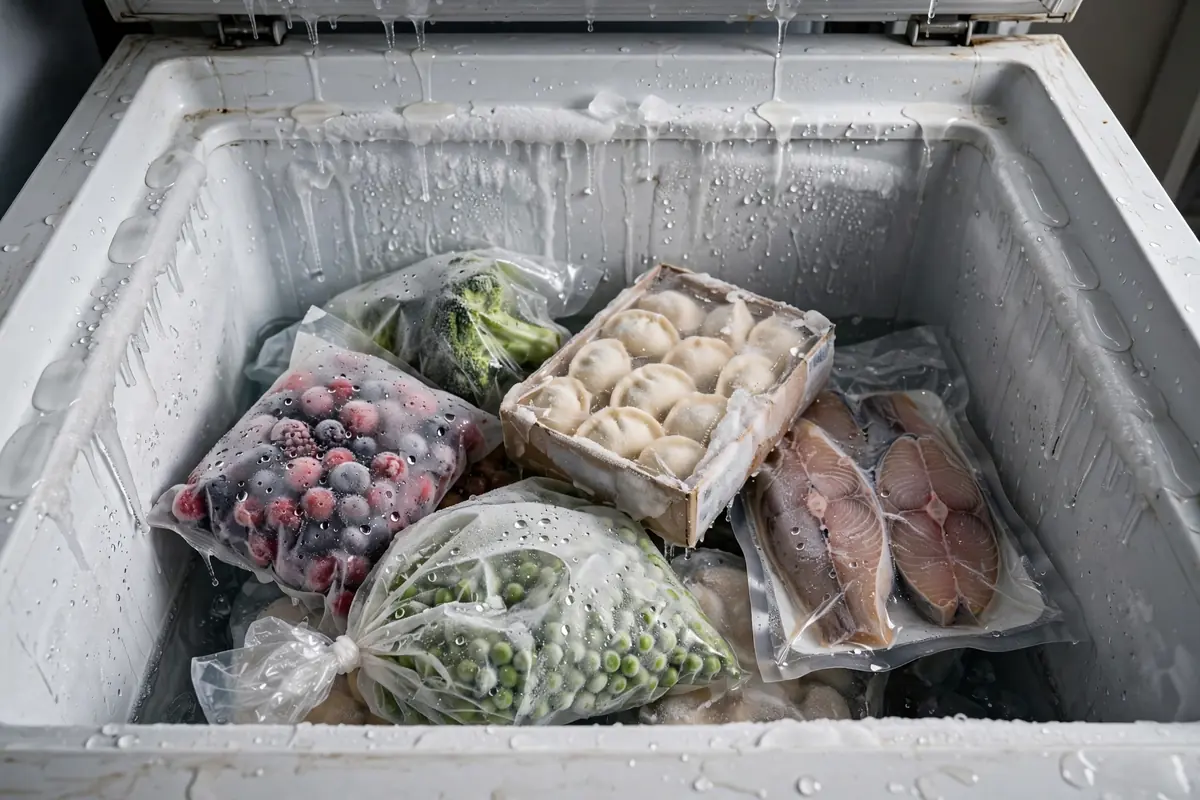
Food safety first: if the freezer has been above 40°F for more than two hours, perishable food may be unsafe even if it still feels cold. When in doubt, throw it out — food poisoning is not worth the gamble. See the food safety section below for the full rules.
How Cold Air Confuses a Standard Refrigerator
To understand the problem, you need to know one design fact: on most standard refrigerators, the only thermostat sits in the fresh-food compartment. The freezer does not get its own thermostat. The entire cooling system — compressor, refrigerant, fans — runs or rests based on what that single sensor reads in the refrigerator section.
In a kitchen, this works perfectly. The room is 70°F, the fridge is set to 38°F, the thermostat calls for cooling, the compressor runs, and cold air is shared with the freezer compartment. Everything stays in its zone: fridge around 38°F, freezer around 0°F.
Now move that same fridge to an unheated garage in January. The garage drops to 28°F overnight. The thermostat in the refrigerator compartment reads 28°F — already colder than its 38°F setpoint — so it never calls for cooling. The compressor stays off. But the freezer, which has no thermostat of its own, only freezes while the compressor runs. With no cycles happening, the freezer drifts upward: 10°F, 20°F, 30°F. Your frozen food thaws while the refrigerator compartment sits at a perfectly safe temperature. That is the core paradox of a garage refrigerator not working in winter: the cold that should help is exactly what stops the system.
There is a second, mechanical layer. Compressor oil thickens as temperatures fall toward and below freezing, so on the coldest nights the compressor works harder on startup and cycles less efficiently. Manufacturers know this — it is why most owner manuals specify a minimum operating temperature, commonly around 55°F for standard models, with the unit simply not guaranteed to behave below that.
A third wrinkle involves the defrost cycle. Frost-free refrigerators periodically warm the evaporator coils to melt frost, then refreeze. In a near-freezing garage, that melt water can refreeze in the drain tube instead of draining away, eventually clogging the defrost drain. The symptom — water pooling under the crisper drawers or ice sheets in the freezer — looks like a leak or a defrost failure, but the root cause is the same cold environment stalling normal cycles.

Garage Temperature Zones: What Happens and When
Not every cold night causes trouble. The risk depends on how far the garage temperature falls below the refrigerator’s setpoint, and for how long. Use this table as a rough guide — exact thresholds vary by model, so check your owner’s manual for its rated operating range.
| Garage Temperature | What Happens Inside | Risk Level |
|---|---|---|
| Above 55°F | Normal cycling; fridge and freezer hold their setpoints | Low — normal operation |
| 40°F to 55°F | Compressor cycles less; freezer may drift a few degrees on long cold stretches | Moderate — monitor the freezer |
| 32°F to 40°F | Thermostat rarely calls for cooling; freezer warms steadily toward garage temperature | High — frozen food at risk |
| Below 32°F | Compressor may not run at all for days; freezer thaws; items in the fridge section can freeze | Severe — act now |
A cheap indoor-outdoor thermometer with a remote sensor in the freezer is the best early-warning system. If the freezer reads above 15°F and climbing on a cold morning, the garage — not a broken part — is almost certainly the cause.
7 Reasons Your Garage Refrigerator Quits in Winter
Work through these in order. The first three account for the large majority of cold-weather garage fridge complaints we see around Bend — and none of them mean the refrigerator is broken.
Single-thermostat design
The number-one cause. One thermostat in the fridge compartment controls everything. When garage air is colder than the fridge setpoint, the compressor never runs and the freezer thaws. This is normal behavior for the design — not a malfunction.
Garage below the rated minimum
Most standard refrigerators are rated for ambient temperatures down to about 55°F (check your manual). Below that, the manufacturer makes no promise the unit will cycle correctly. A Bend garage in January sits far below that line most nights.
Freezer has no independent control
On most top-freezer and many side-by-side models, the freezer depends entirely on the refrigerator compartment’s cooling cycle. No cycle, no freezing. Only some higher-end models give the freezer its own thermostat that can call for cooling independently.
Thickened compressor oil
Refrigerant oil gets more viscous as temperatures drop toward freezing. On bitter nights the compressor may struggle to start or run inefficiently, shortening cycles and reducing cooling capacity — hard on the machine over a full winter.
Weak door seals in the cold
Rubber gaskets stiffen in cold air and seal less tightly. Gaps let cold garage air flood the refrigerator compartment — which makes the thermostat even less likely to call for cooling — and let freezer air escape faster once it starts warming.
Items freezing in the fridge section
The flip side of the same problem: when the garage sits below freezing for days, the refrigerator compartment can drop below 32°F on its own. Produce, milk, and eggs freeze and spoil. If your lettuce is frozen solid, the garage is too cold — full stop.
An actual part failure
Sometimes winter just exposes a weak part: a failing thermostat, a start relay that cannot handle cold starts, or a defrost system problem. If the symptoms persist even when the garage warms above 55°F, the cold was a trigger — but a part needs attention.
15-Minute Diagnosis: Is It the Cold or a Real Failure?
Before spending money on parts or a service call, run this sequence. It separates “the garage is too cold” from “something is actually broken” in about fifteen minutes, with nothing more than a thermometer.
- Measure the garage temperature. Place a thermometer near the refrigerator, away from the motor area. Below 40°F, cold-weather behavior is the prime suspect. Below freezing, it is almost certainly the cause.
- Check the freezer with a thermometer. Do not trust feel — put a probe thermometer among the food. Above 15°F and rising on a cold morning points to stalled compressor cycles, not a dead freezer.
- Check the refrigerator compartment. If it reads at or below its setpoint (typically 37–40°F) while the freezer is warm, that is the classic single-thermostat signature: the fridge sensor is satisfied, the freezer is starved of cycles.
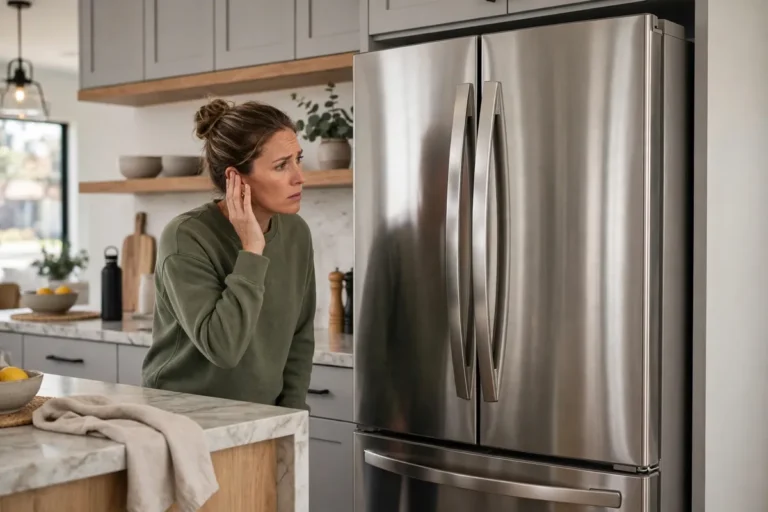
- Listen for the compressor. Put your ear near the back bottom of the unit. Silence for hours on a freezing day is expected. Clicking that repeats every few minutes (the start relay trying and failing) is not — that suggests a failing relay or compressor.
- Test the door seals. Close the door on a dollar bill at several points around the gasket and pull. If it slides out with no resistance in spots, the seal is weak — worse in cold, stiff rubber. Weak seals accelerate both freezer warming and fridge-section freezing.
- Check the owner’s manual rating. Look up your model’s rated ambient operating range. If your garage is below the minimum and the symptoms match, you have your answer: the environment, not the machine.
- Warm-test it. On a milder day (garage above 55°F), does everything work normally again? If yes, the diagnosis is confirmed: cold-weather stalling. If the freezer still will not freeze in mild weather, you have a genuine failure — skip to the “when to call” section.

7 Fixes That Actually Work for a Cold Garage Fridge
Ordered from simplest to most involved. Most Bend homeowners solve this with one of the first three — and nearly everyone solves it without replacing the refrigerator.
Turn the refrigerator thermostat colder
Lower the fridge setpoint a few degrees. A colder setpoint forces the thermostat to call for cooling more often, which keeps the compressor cycling and the freezer frozen. Watch the fridge compartment for a day or two — if items start freezing, you have gone too far and should dial it back.
Install a garage heater kit
A small low-wattage heating element mounts inside the control housing near the thermostat. It gently warms the sensor so the thermostat “thinks” the cabinet is warmer than it is, keeping the compressor cycling on cold nights. Many manufacturers sell a kit matched to their models; a technician can install one in a single visit. This is the most popular permanent fix for an otherwise healthy fridge.
Move frozen food indoors during deep cold
For the coldest snaps — a week of teens in January — the simplest safe move is temporary: shift frozen food to an indoor freezer and let the garage unit ride out the spell. It costs nothing and eliminates any food-safety gamble.
Warm the garage, not the fridge
A small thermostatically controlled space heater or heat lamp near — not touching — the refrigerator can hold the immediate area above the trouble threshold. Keep clearances generous, never leave a heater running unattended without a thermostat and tip-over shutoff, and keep it away from anything flammable. Insulating the garage door helps the heater’s job enormously.
Insulate and elevate the unit
Rigid foam panels behind and beside the fridge create a warmer microclimate around the cabinet, and raising the unit off the cold concrete floor on a pallet or platform cuts conductive heat loss from below. Neither replaces a heater kit in deep cold, but both reduce how hard the fix has to work.
Use an external temperature controller
A plug-in temperature controller sits between the outlet and the fridge, powering the unit based on its own probe. Set correctly, it can force cooling cycles the built-in thermostat would skip. This is a workable DIY option, but the settings need care — misconfigured, it can freeze the fresh-food section.
Upgrade to a garage-ready model
If the garage fridge is old, inefficient, or needed year-round, a garage-ready refrigerator is the clean solution. These are engineered for unconditioned spaces — see the comparison below — and eliminate the problem by design rather than by workaround.
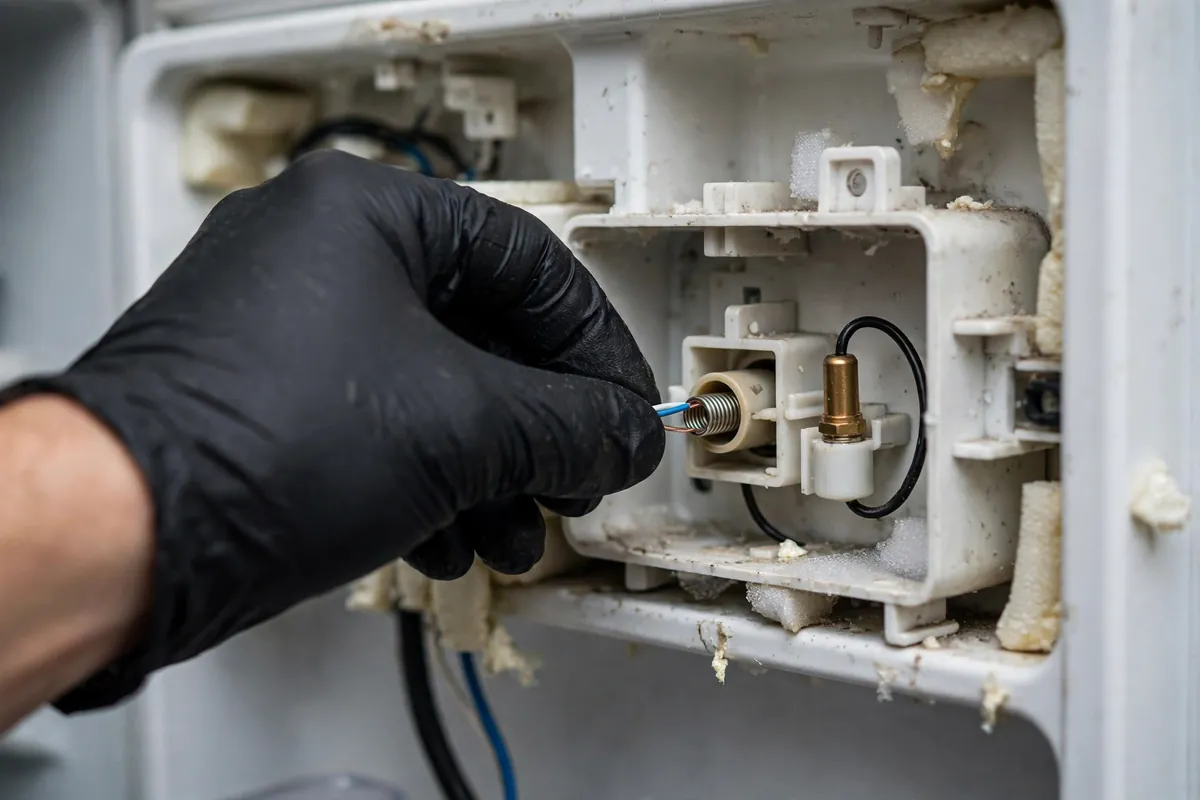
What not to do: do not wrap the refrigerator in blankets or block its condenser coils and vents to “keep it warm.” Restricted airflow makes the compressor run hotter and less efficiently, and it is a fire risk. Warm the thermostat’s environment, not the machinery.
Chest freezer vs. refrigerator-freezer: if your garage storage is mostly frozen goods, a standalone chest freezer handles cold garages far better than a refrigerator-freezer combo. Chest freezers have their own thermostat set for 0°F, so cold ambient air simply means the compressor rests — the food stays frozen either way. Many Bend households run the garage fridge for overflow fresh food in the mild months and rely on a chest freezer for the deep-winter frozen stock. It is the lowest-drama setup for an unheated garage.
Garage-Ready vs. Standard: What Is Actually Different?
“Garage-ready” is not a marketing sticker — it describes real engineering differences. Here is what changes inside the cabinet.
| Feature | Standard Refrigerator | Garage-Ready Refrigerator |
|---|---|---|
| Thermostat system | Single thermostat in the fridge compartment | Dual sensors or a heater-assisted thermostat that keeps the compressor cycling in the cold |
| Rated ambient range | Often around 55°F to 110°F (check the manual) | Commonly rated down to near 0°F |
| Compressor oil | Standard viscosity; thickens in freezing air | Low-temperature formulation that stays fluid in the cold |
| Insulation and seals | Built for stable indoor rooms | Heavier insulation, more cold-tolerant gaskets |
| Summer performance | Struggles and runs constantly above ~90°F | Built to shed heat in hot garages too |

Shopping tip: the words to look for are “garage-ready” or “garage-optimized” in the specifications — not just a wide temperature claim in the marketing copy. When in doubt, check the rated minimum ambient temperature in the spec sheet before you buy.
Summer Heat: The Other Garage Extreme
Winter gets the attention, but a standard refrigerator in an unconditioned garage faces the mirror-image problem every July and August. When garage temperatures climb past 90°F — easy in a sun-baked Central Oregon garage — the compressor must run nearly nonstop to push heat out of the cabinet faster than it leaks back in.
That constant running shows up three ways. First, your electric bill climbs, because the compressor is the hungriest component in the appliance. Second, everything wears faster: motors, relays, and fans logging double or triple their normal duty hours age in dog years. Third, on the hottest afternoons the unit may still lose ground — the refrigerator compartment creeps above 40°F even with the compressor running flat out, because the condenser coils cannot shed heat into 100°F air efficiently.
The fixes mirror the winter playbook in reverse: keep the garage ventilated, shade the unit from direct sun through a window, leave generous clearance around the condenser coils, and keep those coils clean so heat transfer stays efficient. And this is the second reason garage-ready models earn their name — they are engineered for both extremes, with heavier insulation and compressors sized for hot-weather duty as well as cold-weather cycling.
If your garage fridge struggles in both January and August, that is a strong signal the location — not any single part — is the problem, and a garage-ready replacement is worth pricing against another year of workarounds.
Central Oregon Winters Make This Worse
Bend sits at about 3,600 feet in the high desert, and that geography stacks the deck against garage refrigerators three ways.
First, the temperature swings. Clear high-desert nights radiate heat fast, so winter lows routinely land in the teens and 20s — far below any standard refrigerator’s rated minimum — while daytime highs may barely clear freezing. That daily plunge means the compressor can stall for most of every 24-hour cycle, not just during a rare cold snap.
Second, the garages themselves. Many Central Oregon homes have uninsulated or lightly insulated garages with unsealed doors, so the garage tracks outdoor temperature closely. An attached garage on the windward side of the house can run nearly as cold as the driveway on a still, clear night.
Third, the heating season is long. Overnight lows can dip into the 30s from October through April, which means marginal nights — garage in the high 30s, freezer slowly drifting — stretch across half the year, not just deep winter. A remote freezer thermometer pays for itself many times over here: it turns a silent, months-long problem into a number you can see every morning.
The practical upshot: in Bend and Redmond, a garage refrigerator is a seasonal appliance unless it is garage-ready or fitted with a heater kit. Plan for that in October, not in January when the freezer is already thawing.
One more local note: power outages. Winter storms knock out power across Deschutes County most years, and a garage fridge complicates recovery. A full freezer holds safe temperatures for about 48 hours unopened (24 if half full), but a freezer that was already drifting warm before the outage has far less margin. After any outage, check the freezer thermometer before trusting the food — and if the outage coincided with a cold snap, assume the unit was already struggling and verify rather than guess.
Winter Prep Checklist for a Garage Fridge
Run through this once each fall and most cold-weather problems never start.
Food Safety Rules When the Garage Gets Cold
A thawing freezer is a food-safety problem, not just an inconvenience. These are the rules food-safety agencies publish — follow them exactly:
- The 40°F / 2-hour rule. Perishable food that has been above 40°F for more than two hours should be discarded. Bacteria multiply rapidly in the danger zone between 40°F and 140°F, and you cannot see, smell, or taste that growth.
- Partially thawed is not automatically safe. Food that still contains ice crystals or feels refrigerator-cold (below 40°F) can generally be refrozen, though quality suffers. Fully thawed meat, poultry, or seafood above 40°F for over two hours goes in the trash.
- When in doubt, throw it out. A freezer that has been silently warming for days is the worst case — you do not know how long food sat in the danger zone. The cost of replacing groceries is always less than the cost of food poisoning.
- Do not taste-test. Tasting cannot tell you whether food is safe. Pathogens that cause illness are often undetectable by taste or smell.
- Watch the fridge section too. In a below-freezing garage, items in the refrigerator compartment can freeze — thawed-and-refrozen produce, cracked eggs, and separated dairy should be discarded.
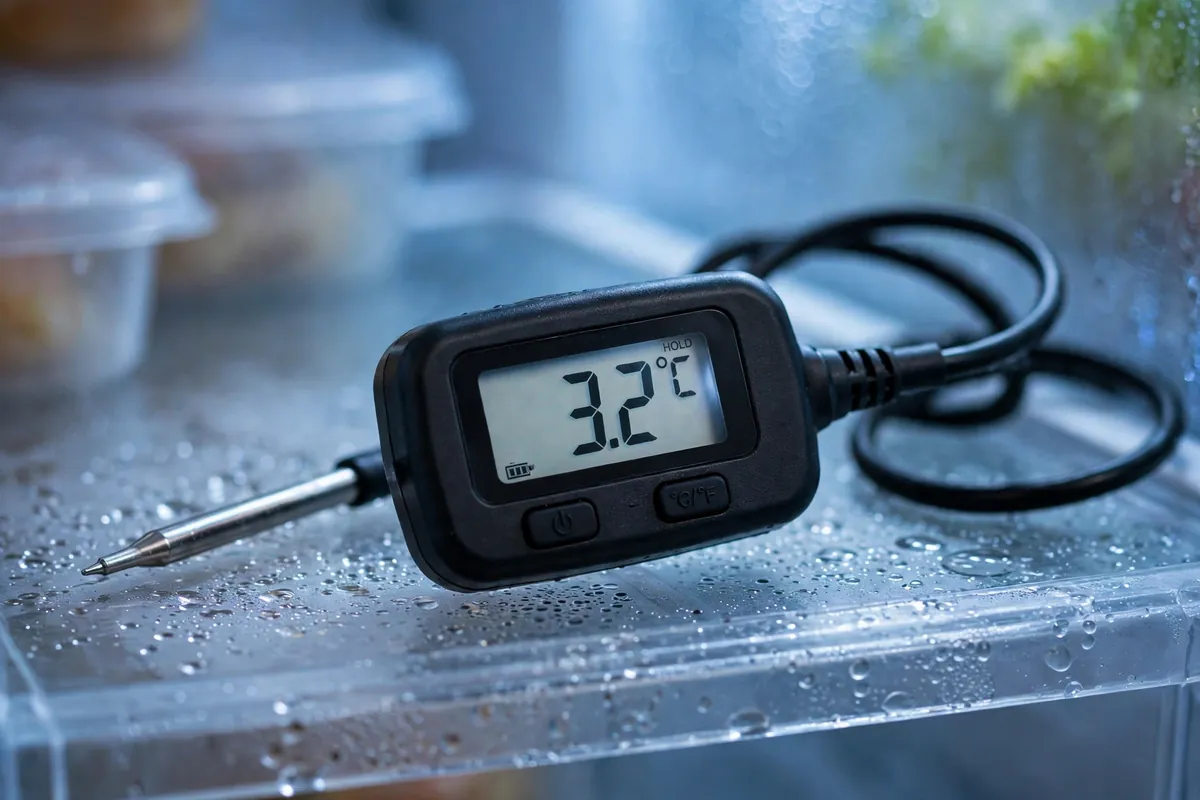
A thermometer removes the guesswork: if you can show the freezer never rose above 40°F, the food is fine. Without one, assume the worst after a multi-day cold spell.
When Should You Call a Refrigerator Technician?

Most cold-weather garage fridge problems are environmental — but call a technician when any of these apply:
- It still will not freeze in mild weather. If the garage warms above 55°F and the freezer still cannot hold 0°F, you have a genuine failure: thermostat, start relay, compressor, or sealed-system issue.
- The compressor clicks but never starts. A start relay clicking every few minutes without the compressor engaging usually means a failed relay — or, less commonly, a failing compressor.
- The refrigerator compartment is warm too. Both sections warm in any weather points to a cooling-system failure, not a cold garage.
- You want a heater kit installed. A technician can match the correct kit to your model and install it safely in one visit — including verifying the thermostat and control wiring while the housing is open.
- Breakers trip or you smell burning. Stop using the unit and call immediately. Electrical faults are not a DIY diagnosis.
For homeowners in Bend, professional refrigerator repair starts with what you have already ruled out. Tell the scheduler your garage temperature readings and the warm-weather test result — “freezer hits 25 degrees on cold nights but holds zero when the garage is above 55” — and the technician will arrive knowing whether to bring a heater kit or diagnostic tools.
One thing a technician will not do is declare a healthy fridge “broken” just because the garage is cold. If the diagnosis confirms environmental stalling and the sealed system, thermostat, and start components all test fine, the honest recommendation is a heater kit or a garage-ready upgrade — not parts you do not need. That is the answer you want: it costs less and actually solves the problem.
Frequently Asked Questions About Garage Refrigerators in Winter
Why does my garage refrigerator stop working when it gets cold?
Most standard refrigerators have a single thermostat in the fresh-food compartment. When the garage air drops below the fridge’s setpoint, the thermostat stops calling for cooling, the compressor shuts down, and the freezer — which has no thermostat of its own — slowly thaws.
At what temperature will a garage refrigerator stop working properly?
Most standard models are rated for ambient temperatures down to about 55°F; check your owner’s manual. Problems typically begin when the garage falls into the 40s, become serious in the 30s, and the compressor may barely run at all below freezing.
Can I put a regular refrigerator in an unheated garage?
You can, but expect cold-weather trouble in winter unless you add a garage heater kit, warm the garage, or move frozen food indoors during deep cold. For year-round reliability, a garage-ready model is the better choice.
What is a garage refrigerator heater kit?
A small low-wattage heating element that installs inside the refrigerator’s control housing near the thermostat. It gently warms the sensor so the thermostat keeps calling for cooling on cold nights, which keeps the compressor cycling and the freezer frozen.
Should I unplug my garage fridge for the winter?
If you do not need it, unplugging is a reasonable option — it avoids wasted energy and wear. Clean it, dry it thoroughly, and leave the doors propped open to prevent mold. If you need the storage, use a heater kit or move food indoors instead.
Why is food freezing in the refrigerator compartment of my garage fridge?
When the garage itself sits below freezing, the refrigerator compartment can drop below 32°F with no cooling cycle running at all. It is the flip side of the same problem — the garage is simply too cold for a standard fridge.
Will a garage-ready refrigerator work in freezing temperatures?
Garage-ready models are commonly rated down to near 0°F thanks to heater-assisted thermostats, cold-tolerant compressor oil, and heavier insulation. Always verify the rated minimum ambient temperature in the spec sheet before buying.
Is thawed food from a warming garage freezer safe to eat?
Follow the 40°F / 2-hour rule: perishables above 40°F for more than two hours should be discarded. Food that still has ice crystals or stayed below 40°F can generally be refrozen. When in doubt, throw it out.
Refrigerator Repair in Bend, OR
A garage refrigerator that quits every winter usually needs a heater kit, a thermostat check, or an honest assessment of whether the unit belongs in an unheated garage at all — and sometimes it needs a real repair the cold merely exposed. Our technicians diagnose the actual cause instead of guessing, and we will tell you straight whether a kit, a repair, or a garage-ready replacement is the smart money.
We serve homeowners throughout Bend — including Northwest Crossing, Awbrey Butte, Boyd Acres, Larkspur, River West, Mountain View, Summit West, Orchard District, and Southern Crossing — as well as appliance repair in Redmond, Oregon and surrounding Central Oregon communities. Same-day appointments available, upfront pricing, 90-day warranty on every repair.
Final Takeaway
A garage refrigerator not working in winter is almost never a dead appliance — it is a standard refrigerator doing exactly what its single thermostat tells it to do in air colder than its design range. The compressor stops, the freezer drifts, and food thaws while the fridge compartment feels fine.
The fix is straightforward: keep the thermostat sensing warmth with a colder setpoint or a heater kit, warm or insulate the garage, or move to a garage-ready model for year-round reliability. And when the symptoms survive mild weather, that is the signal to call a technician — because then the cold was only the messenger.
Garage Fridge Quitting Every Winter?
A heater kit installation, a thermostat diagnosis, or an honest assessment of your setup — our technicians will find the real cause and give you an upfront estimate before any work begins.