
Washing Machine Not Draining? Causes, Fixes & When to Call a Pro
Is your washer won’t drain problem getting worse? Learn why your washing machine not draining, what to check first, and when to call a Bend appliance repair pro.
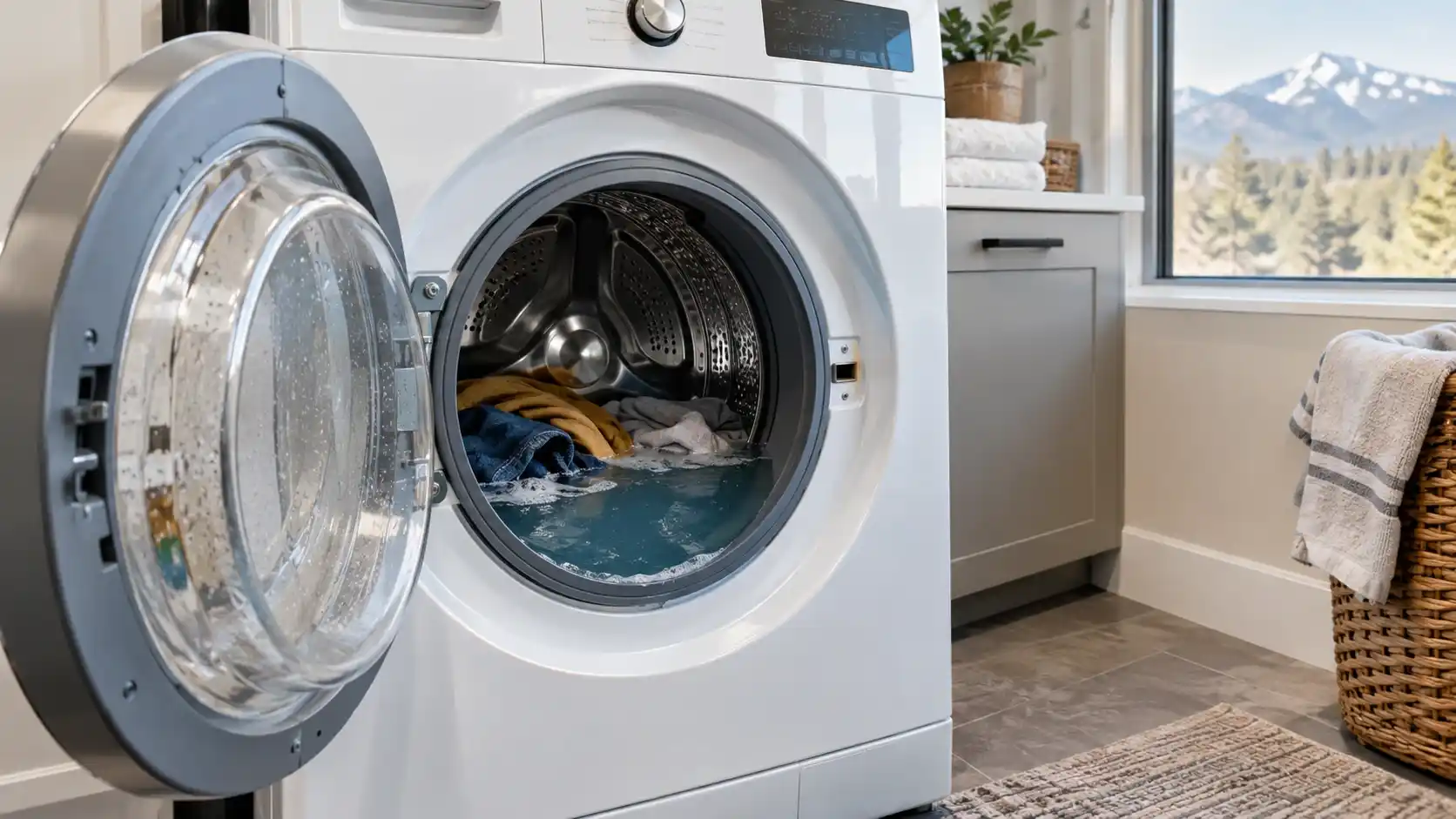
A Washer Full of Water Doesn’t Always Mean a Big Repair
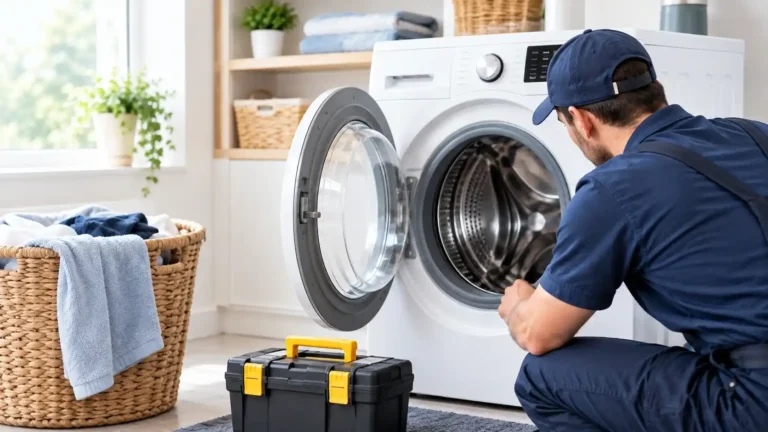
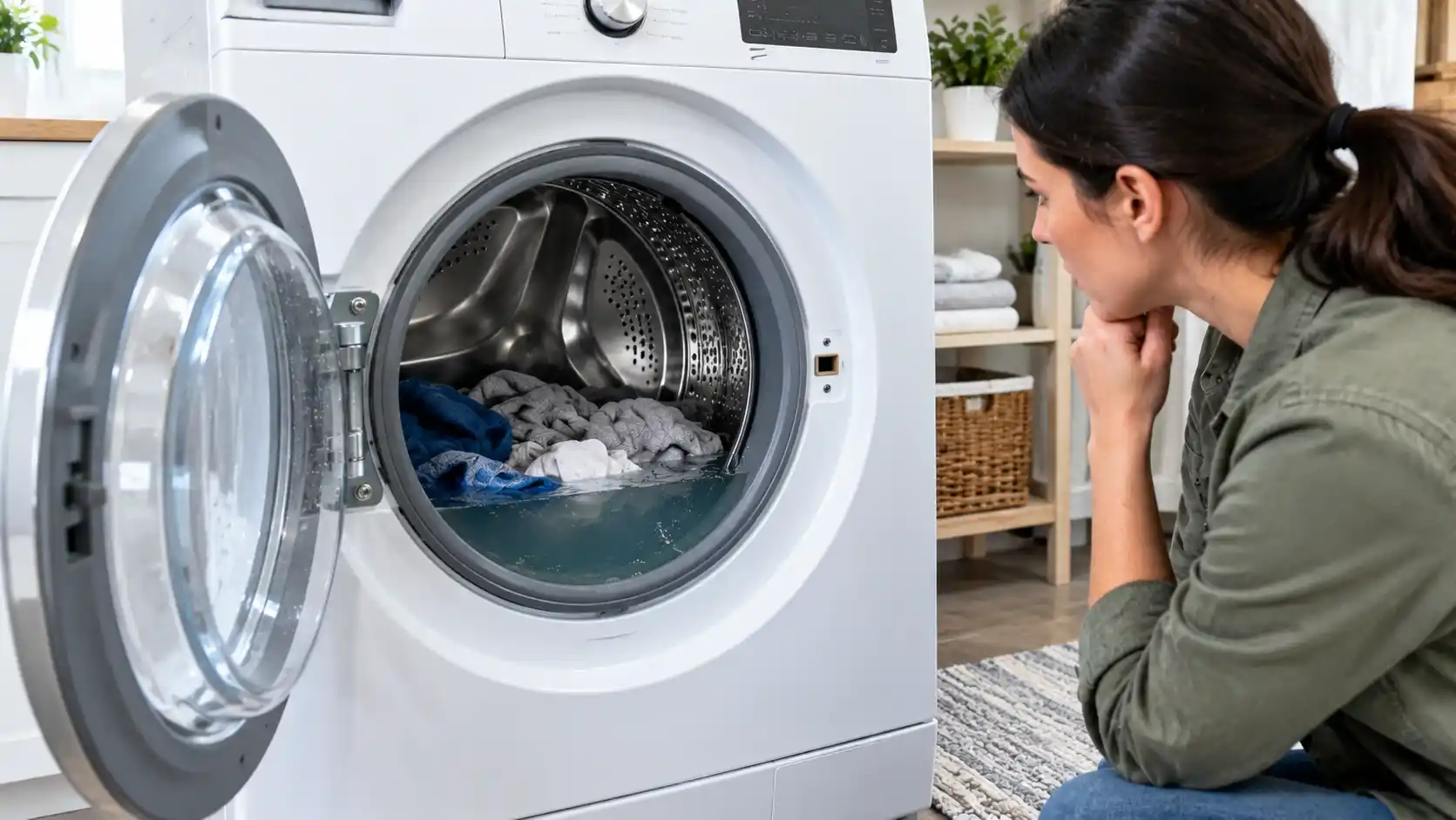
A washing machine not draining can leave your clothes sitting in dirty water at the end of a cycle. Sometimes the problem is simple, such as a kinked drain hose or clogged filter. Other times, the drain pump, lid switch, door lock, or control system may be at fault.
Before calling for repair, check what your washer is doing. Does it make a humming sound? Does it drain slowly? Does it drain but refuse to spin? These symptoms can help narrow down the cause.
For homeowners in Bend, Oregon, getting laundry back on track quickly matters. A blocked washer can turn one unfinished load into several days of extra laundry. The good news is that you can safely check a few common problems before deciding whether professional service is needed.
Why Is My Washing Machine Not Draining?
A washer removes water through a system that includes the drain pump, internal hose, drain hose, and household drain. If one part becomes blocked or fails, the machine may stop with water inside.
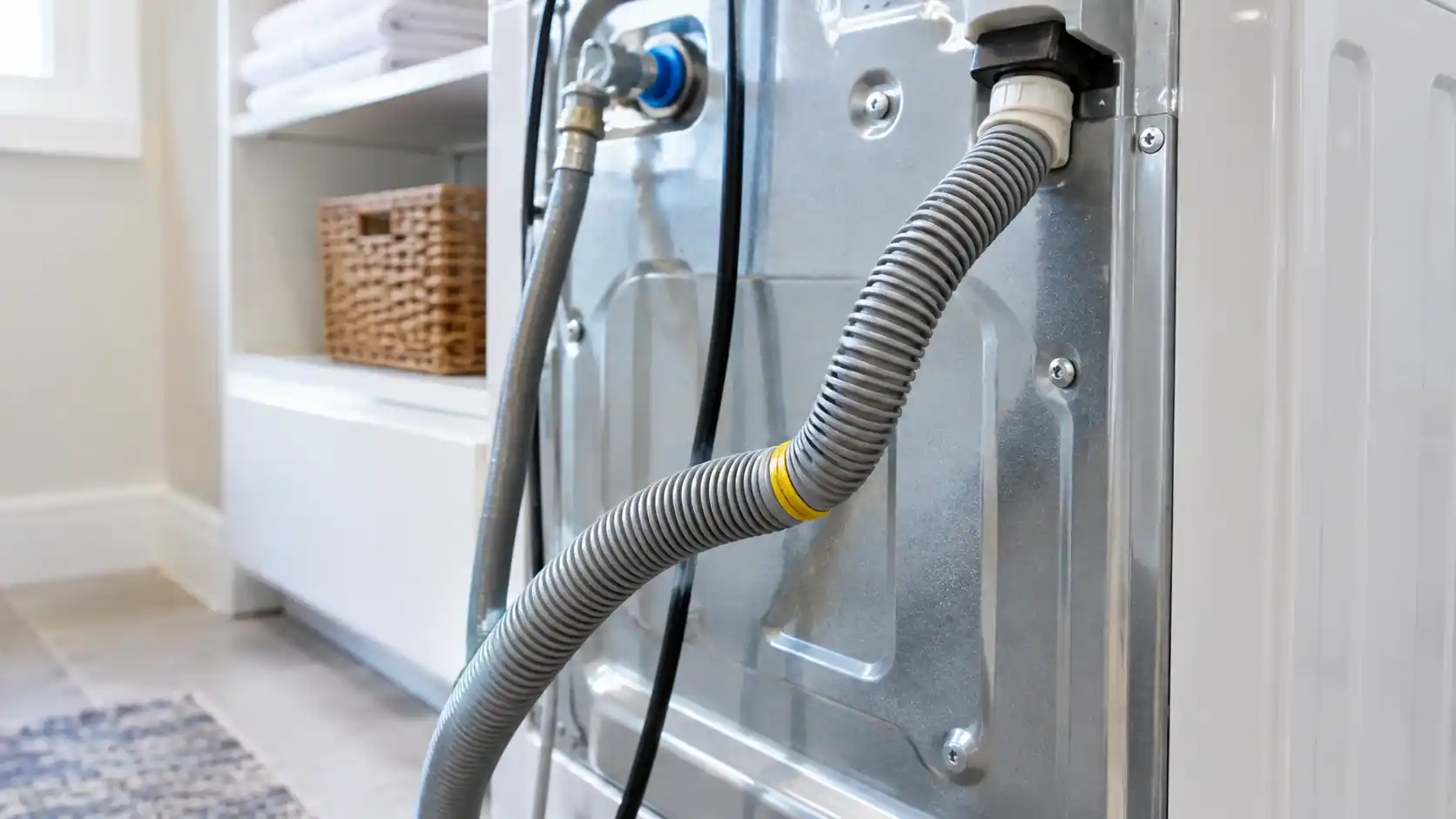
A washing machine not draining issue often starts with the drain hose. Check behind the washer for sharp bends, crushing, or visible restrictions. Also check the household drain. If water backs up from the standpipe, the plumbing may be blocked.
The pump is another common cause. A blocked pump may hum without moving water. A failed pump may make unusual noises or remain completely silent.
What Is Your Washer Doing?
Start with the symptom rather than replacing a part. A washing machine not draining problem can look different from one washer to another.
| What You Notice | Possible Cause | First Check |
|---|---|---|
| Water remains inside | Blocked hose, filter, or pump | Hose and filter |
| Pump hums | Blockage or pump problem | Filter and pump area |
| No sound during drain | Electrical or control issue | Lid/door lock and controls |
| Drains but will not spin | Load, switch, motor, or belt | Load and lid/door |
| Drains slowly | Partial blockage | Hose, filter, plumbing |
If the washer fills and washes normally but stops when it should drain, focus on the drainage system first.
What to Check When Your Washer Won’t Drain
Before checking anything near the pump, disconnect the washer from power. If there is standing water, keep towels and a shallow container nearby. Basic electrical safety guidelines.
Check the Drain Hose
Look behind the washer for a kinked or crushed hose. A restricted hose can slow or stop drainage.
Make sure the hose is installed according to the manufacturer’s instructions. An incorrectly positioned hose can also cause drainage problems.
Drain the Washer Safely
If your washer has a drain-and-spin or drain-only cycle, try that first. Some models also have an emergency drain tube.
Front-load washers may have an access panel near the bottom that allows water to be released manually. Check your owner’s manual because procedures vary by model.
Check the Washing Machine Drain Pump Filter
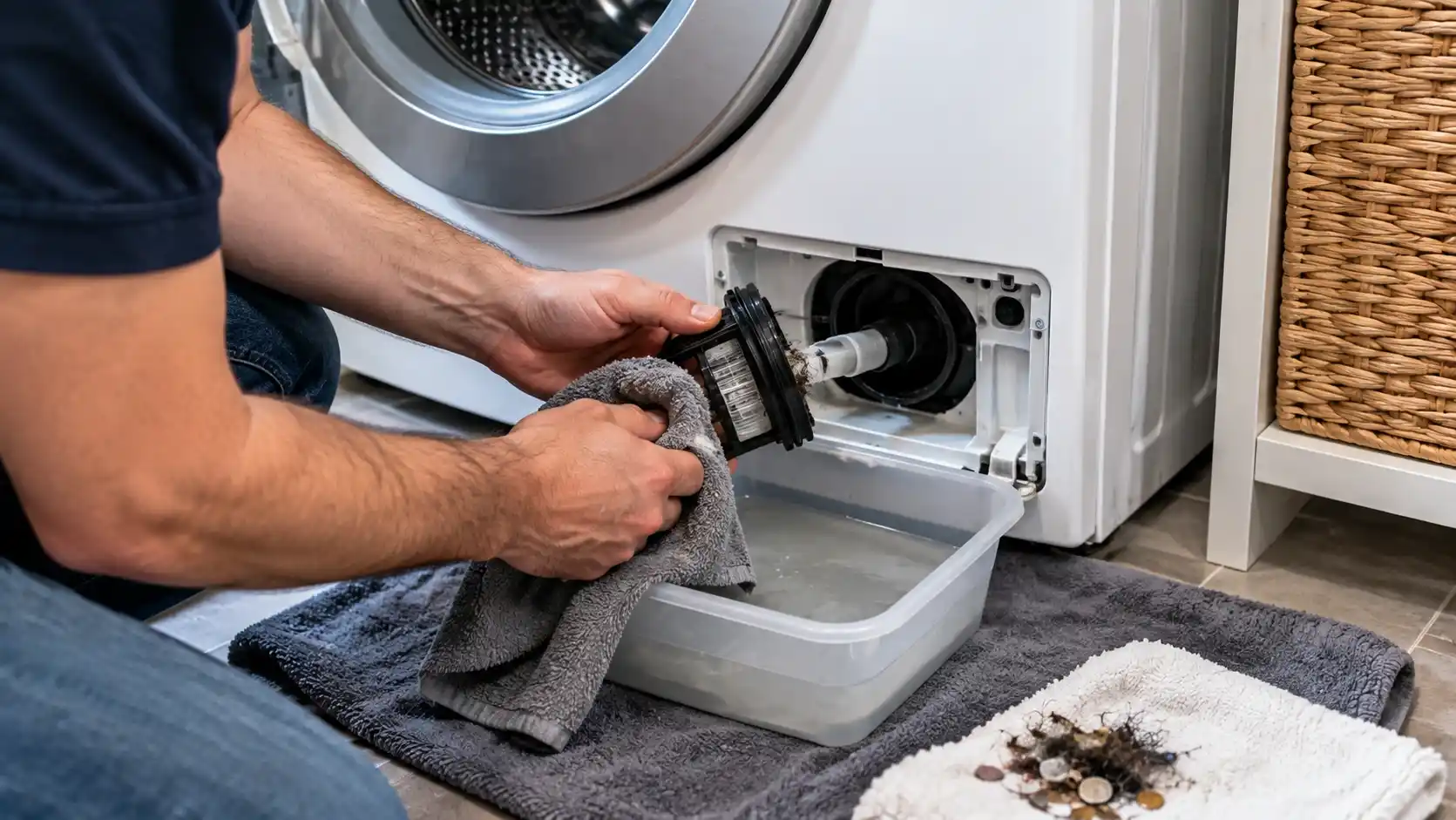
A washing machine drain pump filter can collect lint, coins, buttons, hair, and other debris. If the filter becomes restricted, water may drain slowly or remain inside.
Not every washer has an accessible filter. If yours does, follow the manufacturer’s cleaning instructions and never force a stuck filter.
Look for a Blockage
Small objects can enter the drainage system during washing. Coins and small clothing items can become trapped around the pump.
If the filter is accessible, inspect it carefully. Do not reach blindly into the pump area.
Listen to the Pump
Listen when the washer enters the drain cycle. A humming sound can indicate that the pump is trying to operate. Grinding or rattling may suggest debris or mechanical wear.
Complete silence can point to an electrical, switch, wiring, or control problem.
| Check | What It Tells You | Next Step |
|---|---|---|
| Drain hose | Whether water has a clear exit | Remove visible restriction |
| Pump filter | Whether debris is blocking flow | Clean if manufacturer allows |
| Household drain | Whether plumbing is backing up | Check the drain |
| Pump sound | Whether the pump is operating | Diagnose pump or electrical system |
| Drain-and-spin cycle | Whether drainage and spinning work | Separate drain and spin symptoms |
Washing Machine Not Spinning or Draining
A washing machine not spinning or draining problem can have one underlying cause. Many washers will not enter a high-speed spin while water remains inside.
If the machine cannot drain, solve that issue first. If it drains completely but does not spin, investigate the spin system separately. An unbalanced load can also stop spinning.
Check the Lid Switch or Door Lock
Top-load washers commonly use a lid switch or lock. Front-load washers use a door-lock mechanism.
If the washer cannot confirm that the lid or door is safely closed, it may stop before draining or spinning. Never bypass a safety switch — it is designed to prevent unsafe operation.
Why Is My Washer Not Draining or Spinning?
If you have a washer not draining or spinning problem, do not assume both functions have separate failures. A blocked pump can keep water inside the tub, and the washer may then refuse to spin because the drain stage was never completed.
Top-Load Washer Problems
Check the lid and lid-lock area first. Then inspect the drain hose and any accessible filter. If the washer washes normally but stops before draining, the lid switch, pump, hose, or control system may require testing.
Front-Load Washer Problems
Front-load machines commonly retain water when the drainage path is blocked. Check the emergency drain and pump filter if your model provides them, and confirm that the door closes and locks correctly.
Washing Machine Won’t Drain or Spin
A washing machine won’t drain or spin issue becomes easier to diagnose when you notice exactly when the washer stops. If it fills, washes, and then stops with water inside, investigate drainage. If it drains but never spins, focus on the spin system. This problem can involve the pump, switch, wiring, motor, belt, or control board.
It Hums but Doesn’t Drain
A humming sound often means the pump is attempting to operate. A blockage may be preventing the impeller from moving water. Check the accessible filter and hose first.
It Makes No Sound
Silence during the drain cycle may indicate a failed pump, wiring problem, switch issue, or control fault. This is a good point to stop replacing parts based only on symptoms.
Washing Machine Drain Pump: How to Tell If It’s Bad
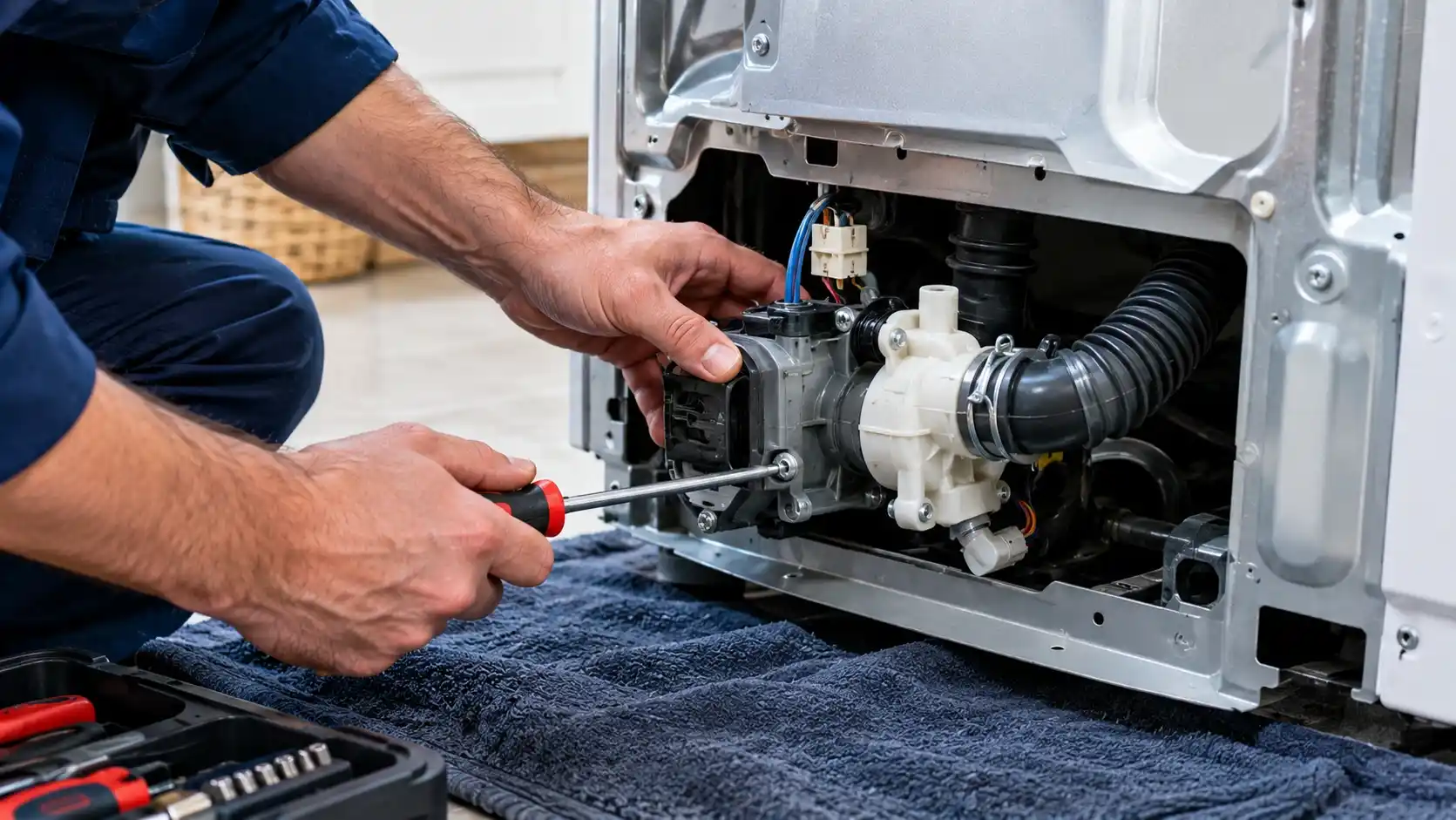
The washing machine drain pump moves water from the tub toward the household drain. A pump can fail mechanically, become blocked, or stop receiving power. That means a washer that will not drain does not automatically need a new pump.
Listen to the pump and check the accessible drainage path first.
Washer Drain Pump
The washer drain pump can wear out over time. Debris may also damage or restrict the impeller. A pump that receives power but cannot move water may need replacement. A pump that receives no power may not be the actual cause.
| Pump Symptom | Likely Possibility | What to Do |
|---|---|---|
| Humming | Blockage or worn pump | Check filter and pump |
| Grinding | Debris or mechanical wear | Inspect pump |
| No sound | Electrical or pump failure | Professional testing |
| Slow drainage | Partial blockage or weak pump | Check complete drain path |
| Intermittent operation | Pump, wiring, or control issue | Diagnose before replacing |
Washing Machine Pump Problems
A washing machine pump problem can be caused by debris, mechanical wear, wiring, or the control system. Replacing the pump without testing can waste money. A technician should determine whether the pump is blocked, mechanically damaged, or simply not receiving the correct electrical signal.
Washing Machine Drain Pump Filter
The washing machine drain pump filter is designed to catch debris before it reaches sensitive pump components. A blocked filter can make the washer appear to have a failed pump — cleaning the filter may solve the problem without replacing any major component.
Washer Won’t Drain or Spin: Other Possible Causes
A washer won’t drain or spin problem may also involve the water-level system, household plumbing, drain hose installation, motor, belt, or control board.
The water-level control helps the washer determine how much water is inside. If it gives incorrect information, the cycle may not operate normally.
A clogged household drain can also cause water to remain inside the washer. In that situation, the washer may be working correctly but cannot discharge water. Incorrect hose height or installation can create drainage problems as well — always use the manufacturer’s installation requirements. For more details contact our washer repair service technician.
Front-Load vs. Top-Load Washer
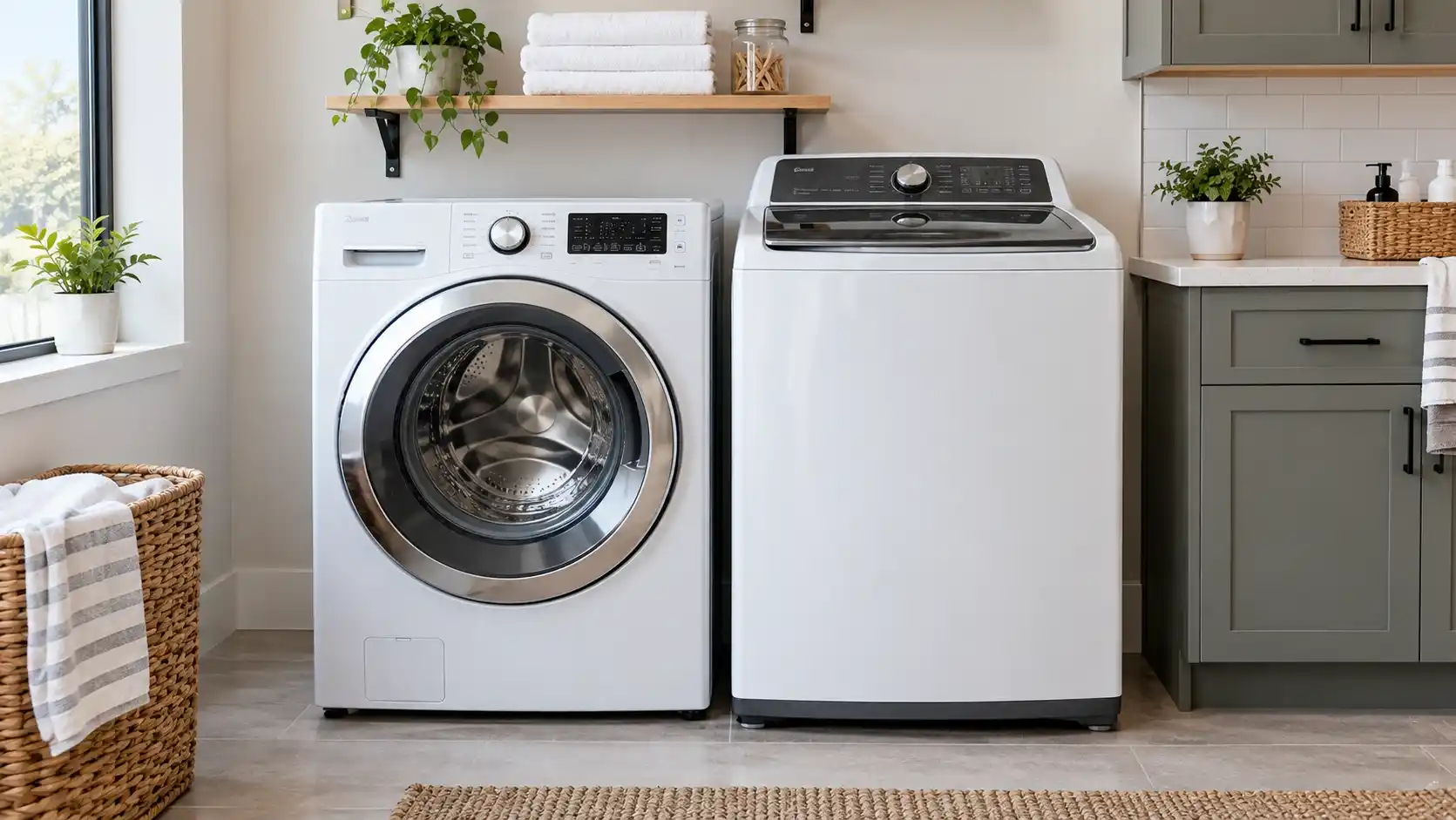
Front-load machines often provide access to a pump filter and emergency drain system. These features can make basic troubleshooting easier. Top-load washers vary more widely — some models have accessible filters, while others require more involved service.
How Do I Force My Washer to Drain?
If your washer has a drain-only or drain-and-spin cycle, use that option first. If it will not drain, follow the manufacturer’s emergency-drain procedure. Do not repeatedly run full cycles with standing water. Disconnect power before cleaning an accessible filter, and prepare towels and a container because water may release quickly.
Can a Clogged Drain Cause a Washing Machine Not to Spin?
Yes. A clogged washer drain or household drain can prevent the machine from completing its cycle. If water remains in the tub, many washers will not proceed to normal high-speed spinning. Confirm that the machine drains completely before replacing spin-related parts.
Is It Worth Repairing a Washing Machine That Won’t Drain?
Usually, a drainage problem is worth diagnosing before replacing the washer. The cause could be a clogged filter, blocked hose, foreign object, or pump problem. The cost decision depends on the washer’s age, condition, repair cost, and expected remaining life.
What Should You Check First When Your Washer Won’t Drain?
Start with the drain hose. Check for kinks and visible restrictions. Then check the household drain and the accessible pump filter if your model has one. Listen during the drain cycle — a humming pump, grinding noise, or silence can help identify the next diagnostic step.
When Should You Stop Troubleshooting?
Stop if the next step involves electrical testing, internal wiring, difficult panel removal, or components you cannot identify safely.
Also stop if you notice burning smells, damaged wiring, water leaking from unusual locations, or repeated breaker trips.
When to Call an Appliance Repair Technician
If the washer still has water inside after checking the hose and accessible filter, professional diagnosis may be needed.
A technician can test the pump, switches, wiring, controls, and other components. This helps prevent unnecessary part replacement. A new pump will not fix a blocked household drain. A new lid switch will not repair a damaged pump.
The goal is to find the actual cause before recommending a repair.
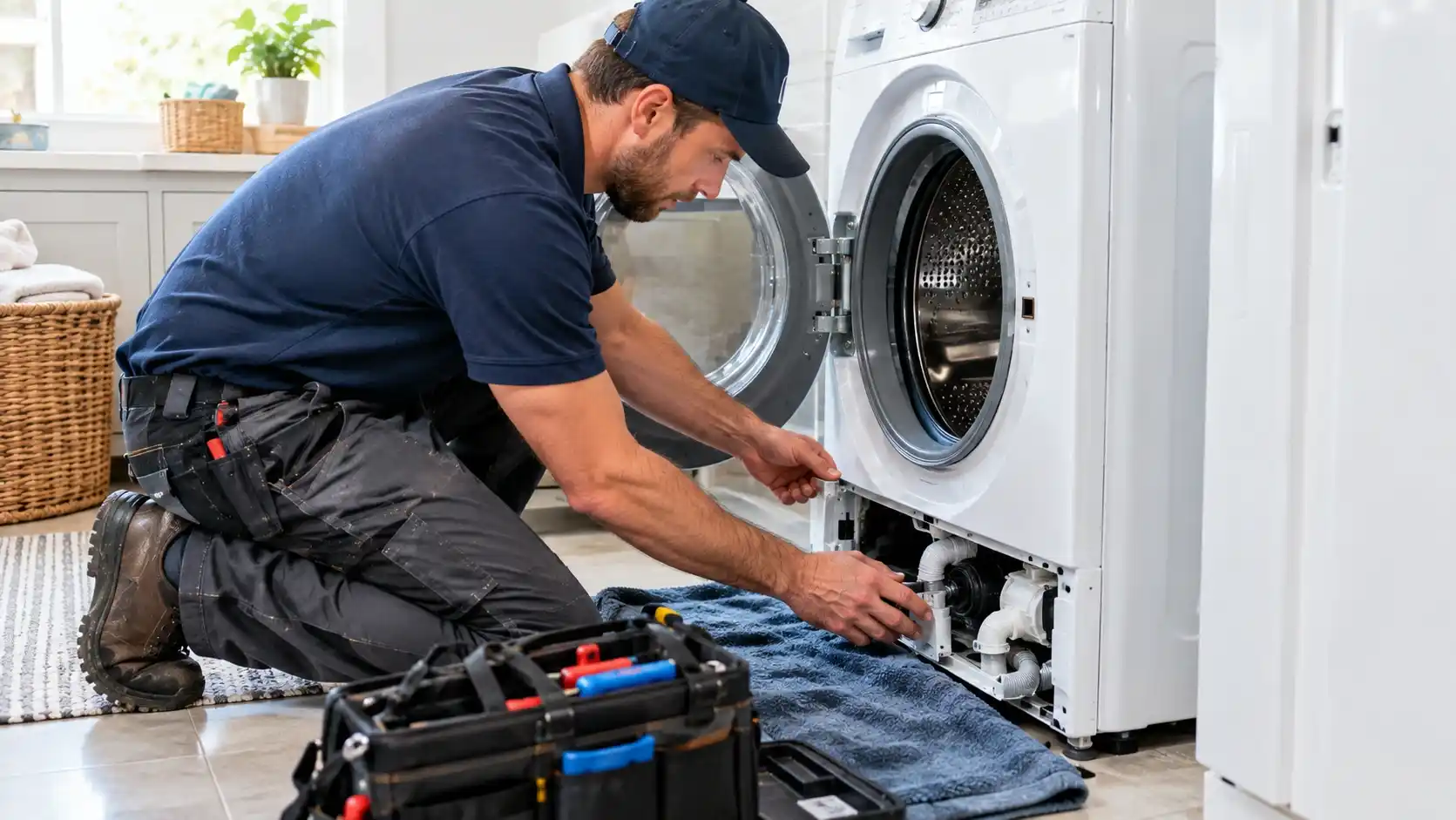
Washing Machine Not Draining in Bend, OR
For Bend homeowners, a broken washer can quickly become a household headache. Laundry does not stop just because the machine does.
Whether you are near downtown Bend, the Old Mill District, or another part of the area, getting the problem diagnosed correctly can save time.
A washing machine not draining problem may be caused by something as simple as debris in the filter. It may also require pump or electrical diagnosis. If basic troubleshooting does not restore normal drainage, contacting a local appliance repair professional is the safest next step.
Why Choose Appliance Repair Bend OR?
A good appliance repair service should diagnose the problem before recommending parts. For drainage issues, that means checking the hose, filter, pump, plumbing connection, and relevant electrical components.
The goal is simple — find the problem, explain the repair, and help the homeowner make an informed decision.
Testimonials
Genuine customer experiences can strengthen trust when they are specific and verifiable.
Accurate Diagnosis
The strongest reviews explain the problem, diagnosis, repair, and outcome in the customer’s own words.
No Unnecessary Parts
Homeowners value technicians who test before replacing components like the pump or lid switch.
Fast Local Response
Same-day appointments help Bend homeowners get laundry back on track quickly.
Awards & Recognition
Add only verified awards, certifications, memberships, or professional recognition. Avoid unsupported claims about being the “best” or “number one” appliance repair company. Specific and verifiable information builds more trust with homeowners.
Case Studies: Real Washer Drainage Problems We Solved
Use actual jobs and verified details. Do not create fictional customer stories — replace the examples below before publishing.
Blocked Drain Pump Case Study
The problem: A Bend homeowner’s washer stopped mid-cycle with standing water inside.
The diagnosis: The technician found debris blocking the drain pump filter.
The result: Clearing the blockage restored normal drainage and spinning.
Drains But Won’t Spin Case Study
The problem: A washer drained completely but would not enter the spin cycle.
The diagnosis: The technician identified a faulty lid switch preventing spin.
The result: Replacing the switch restored normal cycle completion.
Frequently Asked Questions
Why is my washing machine not draining or spinning?
A washer may refuse to spin because it has not completed the drain cycle. Check the drain hose, accessible filter, and household drain first. If it drains normally, investigate the lid switch, door lock, motor, belt, or control system.
How do I know if my washing machine drain pump is bad?
A humming pump that cannot move water may have a blockage or mechanical problem. Grinding can indicate debris or wear. A silent pump may have an electrical or control issue. Testing is needed before confirming pump failure.
Why does my washer fill with water but not drain?
The most common possibilities include a restricted hose, clogged filter, blocked pump, foreign object, or household drain problem. Start with the simple external checks before moving to internal repairs.
A washing machine not draining does not always mean you need a new appliance. Start with the drain hose, filter, pump symptoms, and household drain. If those checks do not identify the cause, professional diagnosis can save time and prevent unnecessary parts replacement.
Need Help Diagnosing a Washer That Won’t Drain?
If basic troubleshooting hasn’t solved the problem, our technicians can find the actual cause and give you a clear repair estimate before any work begins.