How Long Do Appliances Last? Lifespan Guide for Bend, OR Homes
Every homeowner eventually asks how long appliances last before a repair stops making sense. This guide gives you the typical lifespan of each major appliance, what shortens that life in Central Oregon, and how to decide between repair and replacement.

Start Here: What “Appliance Lifespan” Really Means
When people ask how long appliances last, they usually want one of two answers. The first is a planning number: how many years can I expect before this machine needs replacing? The second is a repair question: my appliance is ten years old and acting up — is it worth fixing?
Both answers come from the same place. Every appliance type has a typical service life — a range of years during which most units of that type keep running with normal maintenance. A refrigerator that dies at year six is an early failure. One that hums along at year fourteen is living on borrowed time, even if it still cools fine today.
These ranges are not guarantees. Two identical machines bought the same week can live very different lives. Usage, maintenance, water quality, and even where the machine sits in your home all shift the outcome. That is why this guide covers both the numbers and the factors behind them — so you can judge where your own appliances fall on the curve.
This guide is written for homeowners in Bend, Oregon and the surrounding Central Oregon area. Along with the typical lifespans, it covers the local conditions — hard water, high-desert dust, and seasonal temperature swings — that quietly shorten appliance life here, and the maintenance habits that push it back out.
One more thing worth knowing before the numbers: build quality varies more than brand names suggest. Within any major brand, the base models with mechanical controls and fewer features tend to outlast the flagship models loaded with sensors, touchscreens, and Wi-Fi. Every added electronic system is another potential failure point. That does not mean you should avoid modern features — just understand the trade-off. A simpler machine, maintained well, is often the longest-lived machine in the house.
Usage intensity matters as much as build quality. Appliances are generally engineered around average household use — a few dishwasher cycles a week, a handful of laundry loads, normal cooking. A large family that runs the dishwasher daily and does laundry twice a day will wear machines faster than those averages assume. If your household is on the heavy-use end, mentally shift every range in this guide down by a year or two, and be extra consistent with the maintenance habits in the checklist section.
Table of Contents — Tap to Jump to a Section
How Long Do Appliances Last? The Short Version
Most major home appliances last between 9 and 15 years with normal use and basic maintenance. Refrigerators, washers, dryers, and ranges cluster around 10 to 14 years. Dishwashers and microwaves tend to run shorter, around 7 to 12 years. Garbage disposals often reach about 12 years.
Here is the full picture at a glance:
| Appliance | Typical Lifespan | What Wears Out First |
|---|---|---|
| Refrigerator | 10–13 years | Compressor, ice maker, door seals |
| Top-load washer | 10–14 years | Belts, pump, suspension |
| Front-load washer | 10–12 years | Door gasket, bearings, pump |
| Dryer (electric or gas) | 10–13 years | Heating element, drum rollers, belt |
| Dishwasher | 9–12 years | Pump, spray arms, racks |
| Gas range | 13–15 years | Igniter, oven sensor |
| Electric range | 12–15 years | Heating elements, control board |
| Microwave | 7–10 years | Magnetron, door switches |
| Garbage disposal | 10–12 years | Motor, internal seals |
These are industry-typical ranges, not warranties. A well-maintained machine routinely outlives the top of its range, while a neglected one can fail years early. The sections below explain what moves your appliances up or down that scale.
Refrigerator: 10 to 13 Years
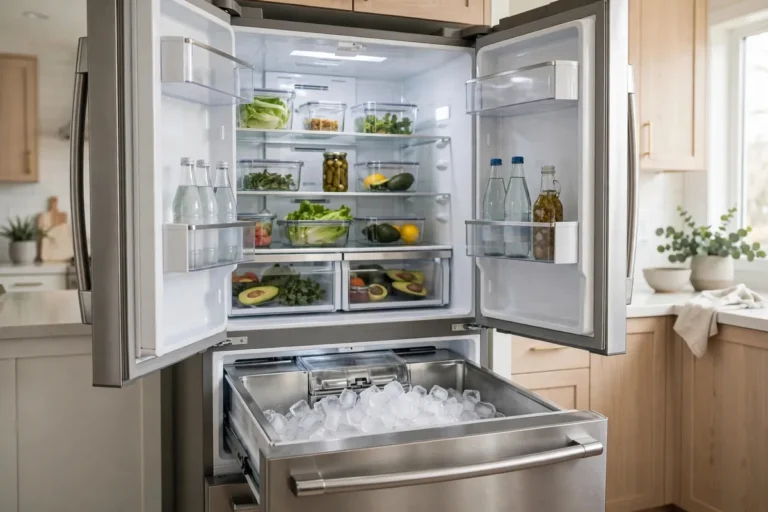
Your refrigerator works harder than any other appliance in the house. It runs around the clock, every day of the year, cycling its compressor on and off thousands of times. Most refrigerators last 10 to 13 years, and simpler models without ice makers or water dispensers often land at the top of that range.
The parts that usually fail first are the ones with moving pieces or constant thermal cycling. The compressor is the heart of the system, and while it is built to last, it eventually wears out. Ice makers are a close second — their small motors, valves, and plastic gears see a lot of action and tend to need attention well before the fridge itself gives up. Door gaskets harden and crack with age, letting cold air escape and forcing the compressor to run longer.
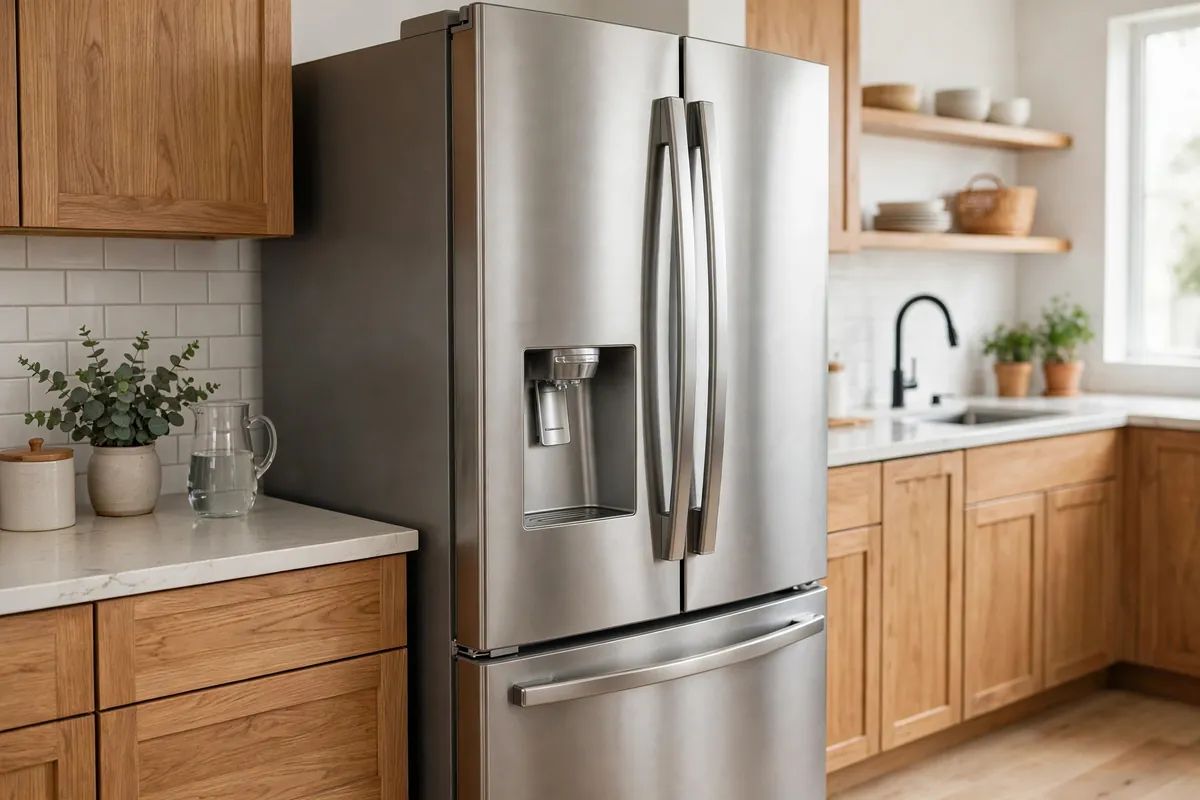
What helps a refrigerator reach the long end of its range is mostly about heat. The condenser coils release the heat the fridge pulls from inside. When those coils are caked with dust and pet hair, the compressor works harder and runs hotter on every cycle. Cleaning the coils once or twice a year is the single highest-value maintenance task for any refrigerator. Keeping the fridge reasonably full also helps, since cold food holds temperature better than cold air.
Refrigerator style affects longevity too. Basic top-freezer models are the simplest design and often the longest-lived, since they have the fewest parts to fail. French-door and side-by-side models add ice makers, water dispensers, and dual evaporators — all convenient, all additional failure points. If long service life is your priority over features, simpler wins. That said, the difference is a few years, not a decade, and any style lasts well when maintained.
Placement matters as well. A refrigerator crammed into a tight alcove with no airflow around the back runs hotter than one with a few inches of clearance. Garages are a special case in Central Oregon: summer heat makes the compressor work overtime, and winter cold can confuse the thermostat on older single-thermostat models. If your fridge lives in the garage, expect it to land at the lower end of its range.
Watch for the warning signs that the end is near. Food spoiling faster than it used to, the compressor running almost constantly, a steady rise in your electric bill, or repairs stacking up within a single year all point toward replacement rather than another repair. A fridge that needs a sealed-system repair — compressor or refrigerant work — past year ten is usually a replace candidate.
Washer and Dryer: 10 to 14 Years
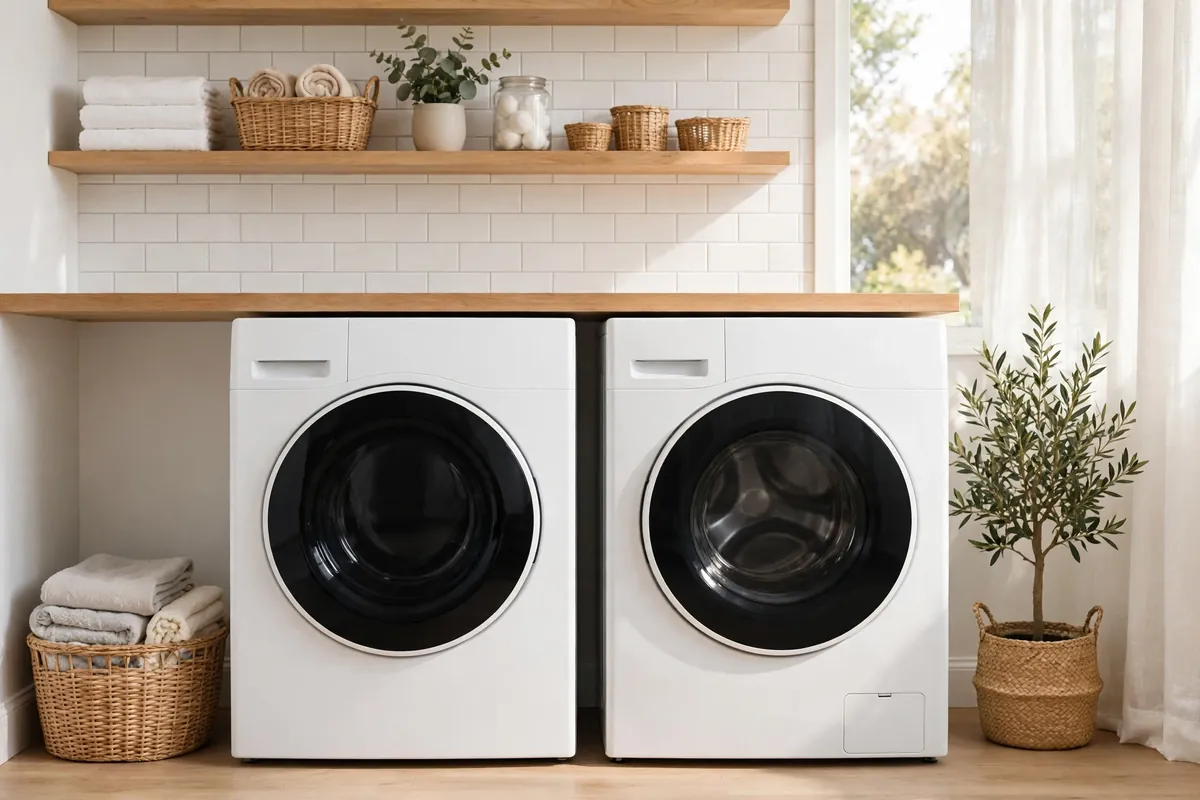
Washing machines and dryers live roughly the same length of life — 10 to 14 years for most models. Top-load washers tend to outlast front-loaders slightly, because they have fewer complex parts: no heavy door gasket to maintain, no high-speed spin bearings under the same stress. That said, a well-kept front-loader easily reaches a decade or more.
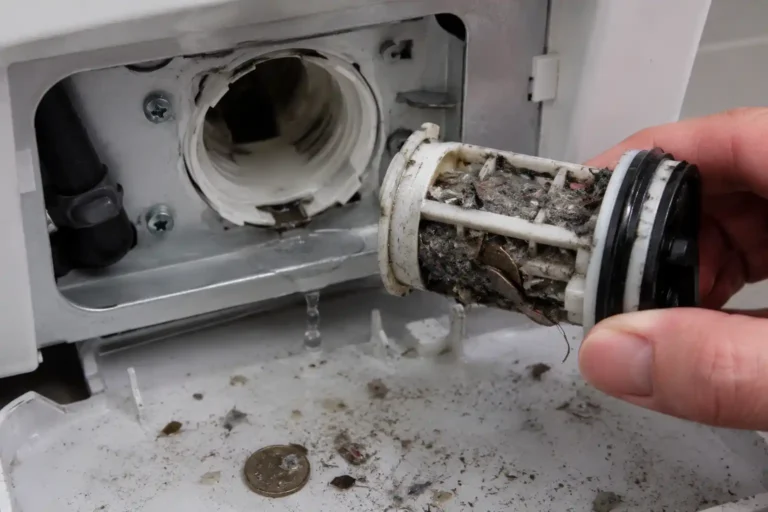
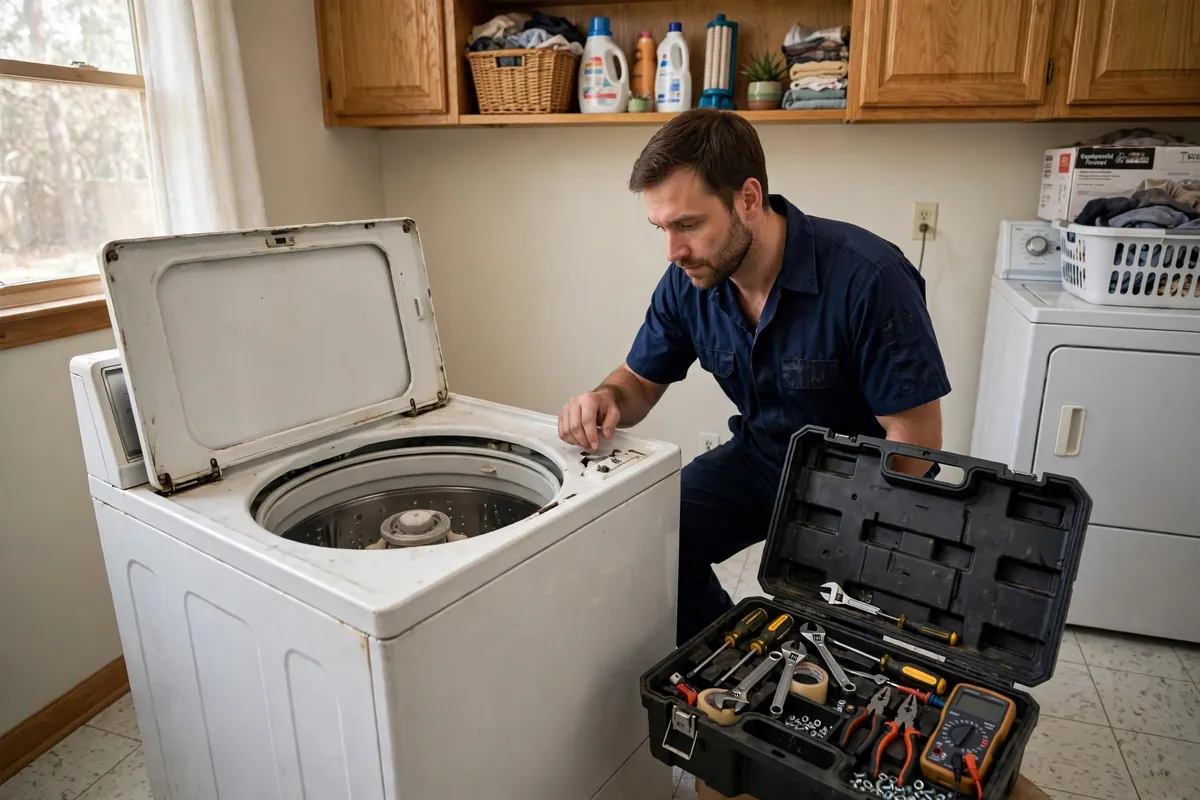
In washers, the first things to wear are usually the drive belt, the drain pump, and the suspension system that keeps the drum balanced. Front-loaders add the door gasket to that list — it stays damp between loads and is the classic spot for mold and mildew. Overloading is the fastest way to shorten a washer’s life. Heavy, unbalanced loads strain the bearings and suspension on every spin cycle, and that damage is cumulative.
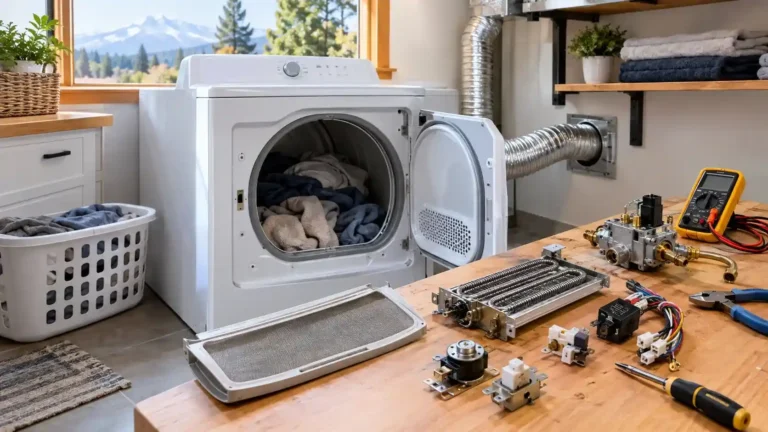
Dryers are mechanically simpler, which is why they often outlive the washer they were bought with. The heating element, drum support rollers, and drive belt are the usual wear items. The real lifespan killer for dryers is restricted airflow. A clogged vent forces the machine to run hotter and longer, cooking its own components. Cleaning the lint trap after every load and having the vent line cleaned regularly does more for dryer longevity than anything else.
Household size matters more for laundry machines than for any other appliance. A family running two loads a day puts three to four times the cycles on a washer compared to a single person doing laundry twice a week. If your machines see heavy daily use, expect them to land at the lower end of the range — and budget for wear parts like belts and pumps along the way.
Detergent choice plays a quieter but real role. High-efficiency washers need HE detergent in the right amount — too much creates excess suds that strain the pump and leave residue that feeds mold in front-loaders. That residue does not just smell bad; it gunks up sensors and seals over time. Measuring detergent instead of eyeballing it is a small habit with a real lifespan payoff.
For dryers, the vent run itself is part of the lifespan equation. Long vent runs with multiple bends restrict airflow even when clean, making the dryer work harder on every load. If your dryer vents across the house to a far wall, consider having the run shortened or rerouted when possible, and have it professionally cleaned at least once a year. A dryer that breathes easily is a dryer that lasts.
Dishwasher: 9 to 12 Years
Dishwashers have one of the shorter lifespans in the kitchen — typically 9 to 12 years. They combine hot water, harsh detergent, food debris, and constant moisture in a sealed box, which is a demanding environment for pumps, seals, and electronics. Hard water shortens that range further, and Central Oregon water runs moderately hard.
The drain pump and circulation pump do the heaviest work and are the most common major failures. Spray arms clog and wear, racks rust where the coating chips, and the door gasket eventually stops sealing. Control boards can fail too, especially after power surges — a real consideration in areas with frequent outages.
Maintenance makes a genuine difference here. Cleaning the filter monthly, running a hot vinegar cycle to dissolve scale, and using the right amount of detergent all reduce the strain on the pump and heating element. Dishes that come out consistently dirty or a machine that leaves standing water are early warnings worth acting on, since a struggling pump only gets worse.
One practical note: dishwasher racks are expensive to replace, and a machine with rusted-through racks plus a tired pump is usually telling you it is done. When two significant parts fail within a year of each other on a machine past year nine, replacement is the sensible call.
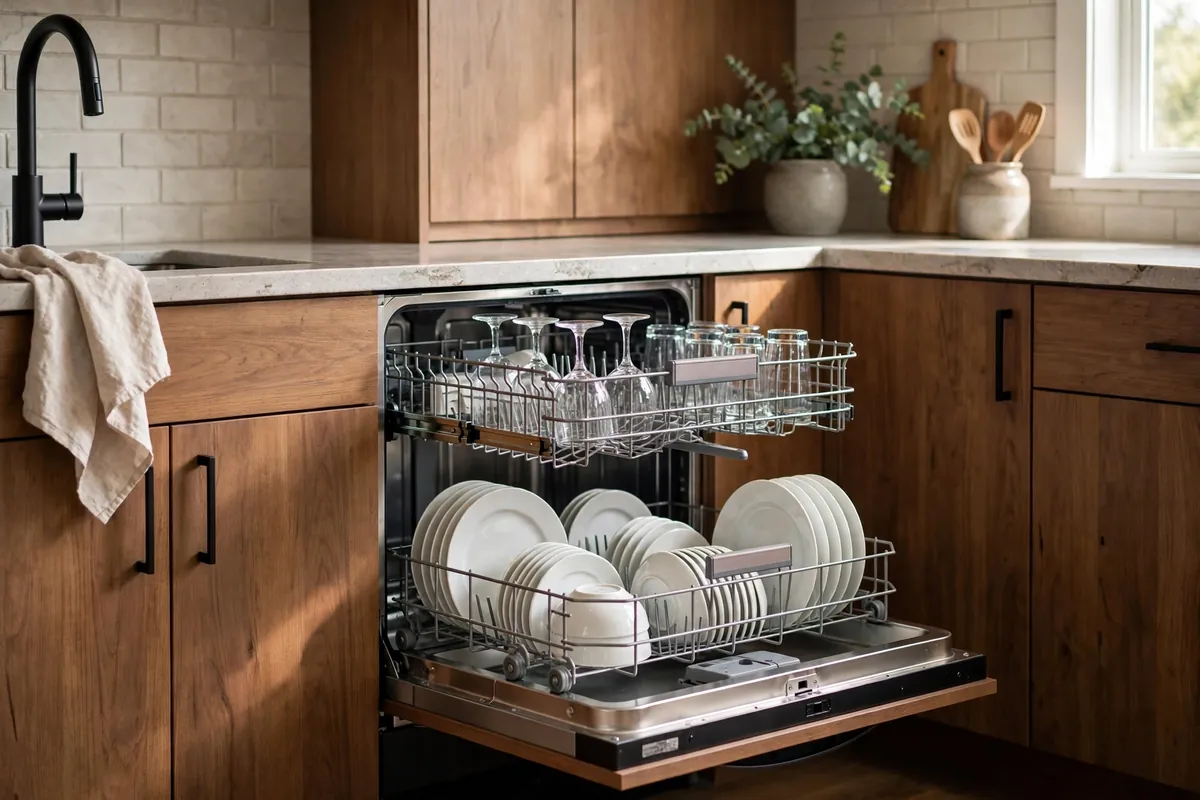
Range, Oven, and Microwave
Ranges and ovens are among the longest-lived appliances in the home. Gas ranges typically last 13 to 15 years, and electric ranges run 12 to 15 years. They have relatively few moving parts — no pumps, no motors under constant load — so their failures tend to be individual components rather than systemic wear. Igniters on gas models and heating elements or control boards on electric models are the usual repairs, and most of those are worth doing even on an older unit.
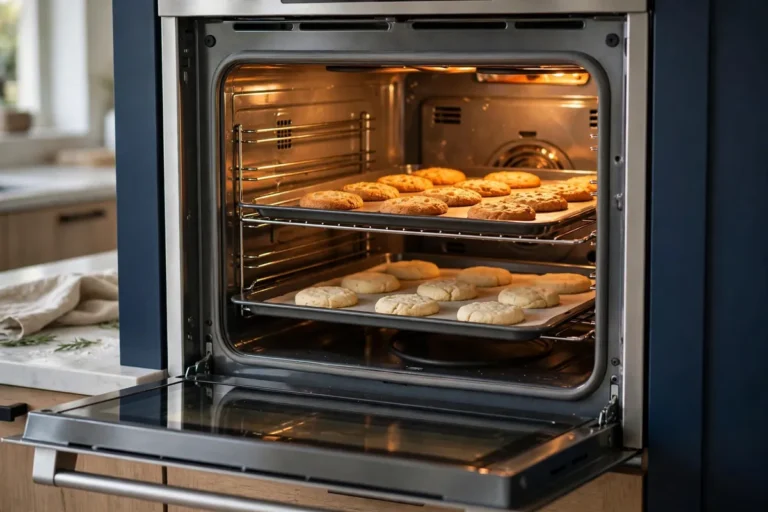
What shortens a range’s life is mostly neglect and heat damage. Grease buildup around burners can damage igniters and clog gas ports. Self-clean cycles run the oven extremely hot, which is effective but hard on electronic controls — using the self-clean feature sparingly, and never right before a big cooking event, is a reasonable precaution.
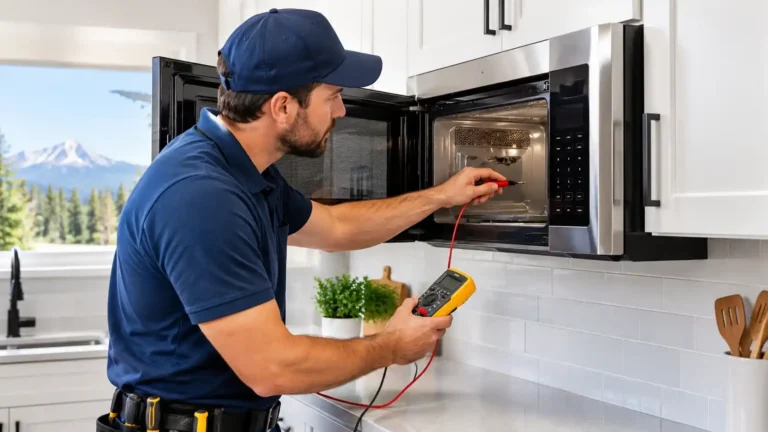
Microwaves sit at the other end of the scale: 7 to 10 years is typical. The magnetron — the component that generates the microwaves — has a finite life, and when it goes, the repair usually costs close to the price of a new unit. Door switches and the turntable motor are smaller failures that are worth fixing. If your microwave is past year eight and the magnetron fails, replace it rather than repair it.
A microwave that sparks, though, deserves immediate attention regardless of age — that can be a waveguide cover issue or something more serious, and it is a fire risk until checked. When in doubt, unplug it and have it looked at.

What Shortens Appliance Life in Central Oregon
Three local conditions quietly take years off appliance life around Bend and Redmond. None of them are dramatic on their own, but together they explain why identical machines sometimes last noticeably longer in other parts of the country.
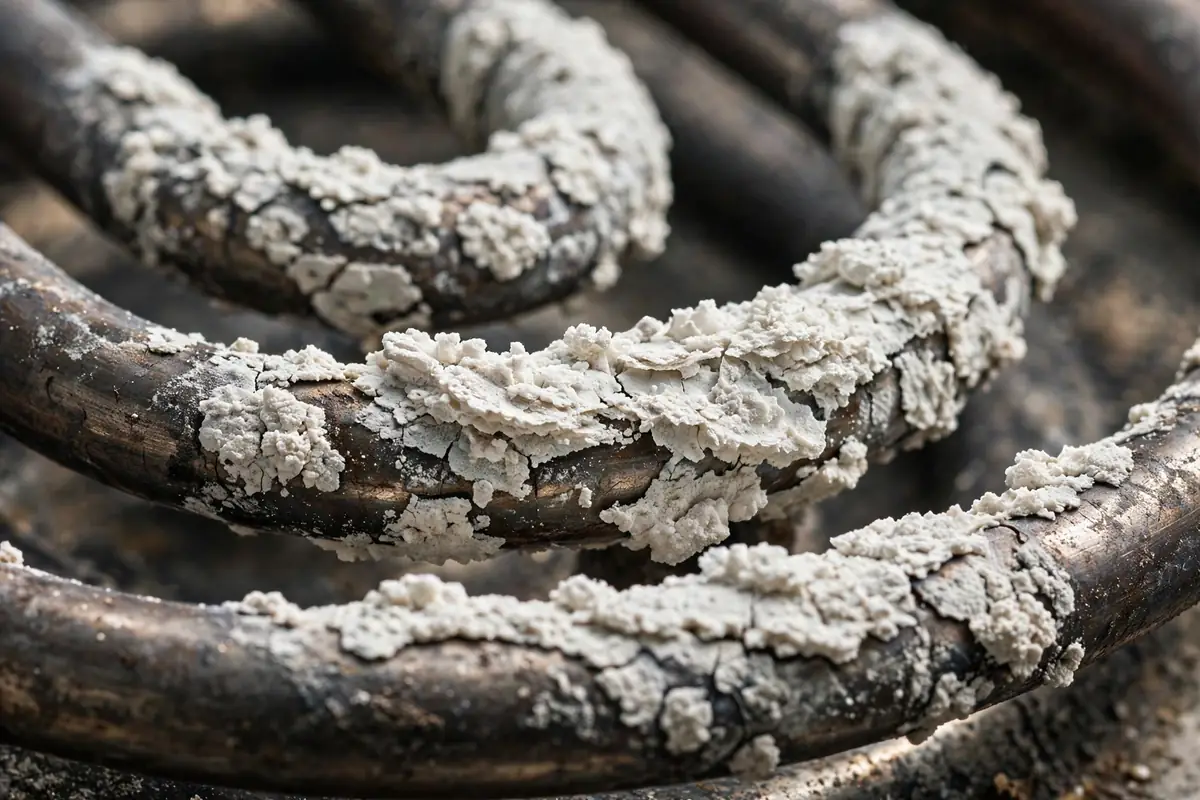
Hard water. Central Oregon’s water carries meaningful levels of dissolved minerals, and homes on private wells see the heaviest content. Scale builds up on dishwasher heating elements, washing machine inlet valves, ice maker water lines, and water heater components. That mineral layer insulates heating elements — forcing them to run hotter to do the same job — and clogs the small passages in valves and spray arms. Monthly descaling habits and rinse aids are not cosmetic here; they directly extend component life.
High-desert dust. Fine dust gets into everything, including refrigerator condenser coils, dryer vent terminations, and the backs of ranges. Dusty coils are the number one reason compressors run hot and die early. In dusty homes, coil cleaning twice a year beats the standard annual recommendation.
Power quality. Seasonal storms and rural grid infrastructure mean voltage sags and surges are more common here than in dense metro areas. Modern appliances are full of electronic control boards that are sensitive to both. A whole-house surge protector is inexpensive insurance for every appliance with a circuit board — which today means nearly all of them.
The good news: all three factors respond to simple habits. Descale regularly, clean coils and vents on schedule, and protect against surges, and your appliances will land at the top of their lifespan ranges instead of the bottom.
Seasonal temperature swings add a fourth, subtler factor. Central Oregon sees real winter cold and real summer heat, and appliances in unconditioned spaces feel both. A washing machine in a cold garage faces freezing risk in its hoses and pump — one hard freeze can crack a pump housing and end the machine. A refrigerator in a hot garage in August runs its compressor nearly nonstop. If any appliance lives outside your home’s conditioned space, that placement alone can cost it years. Moving it inside, or at least insulating the space, is worth considering.
Water heaters deserve a mention here too, since hard water hits them hardest of all. A tank water heater in Central Oregon typically lasts 8 to 12 years, and sediment buildup on well water can push that lower. Annual flushing removes the sediment that insulates the bottom of the tank and forces the burner or elements to overwork. It is a twenty-minute job that directly adds years.
7 Habits That Add Years to Your Appliances
None of these take more than a few minutes. Together, they are the difference between replacing at year nine and replacing at year fourteen.
The reason these small habits matter so much is that most appliance wear is cumulative and invisible. You never see the compressor running two degrees hotter because of dusty coils. You never feel the extra strain on washer bearings from one overloaded cycle. The damage adds up silently for years, and then the machine fails “suddenly” — when in fact it has been degrading the whole time.
Think of it like changing the oil in your car. Nobody questions that habit, because everyone understands engines wear. Appliances are the same: a few minutes of routine care, done consistently, is what separates the machines that die at year nine from the ones still running strong at year fourteen.
Repair or Replace? The 50% Rule
When an aging appliance breaks, use this simple test before you decide.
| Situation | Usually the Right Call | Why |
|---|---|---|
| Appliance under half its typical lifespan, one failed part | Repair | Plenty of service life remains; the fix restores years of use |
| Repair costs less than half the price of a new unit | Repair | The economics favor keeping the machine running |
| Appliance past 75% of its lifespan and the repair is major | Replace | Other components are likely to follow; good money after bad |
| Repair costs more than half the price of a new unit | Replace | You pay most of new-machine money for an old machine |
| Sealed-system failure (compressor, refrigerant) on an old fridge | Replace | The most expensive repair on a machine with little life left |
| Two major failures within a year on an aging machine | Replace | A pattern of failure, not a single bad part |
Example: your 11-year-old dryer needs a $180 belt and roller job. A comparable new dryer costs far more than twice that, and the machine is within its typical range. Repair it. But if your 12-year-old refrigerator needs a $600 sealed-system repair, replacement is the smarter money.
There is one more factor the 50% rule does not capture: energy efficiency. A fifteen-year-old refrigerator can use significantly more electricity than a modern equivalent. If your old machine still runs but your power bills keep climbing, the math sometimes favors replacement even when a repair would be cheap. The same applies to an ancient dryer that takes two cycles for every load — you are paying for that extra runtime every single week.
That said, do not replace a working machine purely on efficiency guesses. The greenest and cheapest appliance is the one you already own, kept running with maintenance. Replace when the machine is failing, when repairs stop making economic sense, or when its energy appetite is genuinely painful — not because a salesperson told you new is always better.
And keep the receipt timeline in mind when you do buy. Note the purchase date somewhere you will find it — a photo of the receipt in your phone, a note on the calendar. When that machine starts acting up eight years later, knowing its exact age turns a guessing game into a straightforward decision.
Garbage Disposal and Smaller Appliances
Garbage disposals typically last 10 to 12 years. They are simple machines — essentially a motor spinning a grinding plate — but they live a hard life. Everything you put down the drain passes through them, including the things that should never go down a disposal in the first place. Grease is the worst offender: it coats the grinding chamber, traps food particles, and eventually restricts the mechanism until the motor strains and burns out.
The internal seals are usually what end a disposal’s life. When a disposal starts leaking from the bottom of the unit itself — not from a hose connection or the sink flange, but from the housing — the internal seal has failed, and there is no practical repair. That leak is the disposal’s retirement notice. Frequent jams that need the reset button every week are another end-of-life signal, as is a motor that hums but can no longer turn the plate even after clearing.
What extends a disposal’s life is mostly about what you feed it. Cold water during and after grinding keeps grease solid so it washes through instead of coating the chamber. Small amounts at a time, rather than stuffing the chamber full, keep the motor from straining. And the obvious list — no bones, no coffee grounds in quantity, no fibrous vegetables like celery, no starchy foods like potato peels that turn to paste — prevents the jams that overheat motors.
Smaller countertop appliances follow their own curves. A microwave’s 7 to 10 years was covered above. Standalone freezers, which run steady and simple cycles without daily door openings, often reach 12 to 20 years — among the longest of any home appliance. Range hoods and exhaust fans typically last around 14 and 10 years respectively, with the fan motor being the usual failure point. These smaller machines rarely justify expensive repairs; when a countertop microwave’s magnetron dies at year nine, replacement is the obvious answer.
The pattern across all of these is the same one you have seen throughout this guide. Simple machines with few moving parts last longer. Machines that handle water, heat, and food debris wear faster. And in every category, the machines that get basic maintenance — cleaning, descaling, not overloading — land at the top of their range while neglected ones land at the bottom.
How to Tell an Appliance Is Near the End
Age alone does not condemn a machine. These are the specific symptoms that tell you a repair is buying months, not years.
Refrigerator: the compressor runs nearly all the time, food spoils before its date, frost builds up in odd places, or you hear loud clicking as the start relay repeatedly tries and fails. Any one of these on a fridge past year ten deserves a hard look at replacement.
Washer: loud banging on spin even with balanced loads, water that will not fully drain, or a drum that feels loose when you push it by hand. Bearing failure in particular is a terminal diagnosis on most machines — the part is expensive and the labor is extensive.
Dryer: clothes need two full cycles to dry with a clean vent, the drum does not tumble, or you smell burning. A dryer that cannot dry is not doing its one job, and repeated heating-element failures suggest the machine is cooking itself.
Dishwasher: dishes come out dirty after a filter cleaning, standing water remains after the cycle, or the racks are rusting through. A dishwasher with both a tired pump and deteriorated racks is done — fixing one leaves you with the other.
Range and oven: uneven baking that calibration cannot fix, burners that will not light reliably, or a control panel with dead buttons. Individual elements and igniters are worth replacing; a failing control board on a twelve-year-old range is usually not.
Microwave: it runs but does not heat, sparking that persists after cleaning the waveguide cover, or a door that no longer latches firmly. A microwave that does not heat has a dead magnetron, and that repair rarely pencils out.
Garbage disposal: leaking from the bottom housing, frequent need for the reset button, or a motor that hums but will not spin after clearing jams. All three mean the motor or seals are finished.
The two-failure rule: any appliance that needs two significant repairs within twelve months is telling you its components are failing as a group, not as individuals. That pattern almost never reverses. Put the repair money toward the replacement instead.
When Should You Call a Technician?
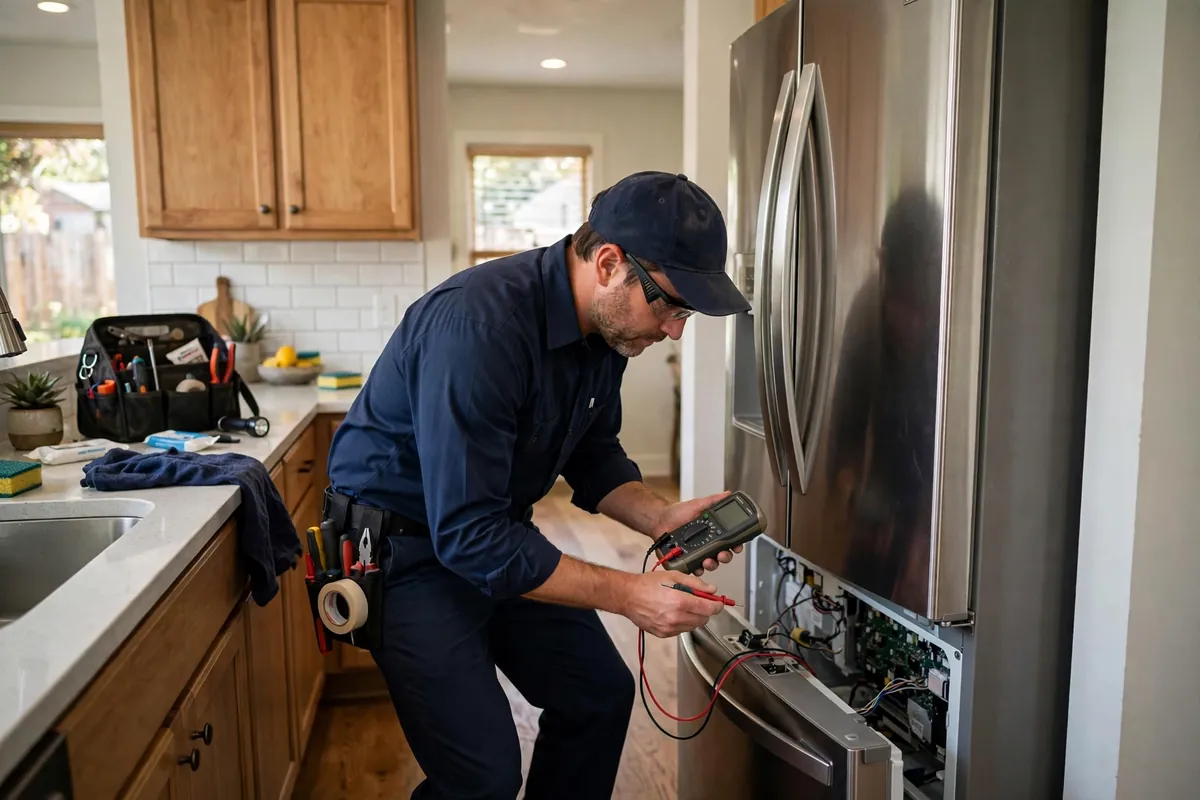
Call a technician when an appliance is underperforming and you cannot trace it to a simple maintenance cause. A fridge that runs constantly despite clean coils, a washer that walks across the floor when level, a dryer that takes two cycles with a clear vent — those are diagnostic situations, not cleaning tasks.
A professional assessment is especially valuable at the repair-or-replace boundary. A technician can tell you whether that ten-year-old dishwasher needs a $150 pump or has a failing control board that will cascade into more repairs. That honest diagnosis — and an upfront estimate before any work begins — is exactly what keeps you from spending repair money on a machine that should be replaced.
For homeowners in Bend, getting that assessment early matters. Catching a failing part while the rest of the machine is healthy is what turns a mid-life repair into three more years of service instead of a premature replacement. If you are unsure which side of the line your appliance falls on, get a free estimate and let a technician look at it.
One last piece of advice: keep a simple log for each major appliance — purchase date, any repairs, and the maintenance you do. When something acts up years later, that log turns a vague “I think it’s about ten years old” into a confident decision. The homeowners who get the most life from their appliances are rarely the ones who bought the most expensive machines. They are the ones who paid attention.
Frequently Asked Questions About Appliance Lifespan
How long do appliances last on average?
Most major appliances last 9 to 15 years. Refrigerators, washers, and dryers typically run 10 to 14 years, dishwashers 9 to 12 years, ranges 12 to 15 years, and microwaves 7 to 10 years with normal use and basic maintenance.
Do expensive appliances last longer?
Often, but not always. Higher-end models may use better components, but the biggest factors are still usage and maintenance. A mid-range machine that is cleaned and maintained regularly usually outlasts a premium machine that is neglected.
What shortens appliance life the most?
Neglected maintenance tops the list: dirty refrigerator coils, clogged dryer vents, and never-cleaned dishwasher filters. After that come overloading washers, hard water scale, and power surges damaging control boards.
Is it worth repairing a 10-year-old appliance?
It depends on the repair cost and the machine. Use the 50% rule: if the repair costs less than half the price of a new unit and the appliance is within its typical lifespan, repair usually makes sense. Get an upfront estimate first.
Do appliances last as long as they used to?
Many people feel older machines lasted longer, and there is some truth to it — modern appliances have more electronics and sensors, which add convenience but also more potential failure points. Good maintenance matters more now than ever.
How does hard water affect appliance lifespan?
Hard water leaves mineral scale on heating elements, valves, and spray arms, forcing components to work harder and wear faster. In Central Oregon, regular descaling meaningfully extends the life of dishwashers, washers, and ice makers.
Should I replace all my kitchen appliances at once?
Not necessarily. Replace each appliance on its own timeline unless you are remodeling. Staggering replacements spreads the cost and lets each machine live out its full useful life.
What is the first thing to fail on most appliances?
The parts that move, heat, or pump: refrigerator compressors and ice makers, washer pumps and belts, dryer heating elements and rollers, and dishwasher pumps. Seals and gaskets also degrade with age across every appliance type.
Appliance Repair in Bend, OR
Knowing how long appliances last helps you plan — but when one breaks down before its time, fast professional repair is what gets you back on track. We diagnose the actual failed part, give you an upfront estimate, and tell you honestly when a machine is worth fixing versus replacing.
We serve homeowners throughout Bend — including Northwest Crossing, Awbrey Butte, Boyd Acres, Larkspur, River West, Mountain View, Summit West, Orchard District, and Southern Crossing — as well as appliance repair in Redmond, Oregon and surrounding Central Oregon communities. Same-day appointments are available, and every repair is backed by our 90-day warranty.
Final Takeaway
Most appliances give you 9 to 15 years of service, and where yours lands in that range is largely up to maintenance. Clean the coils, clear the vents, descale for hard water, and do not overload the washer — those four habits alone add years.
When something does fail, the 50% rule keeps the repair-or-replace decision simple. And when you are unsure, a professional diagnosis with an upfront estimate costs you nothing and can save you from replacing a machine that had years left in it.
Appliance Acting Up Before Its Time?
Do not guess whether it is worth fixing. Our technicians will diagnose the real problem, give you a clear upfront estimate, and tell you honestly if repair or replacement is the smarter move.