Microwave Repair Cost: Can a Microwave Oven Be Repaired?
Yes, a microwave oven can often be repaired, depending on the problem, age, condition, and microwave repair cost. This guide explains common problems, safe troubleshooting, repair costs, and when replacement makes more sense.
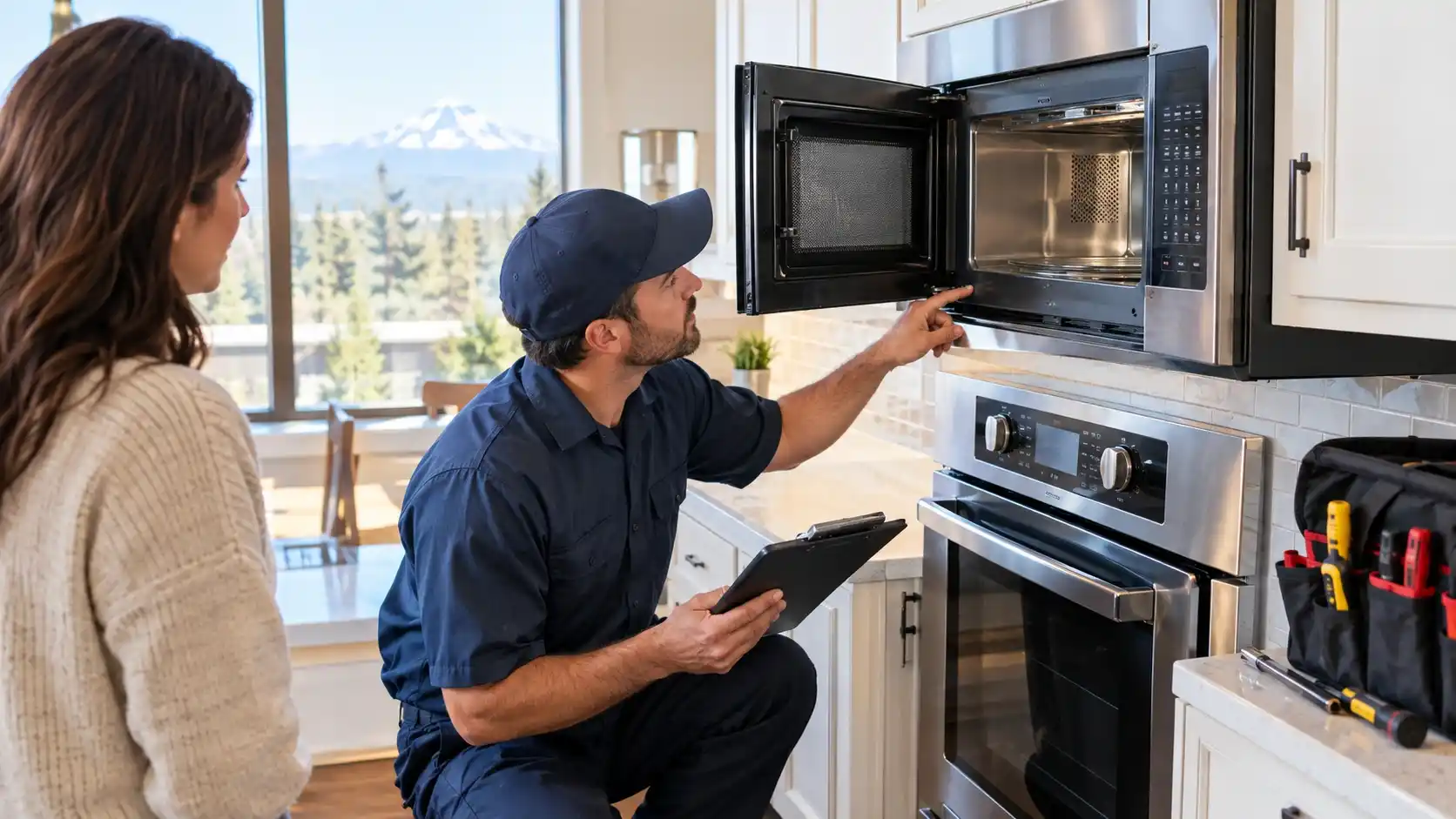
Can a Microwave Oven Be Repaired?
Yes, a microwave oven can often be repaired, depending on the problem, age, condition, and microwave repair cost. Simple issues may involve the door, turntable, fuse, or power supply, while heating failures can involve expensive internal components. Contact our microwave repair team for quote.
If your microwave is not working, do not replace it immediately. First, identify the symptoms and check the safe external causes. This guide explains common microwave problems, safe troubleshooting, repair costs, and when replacement makes more sense.
For homeowners in Bend and Central Oregon, a professional diagnosis can help you avoid unnecessary replacement. Whether you are near the Old Mill District, Reed Market Road, or Cascade Village, the right diagnosis is the first step toward a practical solution.
Can a Microwave Oven Be Repaired?
Most microwave problems are repairable, but the value of repair depends on the appliance and the failed component. A faulty turntable motor, door switch, fuse, or control component may be worth repairing.
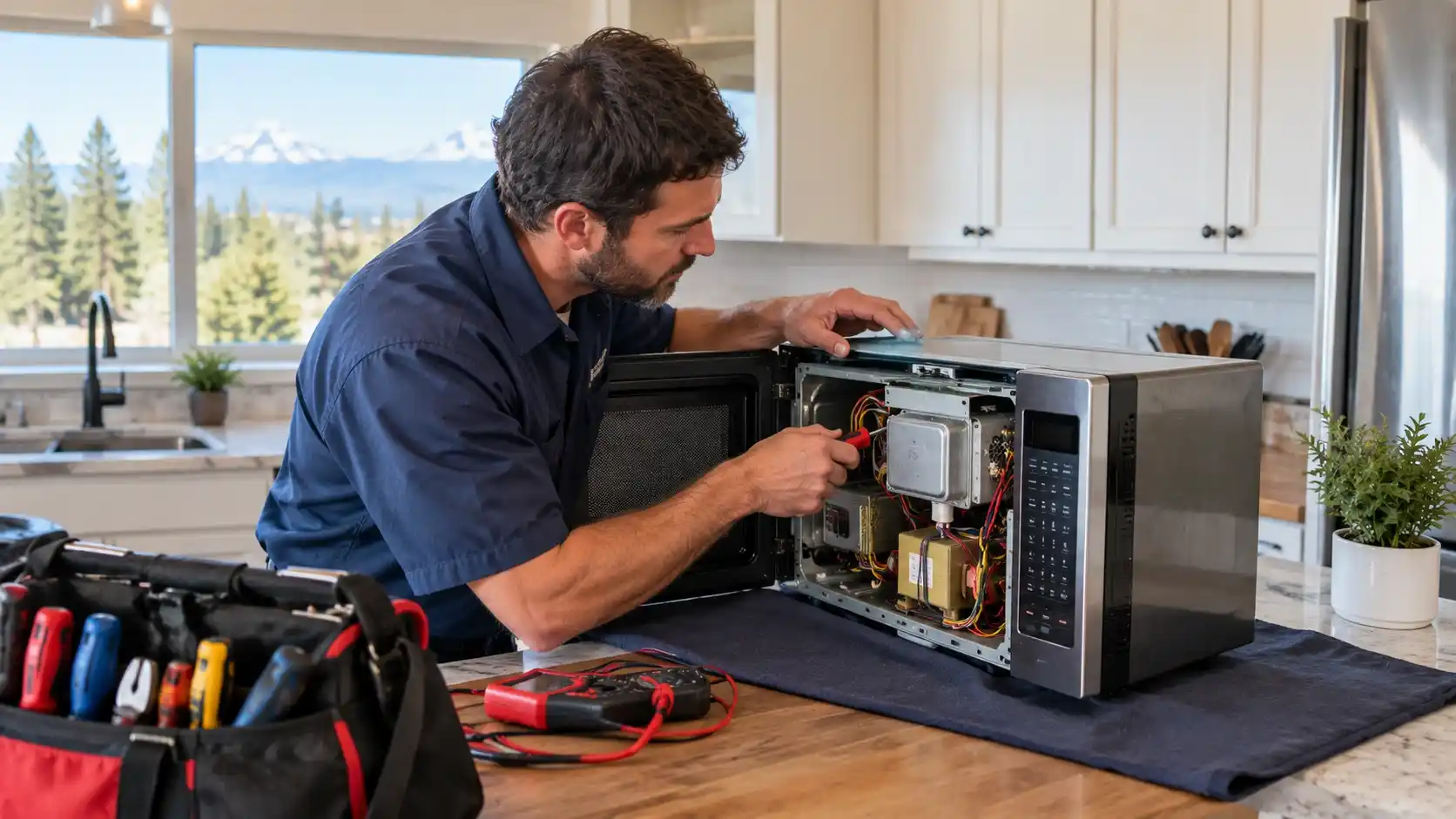
More serious failures can involve the magnetron, high-voltage diode, capacitor, or transformer. These parts require professional testing because microwaves contain high-voltage electrical components.
The best approach is to compare the microwave repair cost with the appliance’s age, condition, and replacement price before making a decision.
Common Microwave Problems
Different symptoms can point to different causes. The table below gives you a quick starting point before you decide whether professional service is necessary.
| Problem | Possible Cause | What to Do |
|---|---|---|
| Microwave not turning on | Outlet, breaker, fuse, door switch | Check power safely |
| Runs but does not heat | Magnetron, diode, capacitor, transformer | Call a technician |
| Sparks inside | Metal, food residue, waveguide cover | Stop using if sparking continues |
| Makes loud noise | Fan, motor, transformer, mechanical issue | Arrange diagnosis |
| Turntable not spinning | Motor, coupler, roller ring | Check tray and components |
| Door won’t close | Latch, hinge, alignment, interlock | Stop using until corrected |
| Buttons do not work | Touchpad or control board | Professional diagnosis may help |
| Suddenly stops | Fuse, thermal protection, electrical fault | Check power and discontinue use if repeated |
Microwave Not Turning On
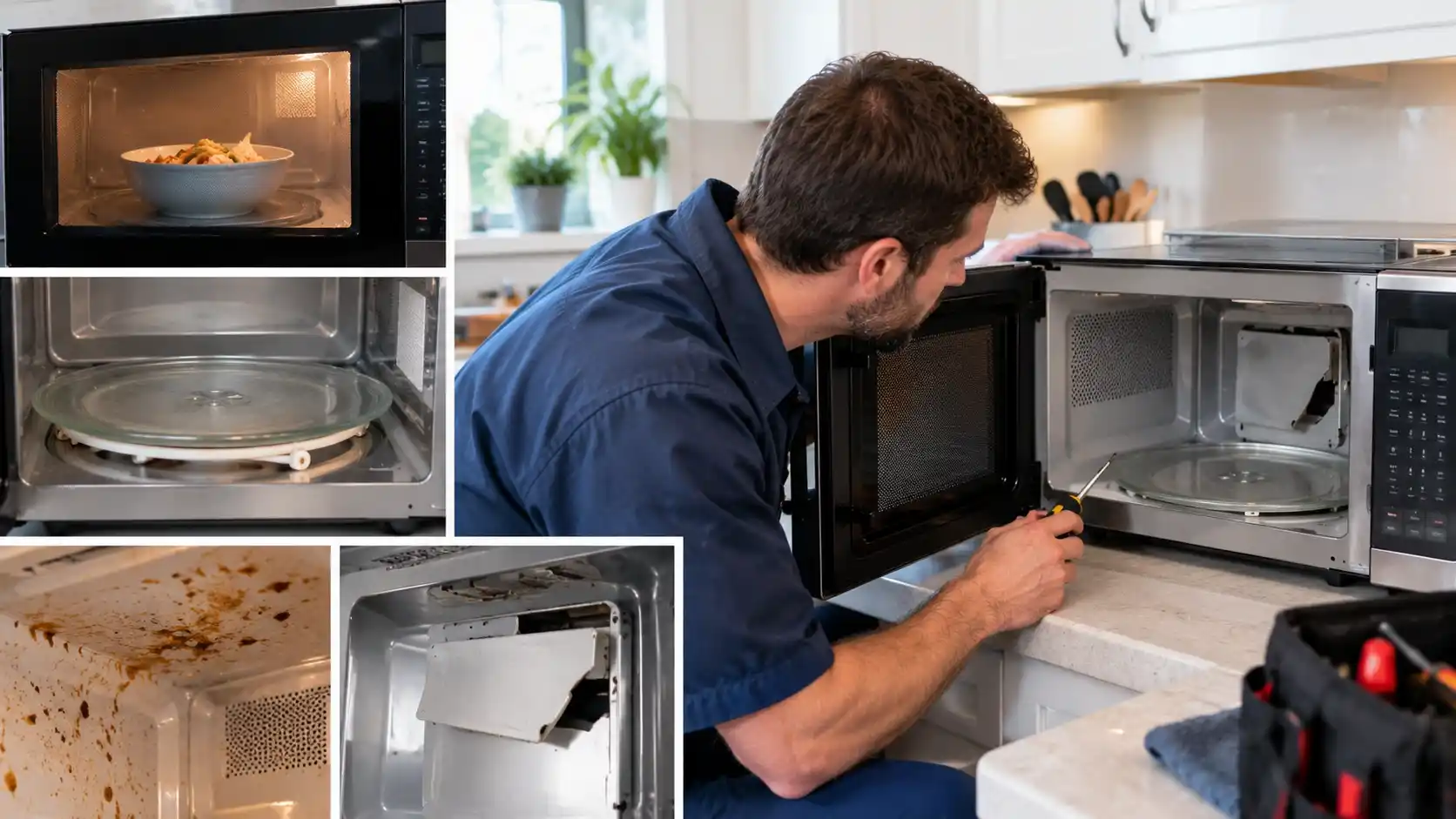
A microwave not turning on may have a simple power-related cause. Check whether the display is completely blank and whether the circuit breaker has tripped.
You can also check the outlet with another suitable appliance. If the outlet works but the microwave remains dead, an internal fuse, door switch, thermal device, or control problem may be responsible.
Do not open the microwave cabinet to replace an internal fuse yourself. Internal components can remain electrically dangerous even after the appliance is unplugged.
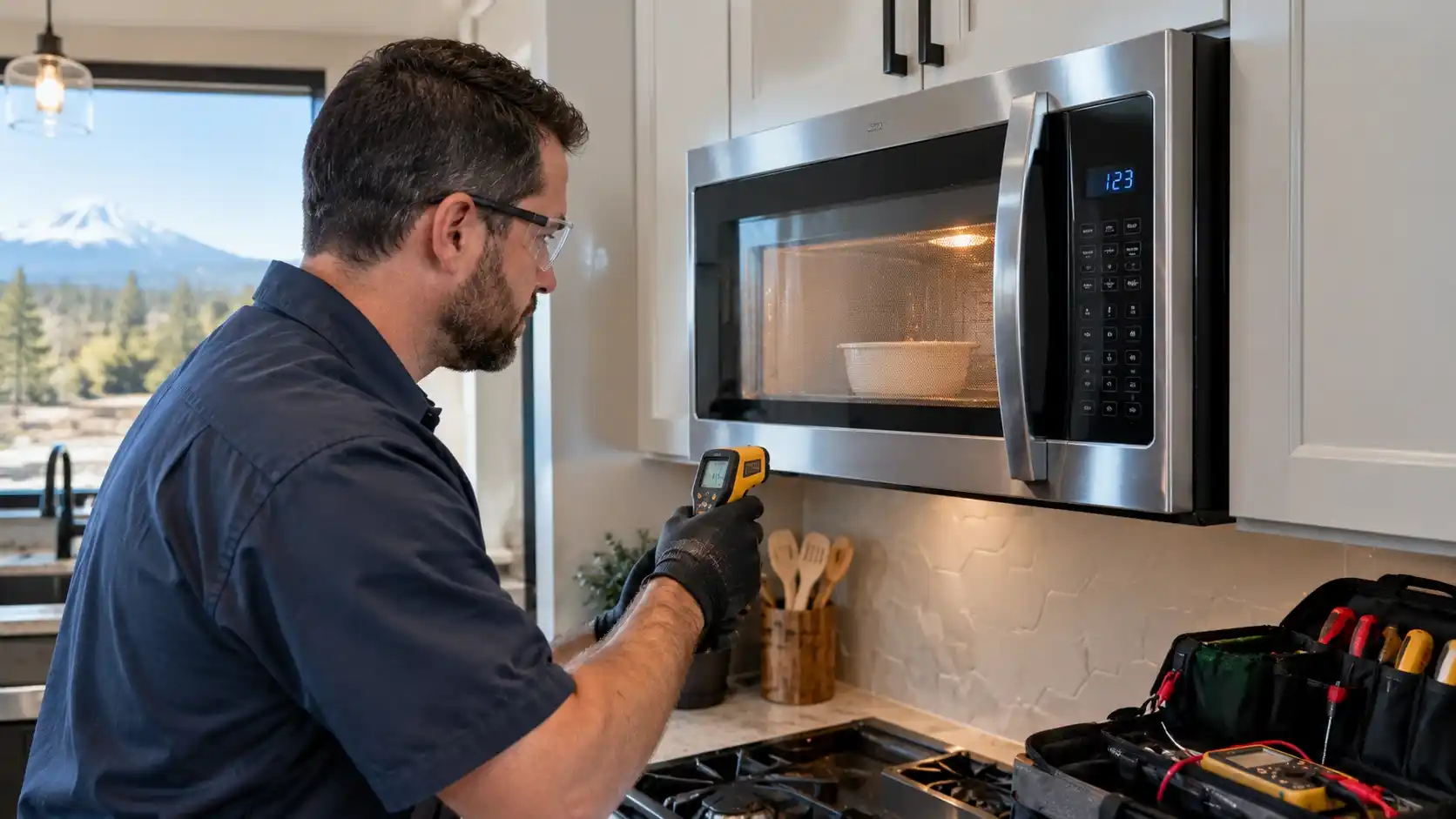
Microwave Runs but Does Not Heat
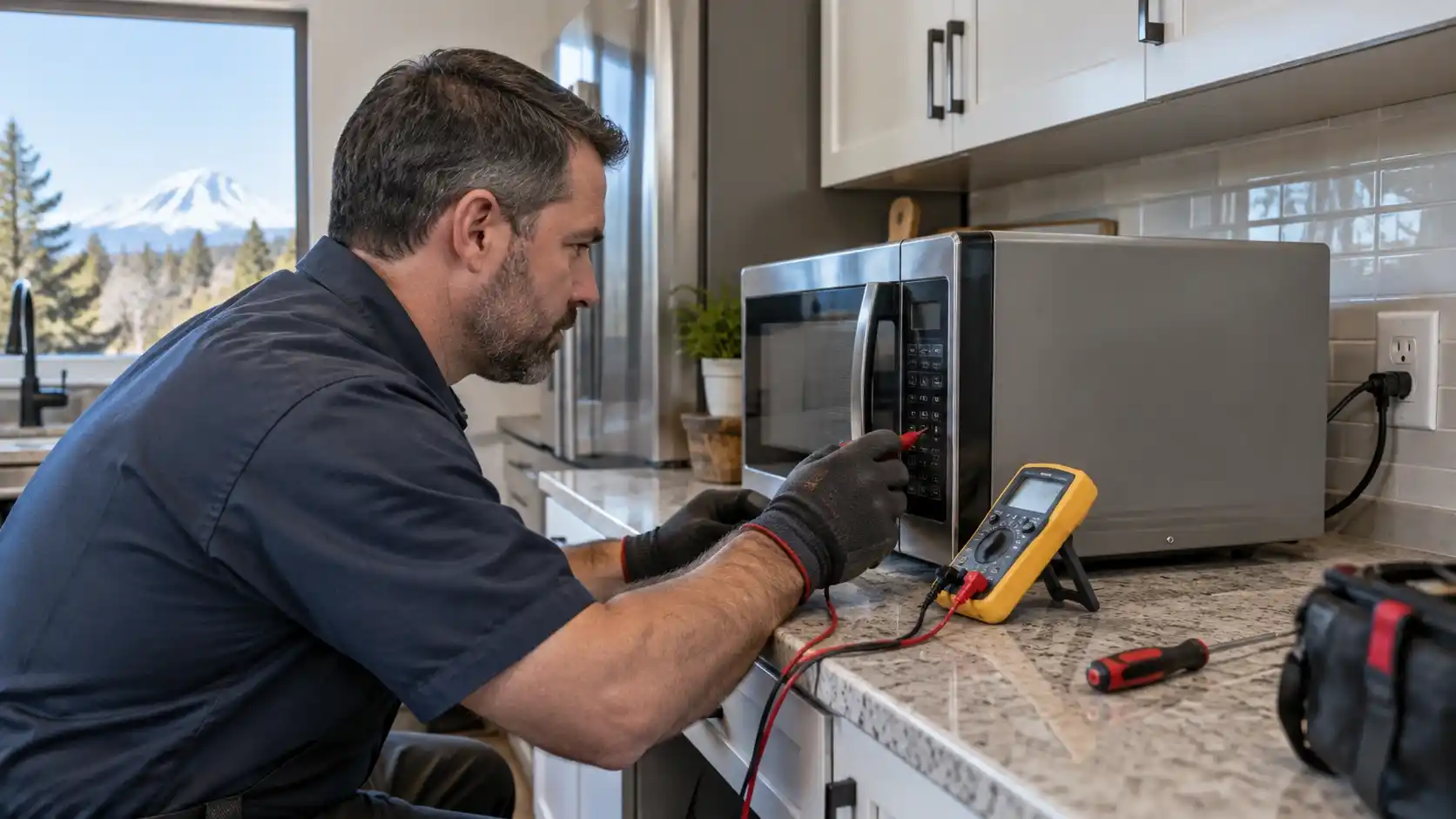
A microwave can appear to work normally while producing no heat. The display, light, fan, and turntable may operate even though food remains cold.
Possible causes include a failed magnetron, high-voltage diode, capacitor, transformer, or control component. These parts require proper diagnosis rather than guesswork.
If the microwave runs but does not heat, avoid repeatedly testing it. A qualified appliance repair technician can identify the failed system and explain your repair options.
Why Does My Microwave Spark?
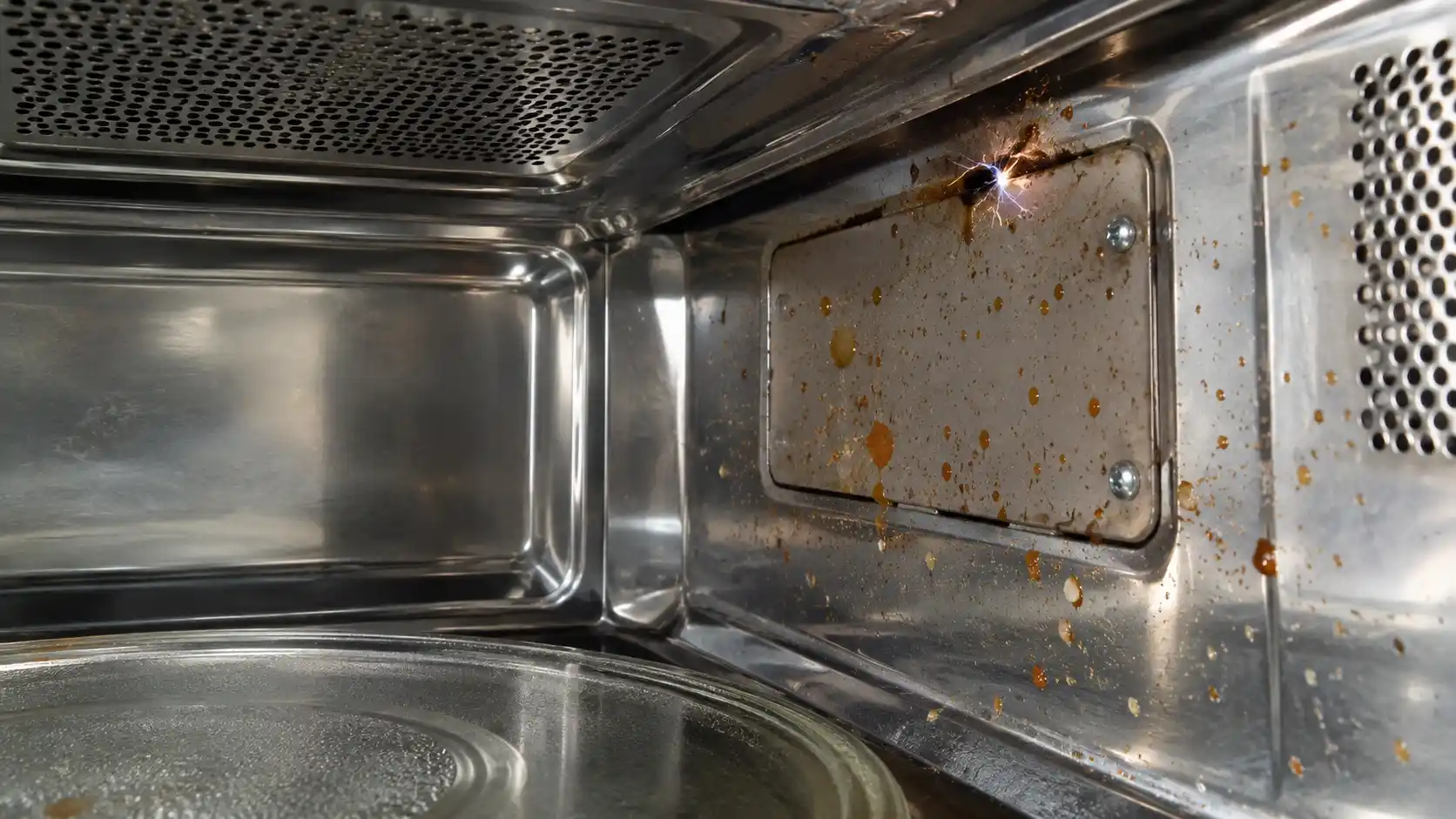
If you are asking, why does my microwave spark, check for obvious causes first. Metal utensils, foil, metallic trim, and certain objects can create electrical arcing inside the cooking cavity.
Food splatter can also cause problems when it becomes heavily burned or concentrated around the waveguide cover. Clean the interior after the microwave has cooled.
If your microwave continues sparking after removing obvious causes, stop using it. Persistent arcing can damage internal components and may create a safety concern.
Microwave Making Loud Noise
A microwave making loud noise may have a problem with the cooling fan, turntable motor, transformer, or another mechanical component. A noticeable change from its normal operating sound should not be ignored.
Grinding, rattling, buzzing, or unusually loud humming can indicate a developing problem. If loud noise occurs together with smoke, sparks, burning smells, or heating problems, stop using the microwave and arrange for professional inspection.
Microwave Door Won’t Close
A microwave door won’t close properly should be treated as a safety issue. The door works with an interlock system designed to prevent normal microwave operation when the door is open.
Check for food debris or an object blocking the door. Do not bend the latch, modify the hinges, or bypass the door safety switch.
Microwave Suddenly Stops Working
When a microwave suddenly stops working, the cause may be a power interruption, thermal protection, fuse, door switch, or internal component failure.
If the appliance was very hot, allow it to cool before checking the power supply. You can also check the circuit breaker if doing so is safe.
Safe Microwave Troubleshooting You Can Try
Some microwave troubleshooting steps are safe for homeowners. These checks should remain external and should never involve removing the microwave cabinet.
Start by checking the power supply and circuit breaker. Then inspect the door, glass tray, roller ring, and cooking cavity for obvious problems. Clean food splatter and make sure the ventilation openings are not blocked.
What You Should Never Repair Yourself
Do not attempt to test or replace the magnetron, high-voltage capacitor, high-voltage diode, transformer, or internal wiring unless you have the appropriate professional training. For additional electrical safety guidance, the Electrical Safety Foundation International provides resources on recognizing and avoiding electrical hazards.
A microwave capacitor can retain a dangerous electrical charge after the appliance has been unplugged. Opening the cabinet can expose you to serious electrical hazards.
When to Call an Appliance Repair Technician
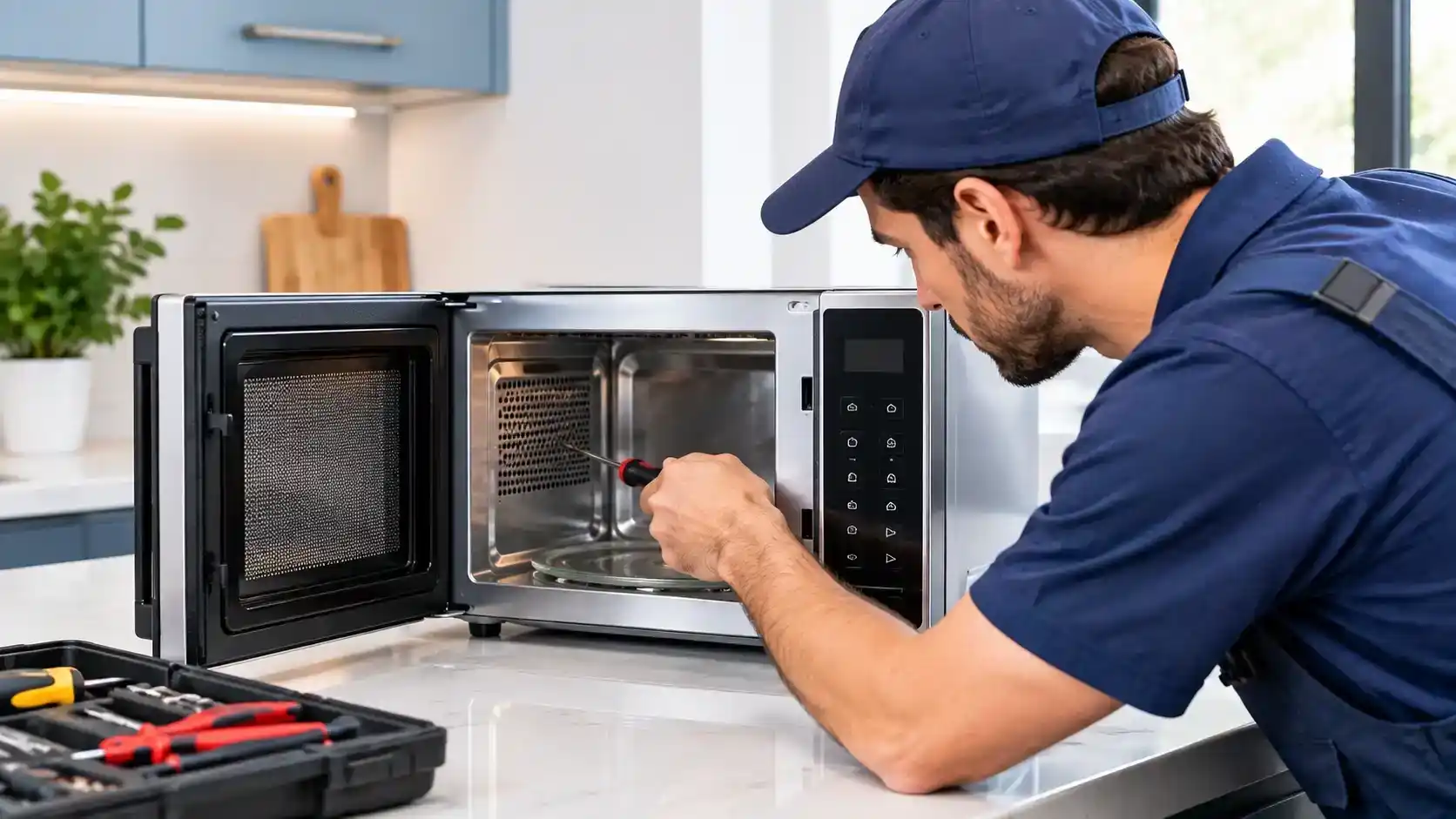
An appliance repair technician should handle internal electrical and high-voltage problems. Professional service is especially important when the microwave does not heat, sparks repeatedly, trips the breaker, or produces smoke or burning odors.
A technician can test the relevant components instead of replacing parts based only on symptoms. This can help control the overall microwave repair cost and prevent unnecessary repairs.
What a Microwaves Technician Can Check
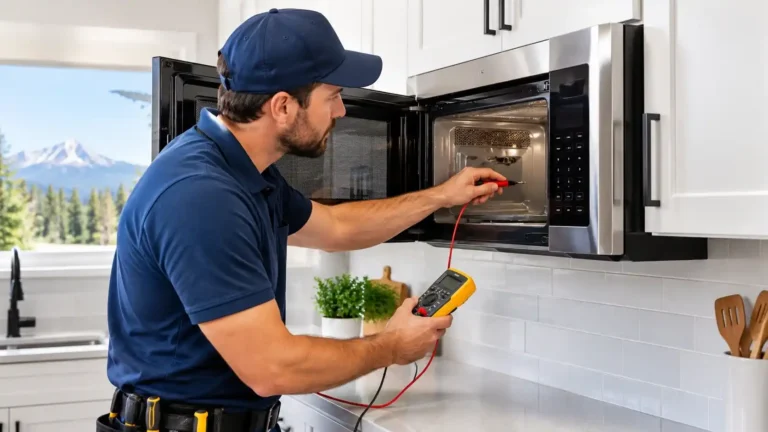
A qualified microwaves technician can inspect the power system, controls, door interlock, turntable, ventilation, and heating components.
Depending on the problem, the technician may test the magnetron, diode, capacitor, transformer, thermal protection, or control board. Ask for a clear explanation of the failed component, required parts, labor, and expected total cost.
Microwave Repair Cost: What Affects the Price?
The microwave repair cost varies according to the appliance model, failed component, labor, accessibility, and parts availability. A simple mechanical problem can cost much less than a major heating-system failure.
Countertop microwaves may be easier to service than some built-in or over-the-range models. Installation type can affect both access and labor.
Instead of relying on one average price, ask for a diagnosis and estimate for your specific appliance.
Repair Cost vs. Buying a New Microwave
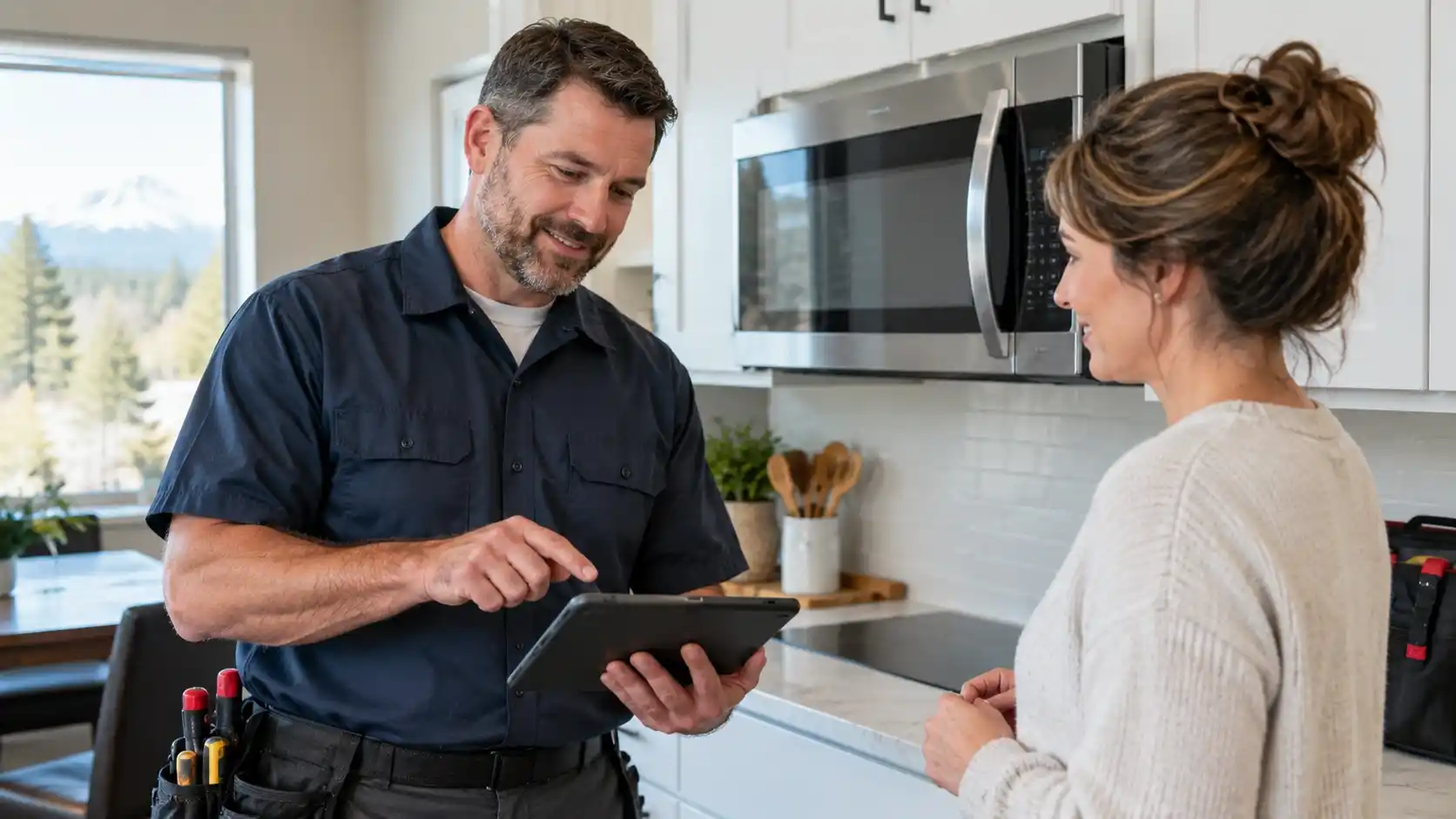
Compare the expected repair with the microwave’s age and overall condition. A newer microwave with one failed component may be a good repair candidate.
An older appliance with repeated problems may be different. If the repair involves several major components, replacement could provide better long-term value. The right microwave repair cost guide should therefore focus on value, not just the price of one replacement part.
Microwave Repair vs. Replacement: How to Decide
| Factor | Repair May Make Sense | Replacement May Make Sense |
|---|---|---|
| Age | Relatively new | Older appliance |
| Condition | Generally reliable | Several existing problems |
| Repair | One manageable failure | Major or multiple failures |
| Parts | Available | Difficult to source |
| Appliance type | Premium built-in model | Basic countertop model |
| Value | Repair is reasonable | Repair approaches replacement value |
When to Replace a Microwave
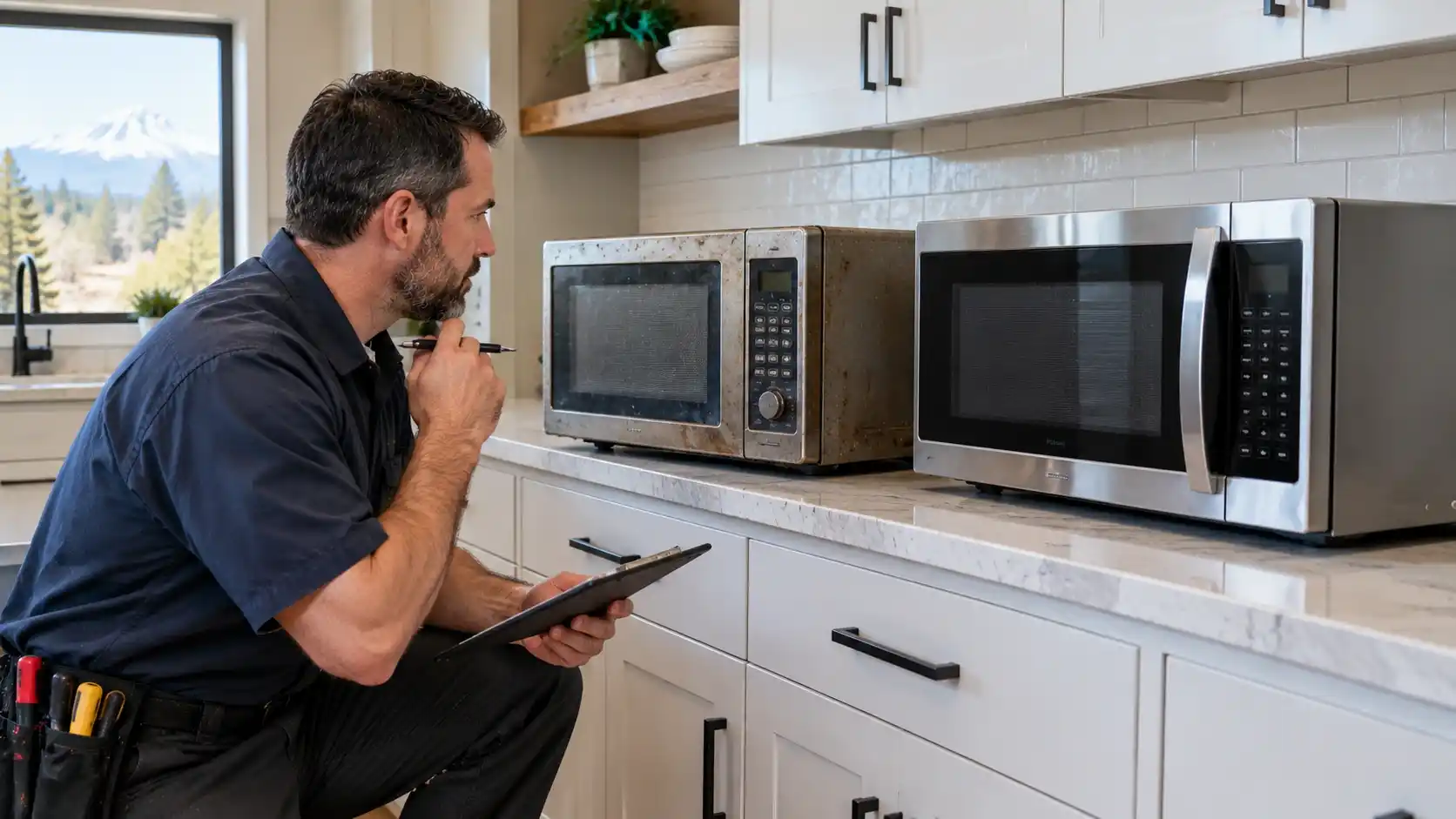
Frequent breakdowns, major component failures, damaged doors, and repeated electrical problems can all support replacement. If the microwave has worked reliably for years and needs one reasonable repair, repair may still be the better option.
How Long Do Microwaves Last?
Lifespan varies with appliance quality, usage frequency, maintenance, installation, and operating conditions. Instead of replacing based only on age, consider reliability, condition, performance, and repair history.
Signs Your Microwave May Need Replacement
Frequent repairs are a major warning sign. Other concerns include repeated heating failures, damaged doors, persistent sparking, unreliable controls, and unusual electrical smells.
Microwave Safety: When to Stop Using It
Microwave safety should always come before convenience. Stop using the appliance if you notice smoke, persistent sparking, burning smells, severe electrical noise, or a damaged door. For additional consumer appliance safety information, the U.S. Consumer Product Safety Commission provides safety guidance and product hazard information.
A damaged door or safety interlock should never be bypassed. These components are important to safe microwave operation.
Stop and Call a Professional If You Notice
- Smoke or burning smells
- Persistent sparking
- A damaged or misaligned door
- Severe electrical noise
Microwave Maintenance Tips
Customer Testimonials
Genuine customer experiences can strengthen trust when they are specific and verifiable.
Honest Repair Advice
Verified reviews can highlight technicians who explain whether repair or replacement makes more sense.
Clear Cost Breakdown
Strong feedback often describes upfront estimates with no surprise charges after diagnosis.
Safe, Professional Service
Homeowners value technicians who handle high-voltage components safely and explain the repair process.
Awards, Credentials & Case Studies
Only display verified licenses, certifications, and awards. Replace the examples below with real, verified service details before publishing.
Microwave Not Heating Case Study
The problem: The microwave ran normally but food stayed cold.
The diagnosis: The technician tested the magnetron and high-voltage components and identified the failed part.
The result: A targeted repair restored normal heating at a fraction of replacement cost.
Sparking Microwave Case Study
The problem: The microwave sparked repeatedly even after cleaning.
The diagnosis: The technician found a damaged waveguide cover causing the arcing.
The result: Replacing the cover resolved the sparking safely.
Final Thoughts
A microwave does not automatically need replacement when it stops working. Many problems can be repaired, but the correct decision depends on safety, appliance condition, failed components, and the expected microwave repair cost.
Start with safe external checks and identify the symptom. If the appliance sparks repeatedly, produces smoke, smells burnt, trips the breaker, or has a damaged door, stop using it and contact a qualified technician.
For homeowners in Bend and Central Oregon, a professional diagnosis can provide a clearer answer: repair the microwave or replace it based on the actual problem and value.
Frequently Asked Questions
Can a microwave oven be repaired?
Yes. Many microwave problems can be repaired, including certain door, turntable, control, fuse, and heating-system failures. The decision depends on the appliance’s condition and repair requirements.
How much does microwave repair cost?
The microwave repair cost depends on the failed component, model, labor, parts, and repair complexity. A professional diagnosis provides a more accurate estimate than a general online price.
Why does my microwave run but not heat?
Possible causes include a failed magnetron, high-voltage diode, capacitor, transformer, or control component. Because these parts can be dangerous, professional diagnosis is recommended.
Is it worth repairing a microwave?
Repair can be worthwhile when the appliance is relatively new and otherwise reliable. Replacement may make more sense when an older microwave has repeated failures or requires expensive major components.
Get a Microwave Repair Estimate in Bend
Whether your microwave won’t heat, sparks, or won’t turn on at all, ask for a clear diagnosis and repair estimate before deciding between repair and replacement.