Freezer Frost Buildup? Causes and Fixes for Bend, OR Homes
If you defrost the freezer and the frost keeps coming back, something specific is causing it — a leaking door gasket, a failed defrost system, a habit like warm food or door traffic, or humidity in your home. This guide shows you how to read the frost pattern, fix what you can safely, and know when to call a technician.
Why Does Freezer Frost Buildup Keep Coming Back?
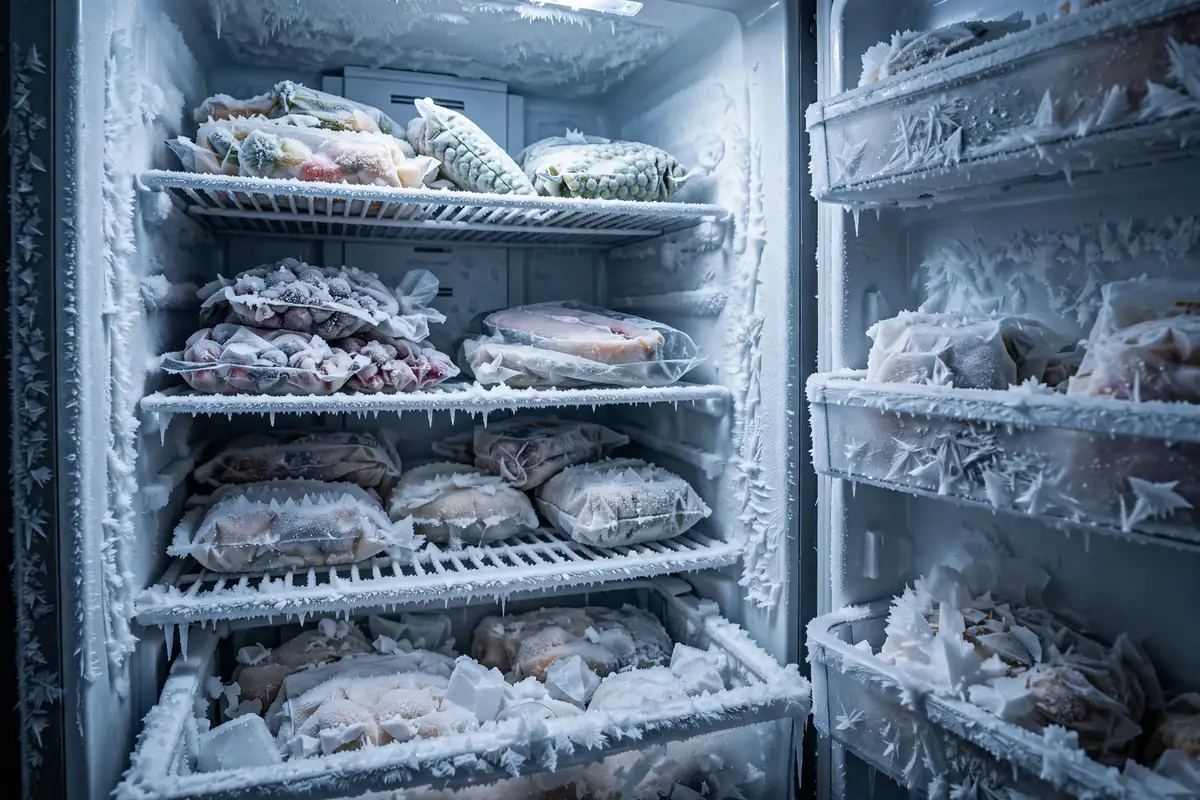
A little frost on the freezer walls is normal. A thick coat of ice that returns weeks after every defrost is not. If you have scraped the freezer clean more than once and the ice comes back, freezer frost buildup is telling you about an underlying problem — one that defrosting alone will never fix.
The good news: the frost itself gives you clues. Where the ice forms — on the back wall, around the door edges, on top of the food, or in one thick slab — points to the cause. Warm moist air entering through a bad door gasket freezes near the door. A failed defrost heater freezes the coils solid behind the back panel. A blocked drain leaves a sheet of ice on the freezer floor.
Left alone, freezer frost buildup does more than shrink your storage space. Thick ice acts as insulation, so the appliance works harder and runs longer to hold 0°F — which raises energy use and wears out the compressor faster. Drawers jam, food gets buried and forgotten, and packages near heavy ice develop freezer burn sooner. A freezer that ices up every month is asking for attention: catching the cause early is almost always cheaper than fixing what the frost damages next.
This guide is written for homeowners in Bend and Redmond, Oregon. It covers the seven most common causes of recurring frost, how to diagnose them from the frost pattern, a safe step-by-step defrost routine, and when professional refrigerator repair in Bend is the right call.
Table of Contents — Tap to Jump to a Section
- 01 Introduction
- 02 Why Frost Keeps Coming Back
- 03 Read the Frost Pattern
- 04 7 Common Causes
- 05 Damaged Door Gasket
- 06 Failed Defrost Heater
- 07 Bad Defrost Timer or Thermostat
- 08 Blocked Defrost Drain
- 09 Warm Food and Door Habits
- 10 Humidity in the Home
- 11 Blocked Vents and Overpacking
- 12 Safe Defrost Routine
- 13 Safety First
- 14 Central Oregon Factors
- 15 Prevention Checklist
- 16 DIY or Pro?
- 17 When to Call a Pro
- 18 FAQ
- 19 Bend & Redmond Service
- 20 Final Takeaway
Why Does My Freezer Keep Getting Frost?
Frost forms whenever moist air touches a freezing-cold surface. A thin layer is normal; thick ice that returns after defrosting means moisture keeps getting in. The usual reasons are:
- A damaged or dirty door gasket lets warm room air leak in around the door.
- A failed defrost heater never melts the frost on the evaporator coils.
- A bad defrost timer or thermostat keeps the defrost cycle from starting.
- A blocked defrost drain traps meltwater inside, which refreezes as a solid slab.
- Warm food placed straight into the freezer releases steam that freezes on contact.
- Frequent or long door openings pull in humid air with every visit.
- Overpacked shelves block the air vents and create uneven cold spots where ice collects.
Start with the frost pattern: ice near the door means an air leak, ice behind the back panel means a defrost fault, and a solid sheet on the floor means a drain problem. The diagnosis table below helps you match what you see to the cause.
One distinction worth making: frost on the freezer’s surfaces is not the same as freezer burn on the food itself. Freezer burn is the dry, discolored, leathery patches that form on poorly wrapped food as moisture escapes from it. The two problems are related — a frosty freezer accelerates freezer burn — but burn on the food alone, with clean freezer walls, is a wrapping problem, not an appliance problem.
Check the temperature first: a healthy freezer holds 0°F (−18°C). Use an inexpensive freezer thermometer on the middle shelf for a few hours. A freezer that runs much colder or warmer than 0°F can both encourage frost — and a wrong setting is a two-minute fix.
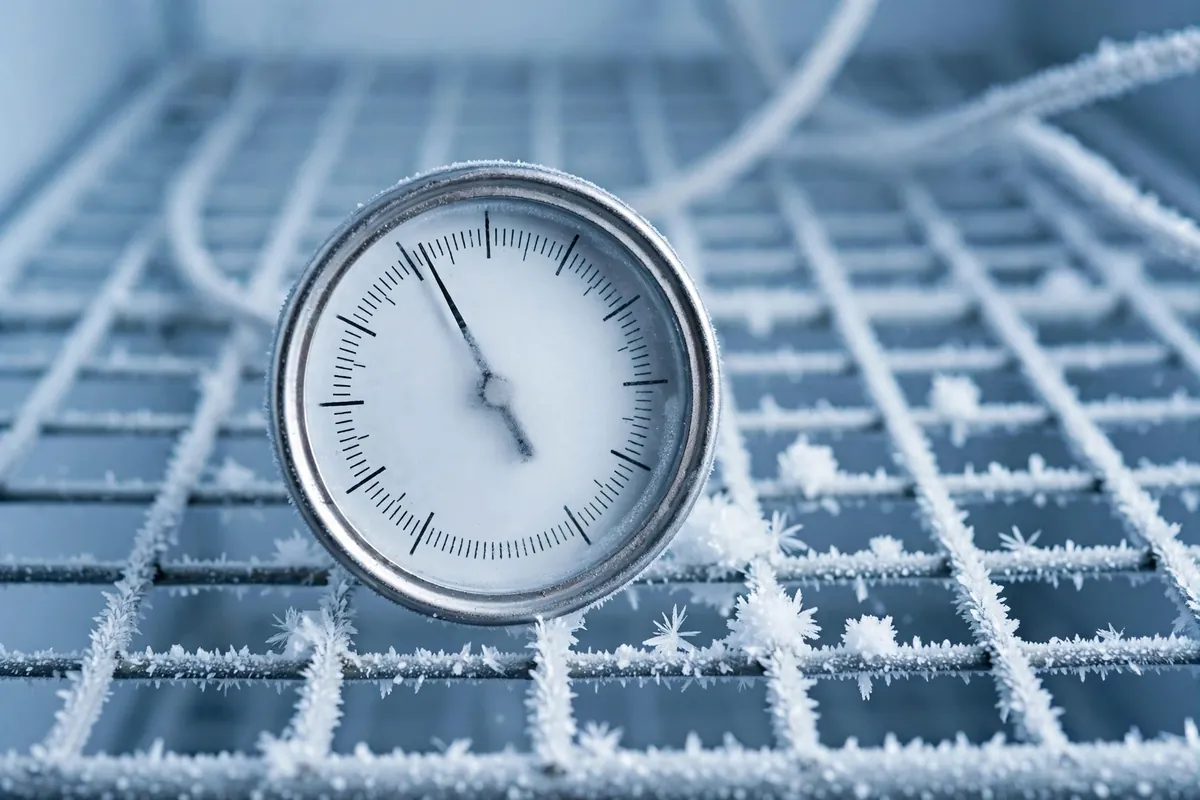
Read the Frost Pattern Before You Touch Anything
The location of the ice is the fastest diagnostic tool you have. Find your pattern in the table below before buying parts or calling anyone.
| Frost Pattern | Likely Cause | Check First |
|---|---|---|
| Ice around the door edges or on the door itself | Door gasket leak or door not closing fully | Gasket condition, paper test, door alignment |
| Thick ice on the back wall, behind the rear panel | Failed defrost heater, timer, or thermostat | Defrost system (usually needs a pro) |
| Heavy frost only on top of the food packages | Warm food going in, or door opened too often | Food handling habits and door traffic |
| Solid sheet of ice on the freezer floor | Blocked or frozen defrost drain | Drain opening at the bottom of the freezer |
| Even coating on all walls and shelves | Humidity, frequently opened door, or worn gasket | Gasket, door habits, home humidity |
| Ice concentrated near the top vents | Blocked vents or overpacked shelves | Air vents, shelf spacing, load level |
| Frost returns within days of defrosting | Defrost system fault or major air leak | Back-panel frost and gasket seal |
| Drawers stick or will not close fully | Ice jamming the drawer tracks | Clear ice, then check gasket and drain |
7 Common Causes of Recurring Freezer Frost
The sections below walk through each cause in detail, from the easiest checks to the faults most likely to need a technician. Work through them in order — do not skip ahead to part replacement before ruling out the simple causes.
| Common Cause | Main Symptom | Difficulty |
|---|---|---|
| Damaged or dirty door gasket | Frost around door edges and on the door | Easy — 10 minutes |
| Failed defrost heater | Thick ice behind the back panel | Professional |
| Bad defrost timer or thermostat | Frost returns within days of defrosting | Professional |
| Blocked defrost drain | Solid ice sheet on the freezer floor | Moderate — 30 minutes |
| Warm food and door-opening habits | Frost on top of food packages | Easy — habit change |
| Humidity in the home | Even frost coating on all surfaces | Easy to moderate |
| Blocked vents or overpacked shelves | Ice near the top vents, uneven cold spots | Easy — 10 minutes |
1. The Door Gasket Is Damaged, Dirty, or Worn
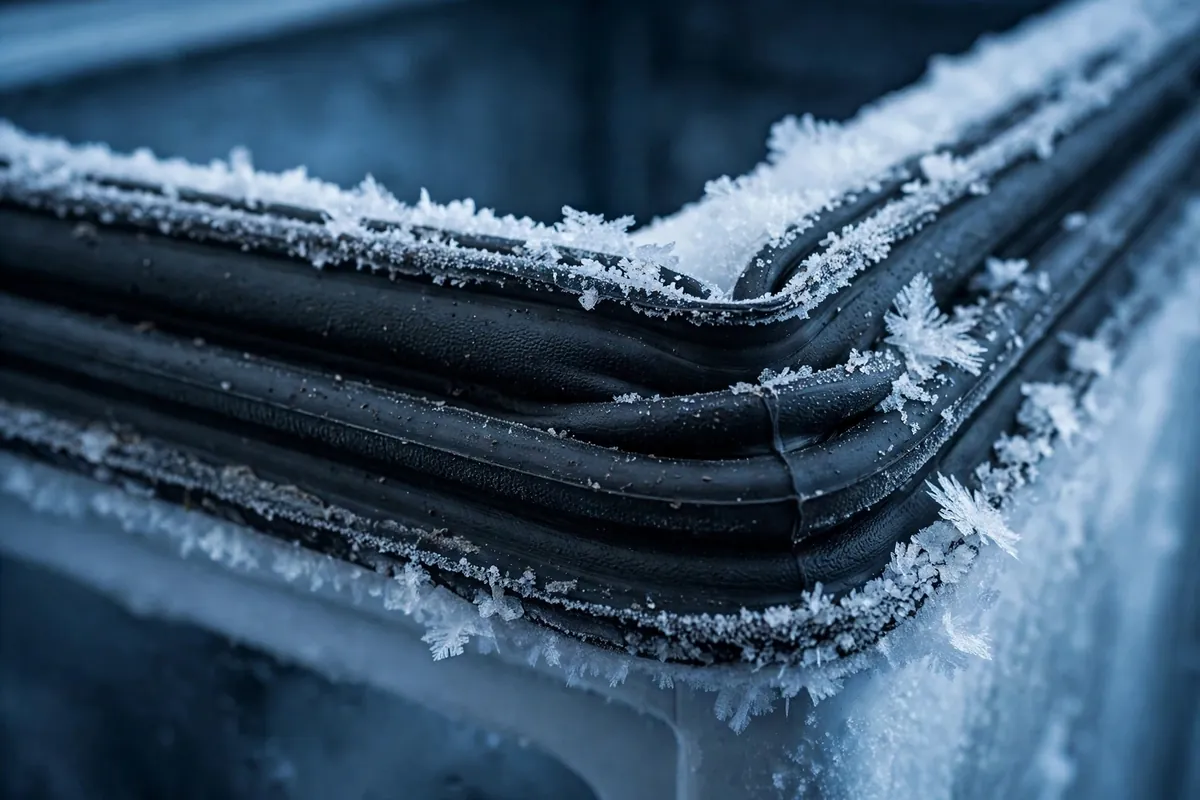
The rubber door gasket is the single most common reason frost keeps coming back. Its job is to create an airtight seal between the door and the cabinet. When it works, warm air stays out. When it cracks, hardens, or gets dirty, warm air leaks in around the edges — and that air’s moisture freezes on contact.
You will usually see frost forming along the door edges or on the door itself, sometimes with condensation on the outside of the cabinet near the door. Over months, even a hairline gap feeds a steady stream of moisture that builds into inches of ice.
Do the dollar-bill or paper test: close the door on a strip of paper and try to pull it out. It should grip firmly. Repeat around all four sides of the door. If the paper slides out easily in spots, the gasket is not sealing there. Also look for cracks, tears, or flattened sections, and run a finger along the seal to feel for crumbs or sticky residue.
Cleaning helps more than most people expect. Wipe the gasket with warm soapy water, rinse, and dry it completely. This alone can restore a seal that was failing from built-up grime. If the gasket is cracked, torn, or permanently flattened, cleaning will not save it — it needs replacement, which is a straightforward repair for a technician.
2. The Defrost Heater Has Failed
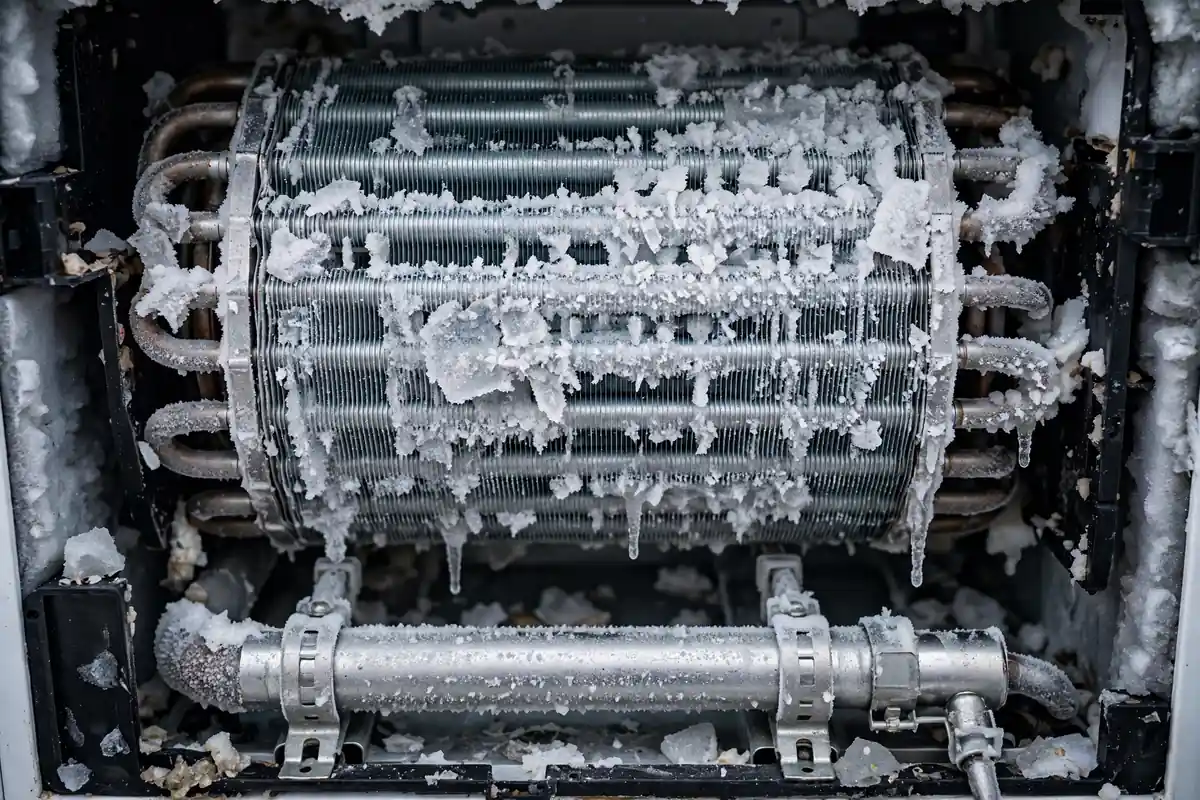
Modern frost-free freezers melt their own frost. A defrost heater — a metal heating element mounted on the evaporator coils behind the back panel — turns on several times a day to melt the thin frost layer that forms during cooling. The meltwater drains away, and the freezer stays clear.
When the heater burns out, frost accumulates on the coils with no mechanism to remove it. The ice grows until it encapsulates the coils in a solid block, and the freezer loses cooling power as the ice insulates the coils from the air. The classic sign: thick ice behind the back panel, frost returning within days of a manual defrost, and gradually weakening cooling.
Testing the heater requires removing the back panel and checking it with a multimeter, which involves live electrical components. This is professional territory for most homeowners. A technician can test the heater, the thermostat, and the timer in one visit and replace whichever part has failed.
3. The Defrost Timer or Defrost Thermostat Is Bad
The defrost heater only works if it gets told to turn on. That signal comes from the defrost timer — which switches the freezer between cooling mode and defrost mode on a schedule — and the defrost thermostat — a small thermal switch clipped to the coils that tells the heater when the coils are cold enough to need melting.
If the timer jams or its motor burns out, the freezer may cool constantly and never enter defrost mode. If the thermostat fails, it never signals the heater to switch on, even when the timer calls for a defrost cycle. Either failure produces the same symptom: frost that returns quickly and relentlessly after every manual defrost.
These parts are small and inexpensive, but diagnosing which one has failed requires electrical testing behind the back panel. Like the heater itself, this belongs on a technician’s workbench rather than in a homeowner’s hands — especially since the timer, thermostat, and heater are tested as a system, and a wrong guess means buying parts twice.
Pattern to watch: if the freezer is frost-free for about a day after you defrost it, then ice starts rebuilding immediately, the defrost system is the prime suspect. Habit-caused frost builds up slowly over weeks; defrost-system frost comes back fast.
4. The Defrost Drain Is Blocked or Frozen
Even when the defrost system works perfectly, the meltwater has to go somewhere. It flows through a small defrost drain at the bottom of the freezer compartment, down a tube to a drain pan near the compressor, where it evaporates.
When that drain plugs with food debris or freezes shut, the meltwater has nowhere to go. It backs up and refreezes into a solid sheet of ice on the freezer floor, sometimes spreading upward into the bottom drawers. You may also notice drawers sticking or a thin layer of water appearing under frozen items before it refreezes.
To clear it: unplug the freezer, remove the bottom drawers, and locate the drain opening. Scoop out the ice above it — never with a knife — then flush the drain with warm (not boiling) water from a turkey baster or squeeze bottle until it flows freely. If the drain is iced shut at the freezer end, the steam method in the defrost routine below will open it.
5. Warm Food Goes In and the Door Opens Too Often
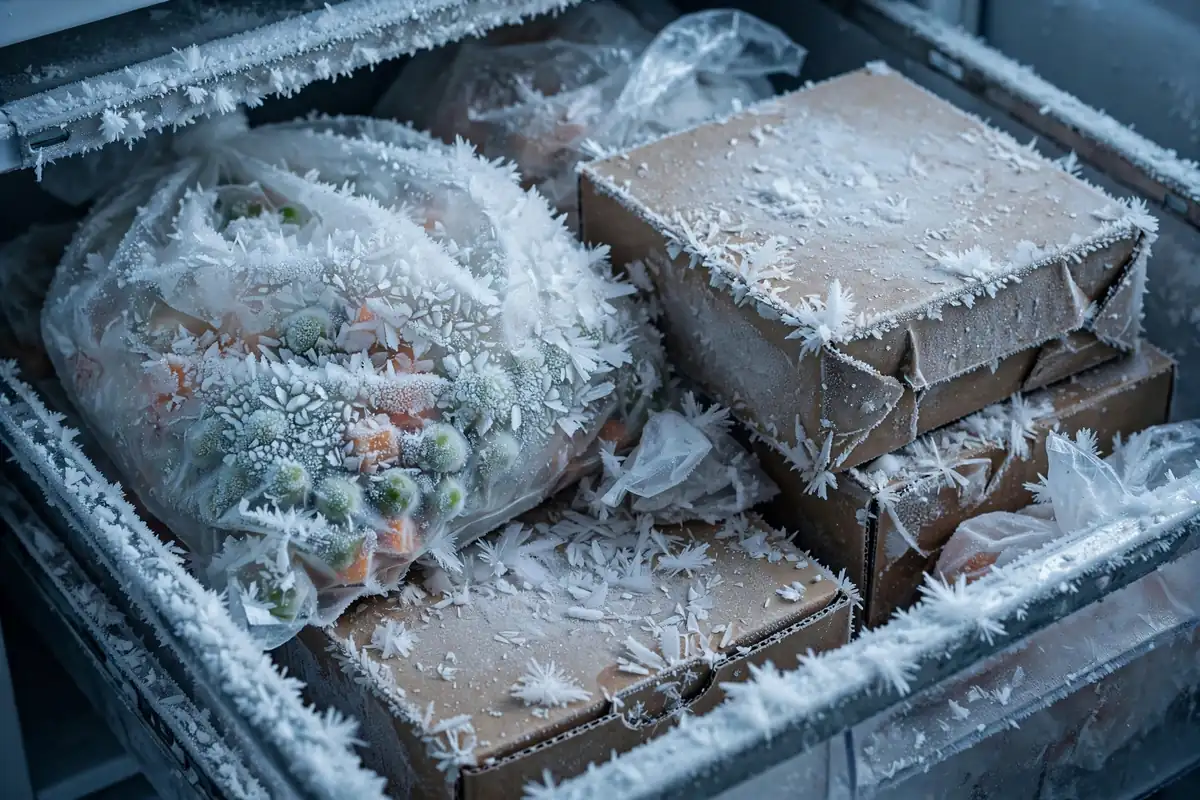
Every freezer makes some frost from normal use. Warm food is the biggest habit contributor. A pot of soup or a casserole straight from the stove releases a surprising amount of steam inside the freezer, and every wisp of that moisture freezes onto the coldest nearby surface — usually the food packages themselves.
Door habits are the other half. Every time the door opens, warm kitchen air rushes in to replace the cold air that falls out. Hold the door open while you hunt for something, and you have introduced a full load of moisture. Do it several times a day, and the frost adds up fast. The sign: heavy frost on top of the food packages and around the front of the shelves.
The fixes are simple and free. Cool cooked food to room temperature before freezing it — even an hour on the counter or in the refrigerator first helps a lot. Decide what you want before opening the door, get in and out quickly, and never leave the door ajar while you unpack groceries. Small changes, but they break the habit-frost cycle.
6. Humidity in the Home Is High
Frost is made of water, and water comes from the air. A home with high indoor humidity gives every door opening more moisture to work with, so frost builds faster even when your habits are reasonable. Kitchens are especially humid: boiling pots, a running dishwasher, and steamy showers all add moisture to the air.
You will recognize humidity-driven frost as an even, even coating on all the freezer walls rather than a concentrated patch. In Central Oregon the outdoor air is dry, but indoor cooking and bathroom moisture still matter — especially in winter when windows stay shut and the heating system runs for months.
Lower the moisture load at its source. Run the kitchen exhaust fan when cooking, keep bathroom fans on during showers, and make sure the freezer is not installed next to the stove or dishwasher. A portable dehumidifier in a consistently damp home helps the freezer too — less airborne moisture means less frost.
7. Vents Are Blocked or the Freezer Is Overpacked
Cold air enters the freezer through vents on the back wall and circulates around the food. When packages are pushed hard against those vents — or the freezer is packed so tightly that air cannot move — cold spots and dead zones form. Moisture freezes unevenly in those spots, and ice collects near the blocked vents.
Ironically, an underpacked freezer frosts faster too: with little thermal mass inside, the temperature swings more with every door opening, and warm air settles in. The sweet spot is a freezer that is full but not stuffed — food in every section with small air gaps between packages and the walls.
Pull packages away from the back-wall vents and leave a finger-width gap between the food and the walls. If the freezer is mostly empty, add a few filled water bottles or bagged ice — they hold the temperature steady and reduce frost between grocery runs. Reorganize once, and the ice pattern usually improves within a couple of weeks.
How to Defrost and Fix It Safely
Clearing the ice is step one. Finding and fixing the cause is step two. Follow this routine in order — the defrost gives you a clean freezer to observe, and the checks tell you whether the frost will return.
Step 1: Move the Food to a Safe Place
Transfer frozen food into coolers with ice packs or a second freezer. Food stays safe in a closed cooler for a few hours, which is plenty for this routine. Toss anything with heavy freezer burn or that is already partially thawed.
Step 2: Unplug and Open the Freezer
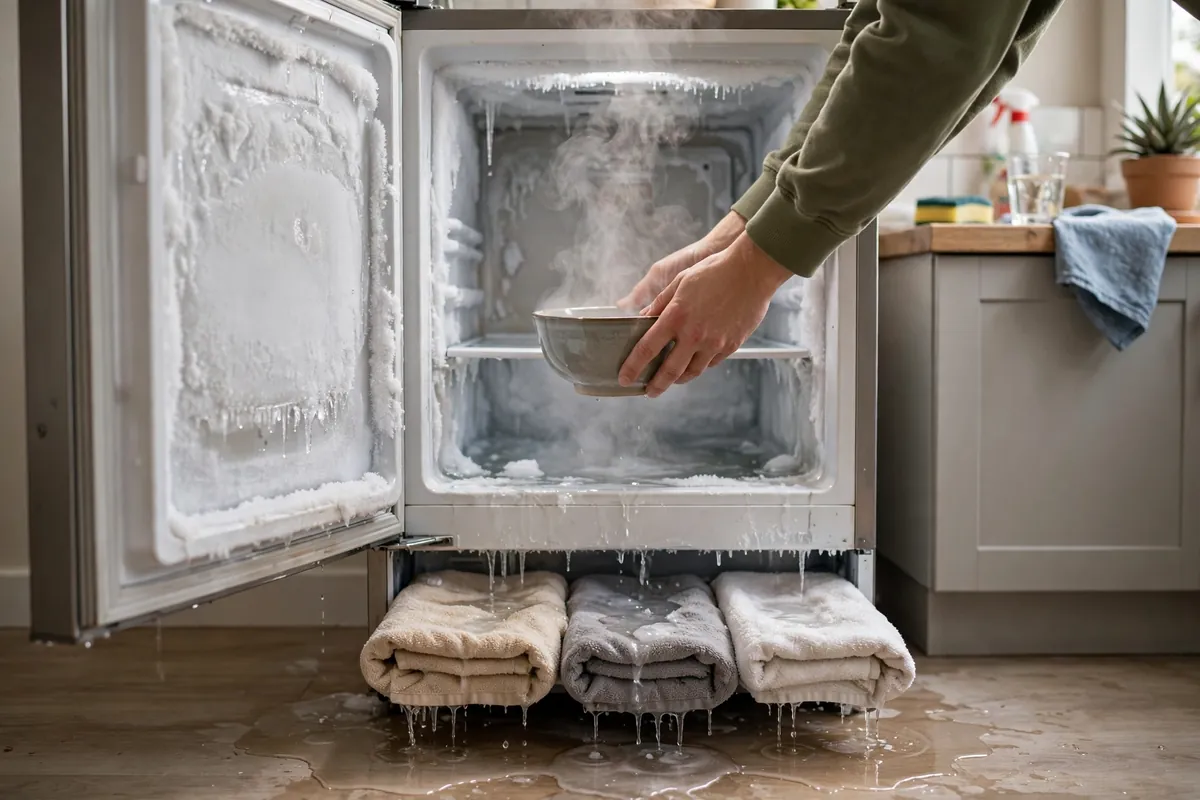
Turn the freezer off and unplug it from the wall. Remove all shelves, drawers, and bins so you can see every surface. Lay towels on the floor around the freezer to catch meltwater.
Step 3: Use Steam, Not Tools
Place a bowl of very hot water on a folded towel inside the freezer and close the door for 10 minutes. The steam softens the ice. Open the door and slide softened sheets off with a plastic spatula — never a knife or screwdriver, which can puncture a refrigerant line. Repeat until the walls are clear.
Step 4: Flush the Defrost Drain
While the freezer is empty, find the defrost drain at the bottom of the compartment. Flush it with warm water using a turkey baster until it drains freely. This one step prevents the most common cause of refrozen ice on the freezer floor.
Step 5: Clean and Inspect the Door Gasket
With the freezer still off, wash the door gasket with warm soapy water and dry it thoroughly. Run the paper test on all four sides. Look for cracks, tears, or flattened spots that will not seal.
Step 6: Wipe Everything Dry and Restart
Wipe the walls, shelves, and gasket completely dry — any water left inside becomes instant frost. Replace the shelves, plug the freezer back in, and let it reach 0°F before reloading. Load food back in organized sections with the vents left clear.
Step 7: Watch for Two Weeks
The defrost was the easy part. Now observe. If frost returns within days, the defrost system or the gasket is the likely problem. If it builds slowly over weeks, habits or humidity are feeding it. Note where the ice forms — that pattern tells you which cause section above to revisit.
The real fix comes from the cause, not the defrost. Defrosting without fixing the underlying problem is like bailing out a boat with a hole in the hull. Clear the ice, fix the cause, and the freezer stays clear on its own.
Safety Warnings Before You Start
Defrosting a freezer is safe when you respect electricity, water, and the sealed refrigerant system. Follow these rules without exception.
- Unplug the freezer before removing any rear access panel or interior back panel. Line voltage is present at the defrost heater and control parts even with the freezer switched off.
- Never chip at ice with a knife, screwdriver, or other sharp tool. It is easy to puncture a refrigerant line behind the interior walls. A punctured sealed system turns a minor repair into a major one.
- Use only low heat when thawing with steam or a hair dryer. High heat can melt plastic interior parts and wiring insulation. Never use boiling water directly on the walls.
- Keep electrical cords and outlets dry. Do not set a plugged-in hair dryer near meltwater, and keep it moving instead of concentrating heat on one spot.
- Stop immediately if you smell burning plastic, see scorch marks, or notice sparking. Unplug the freezer and call a professional.
When in doubt, stop. There is no frost problem urgent enough to justify an electrical shock or a flooded kitchen. A technician can pick up the diagnosis exactly where you left off.
Central Oregon Factors That Affect Freezer Frost
Frost forms for the same physical reasons everywhere, but a few local conditions in the Bend and Redmond area make certain causes more common here than the national averages suggest.
Garage and Outbuilding Freezers in Winter
Many Bend-area homes keep a second freezer in the garage or shop. In winter, the ambient air in an unheated garage can drop near or below freezing — and the freezer’s thermostat, which senses the garage temperature, may think it is cold enough and stop running the cooling cycle. The result is frost, thawing, and uneven temperatures that homeowners often mistake for a defrost failure. If a garage freezer frosts heavily or thaws in winter but behaves in summer, ambient temperature is the likely explanation — a garage-rated model designed for wide temperature swings is the long-term fix.
Winter Heating and Indoor Moisture
Central Oregon winters keep windows shut and the heat running for months. Cooking steam, showers, and even boiling pots for tea stay trapped indoors, raising humidity exactly when every door opening matters most. If frost is a winter-only problem, indoor moisture is the first thing to check — run kitchen and bathroom exhaust fans, and crack a window briefly when steaming food.
High-Desert Dust on Condenser Coils
Central Oregon’s dry, dusty air coats condenser coils quickly. Dusty coils make the sealed system work harder and can push the freezer’s cooling efficiency down — sometimes just enough to make the defrost system work overtime while food stays frozen. Vacuuming the coils once or twice a year is one of the highest-value maintenance tasks for any freezer here, and it helps the whole refrigerator run more efficiently.
Seasonal and Vacation Homes
Many Central Oregon homes — from Sunriver cabins to second homes near Mt. Bachelor — sit empty for weeks or months at a time. A freezer left running unattended can develop heavy freezer frost buildup from a small gasket leak with nobody around to notice. If you are away for long stretches, have someone check the freezer periodically, or empty it and switch it off between visits so you do not come home to a solid block of ice.
How to Keep Your Freezer Frost-Free
Once the freezer is clean and the cause is fixed, these low-effort habits keep the ice from coming back.
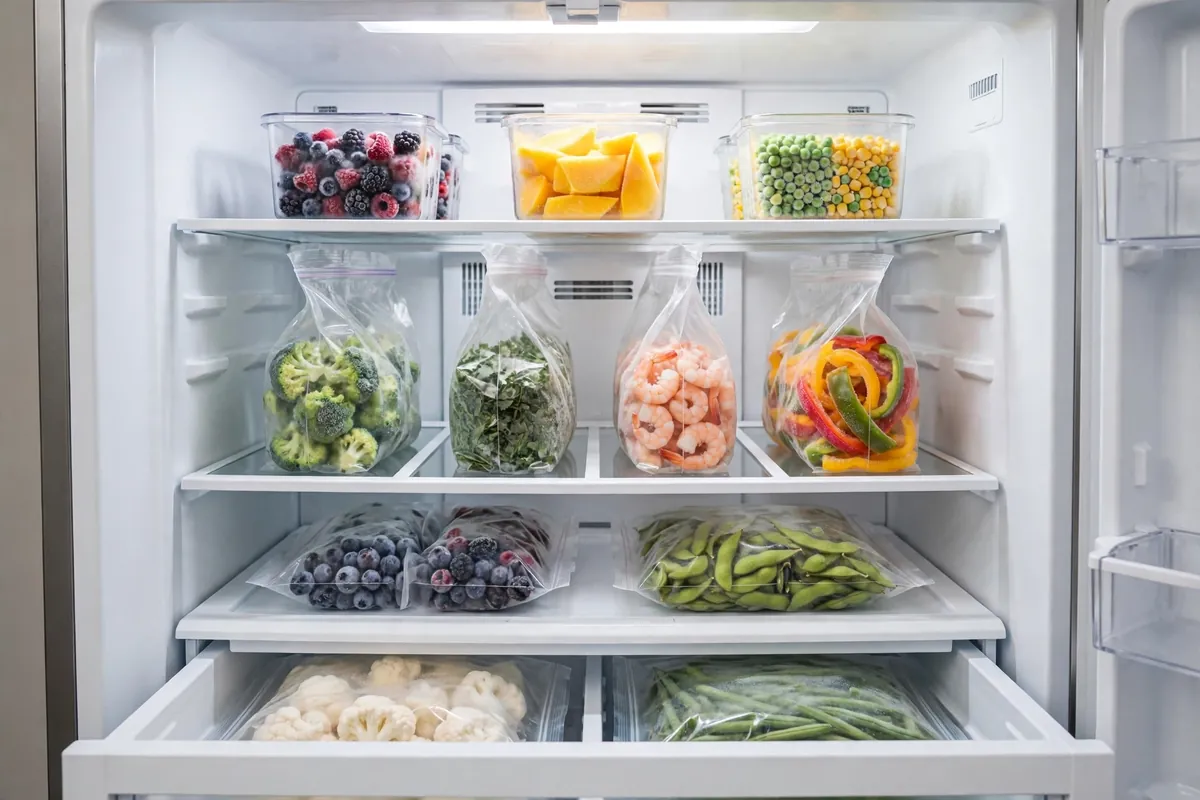
These steps take minutes and address the root causes behind most recurring frost. The ones that cost nothing — cooling food first, quicker door visits, and a monthly gasket wipe — are the highest-impact habits of all.
Freezer Frost: DIY or Professional Service?
Use this table to decide what to handle yourself and what to hand to a technician.
| Repair Task | DIY Suitability | Professional Help |
|---|---|---|
| Manual defrost with steam | Good, with care | Usually unnecessary |
| Clean the door gasket | Good | Usually unnecessary |
| Paper test and inspect the gasket | Good | Usually unnecessary |
| Change warm-food and door habits | Good | Usually unnecessary |
| Clear blocked vents, reorganize shelves | Good | Usually unnecessary |
| Flush the defrost drain | Good, with care | Recommended if it refreezes |
| Replace a damaged door gasket | Moderate | Recommended for a lasting seal |
| Test defrost heater, timer, thermostat | No | Yes — electrical testing |
| Replace defrost system parts | No | Yes |
The key rule is simple: DIY the defrost, the cleaning, and the habits; let a professional handle the defrost system and electrical parts. A correct diagnosis from your own frost-pattern reading makes the service visit faster and cheaper.
When Should You Call a Freezer Repair Technician?
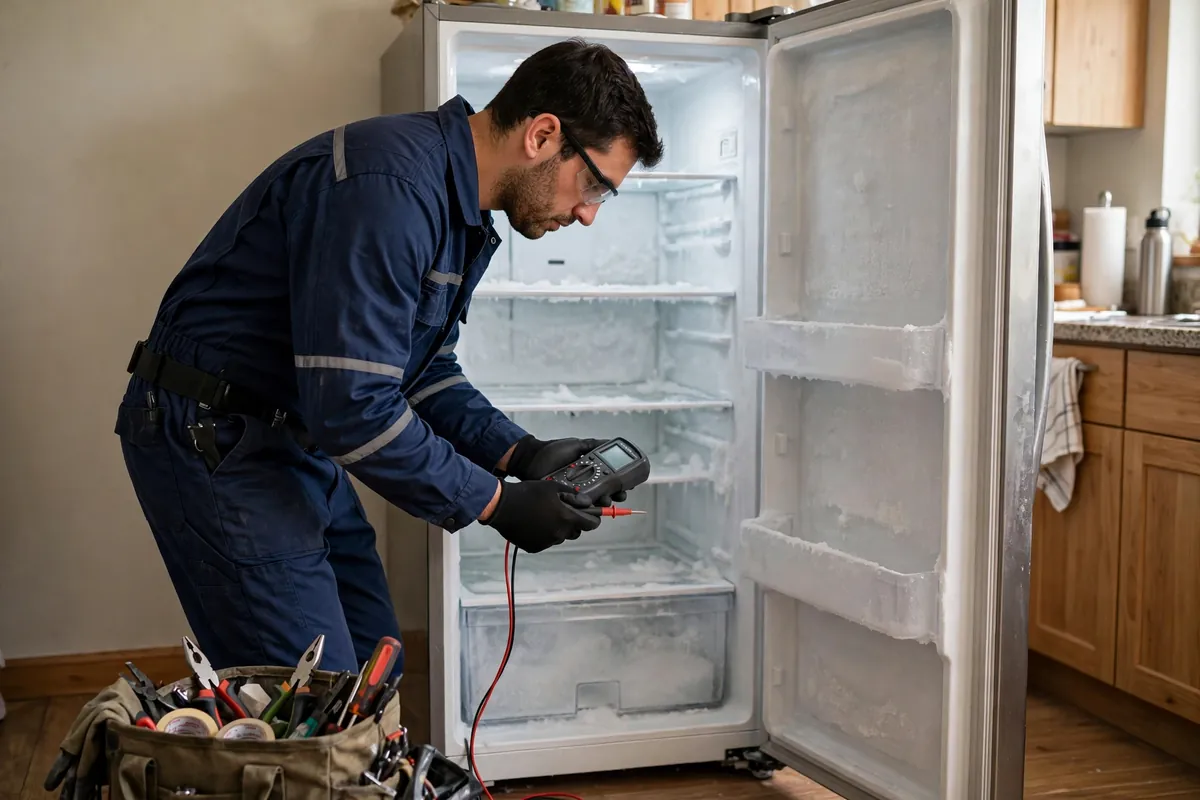
Call a technician when frost returns within days of a full defrost, or when you can see thick ice behind the back panel. Both signs point to the defrost heater, timer, or thermostat — parts that need electrical testing and model-specific replacement behind panels you should not remove without training.
Call sooner — without further DIY attempts — for a burning smell, scorch marks, or sparking anywhere near the freezer, or if the gasket is visibly torn and the freezer will not hold temperature. Unplug the appliance first if you see or smell anything electrical.
For homeowners in Bend and Redmond, professional refrigerator repair starts with your symptoms: tell the scheduler where the frost forms and how fast it returns — for example, “thick ice behind the back panel, back within three days.” That detail helps the technician arrive with the right parts and often resolves the problem in a single visit.
Frequently Asked Questions About Freezer Frost Buildup
Is a little freezer frost buildup normal?
Yes. A thin, even coating of frost is normal in any freezer, because small amounts of moisture enter with every door opening. A problem starts when frost grows thicker than about a quarter inch, returns quickly after defrosting, or interferes with drawers and shelves — that signals an underlying cause worth finding.
Why does frost keep coming back after I defrost the freezer?
Frost returns when the cause is still active. The most common reasons are a failing door gasket that keeps leaking warm air, a defrost system fault that never melts coil frost, or habits like putting warm food inside and opening the door often. Match the frost pattern to the cause table in this guide to find yours.
How do I know if my freezer door gasket is bad?
Do the paper test: close the door on a strip of paper and tug. If it slides out easily in spots, the gasket is not sealing there. Also look for cracks, tears, flattened sections, or crumbs stuck in the seal. Clean it first with warm soapy water — grime alone can break a seal. If the gasket is cracked or torn, it needs replacement.
Should I use a hair dryer or knife to defrost the freezer faster?
Never use a knife or any sharp tool — you can puncture a refrigerant line behind the interior walls and turn a simple defrost into a major repair. A hair dryer on low heat is safer but keep it moving and away from plastic parts. The safest fast method is bowls of very hot water with the door closed, letting steam do the work.
What temperature should my freezer be set to?
Set the freezer to 0°F (−18°C) and verify with a thermometer placed on the middle shelf for a few hours. Going much colder does not preserve food better — it wastes energy and can actually speed up frost formation in humid conditions.
Can a frost-free freezer still get freezer frost buildup?
Yes, and it is common. Frost-free freezers rely on the defrost heater, timer, and thermostat to melt frost automatically. When any of those parts fails, a frost-free freezer can ice up faster than an old manual-defrost model, because it was never designed for the frost to be managed by hand.
How often should I manually defrost a freezer?
Defrost when the frost reaches about a quarter inch thick — typically once or twice a year for a healthy manual-defrost freezer. If you are defrosting more often than that, do not just keep repeating it: find the cause using the frost-pattern table, because something — the gasket, the drain, or the defrost system — is feeding the ice.
When should I call a technician about freezer frost in Bend, OR?
Call when frost returns within days of a full defrost, when you see thick ice behind the back panel, or when the gasket is visibly torn. These signs point to the defrost system or a failed seal, which need professional testing and parts. Homeowners in Bend and Redmond can get a free estimate and same-day service with an upfront flat price before any work begins.
Freezer and Refrigerator Repair in Bend, OR
Frost that keeps coming back is often the first visible sign of a failing defrost system or door seal — catching it early usually means a simpler repair and less wasted food.
We serve homeowners throughout Bend — including Northwest Crossing, Awbrey Butte, Boyd Acres, Larkspur, River West, Mountain View, Summit West, Orchard District, and Southern Crossing — as well as appliance repair in Redmond, Oregon and surrounding Central Oregon communities. Describe where the frost forms and how fast it returns; it helps the technician diagnose the problem faster, often in a single visit.
Final Takeaway
Recurring freezer frost buildup is a symptom, not the disease. Read the frost pattern first: ice at the door means a gasket problem, ice behind the back panel means a defrost fault, and a solid floor sheet means a blocked drain. Defrost once with steam — never tools — fix the cause, and keep up the small habits that keep moisture out.
When frost returns within days, or the gasket is visibly torn, professional diagnosis is the sensible next step. A technician can test the defrost system and replace the right part once, instead of you replacing parts by guesswork. One visit usually settles what weeks of repeated defrosting cannot.
Frost Keeps Coming Back?
If the frost returns within days of defrosting, the problem is the gasket or the defrost system — not your habits. Our technicians can test the defrost heater, timer, and thermostat, check the door seal, and give you a clear, upfront flat price before any work begins.