Why Is My Dishwasher Not Draining? 7 Common Causes and Fixes
Water left in the bottom of your dishwasher can disrupt your kitchen routine fast. Learn the 7 most common drainage causes, what to check first, and when to call a local repair technician.
Why Is My Dishwasher Not Draining? 7 Common Causes and Fixes
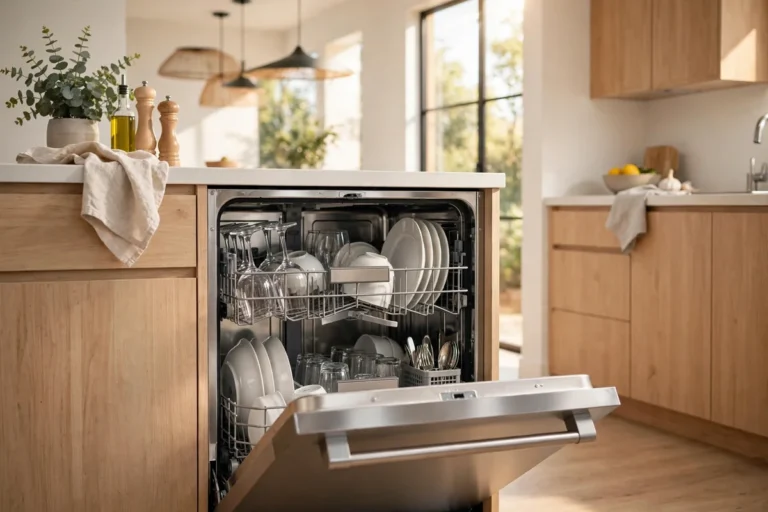
A dishwasher that leaves water inside can quickly disrupt your kitchen routine. The cause may be a simple filter blockage. It could also involve the drain hose, pump, air gap, or disposal connection.
For homeowners in Bend, Oregon, the first step is not replacing parts. Start by finding where the drainage path stops working.
This guide covers seven common causes and practical checks. It also explains what to do when there is no visible blockage. Whether you live near the Old Mill District, River West, Larkspur, or Northwest Crossing, the troubleshooting process starts the same way.
📋 Table of Contents — Tap to Jump to a Section
- 01 Introduction
- 02 Why Is My Dishwasher Not Draining?
- 03 How the Drain System Works
- 04 7 Common Causes
- 05 Dirty or Clogged Filter
- 06 Blocked or Kinked Drain Hose
- 07 Clogged Air Gap
- 08 Garbage Disposal Blockage
- 09 Faulty Drain Pump
- 10 Float Switch / Inlet Valve
- 11 Control or Electrical Problem
- 12 How to Fix It
- 13 No Blockage? What to Check
- 14 Diagnose by Symptom
- 15 Prevent Future Problems
- 16 When to Call a Technician
- 17 Facts and Figures
- 18 FAQ
- 19 Need Help?
Why Is My Dishwasher Not Draining?
A dishwasher drains through several connected components. The drain pump moves wastewater from the tub. The water then travels through the drain hose. It eventually reaches the sink drain, garbage disposal, or air gap.
A restriction anywhere along that path can leave water inside. Whirlpool’s troubleshooting guidance recommends checking the filter, sump, drain hose, air gap, disposal connection, and drain pump when drainage problems occur.
Before removing anything, check whether the cycle actually finished. Look for an error code on the control panel. Then inspect the filter area.
What Normal Dishwasher Drainage Looks Like
A small amount of water can remain in some dishwasher sump areas. The exact amount depends on the model, so your owner’s manual provides the best reference.
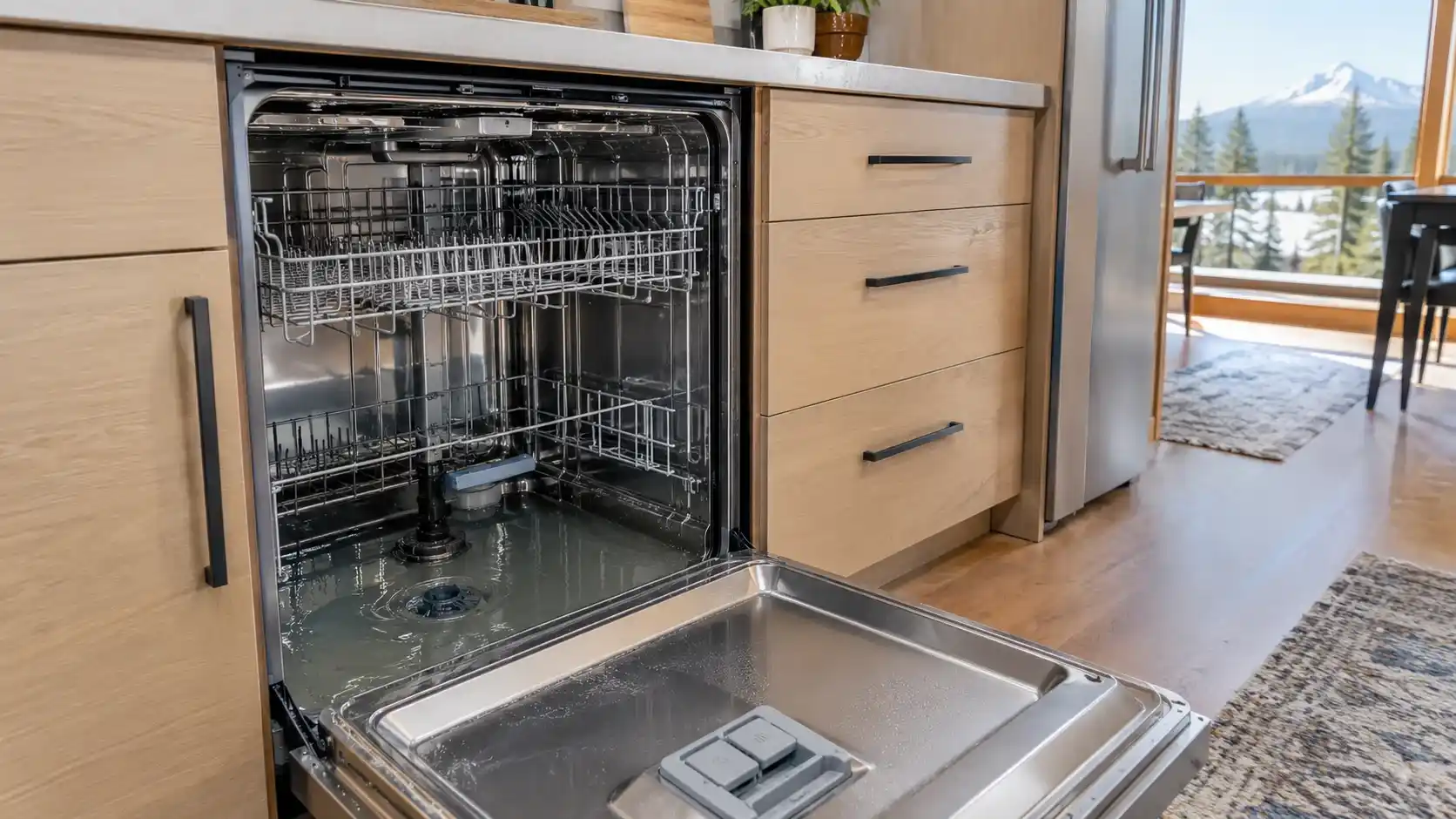
Water covering much of the tub floor after a completed cycle is different. That usually deserves troubleshooting.
Why Is My Dishwasher Not Draining?
Common causes include a clogged filter, restricted hose, blocked air gap, disposal blockage, or drain-pump problem. Start with the easiest checks before testing components.
How a Dishwasher Drain System Works
Knowing the drainage path makes troubleshooting easier. During the drain cycle, the control system activates the drain pump. The pump pushes water through the drain hose.
The hose may connect to a garbage disposal or sink drain. Some installations use an air gap. Others use a high loop in the drain hose. Proper hose routing or an air gap helps prevent wastewater from flowing back into the dishwasher.
The main drainage components work together, so checking only the filter does not always solve the problem.
| Component | What It Does | What Can Go Wrong |
|---|---|---|
| Dishwasher filter | Traps food and debris | Becomes clogged |
| Sump | Collects water below the filter | Debris can restrict flow |
| Drain pump | Moves wastewater out | Can jam, weaken, or fail |
| Drain hose | Carries water to the sink connection | Can kink or clog |
| Air gap | Helps prevent backflow | Can become blocked |
| High loop | Helps prevent wastewater returning | Poor routing can cause drainage issues |
| Garbage disposal connection | Receives dishwasher wastewater | Can become blocked or retain knockout plug |
Understanding these components gives you a better starting point. It also helps explain why a clean filter does not always mean the drainage system is clear.
7 Common Reasons Your Dishwasher Is Not Draining
The following seven causes cover both common blockages and less obvious appliance problems. Start with the simple possibilities before moving toward internal component diagnosis.
| Common Cause | Main Symptom | What to Check |
|---|---|---|
| Dirty dishwasher filter | Water remains inside | Filter and sump |
| Blocked drain hose | Slow or incomplete drainage | Hose routing and blockage |
| Clogged air gap | Water backs up or spills from air gap | Air gap and hose |
| Garbage disposal blockage | Dishwasher will not empty | Disposal and connection |
| Faulty drain pump | Humming or no water movement | Pump and impeller |
| Float or inlet valve problem | Unusual fill or cycle behavior | Float and water-level system |
| Control or electrical problem | Pump does not activate | Controls, wiring, door switch |
1. A Dirty or Clogged Dishwasher Filter
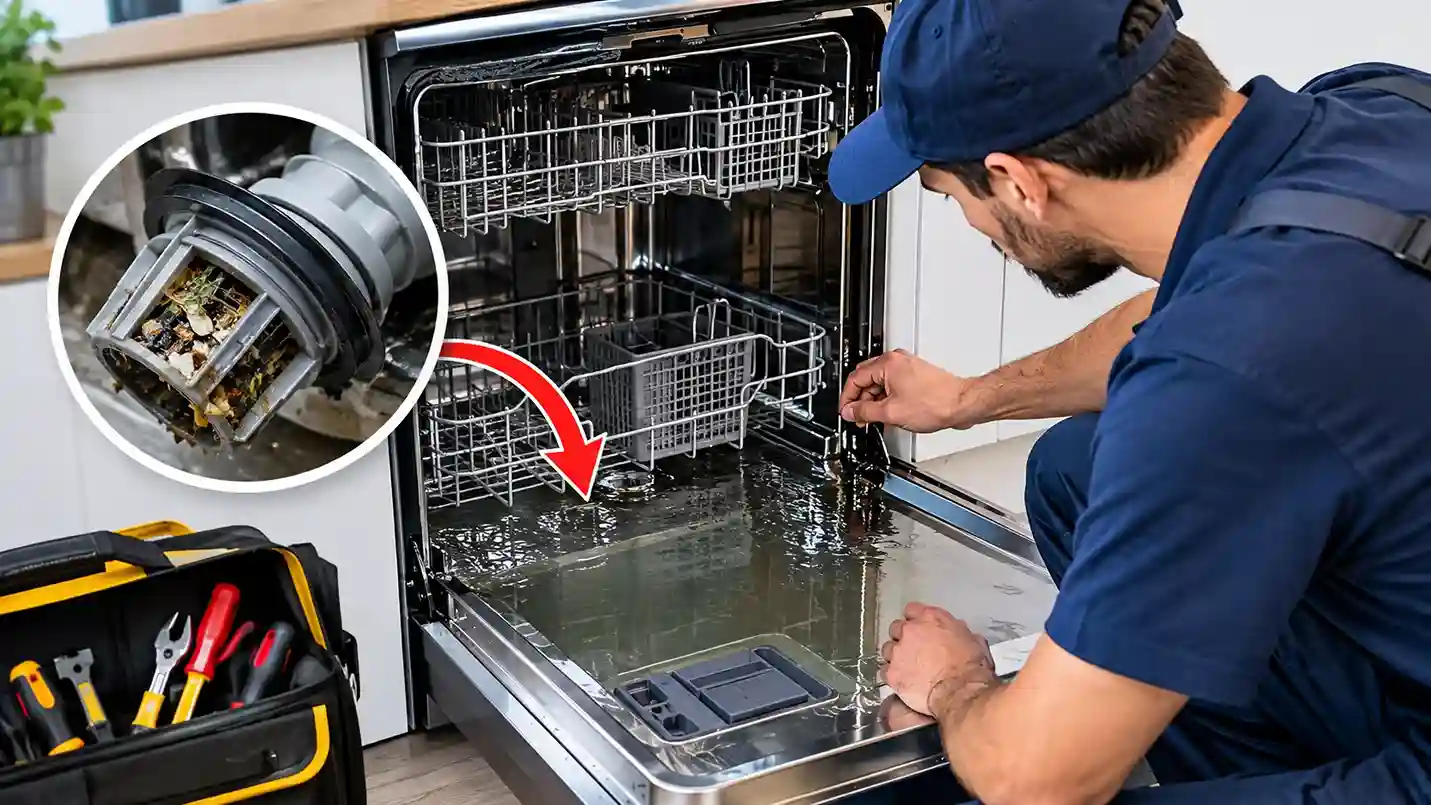
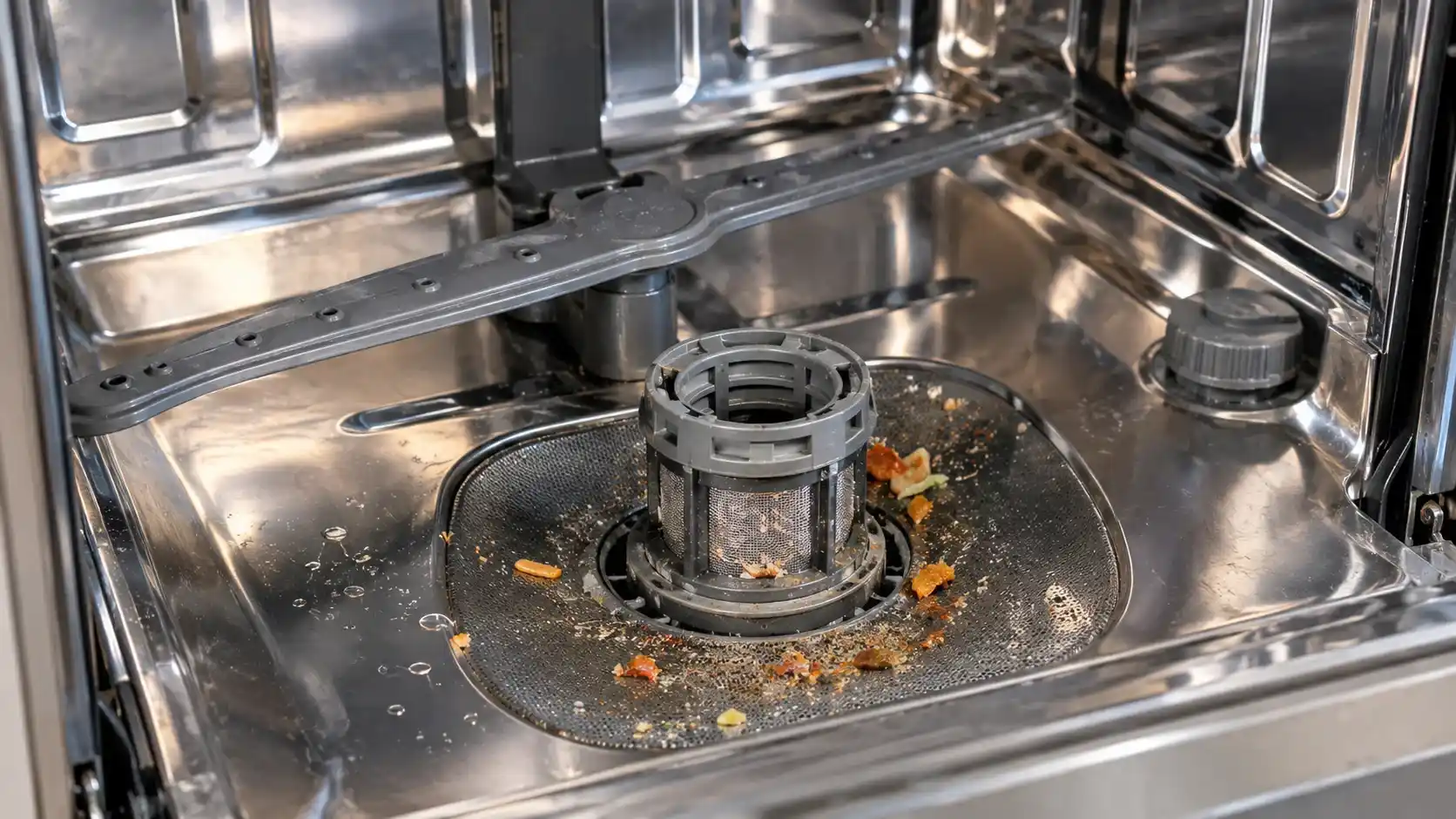
The dishwasher filter catches food particles before they reach the drain system. Food, grease, seeds, labels, and other debris can collect there over time.
Remove and clean the filter according to your model’s instructions. Rinse it under warm water and use a soft brush for stubborn residue. Avoid abrasive tools that can damage the filter mesh.
With the filter removed, inspect the sump area with a flashlight. Look for food particles, toothpicks, labels, or other debris. Do not reach blindly into the sump because broken glass can hide beneath the water.
Regular dishwasher filter cleaning is especially important if your household runs the appliance frequently. A clean dishwasher filter helps maintain proper water flow through the sump and drain system.
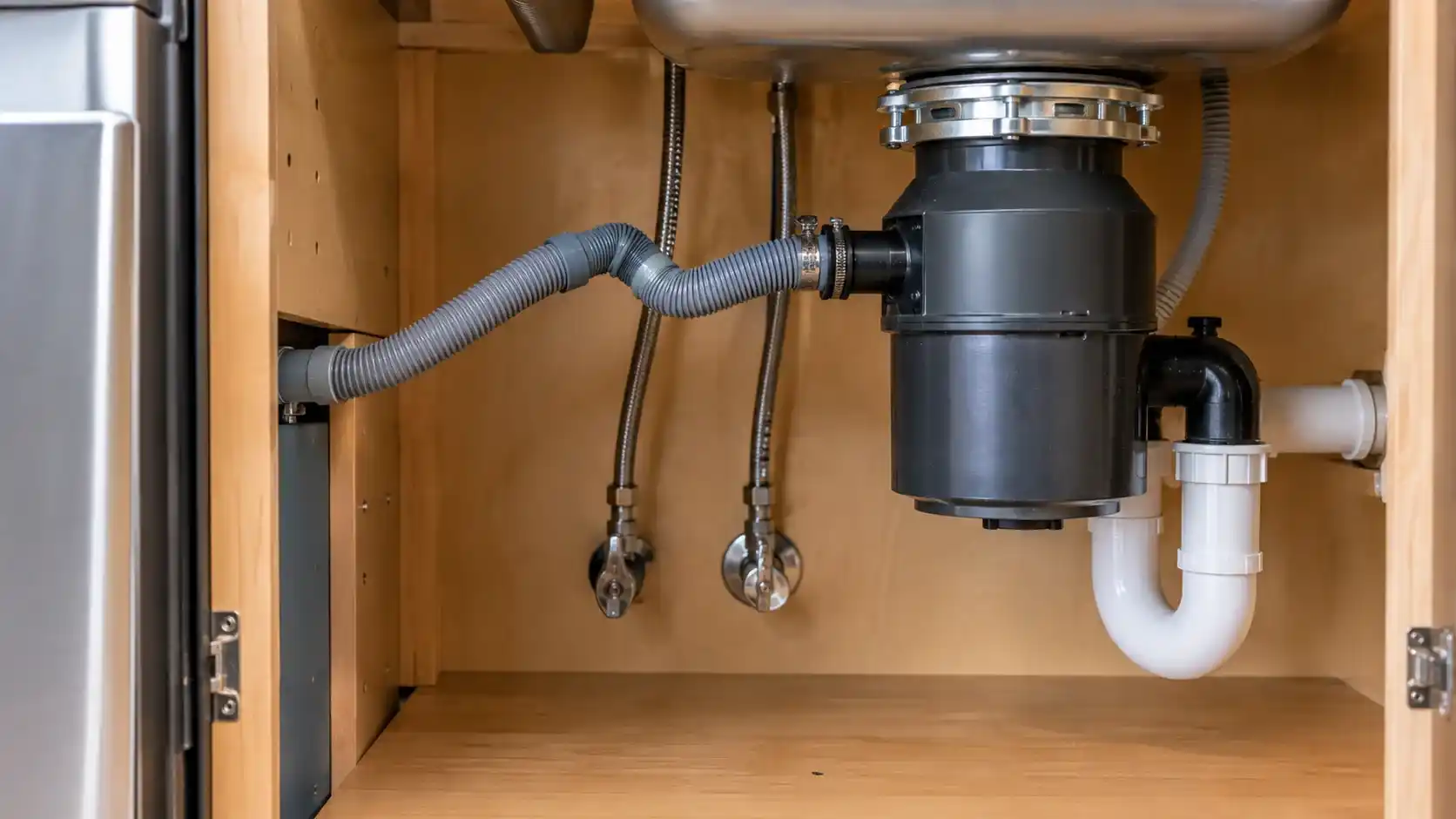
2. A Blocked or Kinked Dishwasher Drain Hose
The dishwasher drain hose carries wastewater toward the sink connection. Look underneath your kitchen sink and follow the hose from the dishwasher to its drain point.
Check for sharp bends, crushing, or unusual sagging. A hose can also develop an internal blockage.
This deserves extra attention after plumbing work. Moving a garbage disposal or storing items under the sink can change the hose routing.
A hose that worked correctly before the work may become pinched afterward. Do not use sharp objects to force a blockage through the hose because this can damage the hose and create a leak.
3. A Clogged Dishwasher Air Gap or Poor Hose Routing
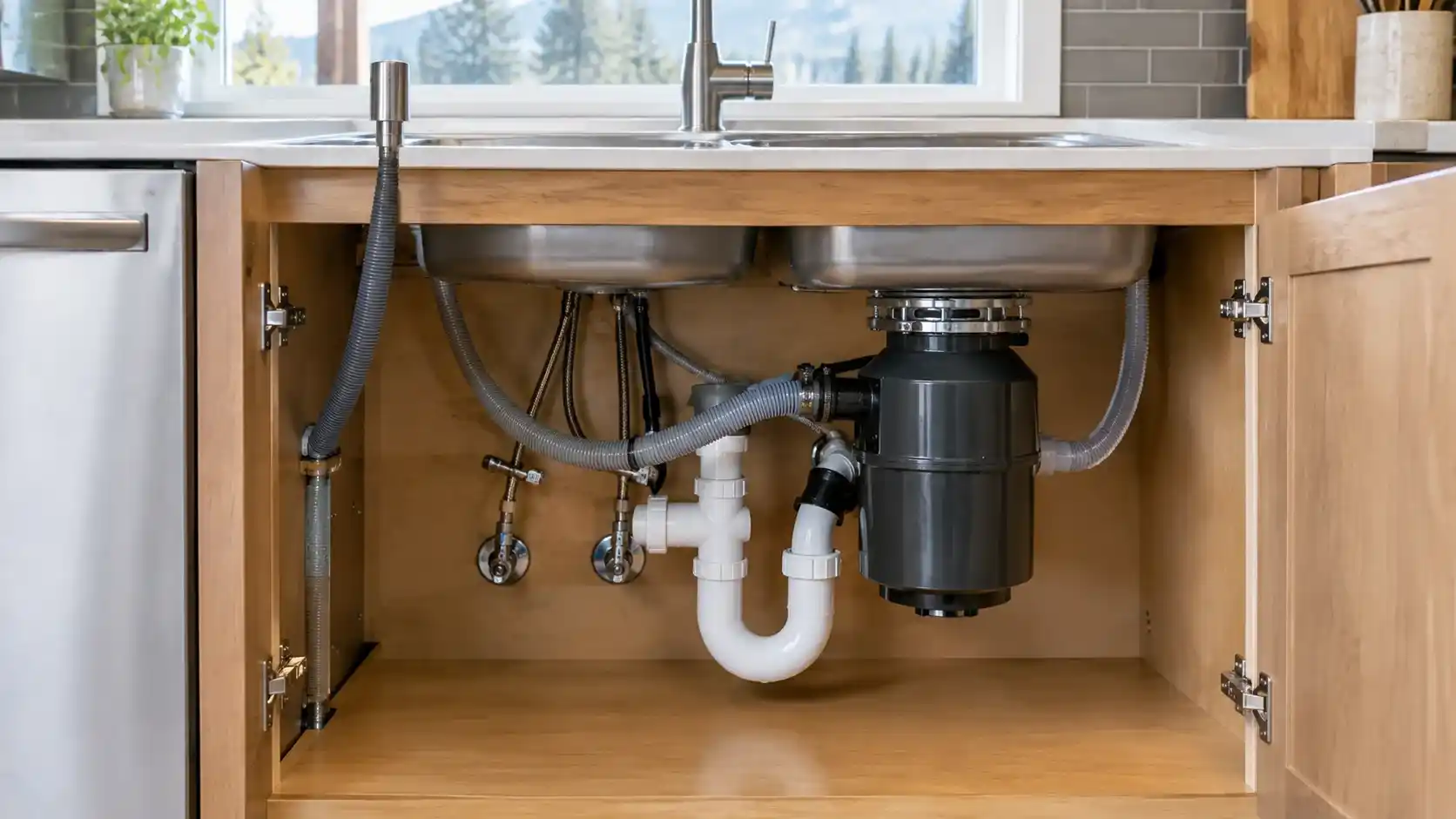
An air gap can become blocked with food debris. When that happens, water may back up during the drain cycle. You may also notice water coming out of the air gap.
If your dishwasher uses a high loop instead, inspect the hose beneath the sink. The correct routing depends on your dishwasher and installation instructions.
Poor routing can allow dirty sink water to return toward the dishwasher. It can also reduce the dishwasher’s ability to move wastewater through the drain path.
4. A Clogged Garbage Disposal or Sink Drain
Many dishwashers connect directly to the garbage disposal. A blockage there can stop wastewater from leaving the dishwasher.
Check whether your sink and disposal drain normally. A slow sink can point toward a downstream plumbing restriction.
There is another important issue after a new disposal installation. The dishwasher inlet may contain a knockout plug. That plug must be removed when the dishwasher connects to that inlet.
This problem can look like a failed dishwasher. The appliance may actually be working correctly while the disposal connection prevents water from leaving.
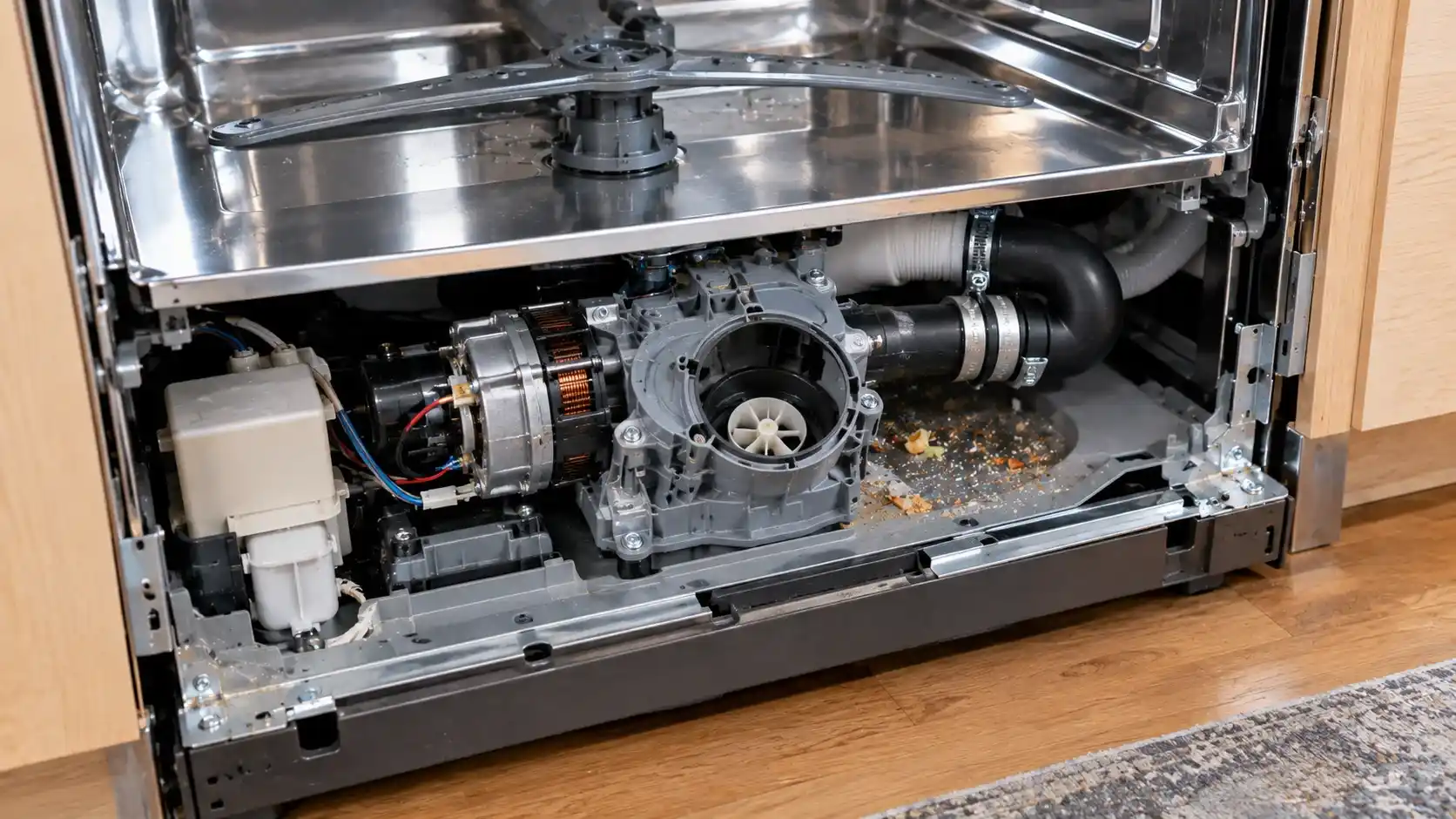
5. A Faulty Dishwasher Drain Pump or Impeller
The dishwasher drain pump creates the pressure needed to move wastewater. A blocked or damaged impeller can reduce that flow.
Listen when the dishwasher enters its drain cycle. A steady hum without water movement can point toward an obstruction or pump issue. Grinding sounds can also indicate debris around moving parts.
However, sound alone does not prove pump failure. Check the filter, sump, hose, and external drain connection first.
If those areas are clear, the drain pump may need further testing. Replacing a pump without confirming the problem can lead to unnecessary repair costs.
6. A Problem With the Float Switch or Water Inlet Valve
The float system helps monitor water levels. A stuck float can affect normal dishwasher operation.
The dishwasher water inlet valve controls incoming water. It is mainly a filling component, so it is not usually the first part to blame for a drainage problem.
However, water-level problems can sometimes look like drainage problems. Look at the complete cycle instead of focusing only on the standing water.
Does the dishwasher fill correctly? Does it wash normally? Does it reach the drain portion of the cycle? Does it stop before draining?
These clues help separate a drainage restriction from another operating problem.
7. A Control Board, Door Latch, or Electrical Problem
Not every drainage problem comes from a blockage. Sometimes the dishwasher never activates the drain system.
A faulty door latch or switch can interrupt the cycle. Control-board problems can also prevent the drain pump from receiving the correct signal.
If your dishwasher shows an error code, record it before resetting the appliance. The code may provide useful information for diagnosis.
Electrical problems require extra caution. If the dishwasher is hard-wired, avoid removing electrical panels unless you understand the required safety procedures.
How to Fix a Dishwasher That Is Not Draining
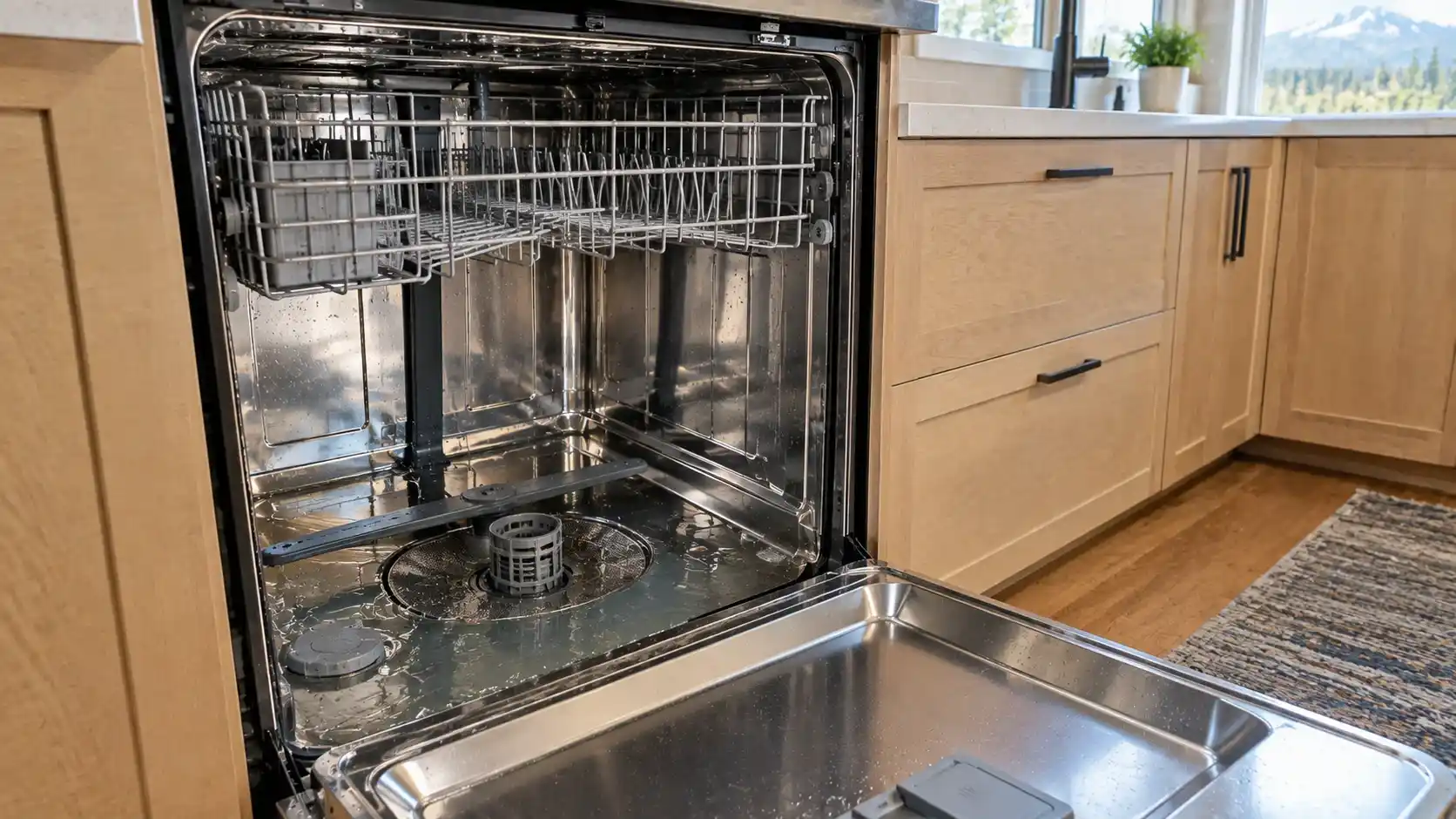
Start by removing the standing water. Use a cup or suitable container to remove excess water from the tub. Towels can help protect the floor and surrounding cabinets.
Do not pour chemical drain cleaner into the dishwasher. These products can damage components and create a safety problem during later repairs.
Next, remove and clean the dishwasher filter. Inspect the sump for visible debris. Once the filter is clean and correctly installed, inspect the drain hose underneath the sink.
Look for kinks, crushing, or poor routing. Check the air gap if your installation has one. If the dishwasher connects to a garbage disposal, inspect that connection as well.
If the disposal was recently replaced, confirm that the knockout plug was removed. This simple installation issue can completely prevent the dishwasher from draining.
After these checks, run a short cycle or drain function if your model provides one. Watch what happens to the water and listen to the pump. These observations can help identify the next area to investigate.
Dishwasher Not Draining but No Blockage? Here’s What to Check
A clean filter does not mean the dishwasher has no drainage fault. This is where deeper diagnosis becomes useful.
A pump can run without moving enough water. An impeller may also have damage or an obstruction. If water drains very slowly despite a clear filter and hose, the pump deserves attention.
A check valve can also affect drainage on models that use one. If water drains and later returns, inspect the backflow path. Check the hose routing and air gap first. Then consider the check valve if your model uses one.
If there is no pump sound, the problem may not be a clog. The door latch, wiring, control system, or pump circuit may need testing.
New installations deserve special attention. Check the drain hose routing, high loop, or air gap. If the dishwasher connects to a new disposal, verify the knockout plug was removed.
What Is Causing Your Dishwasher Drain Problem?
The symptoms can provide useful clues before any parts are replaced. Look at what the water is doing rather than assuming the most expensive component has failed.
| What You Notice | Possible Cause | What to Check Next |
|---|---|---|
| Water remains above the filter | Filter or sump restriction | Clean filter and inspect sump |
| Dishwasher hums but water stays | Pump or impeller issue | Inspect pump area |
| Water drains slowly | Partial restriction | Filter, hose, and air gap |
| Water drains then returns | Backflow | Hose routing and check valve |
| Water comes from air gap | Downstream blockage | Air gap and sink connection |
| No pump sound | Control or electrical issue | Pump circuit and controls |
| Problem began after disposal replacement | Knockout plug | Disposal connection |
These symptoms do not confirm a failed component. They simply help narrow the possible causes and decide what to inspect next.
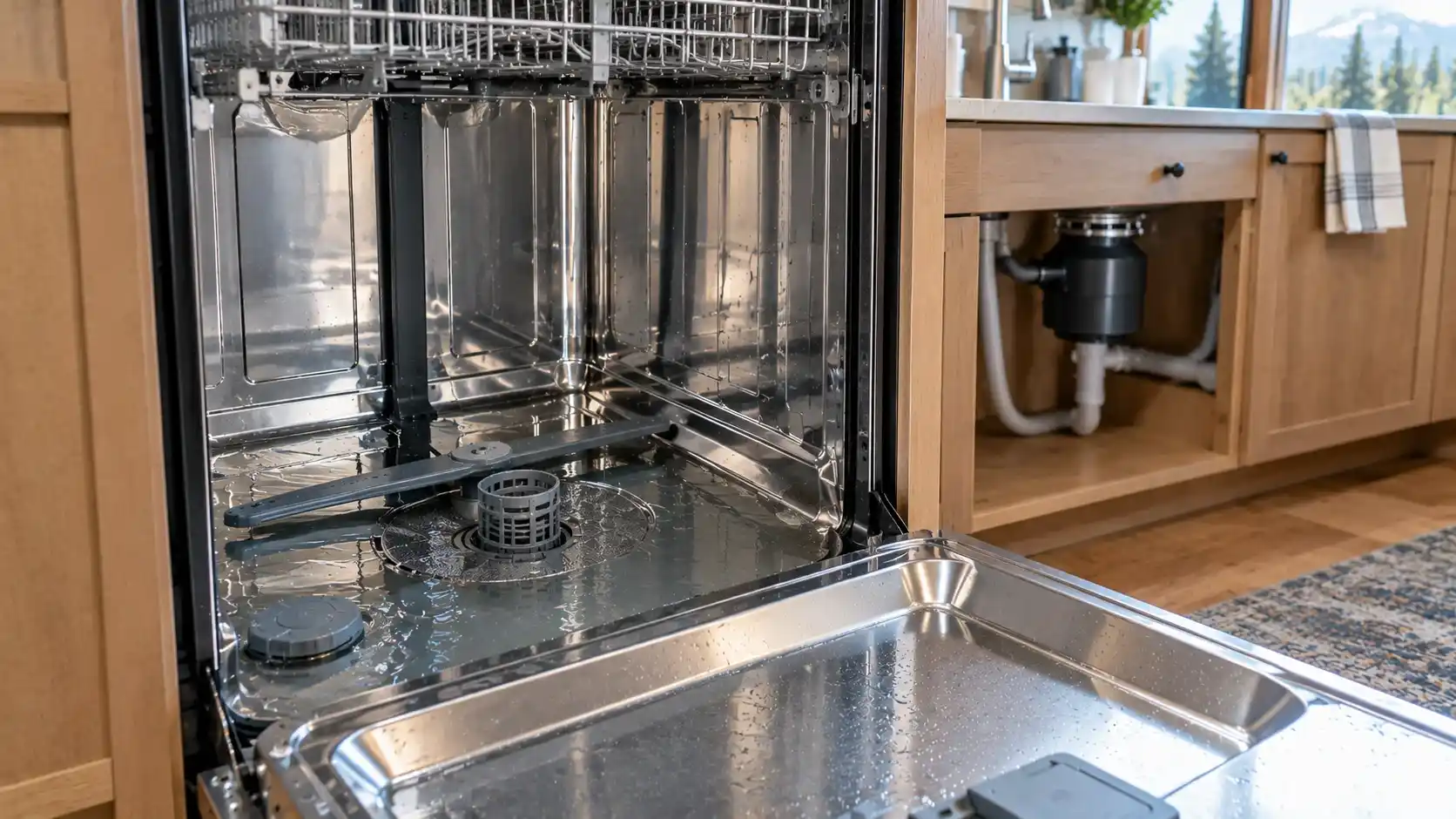
How Much Water Should Be Left in a Dishwasher?
This is one of the most confusing dishwasher questions. A small amount of water can remain in the sump area on some models.
That does not automatically mean the appliance has failed. The normal level varies by dishwasher design, so check your owner’s manual for model-specific guidance.
However, water covering the entire tub floor after a completed cycle is different. If water remains above the filter or repeatedly returns, investigate the drainage system.
Why is there water at the bottom of my dishwasher? A small amount in the sump may be normal. Significant standing water usually points toward restricted drainage, backflow, or a component problem.
How to Prevent Future Dishwasher Drainage Problems
A small restriction is usually easier to address than a complete drainage failure.
When Should You Call a Dishwasher Repair Technician?
Basic maintenance is reasonable when the problem involves a dirty filter or visible debris. More complicated problems should be handled with proper testing.
Consider professional service if the filter and hose are clear but the dishwasher still will not drain. The same applies when the pump makes unusual sounds, the dishwasher shows an error code, or water returns after draining.
Electrical problems deserve additional caution. If the dishwasher is hard-wired or requires access to internal electrical components, avoid experimenting with live wiring.
A technician can test the drain pump, wiring, controls, switches, and other components instead of replacing parts based on guesswork.
Dishwasher Repair in Bend, Oregon
A dishwasher drainage problem is inconvenient whether you live near Downtown Bend, Boyd Acres, the Old Mill District, or elsewhere in Central Oregon. The plumbing layout can vary between homes, but the basic diagnostic process remains similar.
For local homeowners, the first goal is to determine whether the restriction is inside the dishwasher or underneath the sink. That distinction can prevent unnecessary part replacement.
If cleaning the filter and checking the hose does not solve the problem, professional dishwasher repair can help identify the actual failure. Local appliance repair services in Bend handle drainage problems, leaks, unusual noises, and other dishwasher faults.
Facts and Figures: Dishwasher Drainage at a Glance
The most useful fact is that several different components can create the same symptom. A dirty filter can restrict flow. A kinked hose can limit drainage. A blocked air gap can interfere with the drain path.
A garbage disposal connection can stop water from leaving. A failed pump can prevent movement altogether. Control problems can also stop the drain cycle from starting.
Manufacturer troubleshooting guidance supports checking the filter, sump, hose, air gap, disposal connection, and pump before moving toward less common control problems.
That makes a systematic diagnosis more useful than immediately ordering a replacement pump.
Frequently Asked Questions About Dishwasher Drainage
Why is my dishwasher not draining?
A dishwasher can stop draining because of a clogged filter, restricted sump, blocked drain hose, garbage disposal connection, air gap, drain pump, or control problem. Start with the filter and visible drainage path before testing internal components.
How do I fix a dishwasher that is not draining?
Start by removing standing water and cleaning the filter. Then inspect the sump, drain hose, air gap, and garbage disposal connection. If the disposal was recently installed, check the knockout plug. If these areas are clear, the drain pump or electrical controls may need professional testing.
Why is my dishwasher not draining completely?
Partial drainage can result from a restricted filter, partially blocked hose, poor hose routing, air-gap blockage, pump weakness, or backflow. Watch how quickly the water leaves and whether it returns later.
Why is my dishwasher not draining but there is no visible blockage?
A hidden pump problem, damaged impeller, check-valve issue, control fault, or installation problem can cause drainage failure without an obvious clog. If the filter and external hose are clear, further component testing may be needed.
Need Help With a Dishwasher That Is Not Draining?
A dishwasher that will not drain does not always need an expensive part. Start with the filter, sump, drain hose, air gap, and sink connection. These checks can identify many common drainage problems.
If the dishwasher still leaves water after those checks, the next step is proper diagnosis. A technician can determine whether the problem involves the drain pump, electrical system, controls, or another internal component.
For Bend homeowners, getting the cause right matters more than simply replacing a part. The goal is to restore proper drainage and prevent the same problem from returning.
Need Help Diagnosing a Dishwasher That Won’t Drain?
If basic checks haven’t solved the problem, our technicians can find the actual cause and give you a clear repair estimate before any work begins.