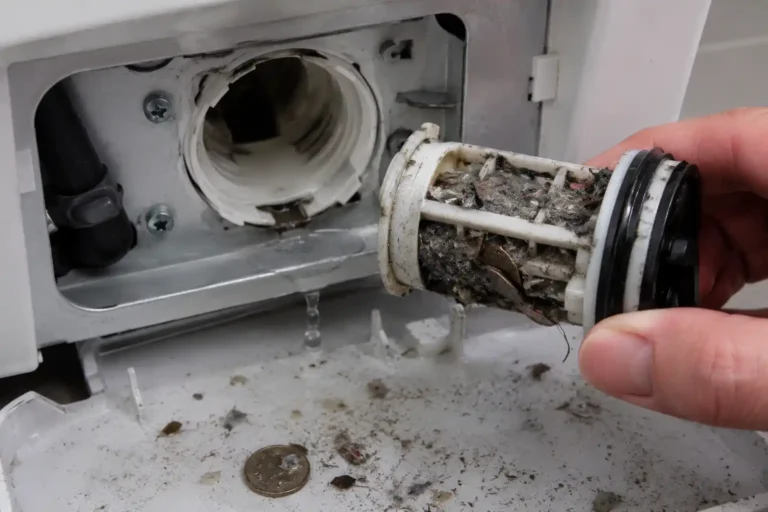

Dishwasher Leaving Dishes Wet and Dirty? Here’s What’s Usually Wrong (Bend, OR)
If your dishwasher leaves dishes wet and dirty, it is a common issue in Bend, Oregon. Most homes face it due to heat loss, poor loading, or rinse aid problems. It often starts small and gets worse if ignored. This guide explains real causes and practical fixes in simple terms.
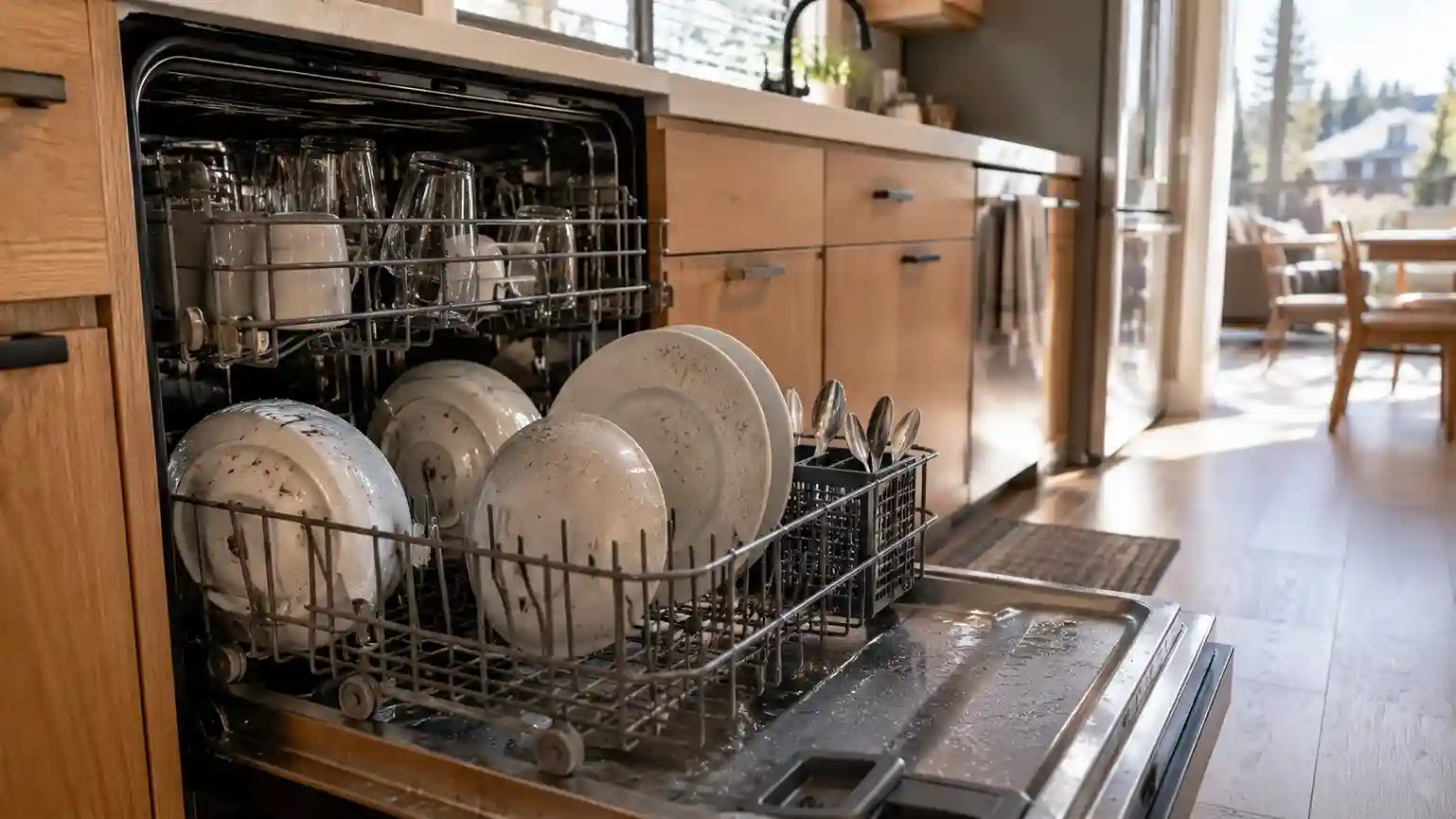
How a Dishwasher Actually Dries Dishes
Dishwashers use heat, steam, and airflow to dry dishes. Water must either evaporate or drain properly. If heat or airflow is weak, moisture stays on dishes. Drying performance depends on system type, water temperature, and cycle settings. Both modern and older machines rely on different drying technologies.
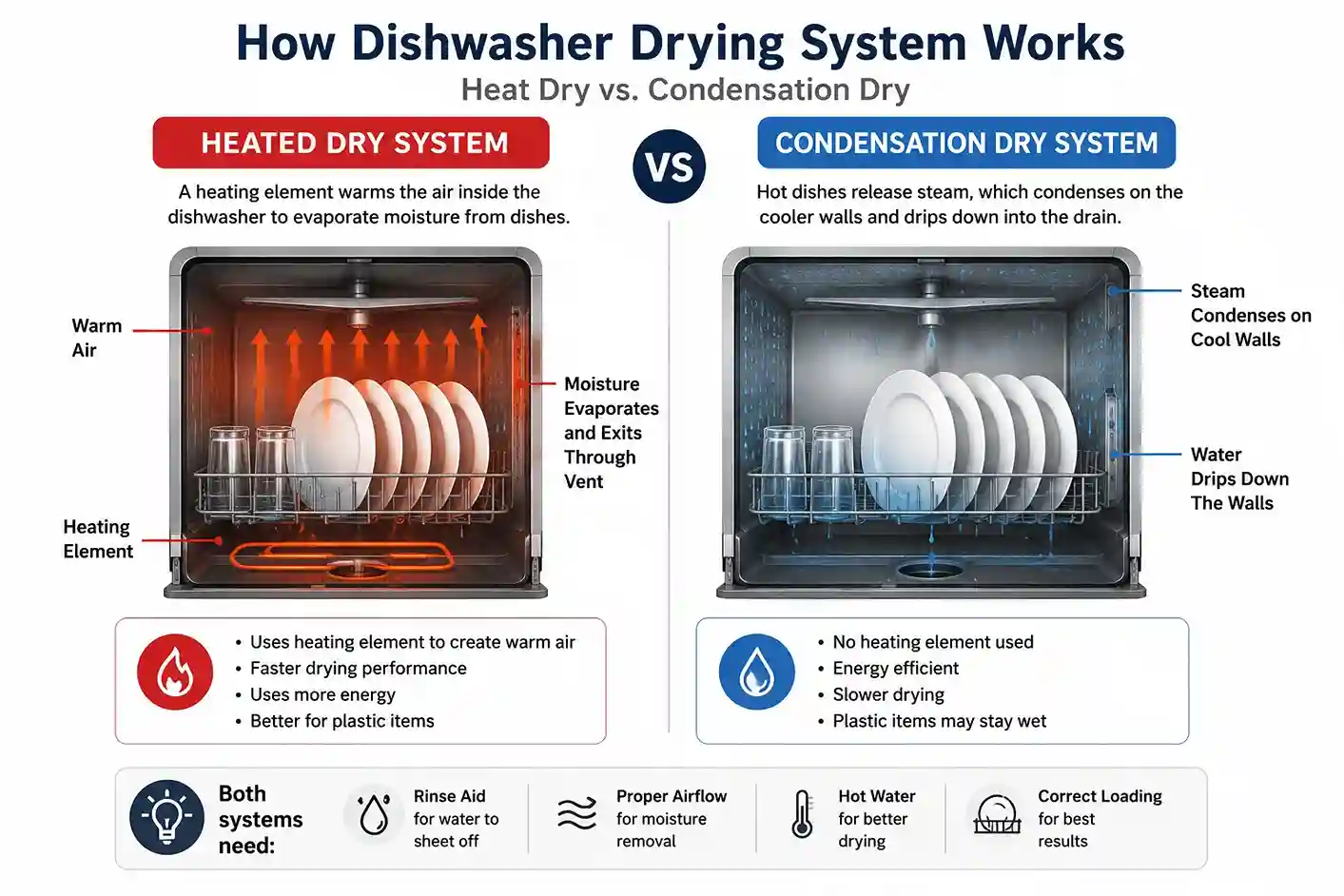
🔥 Heated Dry System
This system uses a heating element to warm the dishwasher interior. Hot air helps water evaporate from dishes during the final cycle. Steam exits through vents. If the heating element weakens, drying becomes poor. This system is faster but uses more energy compared to newer drying methods.
💧 Condensation Dry System
Condensation drying uses hot dishes and cool walls to form water droplets. These droplets slide into the drain naturally. No strong heating is used. It saves energy but works slower. It depends heavily on rinse aid and proper airflow. Plastic items often stay wet in this system.
| Feature | Heated Dry System | Condensation Dry System |
|---|---|---|
| Heat source | Heating element warms air | No active heating used |
| Drying method | Evaporation using heat | Condensation and drainage |
| Energy use | High electricity use | Energy efficient |
| Speed | Faster drying cycle | Slower drying process |
| Plastic drying | Better results | Often remains wet |
| Common issue | Heating element failure | Poor airflow or rinse aid |
Both systems work well when maintained properly.
Signs Your Dishwasher Is Not Drying Properly
Wet dishes, water droplets, and cold glassware are early signs of drying failure. Plastic containers often stay soaked. You may also notice water spots or leftover moisture at the bottom. In Bend homes, hard water makes these symptoms more visible and frequent over time. If you notice these signs consistently, professional dishwasher repair in Bend can identify the root cause quickly.
Top Reasons Your Dishwasher Leaves Dishes Wet and Dirty
Most drying issues come from simple causes like loading mistakes, missing rinse aid, or low heat settings. Some cases involve faulty components like heating elements or vents. Each issue affects airflow, heat, or water movement, which directly impacts how well dishes dry after the cycle.
Improper Dishwasher Loading
Dishes placed too close block airflow inside the machine. Water gets trapped between bowls and cups. This prevents proper drying. Overloading also reduces spray efficiency. Leaving space between items helps air circulate and improves drying results significantly in every cycle.
Heated Dry Is Not Turned On
Many users forget to activate heated dry mode. Eco settings often reduce heat automatically. This saves energy but leaves dishes wetter than normal. Without proper heat, water cannot evaporate fully. Always check cycle settings before starting the dishwasher for better drying performance.
No Rinse Aid in the Dispenser
Rinse aid helps water slide off dishes instead of sticking. Without it, water forms droplets on glass and plastic. This causes spotting and wet surfaces. It is one of the simplest and most effective fixes for improving dishwasher drying performance quickly.
Low Water Temperature
Dishwashers need hot water to clean and dry properly. Cold water reduces evaporation and weakens drying cycles. In colder Bend weather, this issue becomes more common. Running kitchen tap water before starting helps improve dishwasher performance and ensures better drying results.
Dirty Filter or Spray Arms
Filters and spray arms collect food debris over time. When clogged, water circulation becomes weak. This leads to poor cleaning and drying results. Regular cleaning ensures proper water flow and improves both washing and drying performance in every cycle.
Faulty Heating Element
A heating element produces the heat needed for drying. When it fails, dishes remain wet after every cycle. This is a common issue in older dishwashers. Without heat, evaporation cannot happen, leaving moisture on all surfaces. Professional repair services in Bend can test and replace a failed heating element safely.

Broken Vent or Airflow System
The vent system releases steam during drying. If it fails, moisture stays trapped inside. This leads to wet dishes even when heating works. Proper airflow is essential for removing humidity and completing the drying process effectively after each wash cycle.
Thermostat or Sensor Failure
Thermostats and sensors control temperature during drying. If they fail, the dishwasher may stop heating too early. This results in uneven drying. Some dishes may dry properly while others remain wet. This issue requires technical inspection for accurate diagnosis, which our Bend technicians can perform.
Control Board Problems
The control board manages all dishwasher functions. If it malfunctions, drying cycles may not activate correctly. This can lead to incomplete or inconsistent drying. It is less common but usually requires professional dishwasher repair due to electrical complexity.
Hard Water Build-Up
Bend water contains minerals that build up inside dishwashers. These deposits reduce water flow and drying efficiency. They also cause white spots on glassware. Regular cleaning and maintenance help reduce buildup and improve overall dishwasher performance over time.
| Problem | What You See | Why It Happens | Quick Fix |
|---|---|---|---|
| Improper loading | Wet dishes stuck together | Airflow blocked inside machine | Reload properly |
| No rinse aid | Water droplets on glass | Water sticks to surfaces | Refill dispenser |
| Heated dry off | Cold wet dishes | Dry cycle not activated | Turn on heated dry |
| Low water temp | Weak drying results | Cold water supply | Run hot water first |
| Clogged filter | Dirty wet dishes | Poor water circulation | Clean filter regularly |
| Heating failure | Fully wet dishes | No heat production | Replace heating element |
| Vent failure | Moisture trapped inside | No airflow release | Repair vent system |
Step-by-Step Fix Before Calling a Technician
Start by checking heated dry settings and rinse aid levels. Clean the filter to improve water flow. Run hot water before starting the cycle. Finally, load dishes with proper spacing. These simple steps fix most drying problems without needing professional repair services.
DIY Repair or Call a Professional?
Not sure whether to try fixing it yourself or call a pro? Use this guide. For complex electrical or heating issues, scheduling a dishwasher repair in Bend is the safest, most reliable choice.
| Issue | DIY Possible? | Call Technician? |
|---|---|---|
| Empty rinse aid | Yes | No |
| Dirty filter | Yes | No |
| Wrong loading | Yes | No |
| Eco mode issue | Yes | No |
| Heating element failure | No | Yes |
| Vent failure | No | Yes |
| Control board issue | No | Yes |
| Thermostat failure | No | Yes |
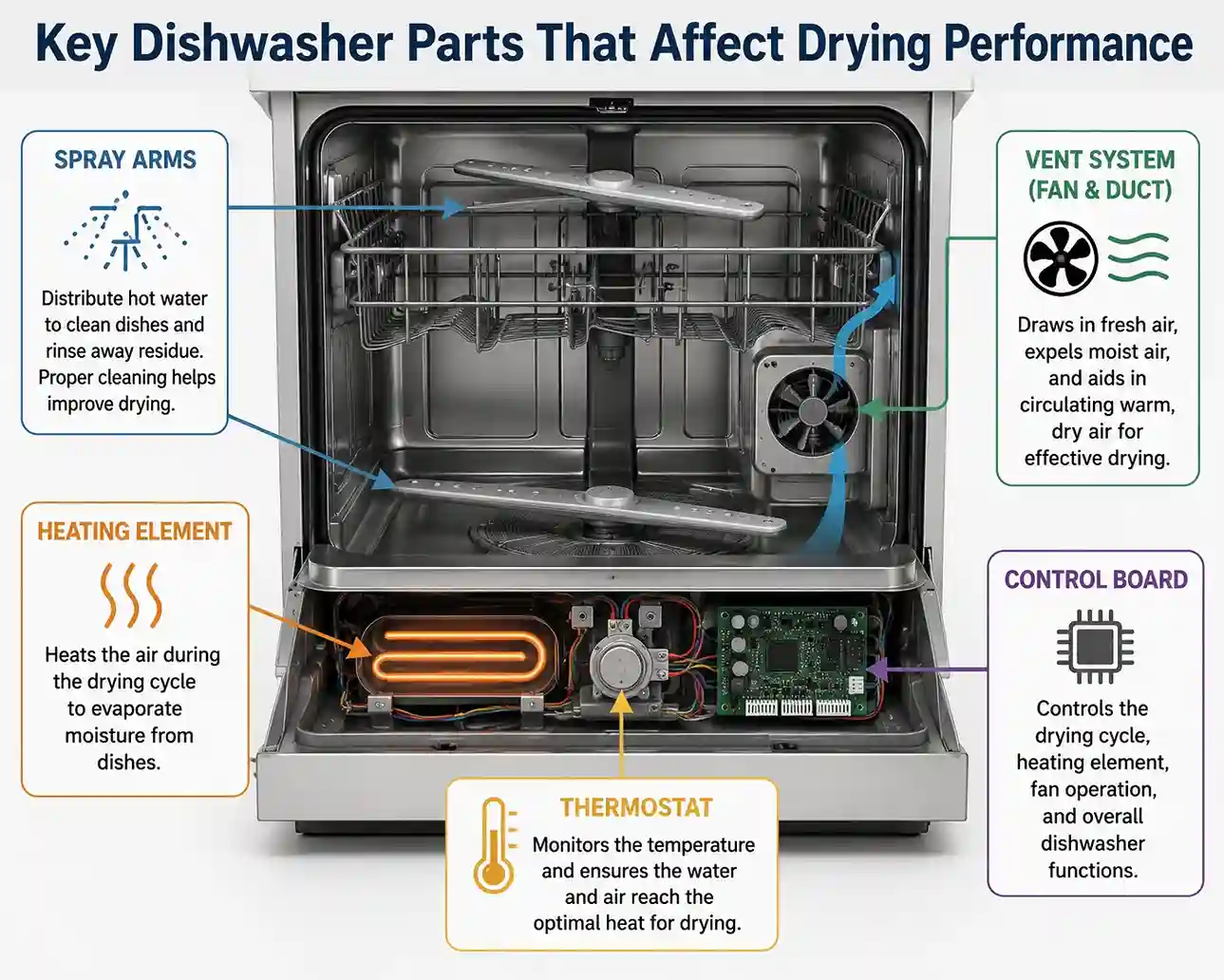
Dishwasher Parts That Control Drying
Several internal parts control drying performance. The heating element creates heat, while vents release steam. Thermostats manage temperature levels. Sensors detect moisture, and the control board coordinates all functions. If any part fails, drying performance drops quickly and becomes inconsistent.
Bend, OR – Why Dishwasher Drying Issues Are Common Here
In Bend, Oregon, dishwasher issues are common due to hard water and cold winters. Homes near Old Bend, NE 3rd Street, and Century Drive often report drying problems. Mineral buildup and low temperatures reduce efficiency, making regular maintenance very important for long-term performance. Our Bend-based repair team understands these local conditions inside out.
Maintenance Tips to Prevent Wet Dishes

Clean the dishwasher filter weekly to prevent blockages. Always keep rinse aid filled for better drying. Avoid overloading dishes and ensure proper spacing. Running hot water before cycles improves performance. Leaving the door slightly open after cycles also helps remove trapped moisture.
If you’ve tried these tips and dishes are still wet, contact our Bend appliance experts for a thorough inspection.
Local Success Story
A homeowner near Old Mill District had constant wet dishes. Settings and cleaning did not help. After inspection, we found a failing heating element. Replacing it restored full drying performance. This is a common issue in older dishwashers across Bend, Oregon homes.
Facts You Should Know
Rinse Aid Matters
Rinse aid fixes many drying cases quickly. It reduces water surface tension and helps water slide off dishes.
Heating Element Failure
Heating element failure is a major repair issue. It often requires professional replacement to restore drying.
Hard Water Effects
In Central Oregon, hard water reduces drying performance and causes mineral buildup over time.
Eco Mode Trade-off
Eco mode reduces heat intentionally to save energy, but it significantly affects drying quality.
Don’t Let Wet Dishes Ruin Your Day
Dishwasher drying issues are usually simple at first. Ignoring them makes the problem worse over time. In Bend, Oregon, water quality and cold weather increase the chances of wet dishes. Regular maintenance and correct settings help prevent most issues effectively, but when in doubt, our team is just a call away.
Frequently Asked Questions
Why are my dishwasher dishes still wet after the cycle?
Dishes stay wet when heat or airflow is weak. Missing rinse aid also causes poor drying. In many cases, Eco mode reduces drying power. Hard water in Bend, Oregon also increases moisture retention on glass and plastic surfaces after cycles.
Does rinse aid really help dry dishes?
Yes, rinse aid improves drying significantly. It reduces water surface tension, allowing water to slide off dishes faster. It also prevents water spots on glasses and improves overall drying performance, especially in modern condensation-based dishwashers commonly used in Bend, Oregon homes.
Should I leave the dishwasher door open after cycle?
Yes, leaving the door open allows steam to escape naturally. This reduces moisture inside the machine and improves drying. It also prevents odor buildup and helps dishes cool faster without retaining excess water.
Can hard water affect drying?
Yes, hard water minerals build up inside the dishwasher, reducing efficiency and causing spots. Regular cleaning and descaling help maintain drying performance.
When should I call a professional for dishwasher drying issues?
If you’ve checked rinse aid, loading, filters, and settings but dishes are still wet, the heating element, vent, or control board may need professional diagnosis and repair.
Need Dishwasher Repair in Bend, OR?
If your dishwasher keeps leaving dishes wet and dirty, professional help may be needed. Appliance Repair Bend OR offers fast, reliable service for all major brands.
We serve Bend and nearby areas with same-day diagnostic and repair services.