Refrigerator Water Dispenser Not Working? Fixes for Bend, OR Homes
You press the dispenser paddle and nothing comes out. No water, no sound, or just a weak trickle. This guide walks you through the most common causes of a dead dispenser. It covers safe checks you can do yourself. It also explains when to call a local refrigerator technician.
Start Here: What to Check When the Dispenser Dies
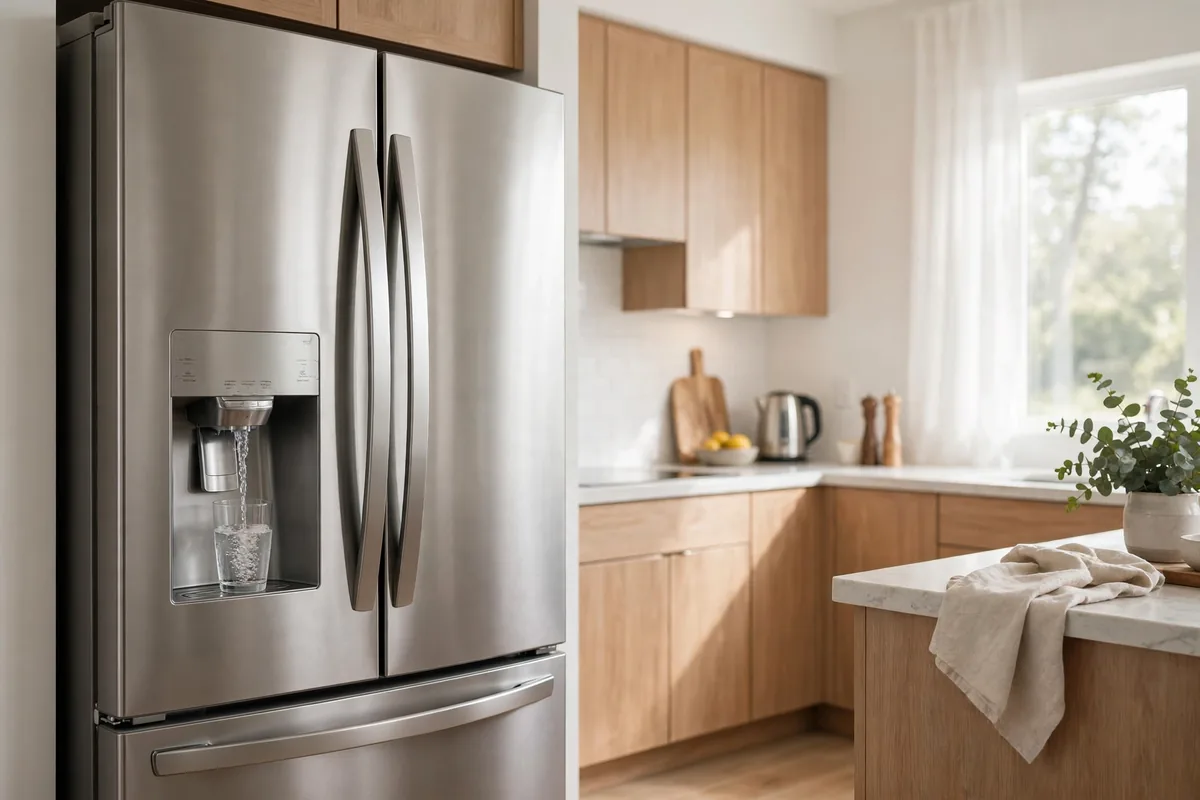
A refrigerator water dispenser not working is one of the most confusing appliance problems. The refrigerator stays cold. The ice maker keeps making ice. Yet the water dispenser on the door gives you nothing.
This mismatch is actually good news. It tells you the cooling system and the main water supply are fine. The problem is isolated to the dispenser path, which narrows the suspects down to a short list.
The most common causes are a clogged filter and a frozen water line inside the door. A failed water inlet valve, a broken dispenser switch, and an engaged control lock round out the list. Less often, low household water pressure or a kinked supply line behind the fridge is to blame.
This guide is written for homeowners in Bend and Redmond, Oregon. It covers eight causes in detail and a step-by-step routine you can follow in order. It also covers local factors that make dispenser problems more likely here. Finally, it explains when professional refrigerator repair in Bend is the right move.
How a Refrigerator Water Dispenser Works
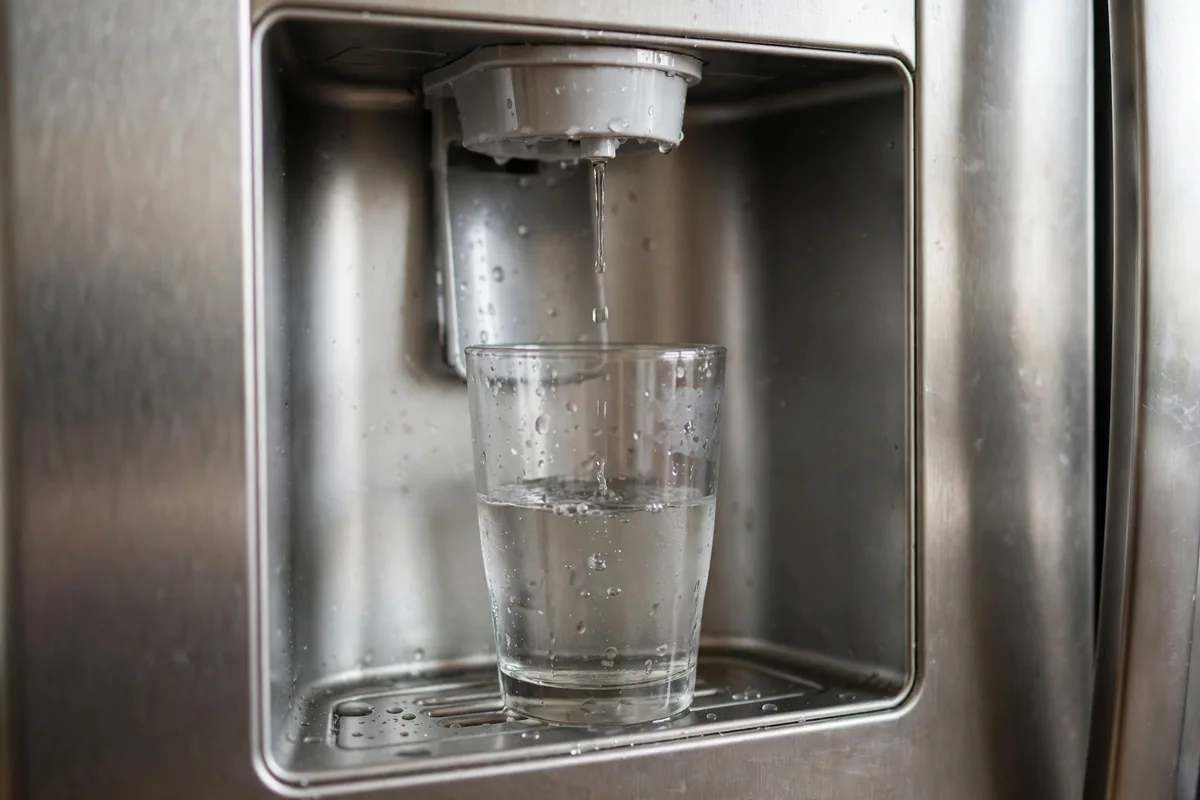
A dispenser is a simple chain of parts. Household water enters through the supply line and passes through the filter. The filtered water waits at the inlet valve. Pressing the paddle sends a signal through the dispenser switch. The control board energizes the valve coil. Water flows up through the door line and out the spout.
That chain matters for diagnosis. A failure at any link stops the flow, but each link fails in its own way. A clogged filter slows everything. A frozen door line blocks only the dispenser. A failed valve coil kills one path but not the other. Knowing the chain turns a mystery into a checklist.
The dual-solenoid inlet valve deserves special attention. It is really two valves in one housing. One coil feeds the ice maker, and the other feeds the dispenser. The two coils fail independently. This is why a refrigerator water dispenser not working alongside a healthy ice maker is such a common story.
The door line is the other unique weak point. It is the only part of the water path that lives inside freezing air. On French-door models it runs the full height of the freezer door. Any water left standing in it can freeze solid between uses.
Table of Contents — Tap to Jump to a Section
- 01 Introduction
- 02 Why the Dispenser Quits
- 03 Dispenser vs. Ice Maker Split
- 04 Clogged or Old Water Filter
- 05 Frozen Water Line in the Door
- 06 Faulty Water Inlet Valve
- 07 Broken Dispenser Switch or Paddle
- 08 Control Lock Engaged
- 09 Low Water Pressure
- 10 Kinked Supply Line
- 11 Failed Dispenser Control Board
- 12 Step-by-Step Diagnosis
- 13 Prevention
- 14 Central Oregon Factors
- 15 DIY or Pro?
- 16 When to Call a Pro
- 17 FAQ
- 18 Bend & Redmond Service
- 19 Final Takeaway
Why Is My Refrigerator Water Dispenser Not Working?
The most common reasons a water dispenser stops dispensing are:
- The water filter is clogged, overdue for replacement, or installed incorrectly.
- The water line running through the freezer door has frozen solid.
- The dispenser-side solenoid on the water inlet valve has failed.
- The dispenser switch or paddle is broken and no longer signals the valve.
- The control lock or dispenser lock is engaged and disabling the buttons.
- Household water pressure has dropped below what the inlet valve needs.
- The supply line behind the refrigerator is kinked, crushed, or blocked.
- The dispenser control board is no longer sending voltage to the valve.
Start with the fastest checks first: the control lock, the filter age, and the paddle click. Most take less than five minutes and solve a surprising share of problems.
Safety first: unplug the refrigerator before removing any rear access panel. Shut off the water supply before disconnecting any water line. Never chip ice with a sharp tool inside the dispenser area — when in doubt, stop and call a professional.
The Dispenser vs. Ice Maker Split: Your Fastest Clue
Your refrigerator’s dispenser and ice maker share one water supply line and one dual-solenoid inlet valve. They use separate paths through that valve, though. That is why one can work perfectly while the other fails. Match your symptom below before reading further.
| What You Notice | What It Tells You | Most Likely Cause |
|---|---|---|
| Dispenser dead, but the ice maker works fine | The water supply and the valve body are healthy | Frozen dispenser line in the door, failed dispenser-side solenoid, broken paddle switch, control lock |
| Ice maker dead, but the dispenser works fine | The problem is isolated to the ice maker circuit | Failed ice-maker side of the inlet valve, frozen ice maker fill tube |
| Both dispenser and ice maker are dead | The problem is upstream of the valve | Clogged water filter, shutoff valve closed, kinked supply line, failed inlet valve |
| Dispenser runs but only as a weak trickle | Water is getting through, just not enough of it | Clogged filter, low water pressure, air trapped in the line |
| Dispenser stopped right after a filter change | The new filter disrupted the flow path | Filter not fully seated, protective caps left on, trapped air |
The first row is this guide’s home turf. If your ice maker is the one that quit instead, the root cause lives in the ice maker circuit. A different diagnostic path applies to that problem.
A Clogged or Overdue Water Filter
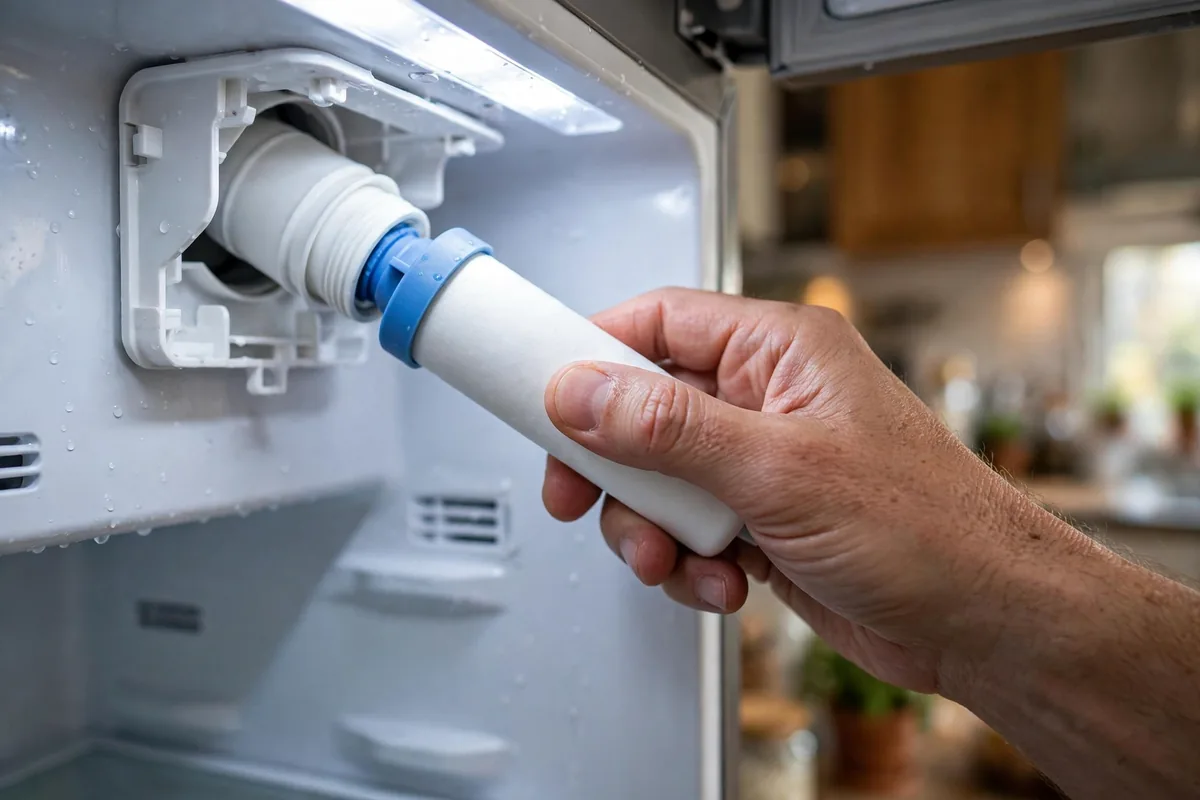
The water filter is the first suspect whenever a refrigerator water dispenser is not working. It sits upstream of the inlet valve and filters every drop before it reaches the dispenser. A restricted filter starves the entire dispenser path.
Most manufacturers recommend replacing the filter every six months. In practice, many households let it go a year or longer. By that point, a clogged cartridge can block flow almost completely. The paddle clicks and the valve hums, but nothing comes out.
Central Oregon water makes this worse. Much of the region’s municipal and well water runs hard with dissolved minerals. Hard water loads filters faster than the calendar suggests. If your dispenser has slowed gradually over months, a loaded filter is the likely culprit.
Check the filter age first. If you cannot remember the last change, replace it now. Use the exact cartridge for your refrigerator model. Wrong-fit filters seat poorly and restrict flow just as badly as a clogged one.
Also verify the installation. A new filter that is not locked fully into its housing blocks flow. Protective end caps left on the cartridge do the same. Remove the filter, confirm the seals and caps, and reinstall it firmly until it seats fully.
Do not rely only on the filter alert light. That alert is a timer, not a sensor. It cannot tell whether your water is hard or full of sediment. A cartridge can clog long before the alert appears, especially on well water. If the dispenser slows early, change the filter anyway.
After any filter change: hold the dispenser paddle down for up to two minutes, filling and emptying several glasses. This purges trapped air from the line. A dispenser that sputters after a filter swap is usually just full of air. It is not broken.
2. A Frozen Water Line in the Freezer Door
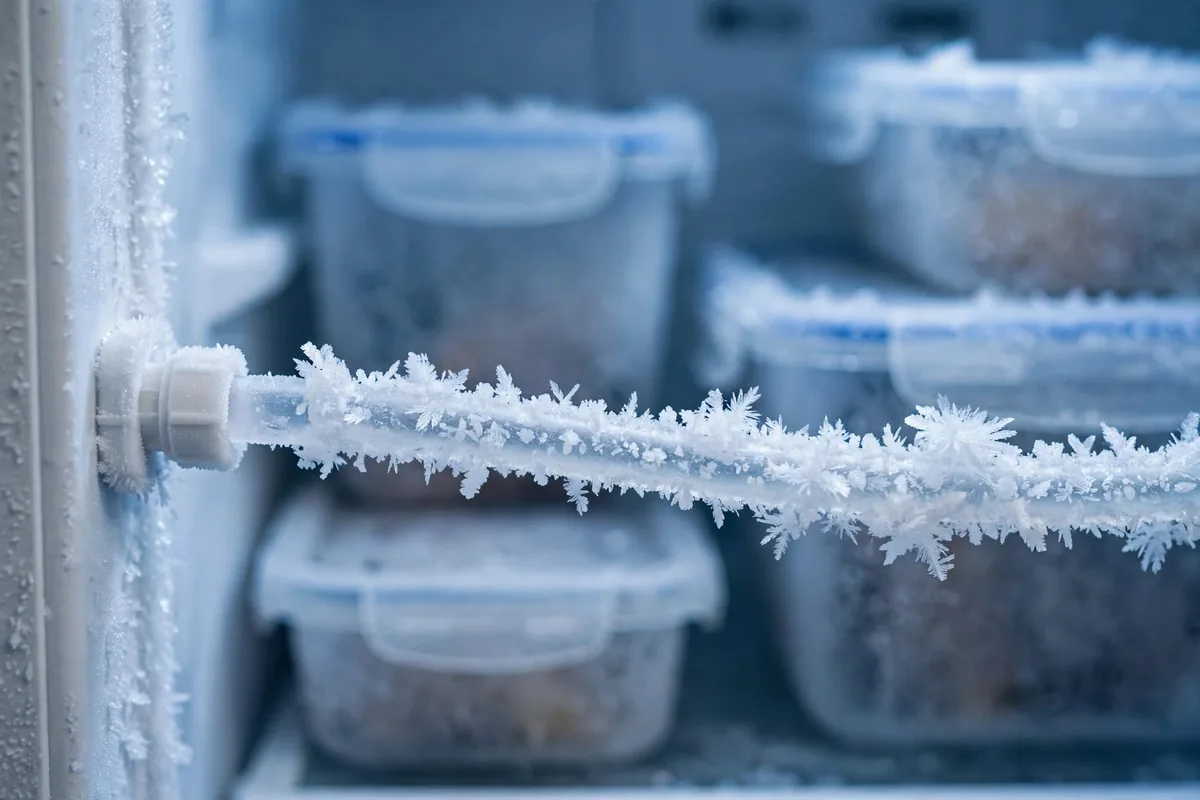
This is the classic explanation for the dispenser-dead-but-ice-works symptom. On most French-door and side-by-side models, the dispenser water line runs up through the freezer door itself. A small section of tubing sits in sub-freezing air for its entire length.
When that line freezes solid, the ice maker keeps working because its fill tube takes a different route. The dispenser, meanwhile, goes completely silent — or lets out only a few drips before the paddle clicks uselessly. You may notice it after a long stretch of cold weather. A freezer set colder than usual causes the same result.
To thaw it safely, unplug the refrigerator and leave the freezer door open for a few hours. Place towels underneath to catch drips. A hair dryer on low heat, waved gently across the inside of the door, speeds things up. Keep the dryer moving and hold it at a safe distance. High heat can damage the door liner and the tubing.
Some models include a built-in thaw feature on the dispenser panel, often labeled as a temperature or energy-saving control. Check your owner’s manual before improvising — the manufacturer’s method is always the safest.
After thawing, set the freezer to the manufacturer’s recommended temperature, typically around 0°F. A freezer running colder than necessary is the most common reason the door line refreezes. If the line freezes again within weeks, have the door insulation and the inlet valve checked. A valve that seeps slightly lets water sit in the line between uses. That standing water freezes solid.
3. A Faulty Water Inlet Valve
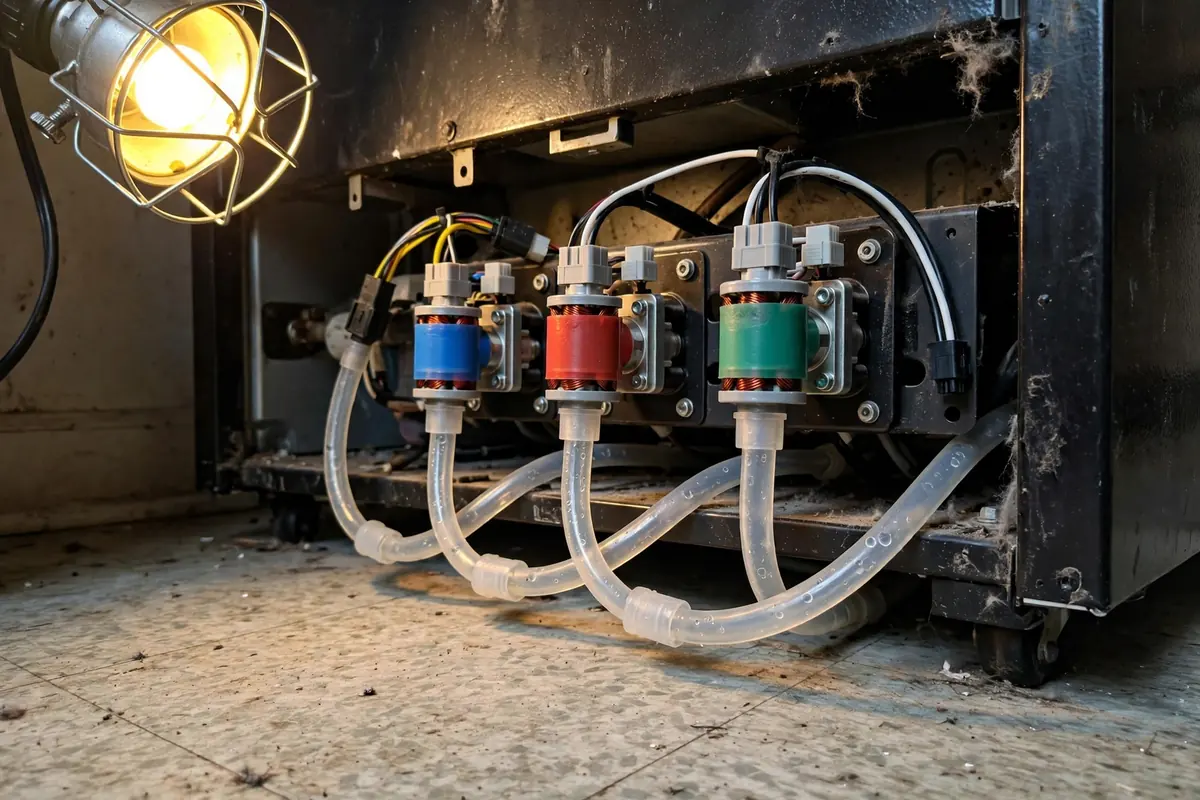
The water inlet valve is an electrically controlled valve at the bottom rear of the refrigerator. It opens on command to send water to the dispenser or the ice maker. Most are dual valves with a separate solenoid coil for each path.
This split explains the confusing symptom perfectly. The dispenser-side coil can fail while the ice-maker side keeps working normally. Ice cubes drop as usual, but the door dispenser gets nothing — or the exact reverse on another appliance.
The key diagnostic clue is sound. Press the dispenser paddle and listen at the back of the refrigerator. A brief buzz or hum means the valve is receiving power and trying to open. The problem is more likely a frozen line or a clogged filter upstream. Complete silence points toward the valve itself, the dispenser switch, or the control board.
Inlet valves also fail mechanically. Mineral scale from hard water can clog the tiny internal passages. The seals can also wear out over years of use. A valve that hums but lets through only a weak stream is often partially clogged rather than electrically dead.
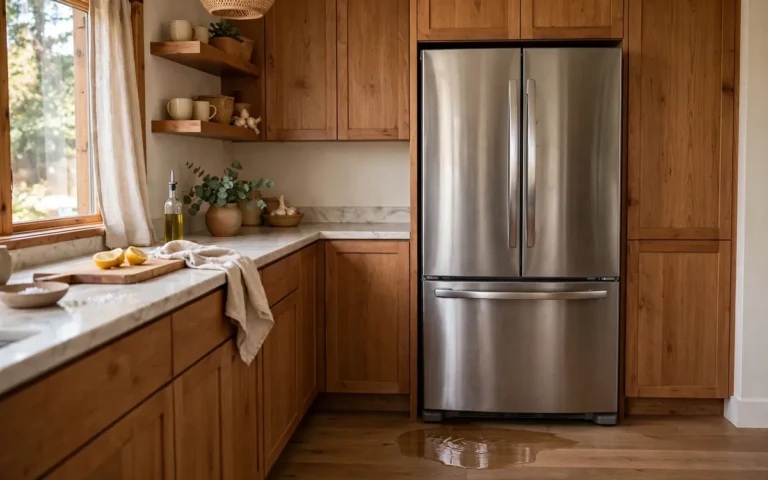
Replacing an inlet valve combines water connections with electrical components behind a heavy appliance. Shut off the water supply first, keep towels ready, and check carefully for leaks after any valve work. Many homeowners reasonably hand this job to a technician. A slow leak behind the refrigerator causes far more damage than the repair itself.
4. A Broken Dispenser Switch or Actuator Paddle
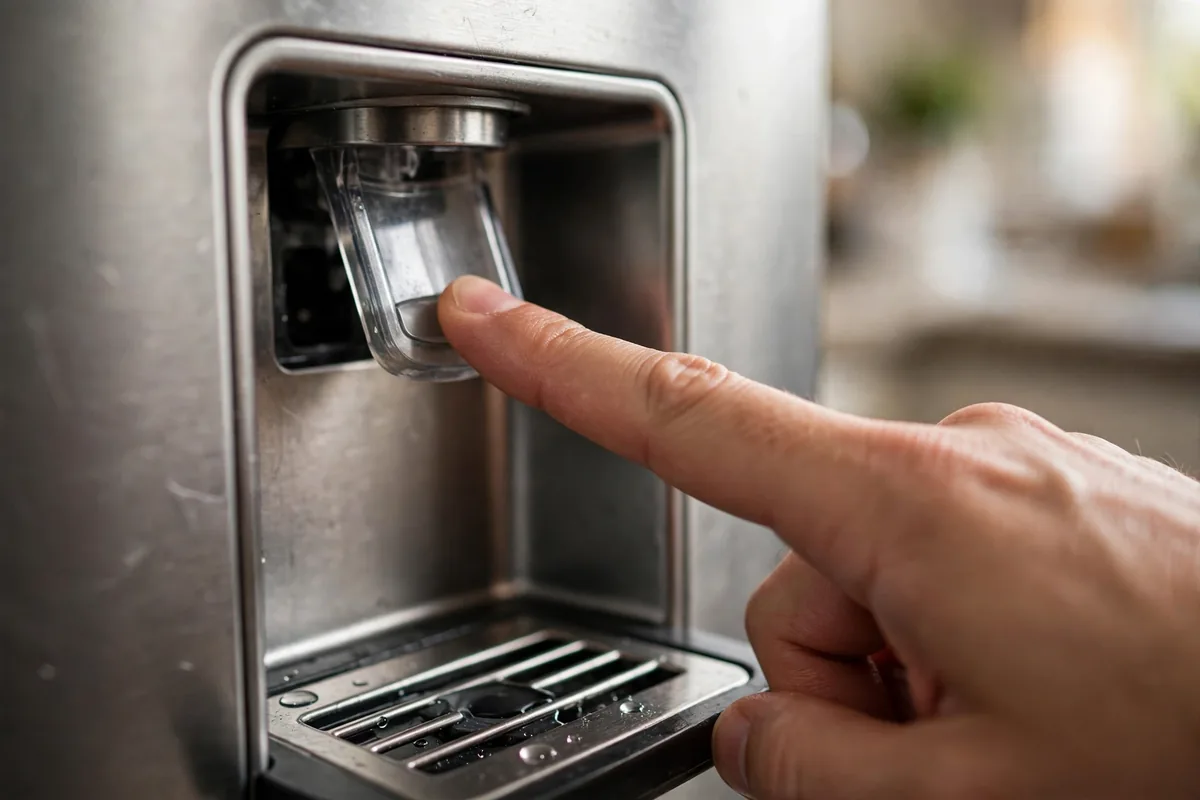
The paddle you press with your glass is not just a lever. Behind it sits a micro-switch that signals the control board to open the inlet valve. If that switch wears out, the paddle moves but no signal is ever sent.
The feel of the paddle tells you a lot. A healthy paddle clicks crisply and springs back firmly. A broken one feels mushy, loose, or stiff — or it stays pressed in and does not return. On older French-door models, the plastic actuator lever can crack at its pivot point. You can often spot this with a flashlight.
Listen closely when you press the paddle. A crisp click with no valve hum suggests the switch works but the valve is not opening. The problem lies downstream. No click at all suggests the switch itself is dead or mechanically broken. Either result narrows the search usefully.
Switches fail from simple wear. A household that fills dozens of glasses a day cycles the switch thousands of times a year. Replacement switches are inexpensive parts. Reaching them requires removing the dispenser faceplate, though. That job involves fragile plastic tabs that crack easily on older doors. Patience and a plastic trim tool matter more than force here.
5. The Control Lock or Dispenser Lock Is Engaged
Before you suspect any part, check the control panel for a lock icon. Most modern refrigerators have a control lock — sometimes labeled dispenser lock — that disables the dispenser buttons and paddle entirely. It exists to prevent spills and curious children from flooding the kitchen.
The lock gets engaged more often than people expect. Someone leans on the panel while cleaning, a child holds the button down, or a houseguest explores the controls. The dispenser then appears completely dead: no click, no hum, no water. Everything else works normally.
The fix is simple. Press and hold the lock button for about three seconds, or follow the unlock prompt on the display. The exact procedure varies by brand, so check your owner’s manual if the panel is unclear. Water should flow immediately after the lock releases.
Check this first, every time. It takes ten seconds, costs nothing, and resolves a surprising number of “dead dispenser” service calls. Rule it out before touching anything else.
6. Low Household Water Pressure
The inlet valve needs adequate household water pressure to open fully — generally around 20 psi or more. When pressure drops below that threshold, the valve may open only partially or not at all. The result is a weak trickle, a sputtering stream, or complete silence at the dispenser.
Low pressure has several common sources. A shutoff valve that is only half open restricts flow. An aging home pressure regulator can drift downward over the years. And in parts of Central Oregon, private well systems occasionally struggle to maintain steady pressure, especially during dry stretches.
Run a quick sanity check at the kitchen sink. If faucets throughout the house also run weakly, the problem is household-wide — not the refrigerator. That is a plumbing issue, and a plumber is the right call. If only the dispenser is weak while taps run strong, the restriction is inside the refrigerator. Check the filter, the valve, and the line.
A pressure gauge on an outdoor hose bib gives you a real number if you want one. Anything well under 20 psi at the house means the refrigerator never stood a chance. Anything normal at the house points the investigation back to the filter, the valve, or the supply line.
A weak stream confuses many homeowners because a clogged filter produces the same trickle. Rule out the filter first, since it is the easier check. If a fresh filter does not restore full flow, pressure becomes the prime suspect. This order saves you from chasing a plumbing problem that never existed.
7. A Kinked Supply Line Behind the Refrigerator
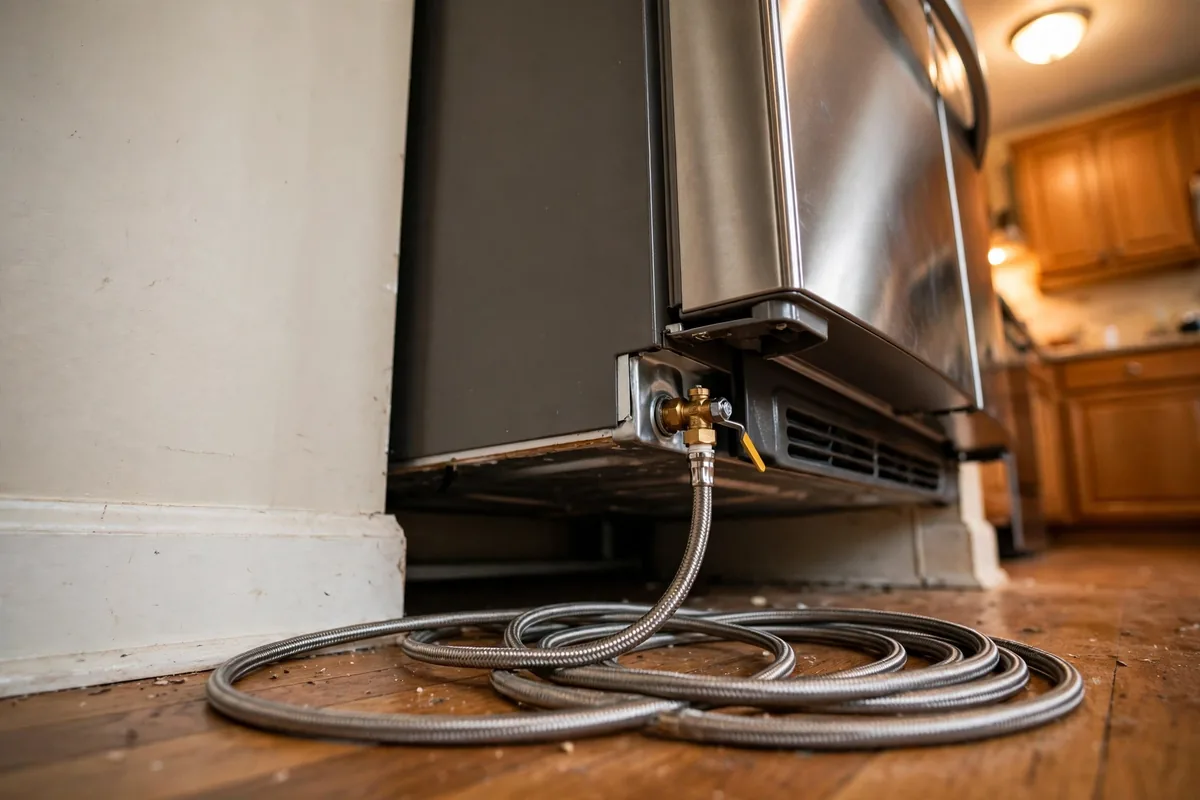
The refrigerator’s water arrives through a single supply line. It runs from a household shutoff valve to the inlet valve at the back. If that line gets kinked, crushed, or pinched, water cannot reach the dispenser. The ice maker usually fails too, since both share the line.
Kinks happen most often when the refrigerator is pushed back against the wall. Cleaning behind the fridge, retrieving a dropped item, or installing new flooring all create opportunities. Copper lines kink permanently and often need replacement once damaged. Braided stainless lines are more forgiving but can still be crushed.
Pull the refrigerator out carefully and inspect the full length of the line with a flashlight. Look for sharp bends, flattened sections, or spots where the line is pinched between the fridge and the wall. Straighten gentle bends by hand. Replace the line if you find a sharp crease — a creased line restricts flow even when it looks straightened.
While you are back there, confirm the shutoff valve is fully open. These valves get closed during remodels, leak scares, or appliance moves and are sometimes only reopened halfway. Turn it fully open and listen for the brief refill sound that confirms water is flowing again.
Also treat any saddle valve with suspicion. These small clamp-on valves tap into a water pipe through a piercing needle. The needle opening clogs with minerals over time. A saddle valve can appear open while delivering almost no flow. Replacing it with a proper quarter-turn shutoff valve is a worthwhile upgrade.
8. A Failed Dispenser Control Board
The dispenser control board is the electronics hub behind the dispenser panel. It takes the signal from the paddle switch and converts it into the voltage that opens the inlet valve. When the board fails, the switch can click perfectly and the valve can be healthy. Yet nothing flows, because the signal never arrives.
The signature symptom is frustrating. The paddle clicks. The switch tests fine. The valve hums when tested directly. But pressing the paddle produces silence from the back of the refrigerator. That combination points to the board as the missing link.
Board failures sometimes follow power surges or outages, which Central Oregon sees during winter storms and summer fire-season shutoffs. Burn marks, a burnt plastic smell, or a dispenser panel that flickers or behaves erratically are all red flags. If you see or smell any of these, unplug the refrigerator and stop — do not keep pressing the paddle.
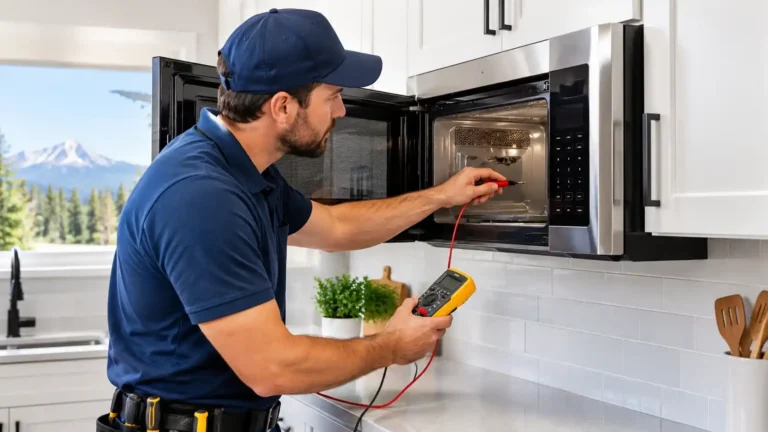
Diagnosing a control board properly requires a multimeter, the model’s wiring diagram, and comfort working around live low-voltage components. This is firmly professional territory. Do not guess on the board — it is one of the more expensive parts, and misdiagnosis here is costly.
How to Diagnose a Refrigerator Water Dispenser Not Working
Follow these steps in order. Each one rules out a cause before you move to the next. Most homeowners with a refrigerator water dispenser not working find the answer within the first four steps. Keep a glass handy for testing, and note what you hear at each step.
Step 1: Check the Control Lock
Look at the dispenser control panel for a lock icon or message. Press and hold the lock button for about three seconds to disengage it. Try the paddle again immediately.
Step 2: Test the Paddle and Listen
Press the paddle with a glass and listen carefully. A crisp click means the switch is working. A click followed by a brief hum at the back of the fridge means the valve is opening. The blockage is likely ice or a clogged filter. No click at all points to the switch or paddle.
Step 3: Check the Filter Age and Seating
If the filter is older than six months, replace it with the correct cartridge. If it was changed recently, remove it and reinstall it firmly. Confirm that it locks fully and that no protective caps remain. After any filter work, hold the paddle down for up to two minutes to purge trapped air.
Step 4: Compare the Ice Maker
Check whether the ice maker is still producing normally. Ice maker fine but dispenser dead points to the dispenser side. Suspects include a frozen door line, the dispenser-side valve coil, the paddle switch, and the control board. Both dead points upstream: filter, supply line, shutoff valve, or the valve itself.
Step 5: Inspect the Supply Line and Shutoff Valve
Pull the refrigerator out and confirm the shutoff valve is fully open. Inspect the supply line along its full length for kinks, crushes, or sharp bends. Straighten gentle bends and replace any line with a permanent crease.
Step 6: Listen for the Valve During a Press
With the filter fresh and the line clear, press the paddle. Have a helper listen at the back of the refrigerator. Silence from the valve area, after the paddle click, points to three suspects. They are the dispenser-side solenoid, the wiring, and the control board.
Step 7: Thaw a Suspected Frozen Door Line
If the ice maker works but the dispenser is dead, suspect the door line. This applies when everything else checks out. Unplug the refrigerator and open the freezer door. Let it thaw for a few hours. Or use a hair dryer on low heat at a safe distance, keeping it moving.
Step 8: Decide Between Repair and a Service Call
If you have reached this step, you have ruled out the easy causes. That means the lock, the switch, the filter, the air purge, the supply line, and freezing. Remaining suspects — the inlet valve, the control board, and the wiring harness — involve electrical testing and model-specific parts. This is where professional diagnosis pays for itself.
How to Keep Your Water Dispenser Working
Most dispenser failures are preventable. A few low-effort habits address the root causes behind the majority of service calls.
The filter schedule is the single highest-value habit. In Central Oregon’s hard-water conditions, it protects the valve, the lines, and your drinking water all at once.
Central Oregon Factors That Affect Water Dispensers
Water dispensers fail for the same mechanical reasons everywhere. But a few local conditions around Bend make certain failures more common here than national averages suggest.
Hard Water and Mineral Scale
Much of Central Oregon’s water — municipal and well alike — runs hard with dissolved calcium and magnesium. Over time, those minerals deposit as scale inside the inlet valve, the water filter, and the narrow dispenser tubing. Valves stick, filters load up early, and flow slows. If dispenser problems recur every year or two, scale is a likely contributor. A strict six-month filter schedule is the simplest defense. Some households add a whole-home softener for the bigger picture.
Well-Water Sediment Clogging Filters Faster
Homes on private wells around Bend, Redmond, and the surrounding rural areas can see fine sediment in their water. Sediment loads refrigerator filters much faster than dissolved minerals alone do. If your filter alert trips well before six months, sediment is the usual reason. Note the actual replacement interval your home needs. For some well households it is closer to three or four months. Set a phone reminder accordingly.
Cold Garage and Outbuilding Installations
Second refrigerators in Bend garages and shops create a special dispenser problem. The door water line sits in a freezer door that swings through big temperature swings each winter. Dispenser lines in garage fridges freeze more often and stay frozen longer. If a garage fridge dispenses fine in summer but not in winter, suspect ambient temperature. It is not a failed part.
Fire-Season Power Interruptions and Control Boards
Central Oregon’s fire seasons bring occasional planned power shutoffs and storm-related outages. Repeated power cycling stresses electronic control boards, including the dispenser board. A simple surge protector on the refrigerator outlet is inexpensive insurance against this specific failure.
Water Dispenser Repair: DIY or Professional Service?
Use this table to decide what to handle yourself and what to hand to a technician.
| Repair Task | DIY Suitability | Professional Help |
|---|---|---|
| Disengage the control lock | Good — always try this first | Usually unnecessary |
| Replace the water filter | Good | Usually unnecessary |
| Purge air after a filter change | Good | Usually unnecessary |
| Open shutoff valve / straighten supply line | Good, with care | Helpful if the line needs replacing |
| Thaw a frozen door water line | Good, with low heat only | Recommended if it refreezes repeatedly |
| Replace the dispenser paddle switch | Moderate — fragile trim tabs | Recommended for older doors |
| Replace the water inlet valve | Moderate | Recommended for most homeowners |
| Diagnose the dispenser control board | No | Yes |
The key rule is simple. DIY the checks and the simple fixes. Let a professional handle water connections, electrical testing, and part replacement when you are unsure. A correct diagnosis from your own troubleshooting makes the service visit faster and cheaper.
When Should You Call a Water Dispenser Repair Technician?
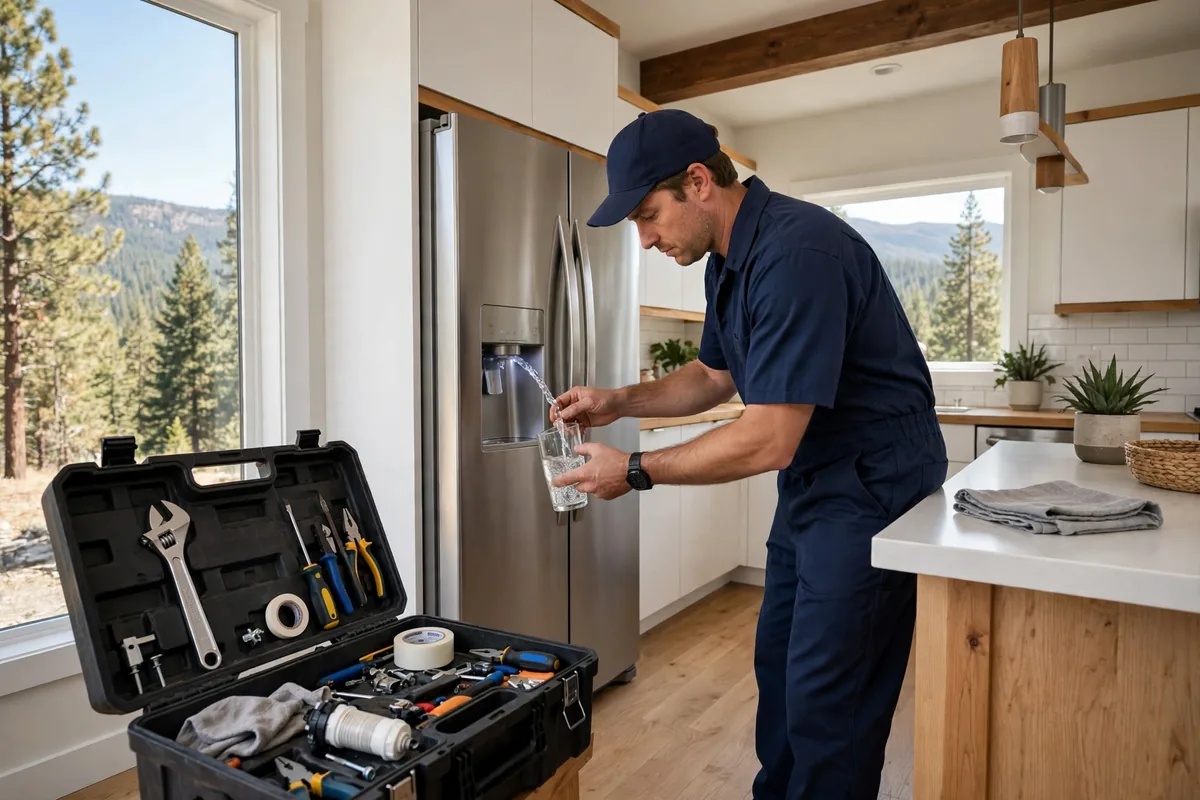
Call a technician when your own troubleshooting has ruled out the simple causes. That means the control lock, the filter, trapped air, the supply line, and a frozen door line. Call when the dispenser still does not work. The remaining suspects are the inlet valve, the dispenser control board, and the wiring between them. All three benefit from professional testing and correct part sourcing.
Call sooner, without further DIY attempts, in three situations. They are water leaking from the back and a burning plastic smell. They also include sparking or scorch marks around the dispenser panel. Shut off the water supply valve first if there is an active leak.
For homeowners in Bend, professional refrigerator repair starts with your symptoms. Tell the scheduler what you have already checked. For example: “the paddle clicks but there is no hum.” Or: “the ice maker works but the dispenser is dead.” That detail helps the technician arrive with the right parts and often resolves the problem in a single visit.
Frequently Asked Questions About Refrigerator Water Dispensers Not Working
Why is my refrigerator water dispenser not working but the ice maker works?
Most refrigerators use a dual water inlet valve with separate coils for the dispenser and the ice maker. The dispenser-side coil can fail while the ice-maker side keeps working. A frozen water line in the freezer door causes the same split.
Can a clogged water filter really stop the dispenser completely?
Yes. A severely clogged filter can block flow almost entirely. Replace the filter every six months, or sooner with hard water.
How do I know if my dispenser water line is frozen?
The classic sign is a dead dispenser while the ice maker keeps working. You may hear the valve hum with no water coming out. Thawing the door line usually restores flow.
What does it mean if I hear a buzzing sound but no water comes out?
The buzz means the inlet valve is opening, but water cannot get through. The usual blockages are a clogged filter or a frozen line.
Why did my dispenser stop working right after I changed the filter?
The new filter may not be fully seated, or protective caps were left on. Air trapped in the line also causes sputtering. Hold the paddle down for two minutes to purge the air.
How do I turn off the control lock on my refrigerator dispenser?
Press and hold the lock button for about three seconds until the icon clears. The exact button varies by brand, so check your owner’s manual.
Why is my water dispenser only trickling out a weak stream?
A weak stream means restricted flow, not a dead part. Check the filter age and household water pressure first. Air in the line after a filter change is another common cause.
Is it worth repairing the dispenser on an older refrigerator?
Simple fixes like filters and thawed lines are always worth trying. For valve or board repairs on a fridge past its expected life, compare the repair estimate against replacement.
Water Dispenser and Refrigerator Repair in Bend, OR
A refrigerator water dispenser not working in a Bend home usually traces back to this guide’s causes. They are the filter, the frozen line, the valve, the switch, and the lock. Work through the steps above and you will often find the answer yourself.
We serve homeowners throughout Bend. Neighborhoods include Northwest Crossing, Awbrey Butte, and Boyd Acres. We also cover Larkspur, River West, Mountain View, Summit West, Orchard District, and Southern Crossing. We serve appliance repair in Redmond, Oregon and surrounding Central Oregon communities too. Describe what you have already checked using the steps above. It helps the technician diagnose the problem faster, often in a single visit.
Final Takeaway
A refrigerator water dispenser not working is rarely a cooling problem. It is almost always a water-path problem: filter, frozen door line, inlet valve, paddle switch, or control lock. Start with the lock and the paddle click — the fastest checks solve the most cases.
Use the ice maker comparison to narrow it down. Ice maker fine means the fault is on the dispenser side. Both dead means the fault is upstream. That one observation cuts the suspect list in half.
Thaw frozen lines gently, take leaks and burning smells seriously, and do not open sealed electrical compartments without training. When the simple checks do not resolve it, professional diagnosis is the sensible next step.
Water Dispenser Still Not Working?
If the steps above did not fix a refrigerator water dispenser not working in your home, we can help. Our technicians can diagnose the actual cause: filter, frozen line, valve, switch, or control board. You get a clear, upfront repair estimate before any work begins.