Washing Machine Troubleshooting Guide: 9 Common Causes
Use this washer troubleshooting guide to find why your machine stops mid-cycle, check common problems, and know when to call a qualified technician.
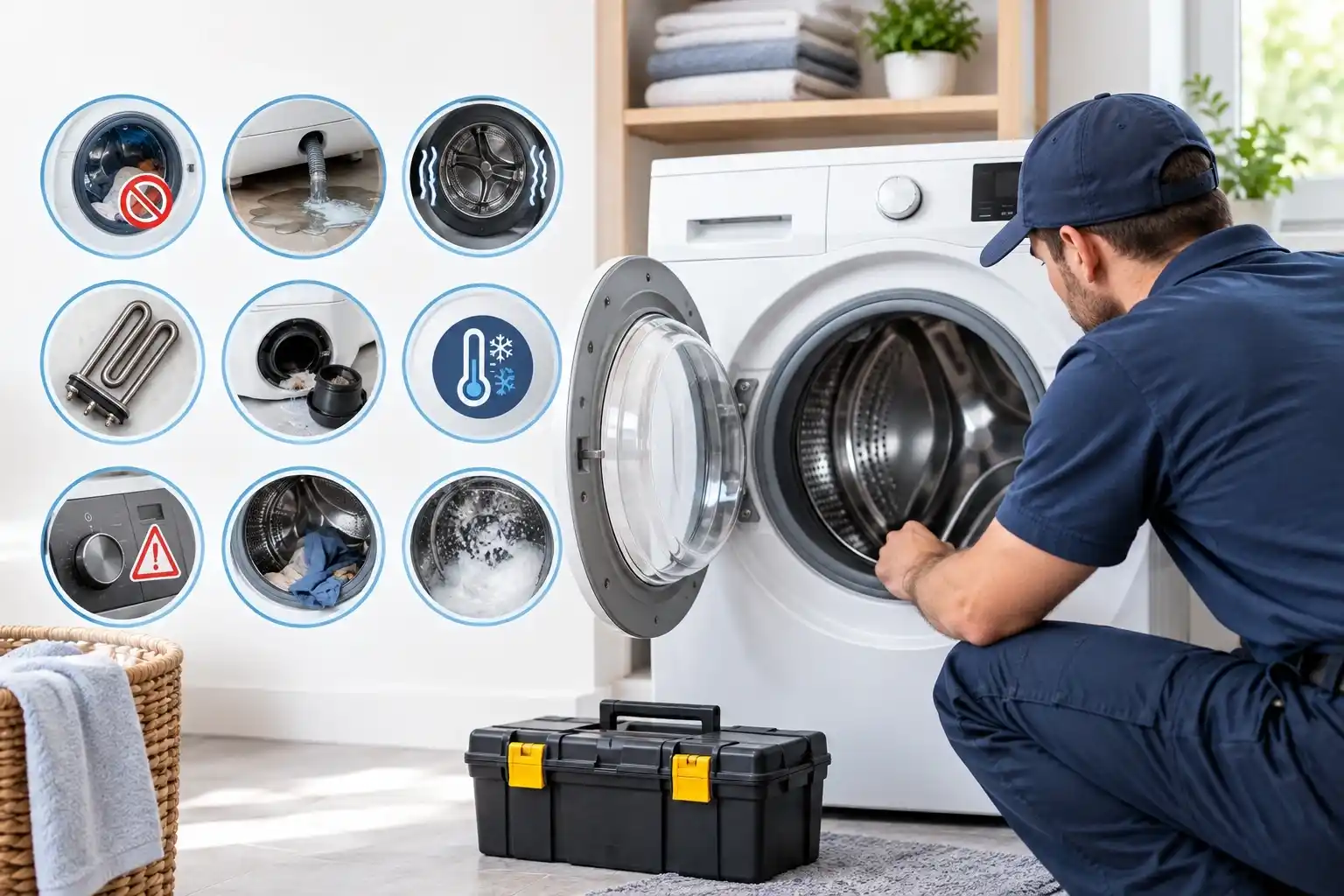
Why Does a Washing Machine Stop Mid-Cycle?
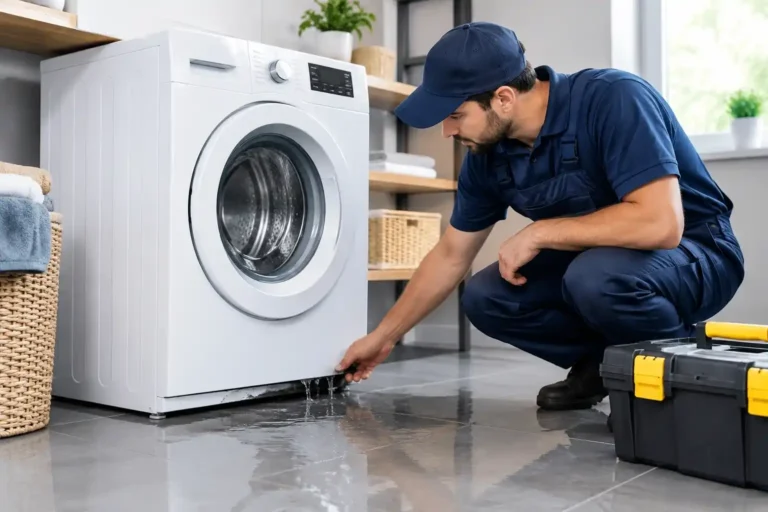
A washing machine that stops halfway through a load can leave clothes soaked and disrupt your routine. Washing machine troubleshooting can help you identify the cause before assuming the appliance needs a major repair. An unbalanced load, blocked drain hose, water-supply issue, faulty door lock, or electronic problem can interrupt a cycle.
The point where the washer stops provides an important clue. A machine that stops with water inside may have a drainage problem. One that stops during spinning may have an overloaded or unbalanced load. This washing machine troubleshooting guide explains nine common causes and safe checks you can make before contacting a professional. Read full guide.
Why Does a Washing Machine Stop Before the Cycle Is Finished?
A washer moves through filling, washing, draining, rinsing, and spinning. Each stage depends on several components working together. A washer not draining, faulty door lock, water-level sensor, or electrical problem can interrupt the cycle.
The first step in washing machine troubleshooting is identifying exactly when the washer stops. Check whether the drum contains water, whether the display shows an error code, and whether the machine makes unusual sounds.
What Should You Check First?
Start with simple causes before assuming a major fault. Check the load balance, error code, water-supply valves, and inlet hoses. If water remains inside, inspect the drain hose for visible restrictions.
Confirm that the washer has power and that the door or lid closes normally. If you notice smoke, sparks, or a burning smell, stop using the appliance immediately and contact a qualified professional.
9 Common Reasons Your Washing Machine Stops Mid-Cycle
| # | Common Cause | Typical Symptom | Basic Action |
|---|---|---|---|
| 1 | Unbalanced load or overload | Shaking or stopping during spin | Redistribute or reduce the load |
| 2 | Drainage problem | Water remains inside | Check the drain hose and pump filter |
| 3 | Door lock or lid switch | Stops before certain stages | Check normal door or lid closure |
| 4 | Water-filling problem | Stops while filling | Check water supply and inlet hoses |
| 5 | Water-level sensor problem | Incorrect filling or interruption | Arrange professional diagnosis |
| 6 | Drive motor or drive problem | Stops during movement or spin | Listen for unusual sounds |
| 7 | Electronic control problem | Random pauses or error codes | Check the code and reset procedure |
| 8 | Main control board problem | Repeated unexplained stopping | Have the board tested |
| 9 | Electrical power problem | Display goes off suddenly | Check power safely |
The Washer Has an Unbalanced or Overloaded Load
An unbalanced load is one of the easiest causes to check. Clothes can gather on one side of the drum, especially when washing towels, bedding, or one bulky item.
The problem becomes more noticeable during high-speed spinning. Modern washers can detect excessive movement and reduce or stop the spin cycle. An overloaded tub can create similar symptoms because clothing cannot move freely.
How to Fix an Unbalanced Washer
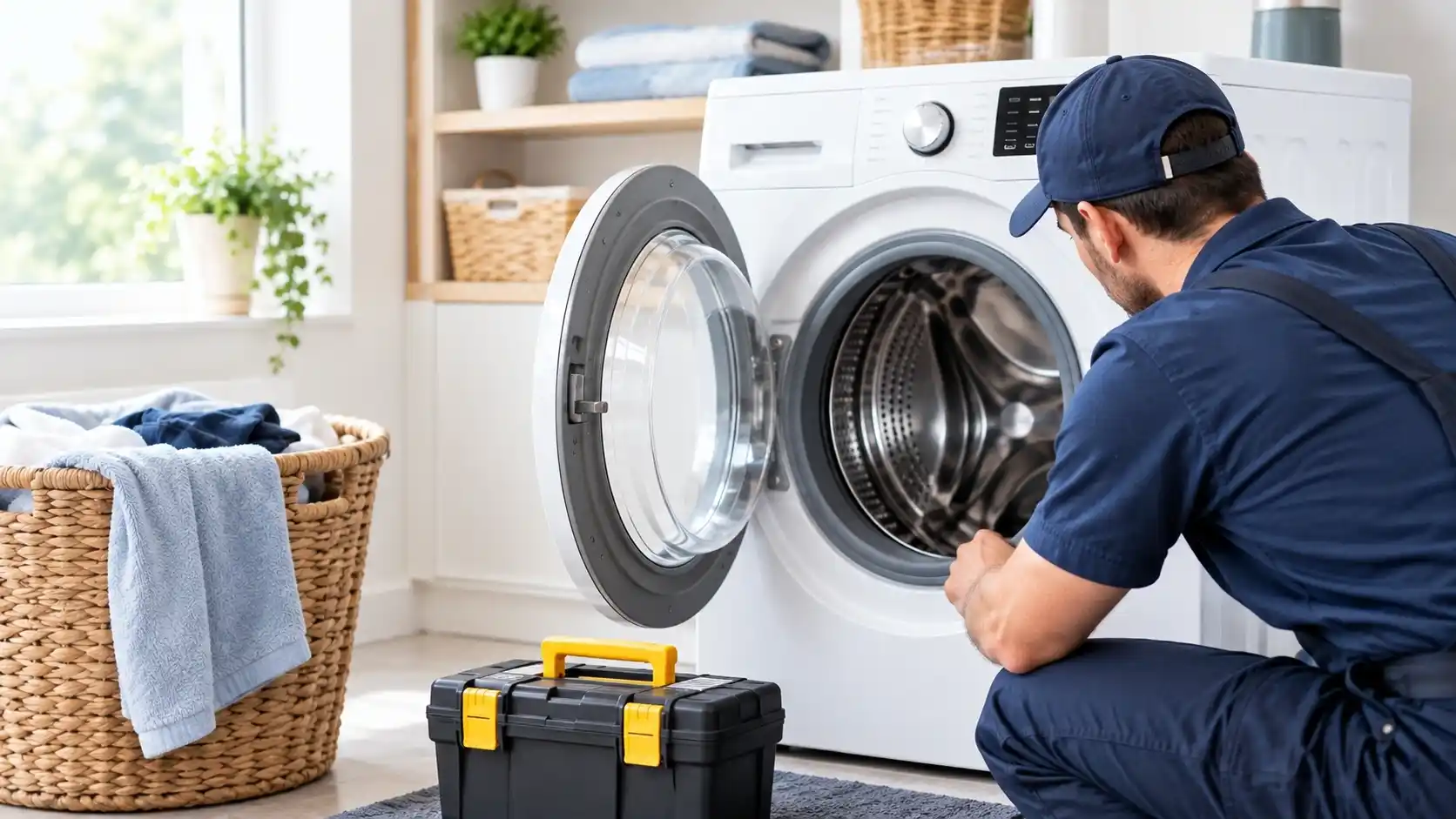
Pause the machine if your model allows it. Open the door or lid and distribute the clothing evenly. Remove some items if the tub is overloaded, then restart the cycle.
If the washer continues stopping with normal loads, check whether it is level. Persistent vibration may point to a suspension, drainage, or drive-system problem. Contact our washing machine repair technician.
The Washer Cannot Drain Properly
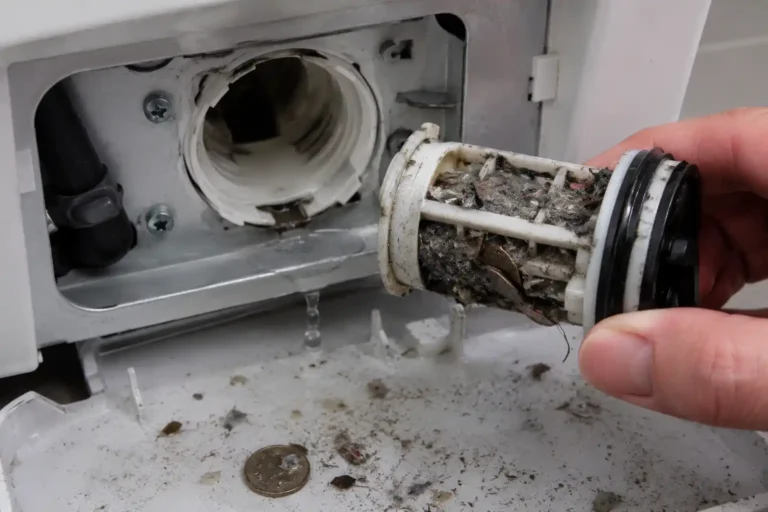
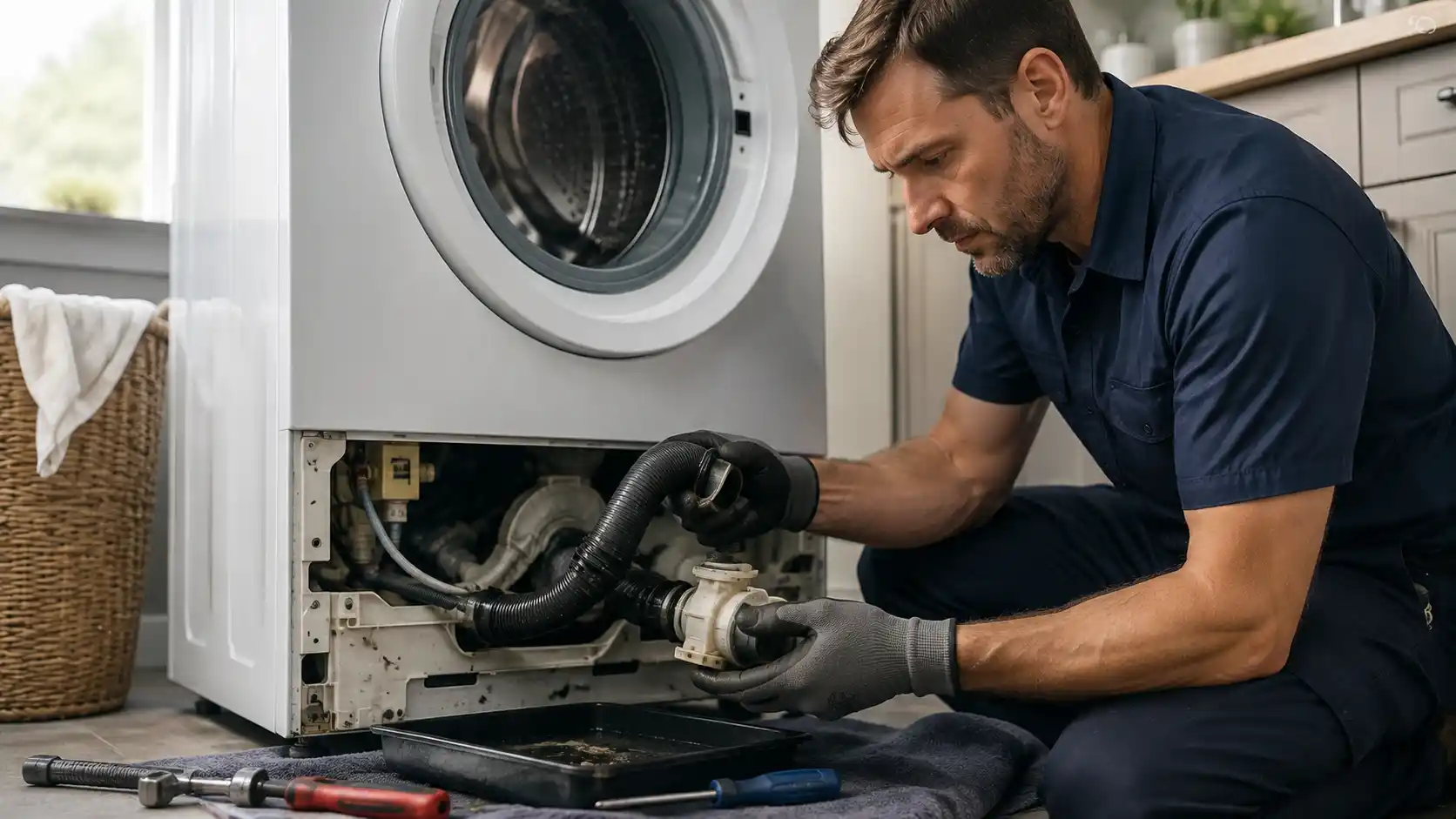
A washer that cannot drain can stop later cycle stages. A blocked drain hose, clogged pump filter, or failing drain pump may cause the issue.
Lint, hair, coins, and small objects can restrict drainage. If your washer stops with water inside, check the drainage system first. This is an important part of washing machine troubleshooting because drainage problems can also prevent the washer from entering the spin cycle.
Check the Drain Hose and Pump Filter
Check the drain hose for kinks or visible blockages. Follow your washer manual before opening the pump filter. Never force a stuck filter.
If water still will not drain, the drain pump may need professional testing. Humming, grinding, slow drainage, or standing water can indicate pump trouble.
The Door Lock or Lid Switch Is Not Working Correctly
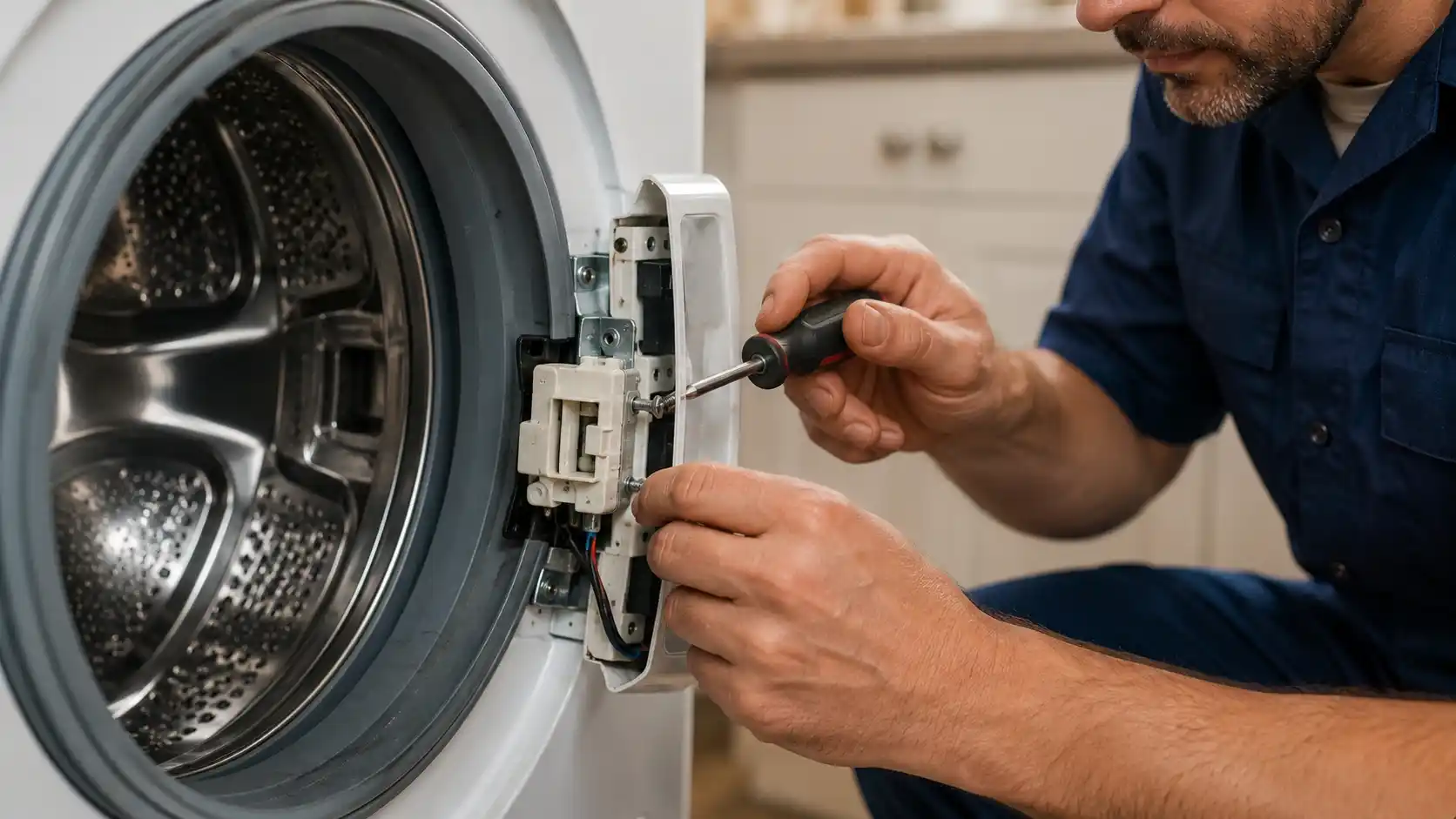
Washers use safety systems to confirm that the door or lid is secure. Front-load machines usually use a door lock assembly. Top-load models may use a lid switch or lid lock assembly.
If the machine cannot confirm that the door or lid is secure, it may stop before draining, washing, or spinning.
Front-Load Door Lock Problems
A faulty door lock can prevent a front-load washer from continuing. Some models show an error code when the lock cannot engage.
Do not bypass this safety system. A qualified technician should test the lock, wiring, and control connections.
Top-Load Lid Switch Problems
A defective lid switch can cause a top-load washer to stop at specific stages. The machine may fill normally but fail to continue washing or spinning.
If the lid closes correctly but the problem remains, the switch may require professional testing.
The Washer Is Not Filling Correctly
Your washer needs a steady water supply to complete each cycle. Closed valves, kinked inlet hoses, blocked screens, or a faulty water inlet valve can stop filling.
Check both supply valves and inspect the hoses for damage. If the washer still stops while filling, the inlet system may require further diagnosis.
When washing machine troubleshooting reveals a filling problem, avoid replacing parts based only on symptoms. The water supply, inlet valve, and sensor can create similar signs.
The Washer Is Not Detecting the Correct Water Level
A washer uses a water-level sensor or pressure sensor to monitor tub water. An incorrect reading can cause the machine to pause, fill improperly, or stop before finishing.
A damaged pressure hose may also affect sensor readings. If the water level looks normal but the problem continues, the sensor system may need professional testing.
A Motor or Drive-System Problem Is Interrupting the Cycle
The drive motor powers washing and spinning, while the belt and pulley transfer movement. A worn belt or failing motor can cause slow movement, unusual noises, or sudden stopping.
A suspension issue may also create heavy vibration. Listen for grinding, humming, clicking, or other unusual sounds without attempting to disassemble the drive system.
During washing machine troubleshooting, unusual noises combined with repeated stopping can help narrow down the possible source.
The Washer Has an Electronic Control Problem
Modern washers rely on electronic controls for filling, washing, draining, rinsing, and spinning. A temporary fault can interrupt the cycle and may cause repeated pauses or error codes.
Follow your model’s reset procedure once. If the problem continues, avoid repeated resets. A sensor, wiring connection, or control component may need professional testing. For model-specific guidance, see these washer electronic control reset instructions.
What Does a Washer Error Code Mean?
An error code provides a useful starting point when a washer stops mid-cycle. It may indicate a drainage, water-supply, door-lock, motor, or sensor condition.
However, the code does not always prove that the named component has failed. Check the manufacturer’s guidance for your exact model before ordering replacement parts.
The Main Control Board May Be Faulty
The main control board coordinates many washer functions. A fault can cause random stopping, unusual display activity, or unexpected cycle behavior.
The control board should not be the first part you replace. Drainage issues, sensor faults, door-lock problems, and electrical failures can create similar symptoms.
Proper testing can confirm whether the board is actually defective. This helps prevent unnecessary replacement costs.
The Washer Is Losing Electrical Power
An electrical interruption can stop a washer without warning. If the display goes blank, check whether the circuit breaker has tripped.
Never use a damaged cord or outlet. If you notice burning smells or sparks, stop using the washer immediately.
What the Washer’s Stopping Point Can Tell You
| Where the Washer Stops | Possible Causes | What to Check First |
|---|---|---|
| While filling | Water supply, inlet valve, sensor | Water valves and inlet hoses |
| After filling | Door lock, sensor, motor, control | Door or lid and error code |
| During washing | Unbalanced load, motor, control | Load balance and unusual sounds |
| Before draining | Drain hose, filter, drain pump | Drain hose and filter |
| With water inside | Drain blockage or drain pump | Drain hose and pump |
| Before spinning | Drainage, balance, lock | Water level and load |
| During spinning | Load, drive motor, belt, suspension | Balance and vibration |
| Stops and starts again | Sensor, control, power issue | Error code and power |
Washer Stops While Filling
Check the water supply first. Make sure both valves are open and the inlet hoses are not kinked. A restricted inlet screen or faulty water inlet valve may also prevent proper filling.
Washer Stops During Washing
Check the load and listen for unusual sounds. An overloaded tub can cause problems, but a motor, drive, sensor, or control issue may also be involved.
Washer Stops During Draining
Focus on the drain hose, pump filter, and drain pump. Follow the manufacturer’s instructions before opening or cleaning a filter.
Washer Stops With Water Inside
Water left inside usually points toward a drainage problem. Check the drain hose and filter if your model provides safe access.
Washer Stops Before Spinning
The washer may still detect water inside. An unbalanced load, drainage problem, door lock, or lid switch can also prevent spinning.
Washer Stops During Spinning
Redistribute the clothing and check whether the washer is level. Excessive vibration can cause some machines to pause or reduce the spin speed.
How to Troubleshoot a Washing Machine
Effective washing machine troubleshooting begins with identifying where the cycle stops. A careful approach helps prevent unnecessary part replacement.
If basic checks do not solve the issue, professional diagnosis is safer than guessing at replacement parts.
How to Troubleshoot a Washer Without Replacing Parts
Learning how to troubleshoot a washer starts with symptoms rather than replacement parts. Record when the washer stops, whether water remains inside, whether the display stays on, and whether an error code appears.
This method can help narrow the problem before professional testing. Avoid bypassing door locks, lid switches, or other safety systems.
Washing Machine Won’t Finish Cycle: What to Check
When a washing machine won’t finish cycle, identify the exact stage where it stops. A washer may stop because it cannot drain, cannot fill correctly, cannot confirm the door is closed, detects an unbalanced load, or experiences a motor or electronic problem.
If a washing machine won’t finish cycle after basic checks, record the symptoms and model information. This gives a technician useful information for diagnosis.
Common Washer Problems and Their Solutions
| Common Washer Problem | First Check |
|---|---|
| Washer stops with water inside | Drain hose and filter |
| Washer shakes during spin | Load balance and leveling |
| Washer stops while filling | Water valves and inlet hoses |
| Washer will not spin | Water level and load |
| Washer shows an error code | Manufacturer’s code guide |
| Washer display goes blank | Power and circuit breaker |
| Washer makes unusual noises | Load and visible obstructions |
Understanding common washer problems helps you focus on the symptom instead of immediately replacing a component.
Common Parts That May Need Replacement
Drain Pump
The drain pump removes water from the washer. A failing pump can leave standing water and prevent the cycle from completing.
Door Lock Assembly
The door lock assembly confirms that a front-load washer is safely closed. A faulty lock can stop the machine before certain stages.
Lid Switch or Lid Lock
Top-load machines may use a lid switch or lid lock assembly. A failure can interrupt washing or spinning.
Water-Inlet Valve
The water inlet valve controls incoming water. A faulty valve can cause slow or incomplete filling.
Water-Level Sensor
The water-level sensor helps determine the amount of water inside the tub. Incorrect readings can interrupt the cycle.
Drive Motor and Belt
The drive motor and drive belt support drum movement. Wear or failure can cause stopping, noise, or poor spinning.
Main Control Board
The main control board manages many washer functions. Proper testing should come before replacement.
When Should You Call a Qualified Technician?
Some problems are suitable for basic homeowner checks, while others require a qualified technician.
| Problem | Safe Homeowner Check | Professional Help? |
|---|---|---|
| Unbalanced load | Redistribute clothing | Usually no |
| Overloaded washer | Remove some items | Usually no |
| Kinked drain hose | Check visible hose | If problem continues |
| Water-supply issue | Check supply valves | If filling remains faulty |
| Error code | Record the code | Often useful |
| Drain pump issue | Observe drainage symptoms | Yes |
| Door lock issue | Check normal closure | Yes |
| Drive motor issue | Note unusual sounds | Yes |
| Control board issue | Record symptoms and codes | Yes |
| Burning smell or smoke | Stop using the washer | Yes |
| Sparks or repeated breaker trips | Stop using the washer | Yes |
When a Technician Is Needed
Licensed Appliance Technician
A licensed appliance technician may be appropriate when the washer repeatedly stops after basic checks or when the problem involves electrical components. Avoid opening electrical panels or bypassing safety switches.
Appliance Repair Technician
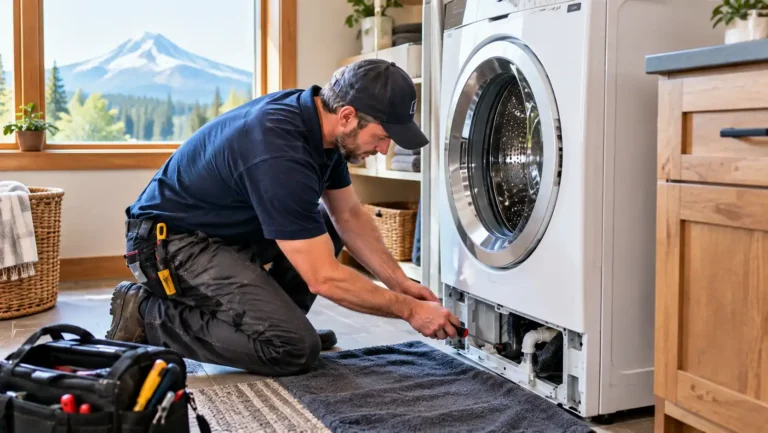
An appliance repair technician can help when troubleshooting does not identify the cause or when a component requires testing or replacement. Provide the washer’s brand, model number, stopping point, water status, error code, and unusual sounds.
Washer Technician
A washer technician may be needed for repeated stopping, drainage failures, door-lock faults, motor problems, sensor issues, or control-board symptoms. Write down the exact stopping point and any error code before scheduling.
Preventative Maintenance Tips
Customer Testimonials
Genuine customer experiences can strengthen trust when they are specific and verifiable.
Clear Diagnosis
Verified reviews can highlight a technician who accurately identified the stopping point before recommending a fix.
Honest Recommendations
Strong feedback often describes technicians who explain the diagnosis and avoid unnecessary part replacement.
Fast, Reliable Service
Homeowners value prompt appointments and washers restored to normal operation without repeat visits.
Awards, Credentials & Case Studies
Only display verified licenses, certifications, and awards. Replace the examples below with real, verified service details before publishing.
Washer Drainage Case Study
The problem: The washer repeatedly stopped mid-cycle with standing water inside.
The diagnosis: The technician inspected the drain hose and pump filter and identified the blockage.
The result: Clearing the drainage path restored normal draining and spinning.
Door Lock Repair Case Study
The problem: A front-load washer stopped before entering the wash stage.
The diagnosis: The technician tested the door lock assembly and confirmed a wiring fault.
The result: Replacing the faulty component returned the washer to normal cycle completion.
Final Takeaway
A washer that stops mid-cycle does not always have a major component failure. Load balance, drainage, water supply, door or lid safety systems, sensors, motors, controls, and electrical power can all affect cycle completion.
Start with safe visual checks and identify exactly where the washer stops. Record error codes and unusual symptoms before attempting a reset. If basic troubleshooting does not resolve the problem, stop guessing at replacement parts and seek professional diagnosis.
Frequently Asked Questions
Why does my washing machine stop in the middle of a cycle?
Common causes include drainage problems, water-supply issues, unbalanced loads, door locks, sensors, motors, electronic controls, and electrical faults. The exact stopping point helps narrow down the likely cause.
Why does my washer stop with water inside?
Water remaining inside usually points toward a drainage issue. Check the visible drain hose for kinks and follow the owner’s manual before cleaning or accessing the pump filter.
Can an unbalanced load make a washer stop?
Yes. An unbalanced load can create excessive movement during spinning. The washer may pause or reduce spin speed to manage the imbalance. Redistribute the clothing and remove some items if the tub is overloaded.
Need a Hand Diagnosing Your Washer?
If basic troubleshooting hasn’t solved the problem, our technicians can diagnose the exact cause and give you a clear repair estimate before any work begins.