Microwave Not Heating: Causes, Troubleshooting & Fixes
Microwave not heating up? Learn why your microwave may stop heating, safe troubleshooting steps, common causes, and when to call a Bend appliance repair technician.
Microwave Not Heating
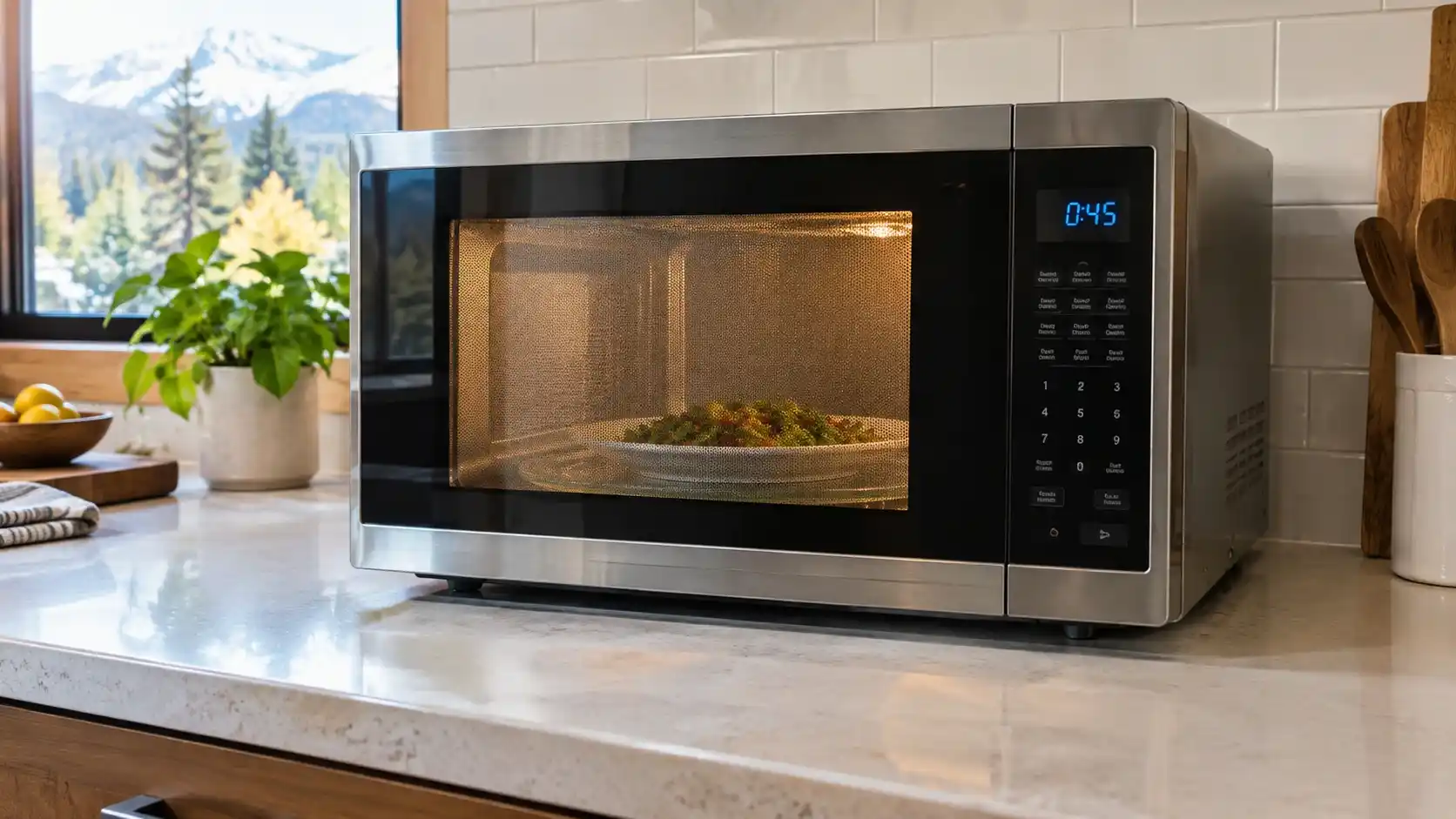
When a microwave not heating problem appears, the appliance may still look normal. The display can work. The light can turn on. The turntable may spin. Yet your food stays cold.
This problem does not always mean you need a new microwave. A wrong power setting, Demo Mode, door issue, or electrical problem can cause similar symptoms. Internal parts can also fail.
This guide explains why is my microwave not heating, what you can safely check, and when professional repair makes sense. It is written for homeowners in Bend, Oregon, and nearby Central Oregon communities.
Why Is My Microwave Not Heating?
A microwave not heating issue usually comes from either a setting problem or a heating-system failure.
Start with simple checks. Confirm the outlet works. Check the breaker and cooking power. Make sure Demo Mode is off. Then check that the door closes and latches correctly.
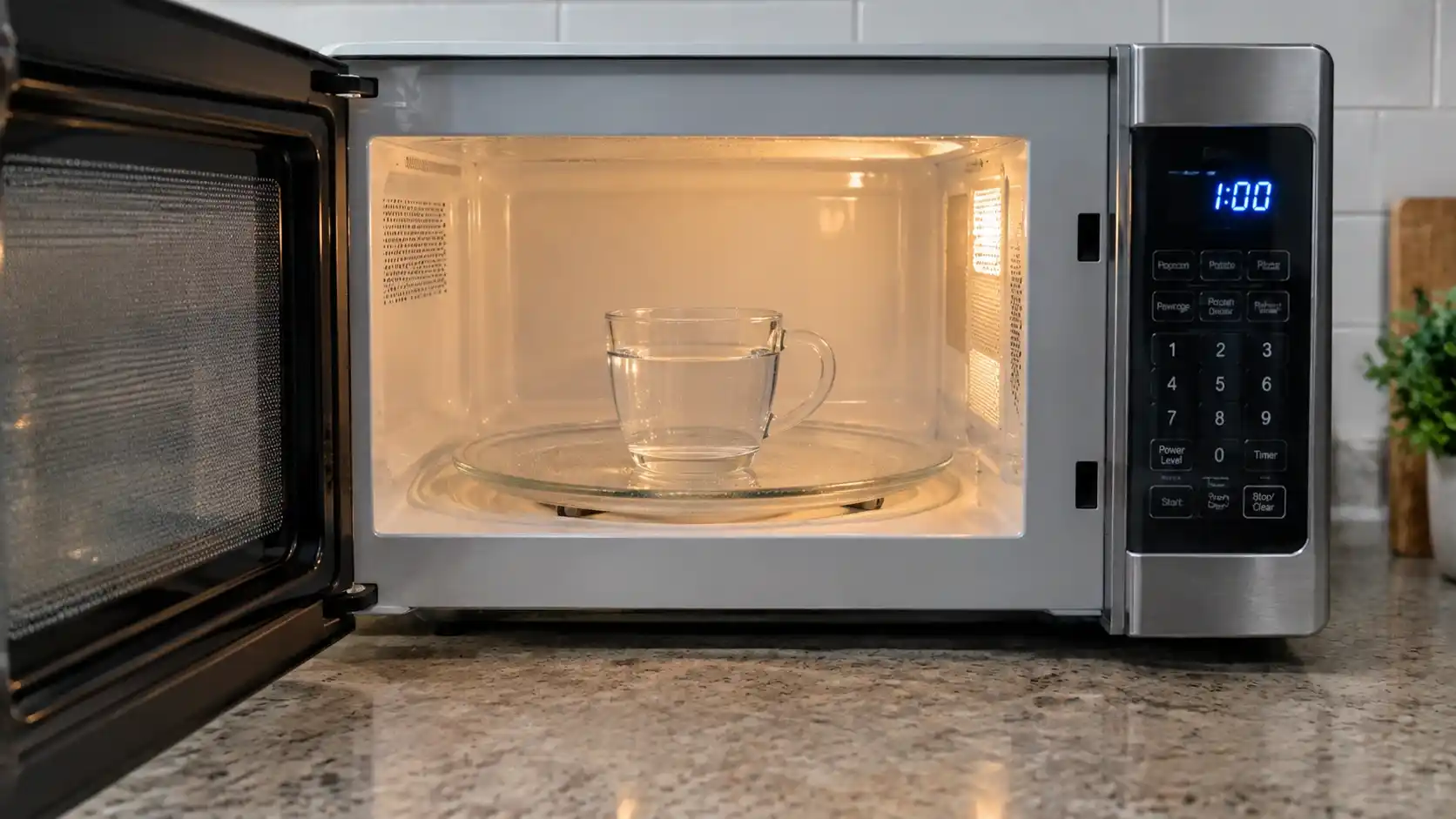
You can also test the microwave with a cup of water. Whirlpool recommendsusing about one cup, or 250 mL, and heating it for one minute on HI or 100% power. This helps determine whether the appliance is producing heat.
If the microwave runs but the water stays cold, an internal heating component may have failed.
| What You Notice | Possible Cause | What to Do |
|---|---|---|
| No display or response | Outlet, breaker, fuse | Check power safely |
| Display works but no heat | Heating circuit | Professional diagnosis |
| Turntable spins but food is cold | Magnetron or related part | Stop unnecessary testing |
| Heats weakly | Power setting or component | Check setting first |
| Loud hum or burning smell | Internal fault | Stop using the appliance |
Why Is My Microwave Not Heating?
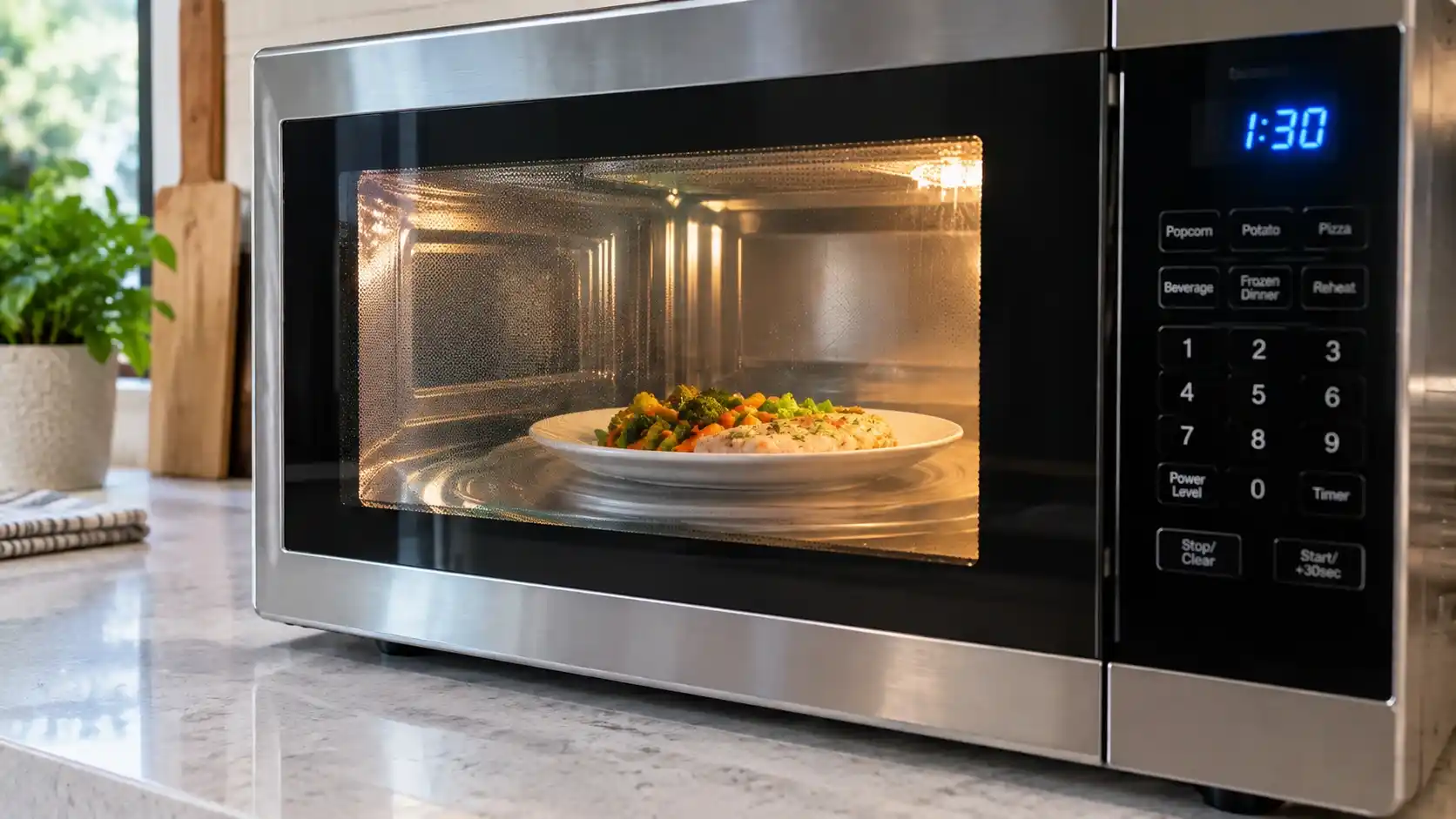
Homeowners often ask why is my microwave not heating when everything appears to work. Several causes are possible.
Power Supply or Breaker
Start with the outlet. Plug another suitable appliance into the same outlet. If it does not work, the issue may be with the outlet or circuit. Do not repeatedly reset a breaker that keeps tripping.
Power Level
A microwave set to a low power level may heat food slowly. Check the cooking settings before assuming a part has failed.
Demo Mode
Demo Mode can make some microwaves appear to operate normally without producing heat. The exact procedure for disabling it depends on the manufacturer and model.
Control Lock or Delay Start
Some models include Control Lock or delayed cooking features. Check the owner’s manual for your specific appliance.
Door Switch or Latch
The microwave door has an interlock system. If the latch or switch is damaged, the heating circuit may not activate correctly.
Microwave Troubleshooting: What to Check First
Good microwave troubleshooting begins with safe and simple checks. You do not need to remove the cabinet for these steps.
Check the Outlet
Make sure the microwave is receiving power. If possible, test the outlet with another appropriate appliance.
Check the Cooking Settings
Set the microwave to a normal heating cycle. Use 100% power for a basic test.
Check Demo Mode
Review the owner’s manual if the controls work but heating does not. Some manufacturers use special button combinations to activate or disable Demo Mode.
Check the Door
Close the door firmly. Look for visible damage around the latch and hinges. Never use a microwave with a damaged or improperly closing door.
Run a Water Test
Place about one cup of water in a microwave-safe container. Run it for one minute on high power. If the water remains cold, the appliance may have a heating-system problem.
Microwave Oven Not Heating: Common Internal Causes
A microwave oven not heating problem can involve several internal components. These parts operate as part of the heating system. Diagnosis requires appropriate electrical testing.
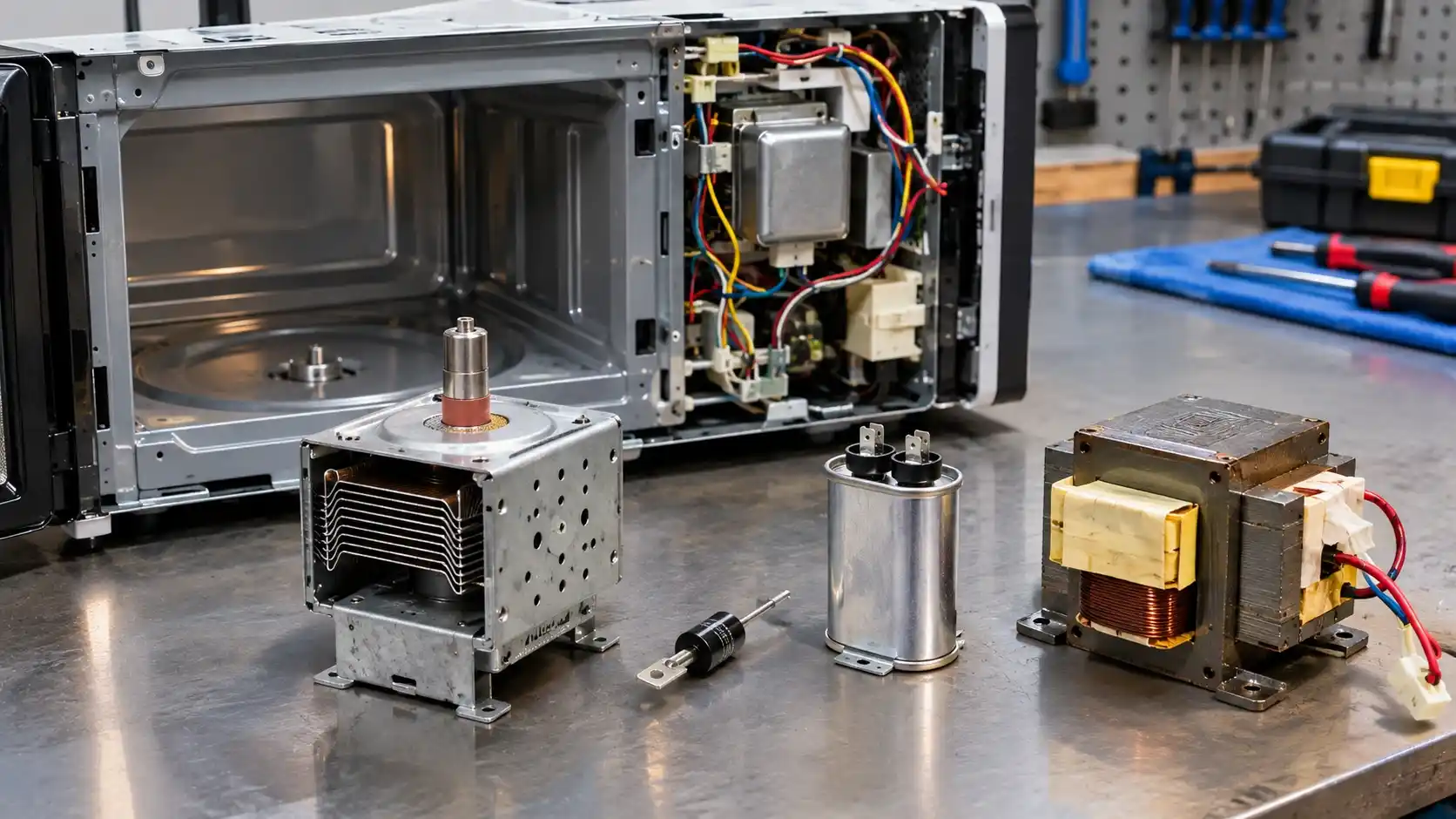
Magnetron
The magnetron generates the microwave energy used to heat food. A faulty magnetron can cause the appliance to run normally without producing heat.
High-Voltage Diode
The high-voltage diode works within the heating circuit. A failed diode can contribute to a no-heat condition.
High-Voltage Capacitor
The capacitor is another important high-voltage component. It can retain dangerous electrical energy. For this reason, homeowners should not open the cabinet to test it.
High-Voltage Transformer
Traditional microwave designs use a transformer to provide the voltage needed by the heating circuit. A transformer fault can prevent normal heating.
Fuse or Thermal Cutoff
A microwave can have protective devices that interrupt power when an electrical or temperature problem occurs. Simply replacing a fuse may not solve the original problem.
Door Switch
A faulty door switch can prevent heating even when other functions appear normal. A technician can test the interlock system properly.
Microwave Not Heating Up? Match the Symptom to the Likely Cause
If your microwave not heating up, describe exactly what happens. That information can make diagnosis easier.
| Symptom | More Likely Area to Investigate |
|---|---|
| Display completely dead | Power supply or protective device |
| Display works, no heat | Heating circuit |
| Fan and turntable work | Heating components or controls |
| Food is only slightly warm | Power setting or heating performance |
| Heating is intermittent | Door switch, thermal protection, or component |
| Loud humming | Internal electrical or heating fault |
| Burning odor | Possible internal failure |
Light, Fan & Turntable Work
These functions show that some systems are receiving power. They do not prove that the microwave is producing heat.
Food Becomes Slightly Warm
Weak heating can have several causes. Check the power setting first. If the setting is correct, further diagnosis may be needed.
It Stopped Suddenly
A sudden failure can involve a fuse, thermal cutoff, door switch, magnetron, or another heating component.
Microwave Not Heating Food: What Does It Mean?
Food Stays Completely Cold
A completely cold meal after a normal high-power cycle suggests that the heating system may not be operating. A technician can test the relevant components.
Food Heats Unevenly
Uneven heating does not always mean a failed component. Food placement, container shape, cooking time, power level, and turntable operation can affect results.
Heating Stops During Cooking
If heating starts and then stops, thermal protection, door switches, controls, or another internal component may be involved. Write down when the problem happens.
Microwave Stopped Heating: What Should You Do?
When a microwave stopped heating, avoid immediately taking the appliance apart. Begin with the safe checks: outlet, breaker, cooking setting, Demo Mode, and door. If those checks do not solve the problem, professional testing is the better next step. You can contact our Bend appliance repair teamto arrange a diagnosis.
Safe Homeowner Checks
- The electrical outlet
- The circuit breaker
- Power level
- Cooking mode
- Demo Mode
- Control Lock
- Door closure
- Basic water-heating performance
Internal Component Problems
Internal repairs are different. A technician may need to test the magnetron, diode, capacitor, transformer, thermal cutoff, door switches, or control board.
When to Stop Using It
Stop using the appliance if it produces smoke, burning odors, unusual electrical sounds, or unsafe sparking. A door that does not close correctly is also a reason to stop operation.
Microwave Turns On but Doesn’t Heat: What a Technician Checks
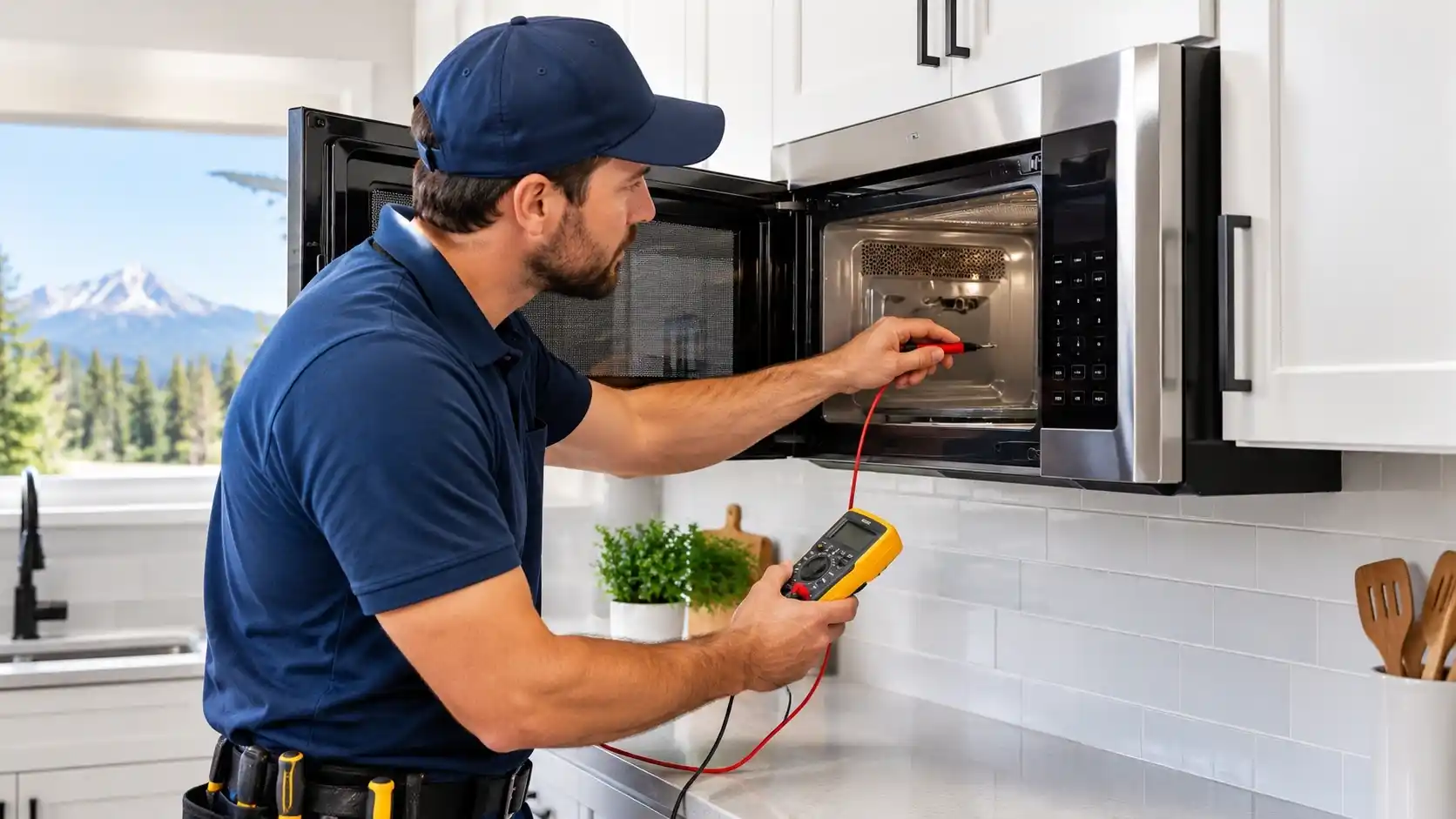
A microwave turns on but doesn’t heat condition often needs component-level diagnosis. The technician first confirms the complaint, then the heating circuit and safety systems can be checked.
Heating Circuit
The magnetron is one of the main components involved in microwave heating. The technician can determine whether it receives the required electrical conditions.
Diode, Capacitor & Transformer
These high-voltage components work together. One failed component can affect the heating process.
Door Interlock
Door switches are also checked. The microwave must recognize the door as properly closed before normal heating can occur.
Electrical Testing
A professional diagnosis should follow the appliance manufacturer’s specifications. Replacing parts based only on symptoms can waste money.
Microwave Won’t Heat Up: Can You Fix It Yourself?
If your microwave won’t heat up, you can perform basic troubleshooting. However, do not open the cabinet unless you have the proper training and equipment.
What You Can Safely Check
Start with the outlet. Then check the breaker, power level, cooking mode, Demo Mode, and door. A basic water test can also show whether the appliance is producing heat.
Why Internal Repairs Are Different
Microwaves contain high-voltage electrical components. Some components can remain dangerous after the appliance has been unplugged. That makes internal DIY repair risky.
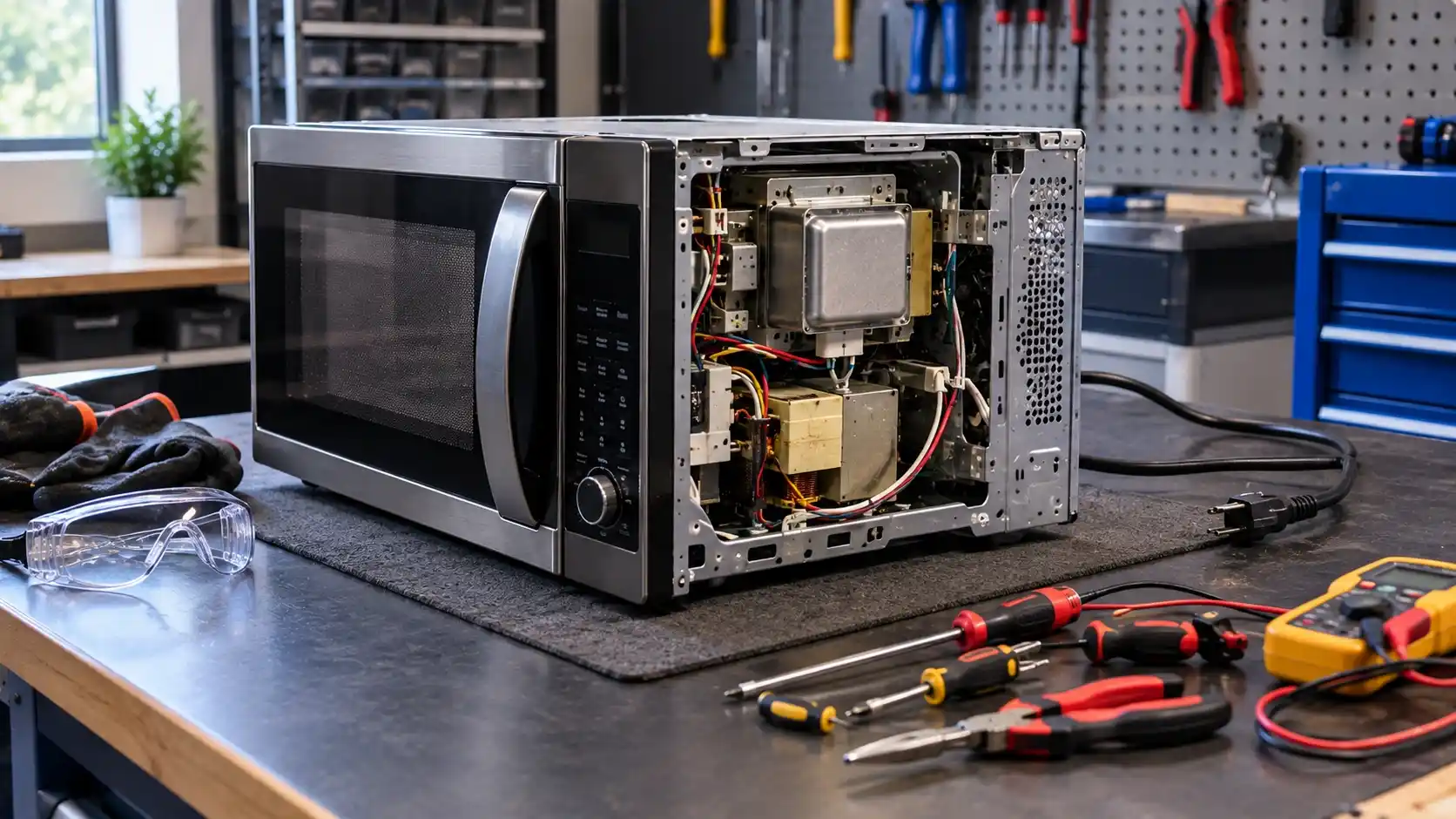
Microwave Not Working: Power Problem or Heating Problem?
No Display or Response
Check the outlet and breaker first. If the appliance remains completely dead, an internal protective device or electrical fault may be involved.
Controls Work but No Heat
This is different from a completely dead appliance. The heating circuit may be the problem.
Weak Heating
Check the power level and cooking cycle. If they are correct, the heating system may need testing.
Repair or Replace? A Quick Decision Table
| Situation | Repair May Make Sense | Replacement May Make Sense |
|---|---|---|
| Newer microwave | ✓ | |
| Built-in or over-the-range model | ✓ | |
| Minor control issue | ✓ | |
| Expensive major repair | ✓ | |
| Very old countertop unit | ✓ | |
| Multiple recent failures | ✓ | |
| Warranty coverage exists | ✓ |
The final decision depends on the microwave’s age, condition, repair price, model, and replacement cost.
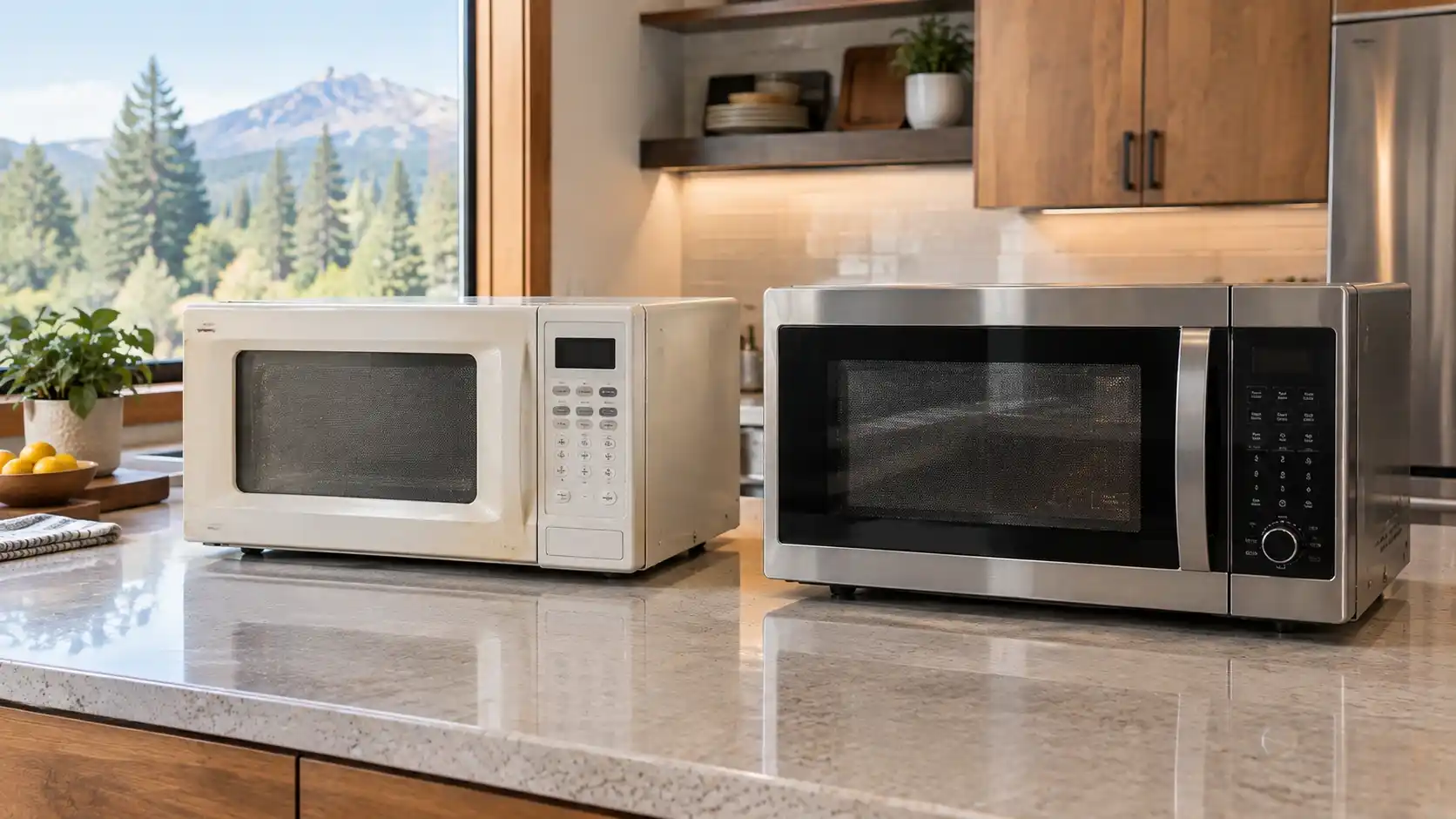
How Much Does Microwave Repair Cost in Bend, OR?
Repair costs vary by appliance and diagnosis. There is no single price for every microwave. A countertop microwave may be easier to access than a built-in unit. Ask for a diagnosis before approving a major repair.
The Final Cost Can Depend On
- Diagnostic time
- Labor
- Replacement parts
- Appliance type
- Model and design
- Accessibility
- Part availability
- Warranty coverage
Microwave Repair in Bend, OR
If you need appliance repair in Bend OR, local service can make the process easier. Bend homeowners may live in areas such as Old Bend, River West, Awbrey Butte, Boyd Acres, Century West, Old Farm, Orchard District, and other parts of the city.
Service can also extend to nearby Central Oregon communities, depending on availability.
What to Expect From a Local Repair Visit
A good visit should begin with diagnosis. The technician should identify the symptom, and the relevant components should then be checked. You should understand the problem before deciding whether to repair or replace the appliance.
Testimonials and Customer Experiences
Real customer feedback can help homeowners understand the service experience. Testimonials should always be genuine — do not publish invented names, quotes, ratings, or repair results.
Accurate Diagnosis
A useful testimonial mentions the appliance problem, the diagnosis, the repair, and the final result.
Honest Repair Advice
Homeowners value technicians who explain whether repair or replacement makes more sense.
Safe, Professional Service
Real experiences with high-voltage repairs provide stronger trust than generic marketing claims.
Awards, Credentials & Case Studies
Awards and credentials should only be listed when they can be verified. Use actual job information — do not create fictional case studies. Replace the example below before publishing.
Microwave Turns On but Doesn’t Heat Case Study
The problem: A microwave powered on normally but failed to heat food.
The diagnosis: The technician tested the magnetron and related high-voltage components to identify the failed part.
The result: Replacing the failed component restored normal heating.
Microwave Facts and Figures
Microwave ovens use electromagnetic energy to heat food. The heating system contains several electrical components that work together.
A simple diagnostic figure comes from Whirlpool’s support guidance. It recommends about one cup, or 250 mL, of water for a one-minute test at HI or 100% power. That test can help determine whether the microwave is producing heat.
Another important fact is that some microwave models have Demo Mode. This can make the appliance appear to operate while heating remains disabled. The exact controls vary by model.
Most importantly, microwave repair involves high-voltage components. Unplugging the appliance does not mean every internal component is automatically safe to touch. For general microwave safety information, see the FDA’s microwave oven safety guidance.
Frequently Asked Questions
Why is my microwave not heating?
Common causes include incorrect settings, Demo Mode, a door-switch problem, a blown protective device, magnetron failure, diode failure, capacitor problems, or another heating-circuit fault.
Why does my microwave turn on but not heat?
The display, fan, light, and turntable can work even when the heating circuit has failed. A technician may need to test the magnetron and other high-voltage components.
Is it worth repairing a microwave that stopped heating?
It depends on the appliance’s age, condition, type, warranty, repair cost, and replacement price. A diagnosis gives you the information needed to make the right decision.
Final Takeaway
A microwave not heating problem does not automatically mean you need a replacement. Start with safe checks. Test the outlet. Check the breaker. Review the power level. Check Demo Mode. Inspect the door. Then perform a basic water test.
If the microwave still does not heat, an internal component may have failed. In that situation, professional microwave oven repair Bend in Bend can help identify the problem. Do not open the cabinet unless you have the proper training.
For homeowners in Bend, Oregon, professional diagnosis can help identify the actual problem and compare repair with replacement. The goal is simple: find the cause, understand your options, and make a safe decision.
Need Help Diagnosing a Microwave That Won’t Heat?
If basic troubleshooting hasn’t solved the problem, our technicians can find the actual cause and give you a clear repair estimate before any work begins.