Why Is My Washer Leaking From the Bottom? Causes and Fixes
Is your washing machine leaking during spin cycle? Learn why a washing machine leaking from bottom happens and how to fix it safely.
Why Is My Washer Leaking From the Bottom?
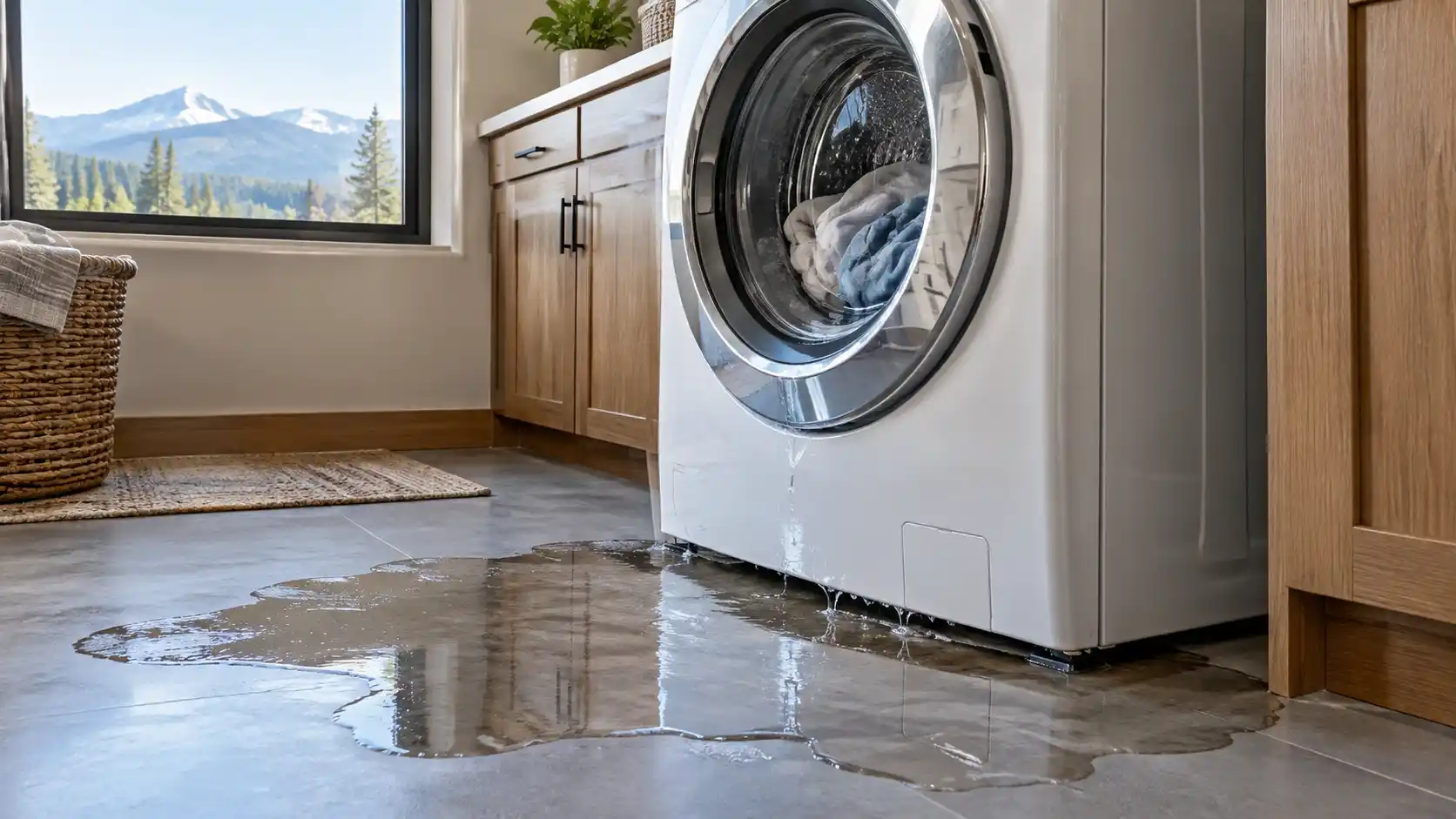
A washing machine leaking from bottom can leave water across your laundry room floor. The leak may appear during filling, washing, draining, or spinning. Each stage can point to a different problem.
A small puddle may come from a loose hose. A larger leak may involve the drain pump, tub seal, or inlet valve. Finding the leak early can help prevent floor damage and costly repairs.
If you live in Bend, Oregon, act quickly. Water can affect flooring, baseboards, and nearby storage areas. This matters in homes around Old Bend, River West, Larkspur, and neighborhoods near the Old Mill District.
This guide explains common causes, safe checks, and repair options. It also explains when you should call a professional.
📋 Table of Contents — Tap to Jump to a Section
- 01 What to Do First When Your Washer Leaks
- 02 Why Is My Washing Machine Leaking?
- 03 Leaking During Filling
- 04 Inlet Valve Leaking
- 05 Drain Hose Leak
- 06 Drain Hose Clogged
- 07 Leaking From Bottom During Draining
- 08 Leaking From Bottom During Spinning
- 09 Washer Leaking Underneath
- 10 Hose Leaking: Repair or Replacement?
- 11 Washing Machine Overflowing
- 12 Leaking From the Bottom After Moving
- 13 How to Find the Source of the Leak
- 14 Can You Fix a Leaking Washer Yourself?
- 15 When to Call a Technician
- 16 Washing Machine Repair in Bend, Oregon
- 17 How to Prevent Future Leaks
- 18 Frequently Asked Questions
- 19 Final Thoughts
What to Do First When Your Washer Leaks
Follow these steps before investigating the machine.
Why Is My Washing Machine Leaking?
Several components can cause a leak. The most common sources include:
- Damaged water supply hoses
- Loose hose connections
- A blocked drain hose
- A faulty drain pump
- A damaged door seal
- A leaking inlet valve
- A worn tub seal
- Excessive detergent
- An overloaded washer
- A damaged outer tub
The leak’s timing can help identify the cause. Water appearing during filling suggests a supply problem. Water appearing during draining may point to the drain system. A leak during high-speed spinning may involve movement, pressure, or a damaged internal component.
Washing Machine Leaking Water During Filling
A washer may leak as soon as it begins filling. This usually involves the water supply system.
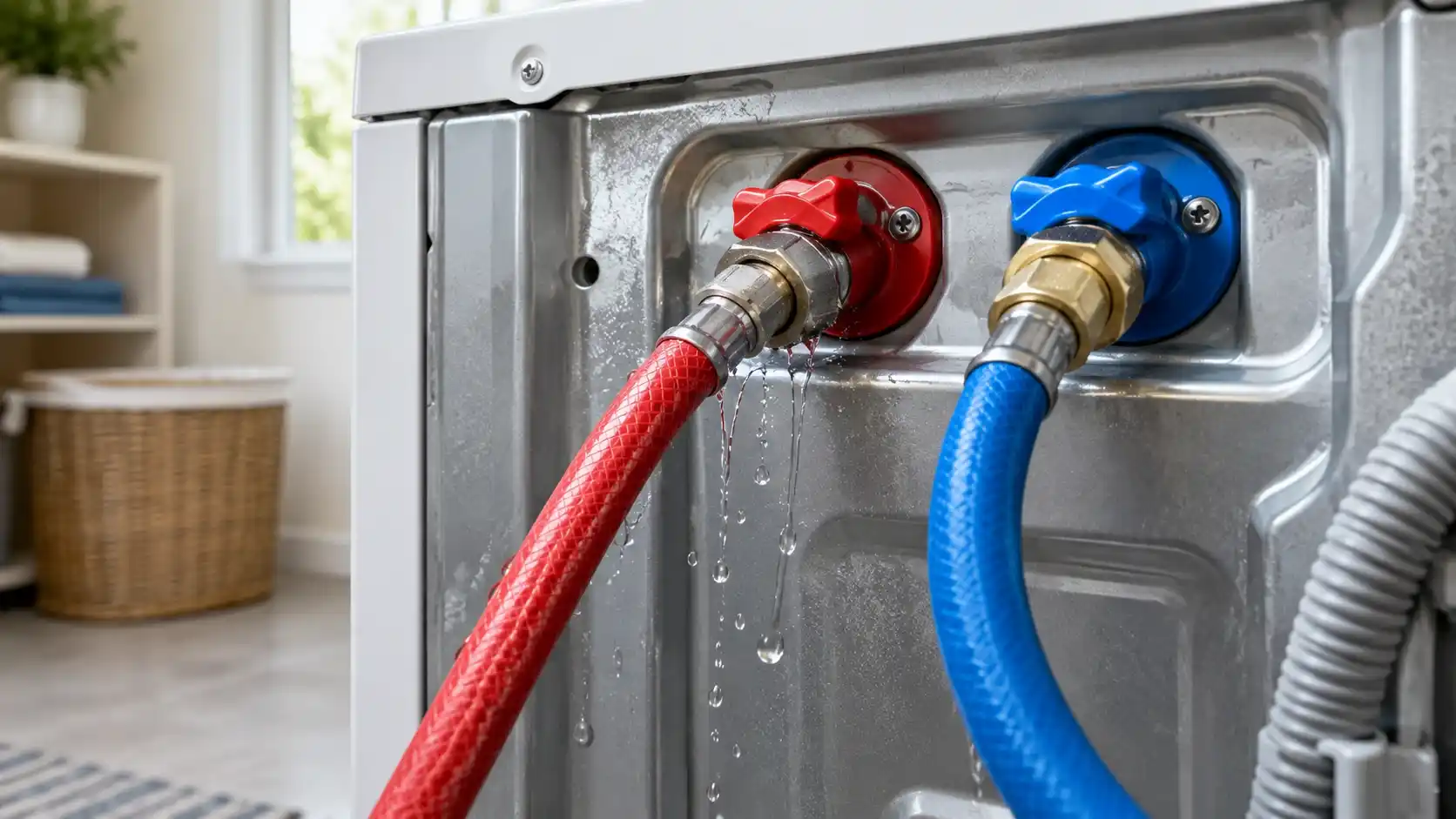
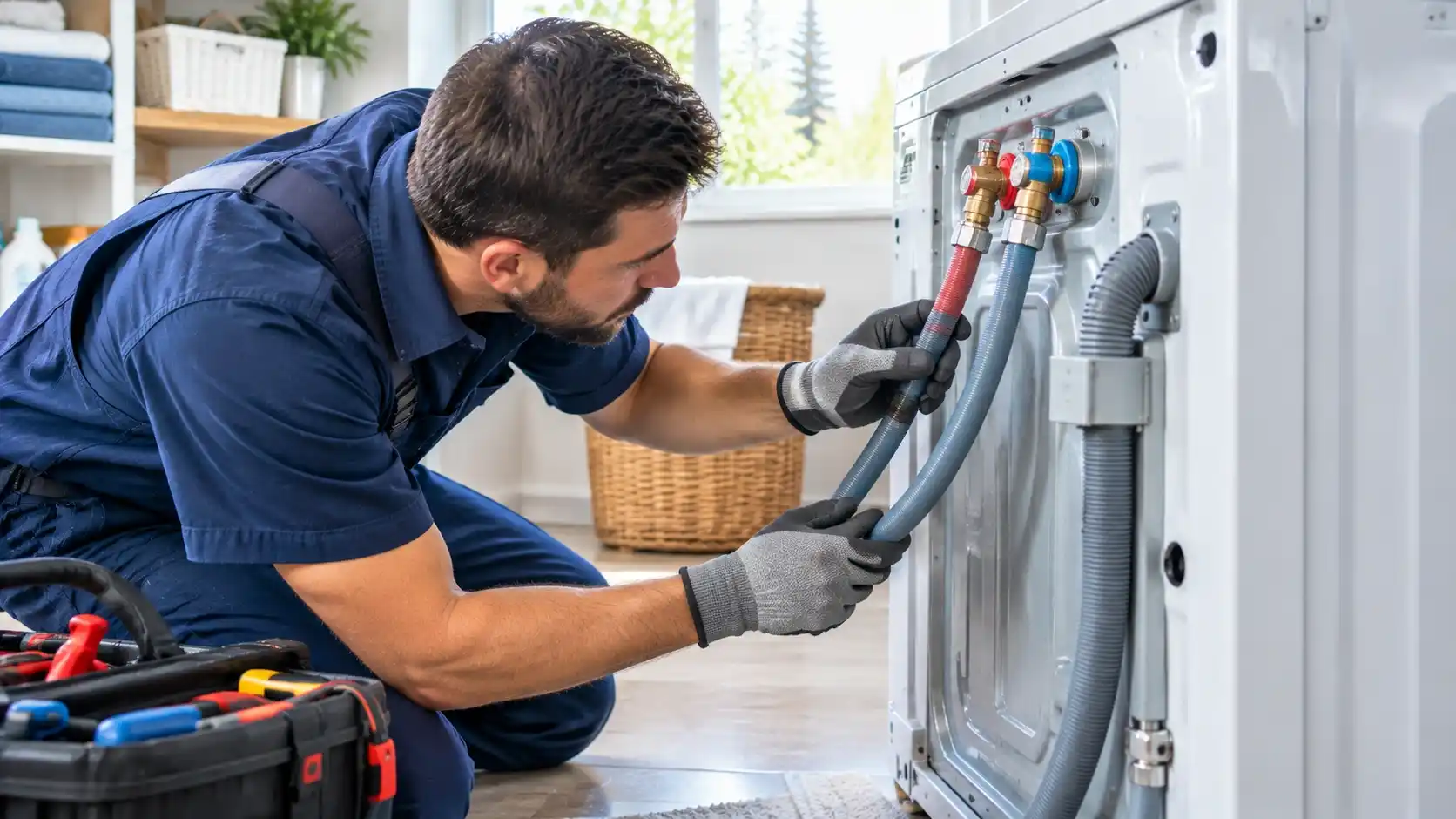
Check the hot and cold water hoses behind the appliance. Look for cracks, bulges, rusted fittings, or loose connections.
A hose can look fine from the outside but still leak under pressure. Water may travel down the rear panel before reaching the floor. This can make the leak seem like an internal problem.
Washing Machine Inlet Valve Leaking
The inlet valve controls water entering the washer. A damaged valve may leak around its body or connection points.
Do not open the valve assembly yourself unless you have the correct training. A technician can test the valve and replace it when necessary.
Signs of an Inlet Valve Problem
- Water appearing during the fill cycle
- A slow drip behind the washer
- Water entering the drum when the machine is off
- Rust or mineral deposits near the valve
Washing Machine Drain Hose Leak
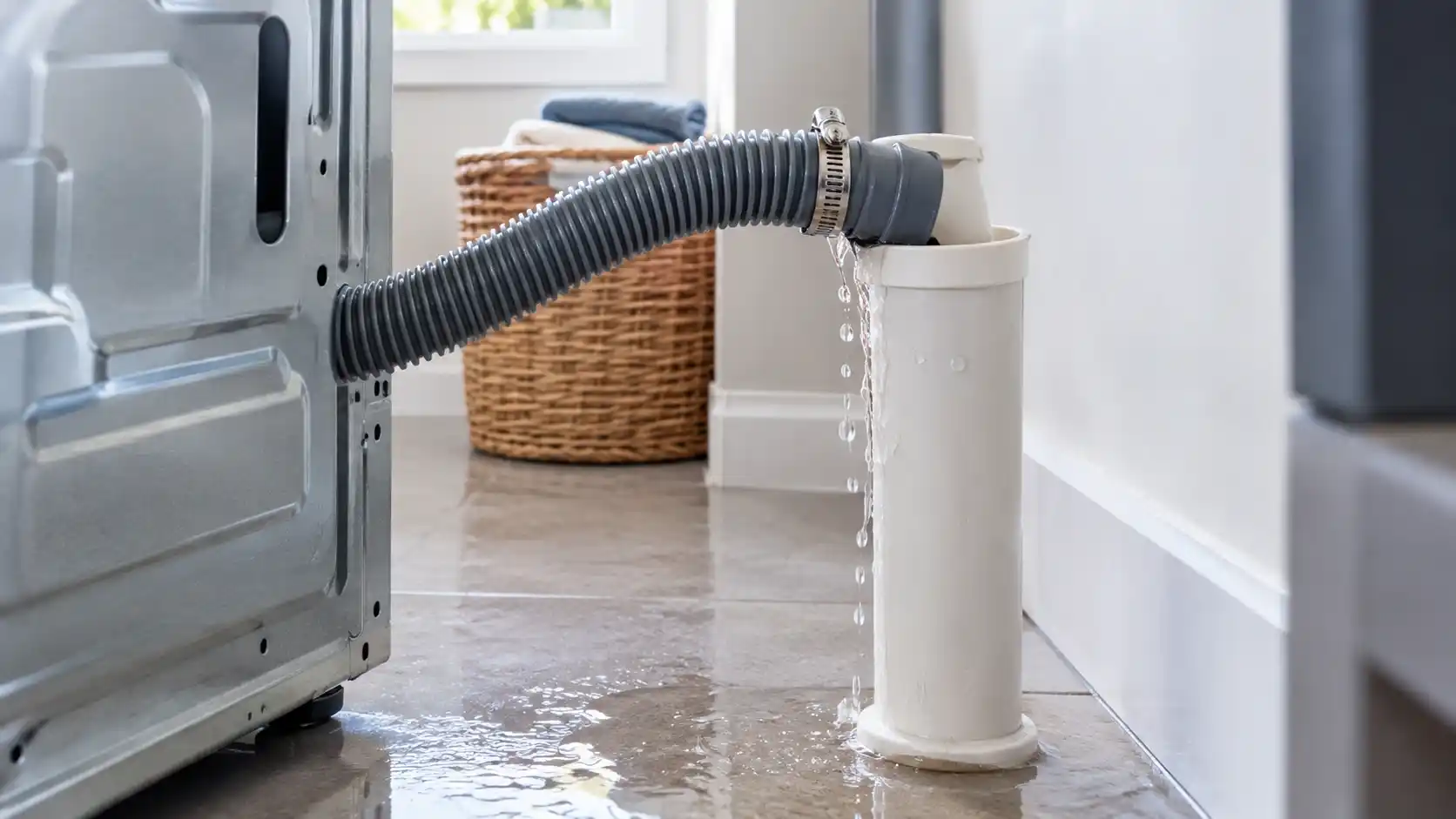
The drain hose carries used water from the washer to the household drain. A crack, loose clamp, or poor connection can cause water to escape.
A drain hose should not sit too deeply inside the standpipe. Incorrect positioning can contribute to drainage problems and overflow.
Inspect the Hose For
- Splits or cracks
- Loose fittings
- Sharp bends
- Damaged clamps
- Water marks around the standpipe
- A hose that has slipped out of position
Washing Machine Drain Hose Clogged
A washing machine drain hose clogged with lint, debris, or foreign objects may restrict water flow. The washer may then drain slowly or discharge water onto the floor.
Before checking the hose, disconnect power and turn off the water supply. Follow the manufacturer’s instructions. Some hoses require access through the rear panel.
Do not force a tool through the hose. You could damage the pipe or push debris deeper into the system. If the hose appears clear, the blockage may exist inside the drain pump or filter.
Washer Leaking From Bottom During Draining
A washer that leaks during draining may have a problem with its pump or drain system. If you notice a washing machine leaking from bottom during this cycle, the drain pump is one possible source.
The drain pump removes used water from the tub. It works harder when the machine drains quickly. A damaged pump housing may leak under pressure.
A pump filter may also contain coins, buttons, lint, or small objects. Only clean an accessible filter when the owner’s manual permits it. Place a shallow container beneath the filter — water may release suddenly.
Common Warning Signs
- Water pooling near the front or rear
- A humming sound during draining
- Slow drainage
- A burning smell
- Repeated drainage errors
- Water remaining inside the drum
Washer Leaking Water From Bottom During Spinning
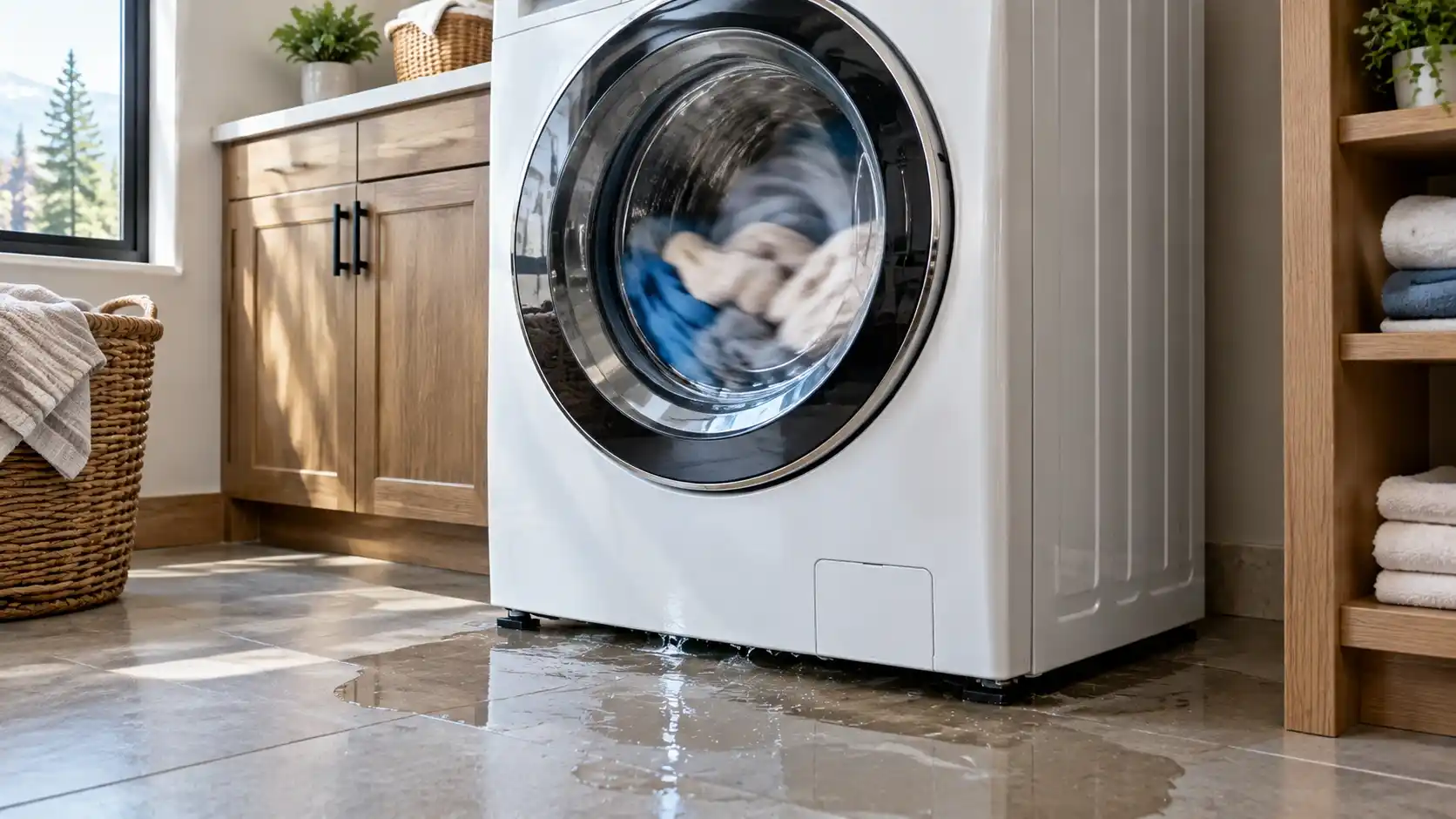
A washer leaking water from bottom during spinning may have a mechanical or balance-related problem.
The spin cycle creates strong movement. An overloaded or unbalanced drum can shake the appliance. This movement may strain hoses and internal seals.
Check whether the washer sits level. Adjust the feet if your manual allows it. Also inspect the load size and distribution. Avoid washing one heavy item alone — a single blanket or rug can create an uneven load.
Washer Leaking Underneath
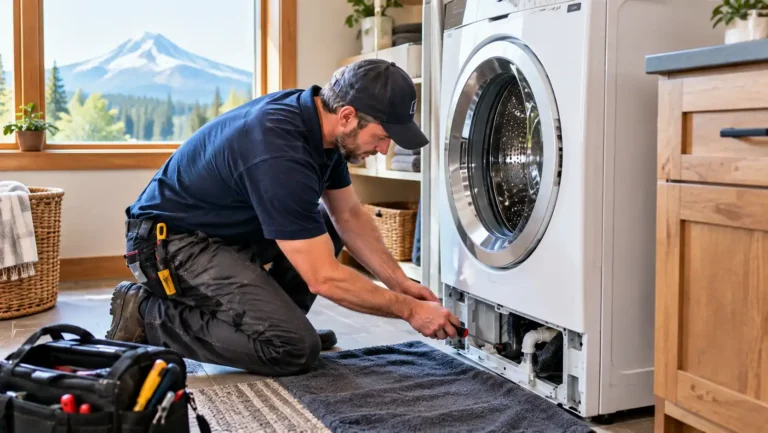
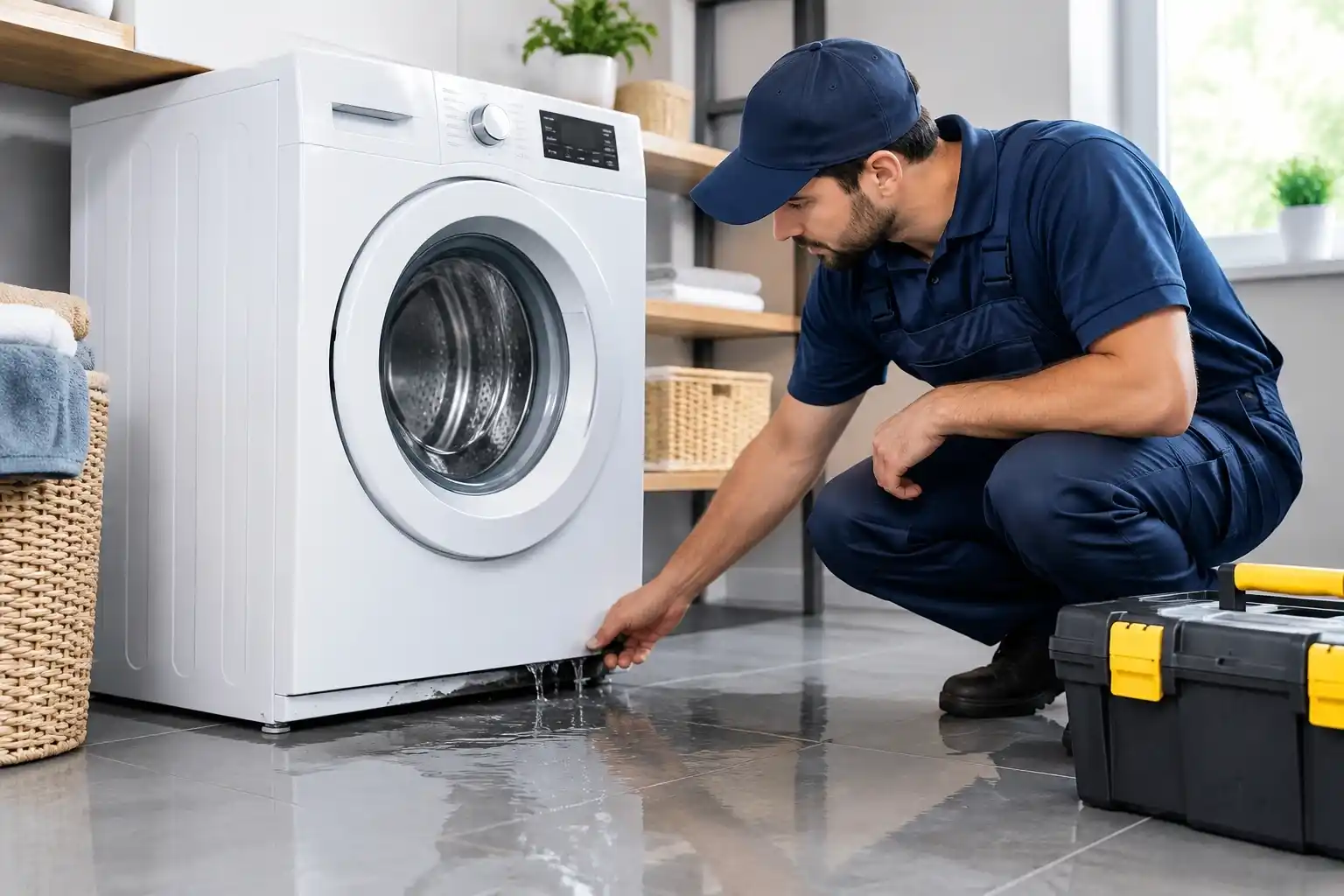
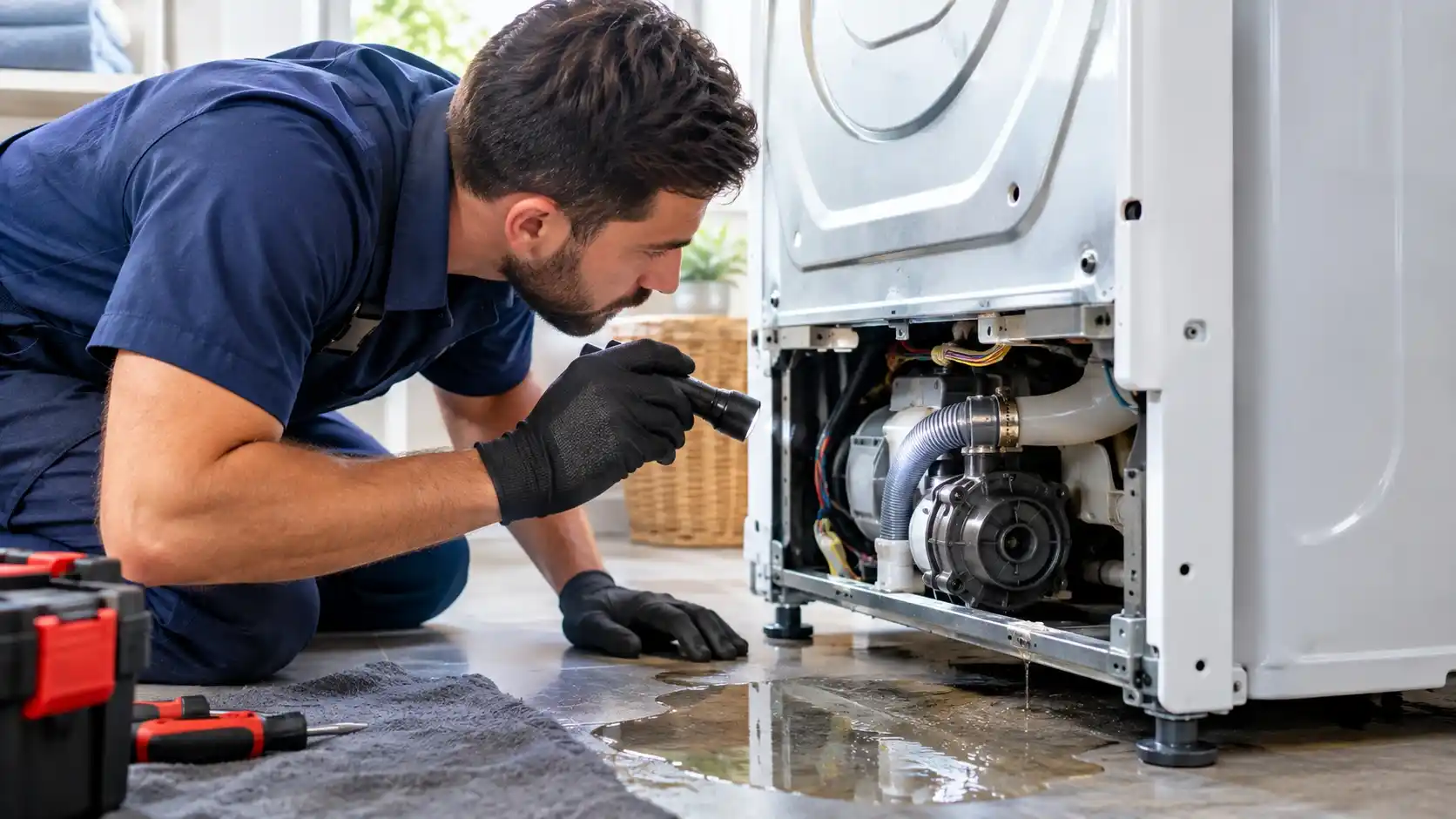
A washer leaking underneath may have a damaged tub seal, pump, hose, or internal connection.
The exact source can be difficult to identify. Water often travels along the base before reaching the floor. The location of the puddle may not match the source.
A technician may need to remove an access panel to inspect the pump, hoses, tub, and seals. Do not tilt the washer without proper equipment — washing machines are heavy and can cause serious injuries.
Washing Machine Hose Leaking: Repair or Replacement?
A washing machine hose leaking should receive prompt attention. Even a slow drip can damage flooring over time. A hose may need replacement if it has:
- Visible cracks
- Bulges
- Rust around the connection
- Damaged threads
- A persistent leak
- Signs of age or wear
Washing Machine Hose Replacement
A washing machine hose replacement is often simpler than repairing an internal component. However, the correct hose must match the connection and application. Whirlpool recommends considering washer hose replacement every three to five years, especially when you notice cracks, corrosion, or other damage.
- Turn off both water supply valves.
- Disconnect power safely.
- Place towels beneath the connections.
- Remove the old hose carefully.
- Fit the new hose without cross-threading.
- Tighten the connection according to the instructions.
- Turn the water on slowly.
- Check for leaks.
Washing Machine Overflowing: What Causes It?
A washing machine overflowing can create a serious water problem. Overflowing may involve the drain system, water-level control, or household plumbing.
- A blocked standpipe
- A restricted drain hose
- A faulty water-level sensor
- A defective inlet valve
- Excessive suds
- A blocked household drain
- A damaged control component
Too much detergent can create excessive foam. Suds may interfere with proper draining. Always use the detergent type and amount recommended for your machine. If water rises from the standpipe, the household drain may be blocked — this issue may require a plumber rather than an appliance technician.
Why Is My Washer Leaking From the Bottom After Moving?
Moving a washer can disturb hoses and connections, which may lead to a washing machine leaking from bottom after relocation. The drain hose may shift out of position, while a supply hose may also loosen.
Check the rear connections after installation or relocation. Make sure the washer stands level. Confirm that the drain hose follows the manufacturer’s instructions.
If the leak began immediately after moving, mention this detail during a service call — it can help the technician narrow down the cause. Homes near busy routes such as Third Street, Franklin Avenue, and Reed Market Road may experience frequent appliance deliveries or moves. Proper installation matters after every relocation.
How to Find the Source of the Leak
You can gather useful information without dismantling the appliance. Observe when the water first appears:
| When the Leak Happens | Possible Cause |
|---|---|
| During filling | Supply hose or inlet valve |
| During washing | Door seal, tub, or internal hose |
| During draining | Drain hose, pump, or household drain |
| During spinning | Unbalanced load, seal, pump, or tub issue |
| When the washer is off | Inlet valve or supply connection |
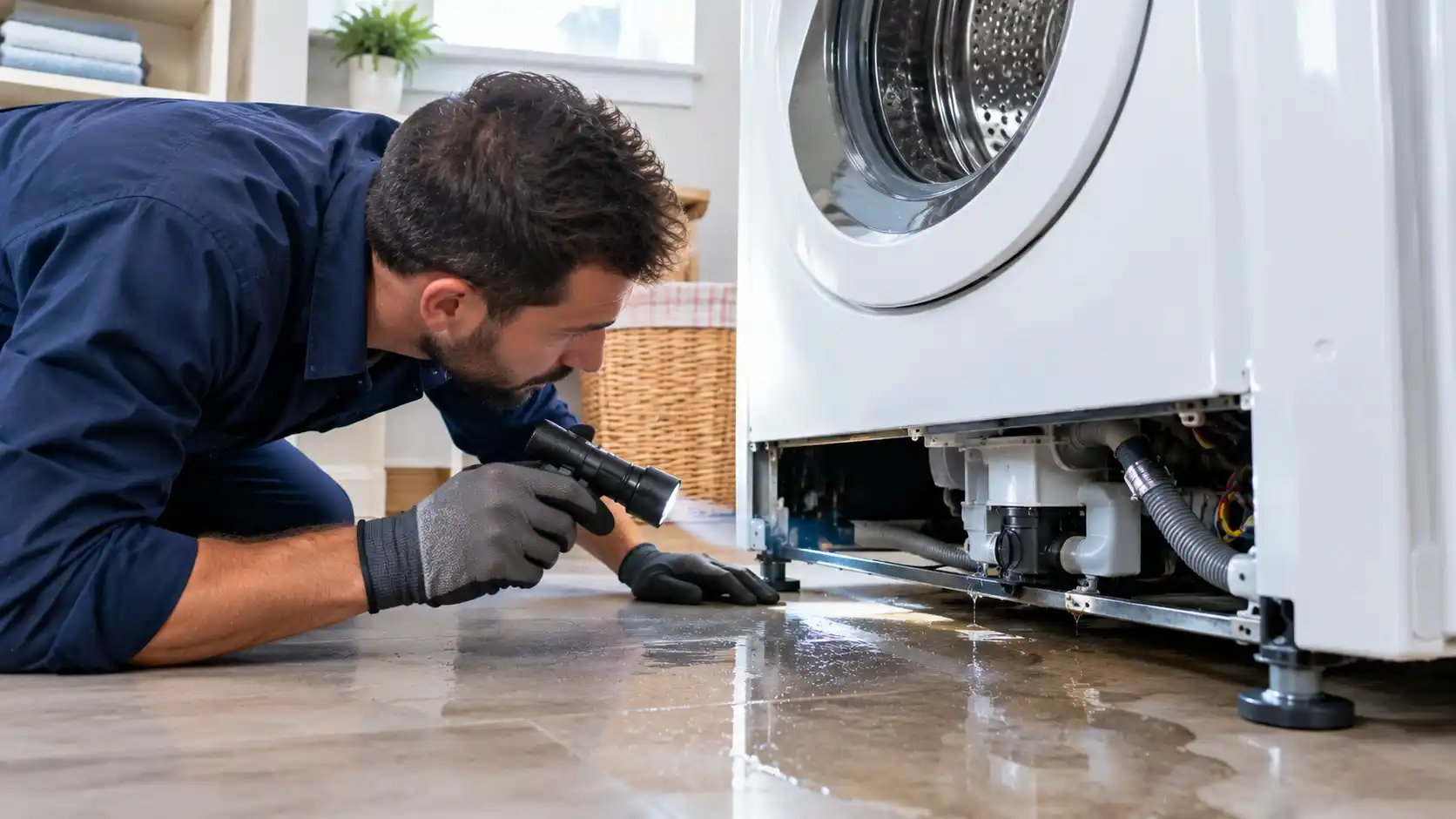
Use a flashlight to inspect visible areas. Look for fresh drips, water trails, rust, or mineral deposits. Do not run repeated test cycles if water reaches electrical parts — a single observation may provide enough information for a technician.
Can You Fix a Leaking Washer Yourself?
Some external problems may be manageable for a careful homeowner. These include checking hose connections and adjusting an uneven load.
Ask for a clear explanation of the problem. Request a written estimate when possible. Confirm whether the repair includes parts, labor, and follow-up testing.
Professional Service Is Safer For
- Drain pump replacement
- Tub seal repair
- Inlet valve replacement
- Door seal replacement
- Outer tub repair
- Internal hose replacement
- Control system diagnosis
When Should You Call an Appliance Repair Technician?
Arrange service when:
Washing Machine Repair in Bend, Oregon
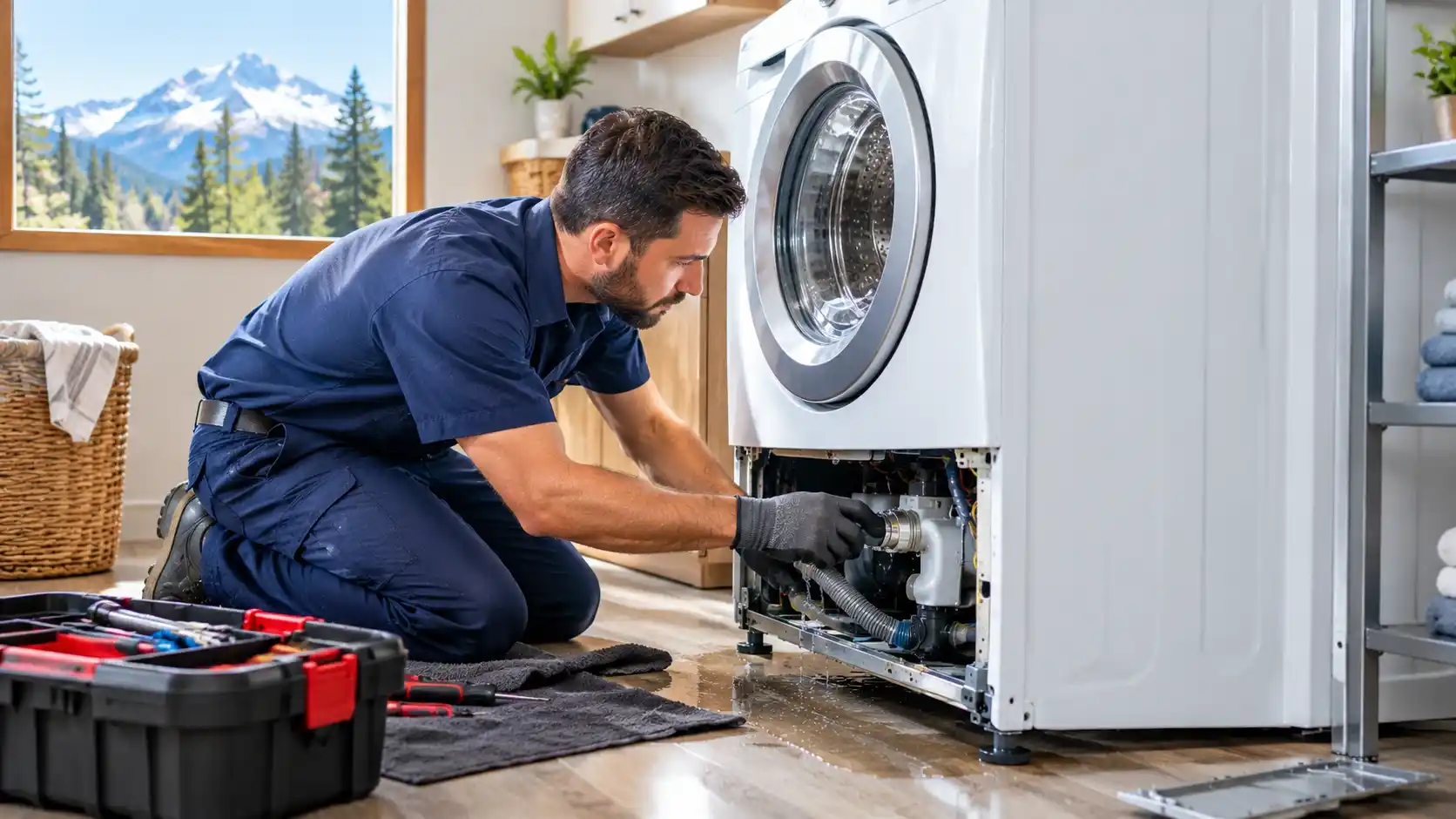
If your appliance is leaking near Downtown Bend, Northwest Crossing, Old Farm District, or the Old Mill District, local repair support can help identify the problem. If you notice a washing machine leaking from bottom, prompt inspection can help determine whether the source is a hose, pump, valve, or internal connection.
A technician may inspect the washer’s hoses, pump, inlet valve, seals, drain system, and internal connections. The inspection should focus on the leak’s timing and location.
Before Booking Service, Prepare These Details
- Washer brand and model
- Approximate appliance age
- Where the water appears
- When the leak begins
- Whether the drum fills or drains
- Any displayed error codes
- Recent installation or movement
- Photos of visible leaks
Bend residents can also distinguish appliance leaks from household plumbing problems. The City of Bend provides separate guidance for water and sewer issues, and private home plumbing systems remain the homeowner’s responsibility. If water comes from a household drain or standpipe, a licensed plumber may be more suitable. If the appliance itself is leaking, an appliance repair technician can investigate the machine.
How to Prevent Future Washing Machine Leaks
A few habits can reduce the risk of future problems.
Replace worn hoses before they fail. Do not ignore small puddles — a minor leak can become a major problem during an unattended cycle.
Testimonials
Genuine customer experiences can strengthen trust when they are specific and verifiable.
Accurate Diagnosis
The strongest reviews explain the problem, diagnosis, repair, and outcome in the customer’s own words.
No Unnecessary Parts
Homeowners value technicians who find the exact source of a leak before recommending a repair.
Fast Local Response
Same-day appointments help Bend homeowners limit water damage quickly.
Awards, Credentials & Case Studies
Only display verified licenses, certifications, and awards. Replace the example below with real, verified service details before publishing.
Leaking Drain Pump Case Study
The problem: A Bend homeowner noticed water pooling near the front of the washer during draining.
The diagnosis: The technician found a cracked drain pump housing leaking under pressure.
The result: Replacing the pump stopped the leak and restored normal drainage.
Frequently Asked Questions
Why is my washing machine leaking from the bottom?
The cause may be a damaged hose, drain pump, inlet valve, tub seal, or internal connection. The timing of the leak helps identify the source. Water during filling often suggests a supply issue. Water during draining may involve the pump or drain system.
Why is my washer leaking water during the spin cycle?
Spinning creates strong movement and pressure. An unbalanced load may strain hoses or seals. A damaged tub seal, drain pump, or internal component may also cause leakage. Stop the cycle if the washer moves or leaks heavily.
Can a clogged drain hose cause a washing machine to overflow?
Yes. A blocked drain hose can restrict water flow. The washer may drain slowly or discharge water from the standpipe. Check the hose only when it is safe and accessible. A household drain blockage may require plumbing service.
Is washing machine hose replacement better than repair?
Replacement is usually appropriate when a hose has cracks, bulges, or damaged fittings. A hose connection problem may need adjustment instead. Use the correct replacement part. A technician should handle difficult or inaccessible connections.
Final Thoughts
A leaking washer should not be ignored. The source may be simple, such as a loose hose. It may also involve a pump, valve, seal, or internal component.
Start with safe checks. Avoid dismantling the machine without proper knowledge. If the leak continues, arrange a professional inspection.
Fast action can help protect your laundry room, flooring, and home from further water damage.
Need Help Finding the Source of a Washer Leak?
If basic checks haven’t solved the problem, our technicians can pinpoint the actual source and give you a clear repair estimate before any work begins.