Seasonal Appliance Maintenance Checklist for Bend, OR Homes
A seasonal appliance maintenance checklist is the simplest way to keep every machine in your home running longer. This year-round calendar breaks down exactly what to clean, check, and service each season — tuned for Bend and Central Oregon conditions.
Start Here: Why Seasonal Maintenance Works
Most appliance breakdowns do not happen out of nowhere. They build slowly — dust choking refrigerator coils over months, lint packing a dryer vent a little tighter with every load, mineral scale filming a dishwasher’s heating element one cycle at a time. By the time the machine fails, the cause has been growing for a year or more.
A seasonal appliance maintenance checklist interrupts that slow decline. Instead of one overwhelming deep-clean day, you spread small tasks across the year, timed to when each one matters most. Clean the dryer vent before summer heat arrives. Check the washer hoses before winter. Descale the dishwasher when hard-water buildup peaks. Each job takes minutes, and together they prevent the majority of the breakdowns technicians get called out for.
The calendar below is built for Bend, Oregon and Central Oregon homes. It accounts for our hard water, high-desert dust, real winters, and dry summers — the local conditions that shape what your appliances need and when they need it. Follow it for a year, and you will spend less on repairs and replace machines less often.
You do not need special tools for most of this list. A vacuum with a brush attachment, an old toothbrush, white vinegar, baking soda, and a microfiber cloth cover nearly everything. The few jobs that need a professional are marked clearly, so you always know where the DIY line sits.
Table of Contents — Tap to Jump to a Section
Your Appliance Year at a Glance
If you only remember one thing from this seasonal appliance maintenance checklist, make it this: four small jobs each season prevent most breakdowns. Clean the dryer vent, vacuum the refrigerator coils, clean the dishwasher filter, and run a washer tub-clean cycle. Those four tasks, done on schedule, address the most common failure points in the home.
Here is the full year in one table:
| Season | Focus | Key Tasks |
|---|---|---|
| Spring (Mar–May) | Reset after winter | Fridge coils, washer tub-clean, dryer vent exterior, range hood filter |
| Summer (Jun–Aug) | Heat and heavy use | Full dryer vent line, fridge door seals, dishwasher filter, AC filter |
| Fall (Sep–Nov) | Prepare for winter | Oven deep-clean, dishwasher descale, lint trap housing, fridge water filter |
| Winter (Dec–Feb) | Cold-weather watch | Vent flap ice check, washer hose inspection, door gasket check, garage appliances |
Nearly every task on this list protects one of two things: airflow or drainage. Appliances rarely fail suddenly — they get choked slowly, work harder for the same result, and burn out a motor months later. Seasonal maintenance keeps those pathways clear.
Spring (March – May): The Post-Winter Reset
Spring is the reset after a Central Oregon winter. Dust has been circulating through the house for months, the outside end of your dryer vent has been through freeze-thaw cycles, and your appliances have been working in dry heated air since November. This is the season to clear out everything winter left behind.
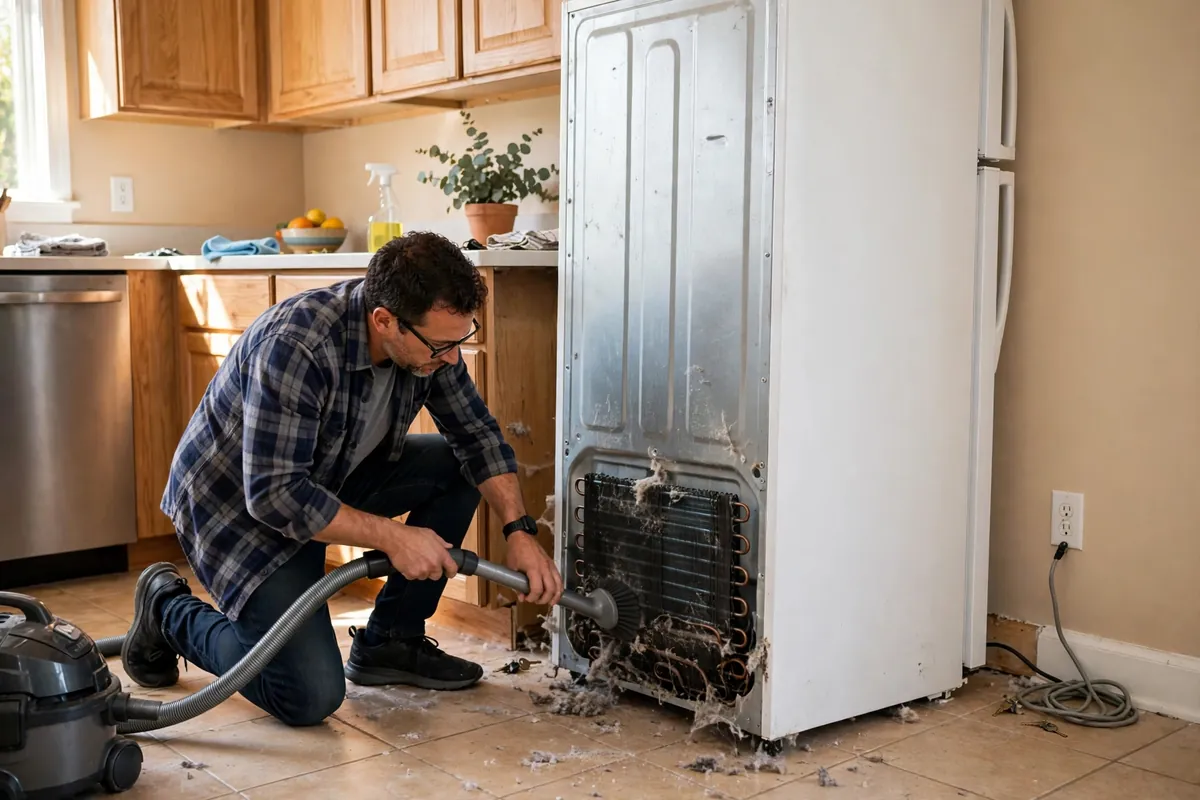
Refrigerator coils — vacuum them. Pull the fridge out, unplug it, and vacuum the condenser coils with a brush attachment. In dusty homes, a winter’s worth of buildup can be significant. Clean coils let the compressor run cooler and shorter, which is the single best thing you can do for refrigerator lifespan. While the fridge is out, wipe the floor underneath and check that the water line to the ice maker is not kinked.
Washer — run a tub-clean cycle. Run the hottest, longest empty cycle with two cups of white vinegar or a washing machine cleaner. Winter’s heavy laundry loads leave detergent residue and biofilm in the drum, dispenser, and hoses. This one cycle flushes it all out before spring cleaning season ramps up your laundry volume.
Dryer vent exterior — inspect the flap. Go outside and look at the vent termination. The flap should open freely and close fully. Winter ice and debris can jam it open — which lets cold air and pests in — or jam it shut, which traps moist air in the vent line. Clear any obstructions and make sure the flap moves easily.
Range hood filter — degrease it. Pop out the metal mesh filter over your stove and soak it in hot water with dish soap and baking soda. A grease-clogged hood filter recirculates cooking grease instead of capturing it, and that grease ends up coating nearby surfaces and the inside of the hood.
Dishwasher — check the filter and spray arms. Pull the filter, rinse it under hot water, and scrub it with a soft brush. Check the spray-arm jets for clogs while you are at it. Spring is a good time for this because hard-water scale builds up fastest during winter’s heavier hot-water use.
Summer (June – August): Beat the Heat
Summer puts extra stress on cooling appliances and rewards good airflow everywhere else. Kitchens run hotter, refrigerators work harder, and dryers push hot air through vents in peak heat. Your summer tasks focus on keeping everything breathing easy.
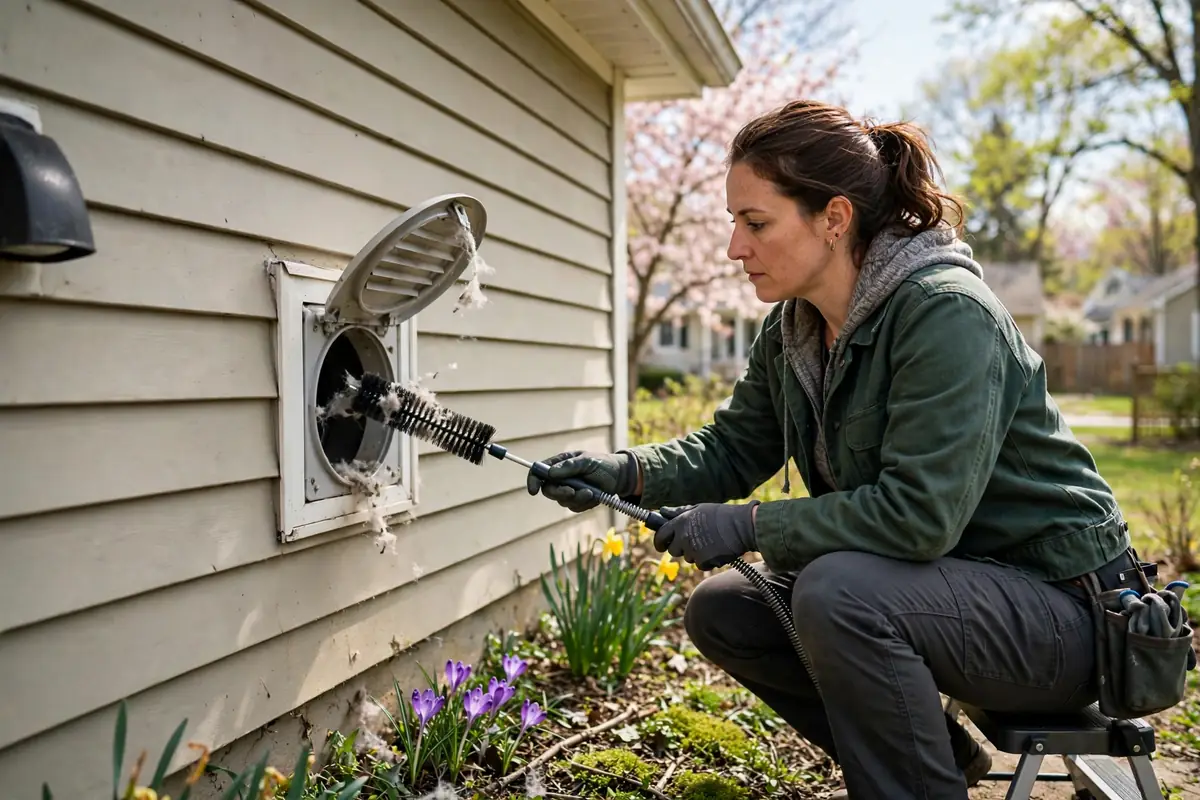
Dryer vent line — clean the full run. This is the big one. Disconnect the vent from the back of the dryer and clean the entire duct run to the outside wall with a vent brush kit. Summer is the right season because heat plus lint is the combination that causes dryer fires, and a clean vent also cuts drying time noticeably. If the vent run is long or has multiple bends, consider having it professionally cleaned — the airflow improvement is dramatic.
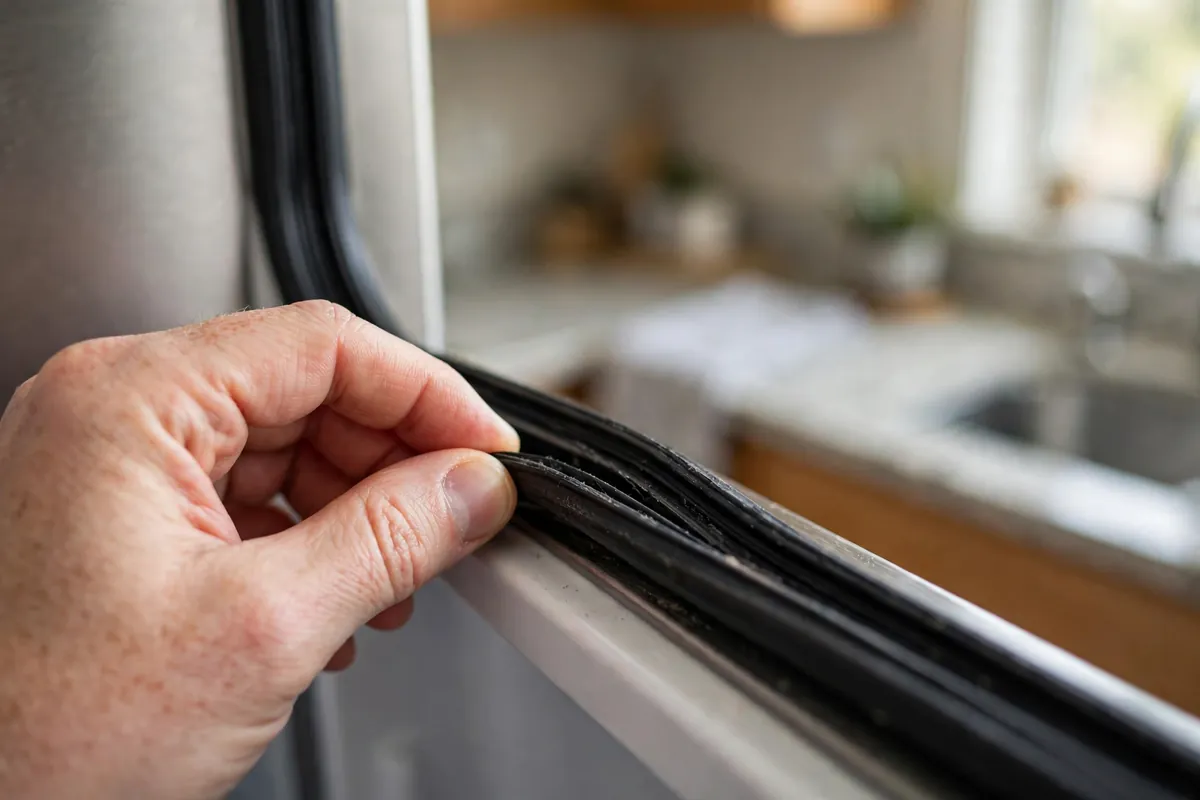
Refrigerator door seals — test and clean. Close the door on a dollar bill at several points around the seal. If the bill slides out easily, that section of gasket is not sealing and cold air is escaping. Clean the gaskets with warm soapy water — sticky residue prevents a full seal — and check for cracks or tears. In summer heat, a weak seal makes the compressor run far longer than it should.
Dishwasher filter — clean it again. Summer means more cooking, more entertaining, and more dishwasher loads. A mid-year filter cleaning keeps the pump from straining through the busiest season. While you are in there, wipe the door gasket folds where mold loves warm weather.
Air conditioner filter — replace or clean. If your home has central air, the filter needs monthly attention during cooling season. A clogged AC filter is the same story as a clogged dryer vent: restricted airflow, overworked equipment, higher bills. Check it on the first of each summer month.
Ice maker — check output and taste. Summer is peak ice season. If cubes are small, hollow, or taste off, the water filter likely needs replacing or the inlet valve is struggling with sediment. Most manufacturers recommend a new water filter every six months, which makes summer the natural replacement point if you changed it in winter.
Fall (September – November): Prepare for Winter
Fall is preparation season. Holiday cooking is coming, heating season is starting, and you want every appliance in top shape before the cold arrives. The tasks this season focus on the oven, deep cleaning, and anything that winter will make harder to access.
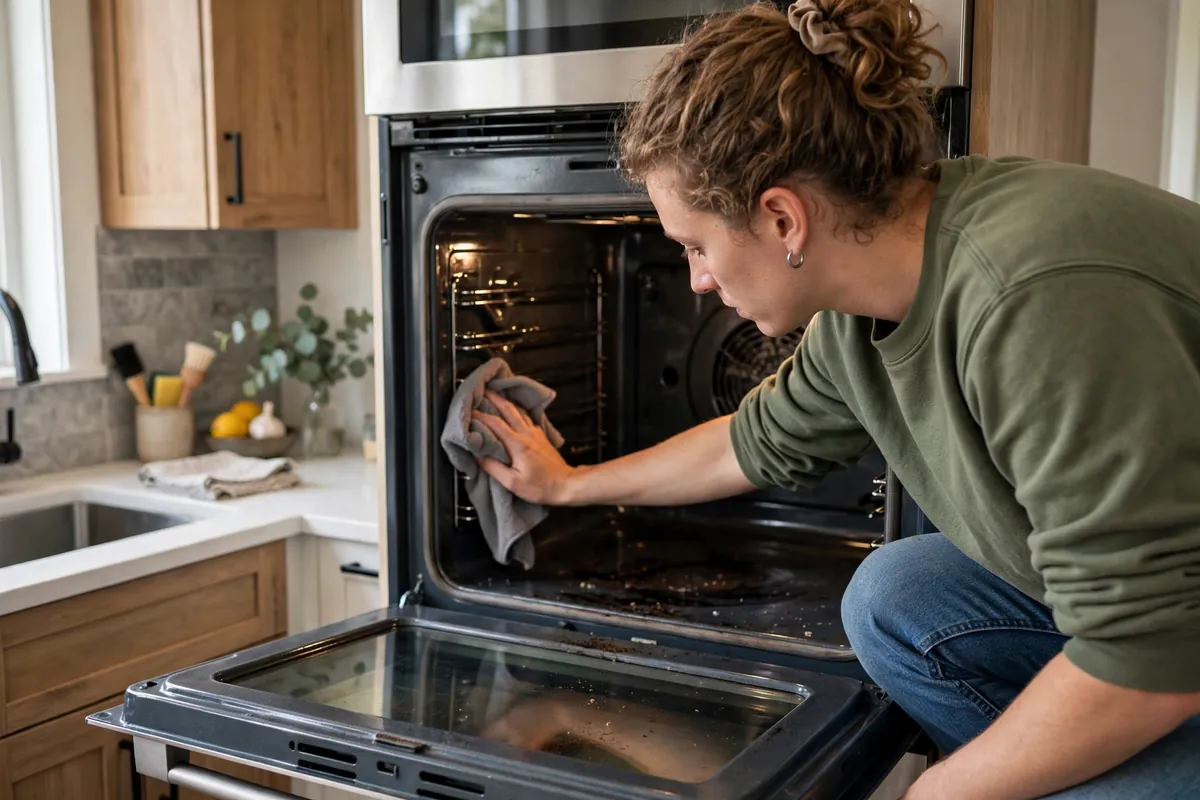
Oven — deep-clean it now. Before the holiday cooking marathon, give the oven a thorough cleaning. Remove the racks and soak them, wipe the interior, and clean the door glass. If you use the self-clean cycle, do it now — not the week of a big dinner, in case the extreme heat stresses an aging control board. Check that the oven thermometer matches the set temperature; calibration drifts over time.
Dishwasher — descale for hard water. Run an empty hot cycle with white vinegar or a descaling product. Fall is ideal because Central Oregon’s hard water has been filming the heating element and spray arms all summer. Descaling now means the dishwasher enters its busiest season — holiday dish loads — at full efficiency.
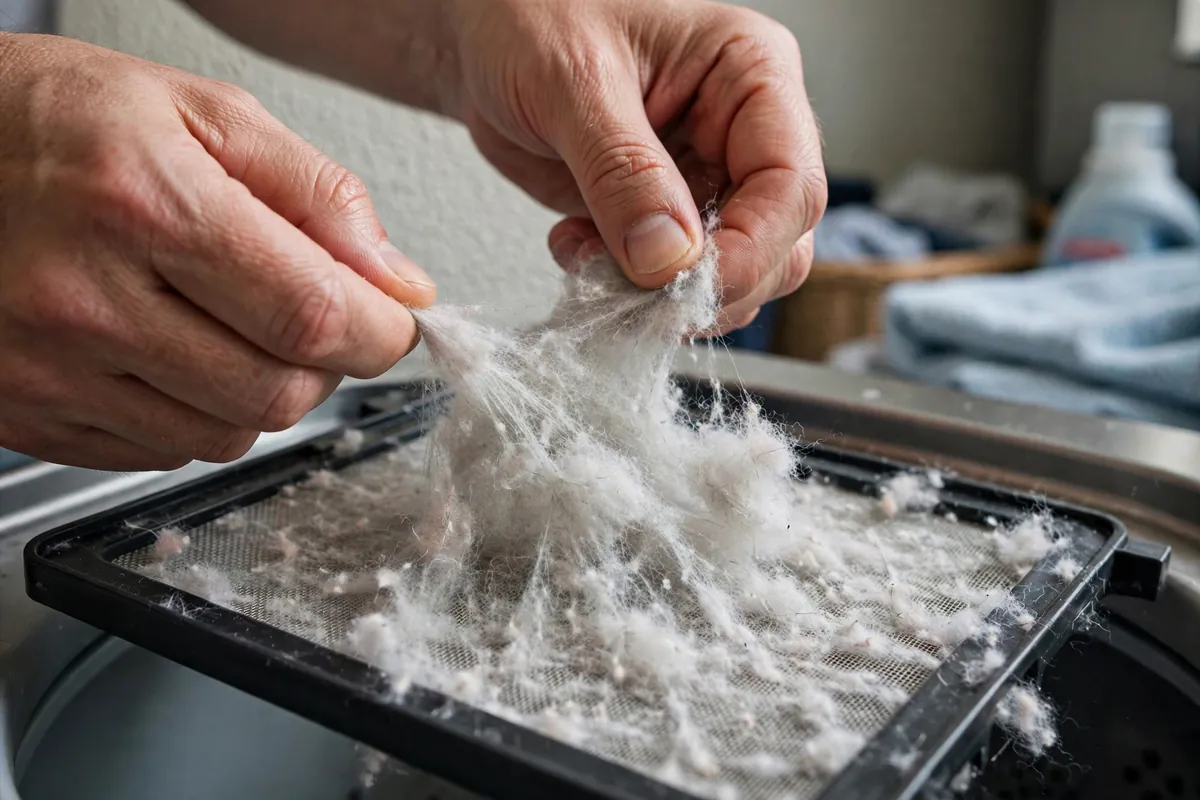
Dryer lint trap housing — vacuum it out. Pull out the lint screen and vacuum deep into the housing slot with a narrow attachment. Lint bypasses the screen over time and packs into the housing and the duct connection. This hidden buildup is a fire risk and a major efficiency drag, and most people never clean it.
Refrigerator water filter — replace if due. If you replaced it in spring, fall is the six-month mark. A spent filter restricts water flow to the ice maker and dispenser, straining the inlet valve. Mark the replacement date on the new filter with a marker so you remember next time.
Washing machine hoses — inspect before winter. Pull the washer out enough to see the hoses. Look for bulges, cracks, brittleness, or dampness at the connections. Rubber hoses should be replaced every five years; braided stainless steel hoses last longer but still deserve an annual look. A burst washer hose is one of the most damaging home floods there is, and fall inspection catches it before winter’s cold makes rubber more brittle.
Winter (December – February): Cold-Weather Watch
Winter in Central Oregon is the stress test. Freezing temperatures, dry heated indoor air, and heavy holiday use push every appliance. Winter maintenance is mostly about watching for cold-related problems and keeping up with the routines that matter most in heating season.
Dryer vent flap — check for ice. In freezing weather, moist exhaust air can freeze the exterior vent flap shut. A flap frozen closed traps all that moisture in the vent line, which then drips back or freezes inside the duct. Check the exterior vent after cold snaps and clear any ice. This is also why the fall vent-line cleaning matters — a clean vent pushes air out forcefully enough to keep the flap clear.
Washer hoses — recheck in the cold. If your washer sits in a garage or unheated space, winter is when hoses are most vulnerable. Rubber gets brittle in the cold, and a freeze can crack a pump housing. Keep the space above freezing if at all possible, and consider replacing old rubber hoses with braided steel before winter rather than after a failure.
Refrigerator and freezer door gaskets — check the seal. Dry winter air shrinks and stiffens rubber gaskets. Run the dollar-bill test again, and wipe the gaskets with warm water to keep them supple. A freezer with a weak seal builds frost fast in winter’s dry air, which then strains the defrost system.
Garage appliances — monitor them. Refrigerators and freezers in unheated garages face the toughest winter conditions. Extreme cold can confuse older refrigerator thermostats, and the compressor may barely run — which sounds good until you realize the freezer section is warming up too. If you keep a fridge in the garage, check its temperatures with a thermometer during the coldest weeks.
Dishwasher — keep it running regularly. An unused dishwasher in winter is a recipe for dried-out seals and stagnant water in the pump. Even if you hand-wash most dishes, run an empty hot cycle every week or two through winter to keep seals moist and the pump primed.
The Monthly 10-Minute Routine
Between the seasonal jobs, this quick monthly routine keeps everything humming. Set a recurring phone reminder — consistency matters more than perfection.
Ten minutes a month prevents the slow buildup that causes most breakdowns. Pair it with something you already do — the first Saturday of the month, or the day the mortgage is due — and it becomes automatic.
Your Maintenance Kit: What to Keep on Hand
You do not need a professional tool chest. This short list covers nearly every task on the seasonal checklist, and most of it is already in your home.
- Vacuum with brush and crevice attachments — for refrigerator coils, dryer lint housings, and vent terminations.
- Coil brush — a long flexible brush made for refrigerator condenser coils; reaches where the vacuum cannot.
- Dryer vent brush kit — flexible brush on extension rods for scrubbing the full vent run.
- White distilled vinegar — descaling dishwashers and washers, cleaning gaskets, dissolving mineral film.
- Baking soda — deodorizing washer drums and dishwasher interiors, gentle scouring.
- Old toothbrush or soft brush — scrubbing dishwasher filters, gasket folds, and spray-arm jets.
- Microfiber cloths — wiping seals, drums, and interiors without scratching.
- Appliance thermometer — verifying fridge, freezer, and oven temperatures twice a year.
- Flashlight — seeing into dishwasher filters, disposal chambers, and behind appliances.
Total cost for anything you do not already own is modest, and every item pays for itself the first time it prevents a service call. Store the kit together — a small caddy under the sink — so the monthly routine never stalls on “where is the brush.”
Three High-Value Jobs, Done Right
Three maintenance tasks prevent more breakdowns than all the others combined. Here is exactly how to do each one.
Cleaning the full dryer vent line. Unplug the dryer and pull it away from the wall. Loosen the clamp and detach the vent duct from the back of the machine. Use a vent brush kit — a flexible brush on extension rods — to scrub the entire duct run from both ends, twisting as you push. Vacuum out everything the brush loosens. Reconnect the duct with a proper clamp (not duct tape, which dries out and fails), push the dryer back without kinking the duct, and run a test load. You should feel strong, warm airflow at the exterior vent. If airflow is still weak, the blockage may be in a section you cannot reach — that is the point to call a professional vent cleaning service.

Vacuuming refrigerator condenser coils. Unplug the refrigerator. The coils are either behind a kick plate at the bottom front or on the back of the unit — check your manual if you are unsure. Remove the kick plate or pull the fridge out. Use a vacuum with a brush attachment to remove dust from the coils, working gently so you do not bend the delicate fins. For stubborn buildup, a purpose-made coil brush — a long, flexible brush designed to reach between coils — works better than the vacuum alone. Vacuum the floor underneath while the fridge is out, then push it back, leaving a few inches of clearance behind for airflow. Plug it back in and listen: a fridge with clean coils cycles off sooner and runs quieter.

Inspecting washing machine hoses. Turn off the water supply valves behind the washer. Pull the machine out enough to see and reach the hoses. Run your hand along each hose, feeling for bulges, soft spots, cracks, or brittleness. Check both ends where the hose meets the valve and the machine — dampness or mineral crust at a connection means a slow leak. Look at the valves themselves for corrosion. If the hoses are plain rubber and more than five years old, replace them with braided stainless steel hoses as preventive maintenance — it is a cheap job that prevents one of the most destructive home floods. Turn the water back on slowly and watch the connections for drips before pushing the washer back.

Central Oregon Twists on the Standard Checklist
Three local conditions change the standard advice for Bend and Redmond homes. Adjust the calendar above to account for them.
Hard water means descale more often. The generic advice says descale the dishwasher twice a year. In Central Oregon, quarterly is smarter — our mineral content films heating elements and clogs spray arms faster than the national average. Homes on private wells should descale even more often and clean the washer’s inlet screens annually, since sediment loads them faster than city water does.
High-desert dust means clean coils twice a year. The standard recommendation is annual coil cleaning. Here, spring and fall cleanings are both worthwhile — dust is simply more present, and it settles on condenser coils, dryer vent terminations, and range backs faster than in humid climates. If you have pets, add a mid-summer check too.
Real winters mean winterize the edges. Appliances in garages, mudrooms, and other unconditioned spaces need the winter attention described above. The freeze risk to washer hoses and pumps is real here — a single hard freeze can crack a pump housing. If any water-using appliance lives outside your heated envelope, the fall hose inspection is not optional.
Wildfire smoke season deserves a mention. During smoky summers, fine ash gets into everything, including dryer vents and refrigerator coils. After a bad smoke stretch, it is worth repeating the coil vacuuming and checking the dryer vent exterior — ash is surprisingly effective at clogging both.
The Bend adjustment in one line: descale quarterly instead of twice a year, clean coils twice a year instead of once, and never skip the fall hose inspection. Those three changes adapt the national checklist to Central Oregon reality.
What Each Appliance Needs, All in One Place
The seasonal calendar tells you when. This section tells you what — every maintenance task for each major appliance, so nothing falls through the cracks.
Refrigerator
Vacuum the condenser coils twice a year — spring and fall at minimum. Test the door gaskets with the dollar-bill test each summer and wipe them with warm soapy water. Replace the water filter every six months if you have an ice maker or dispenser. Keep the fridge between 37 and 40 degrees and the freezer at zero, and check with a thermometer twice a year since built-in displays drift. Leave a few inches of clearance behind the unit for airflow, and do not block the vents inside with packed food — cold air needs to circulate.
Washing Machine
Run a hot tub-clean cycle monthly — vinegar or a washing machine cleaner on the longest, hottest setting. Wipe the door gasket folds weekly on front-loaders and leave the door ajar after every load. Clean the detergent dispenser drawer monthly; dried detergent and softener breed mold. Inspect the supply hoses every fall and replace rubber hoses every five years. Do not overload — the number one cause of premature bearing and suspension failure. Use HE detergent in the measured amount, not more.
Dryer
Clean the lint trap after every single load — no exceptions. Vacuum the lint trap housing monthly. Clean the full vent line annually, ideally in summer before peak heat. Check the exterior vent flap each spring and after winter cold snaps. Wipe the moisture sensor bars (inside the drum) with a cloth dampened with rubbing alcohol every few months — fabric softener residue coats them and makes the sensor misread dryness. Never run the dryer while sleeping or away from home.
Dishwasher
Clean the filter monthly — pull it, rinse it, scrub it. Descale quarterly in Central Oregon with a hot vinegar cycle or descaling product. Wipe the door gasket folds monthly and check for cracks annually. Clean the spray-arm jets when dishes start coming out spotty. Use rinse aid every cycle to fight hard-water filming. Scrape — do not pre-rinse — dishes before loading, and run the garbage disposal before starting the dishwasher so the shared drain is clear.
Range and Oven
Deep-clean the oven each fall before holiday cooking season. Wipe spills promptly — baked-on grease damages igniters and clogs gas ports over time. Check the oven temperature with an oven thermometer annually and recalibrate if it drifts more than 25 degrees. Clean the range hood filter every few months. On gas models, make sure burner caps sit flat and ports are clear. Use the self-clean cycle sparingly and never right before an important meal, since the extreme heat stresses electronic controls.
Microwave
Keep the interior clean — food splatter absorbs microwave energy and can damage the interior over time. Check the waveguide cover (the small panel inside, usually on the side wall) for burns or damage; a damaged cover causes sparking. Make sure the door latches firmly and the seal is intact. Never run it empty. If it sparks, stop using it immediately and have it checked — sparking is a fire risk, not a quirk.
Garbage Disposal
Run it regularly — an unused disposal seizes up. Always run cold water before, during, and after grinding. Grind ice cubes monthly to scour the chamber. Never put bones, coffee grounds in quantity, fibrous vegetables, starchy peels, or grease down the disposal. If it hums but does not spin, turn it off immediately and use the hex wrench and reset button — running a jammed motor burns it out. Know where your reset button is before you need it.
How to Actually Stick to the Checklist
The best maintenance checklist is the one you follow. Most people start strong in spring and forget by August. These three habits fix that.
Put the seasons on your calendar now. Create four recurring yearly events — spring tasks in March, summer in June, fall in September, winter in December — with the task list in the event notes. When the reminder pops up, you do not have to remember anything or look anything up. The calendar tells you exactly what to do.
Keep a one-page log. A sheet of paper on the inside of a utility closet door works fine. Each time you complete a task, write the date next to it. That log becomes surprisingly valuable: when the dishwasher starts acting up, you can see at a glance that the filter was last cleaned four months ago, or that the water filter is overdue. It also helps a technician diagnose faster — “the coils were cleaned in March” is useful information on a service call.
Pair tasks with things you already do. Clean the dishwasher filter the same day you pay the electric bill. Check the dryer vent flap when you change the clocks. Run the washer tub-clean cycle on the first Saturday of the month. Anchoring maintenance to existing habits is what makes it stick year after year.
None of this needs an app or a complicated system. A calendar, a piece of paper, and ten minutes a month are the entire infrastructure. The appliances do not care how you track it — they only care that it happens.
When Maintenance Is Not Enough: Call a Pro
Maintenance prevents most problems, but not all of them. Call a technician when you find something the checklist cannot fix: a washer hose valve that will not fully shut off, a dryer vent run you cannot clear from either end, a refrigerator that runs constantly despite clean coils, or any appliance making new grinding, squealing, or burning smells.
Also call when a seasonal task reveals a bigger issue. Finding a bulging washer hose is a win — you caught it before it burst — but replacing valves or rerouting a dryer vent is professional work. The checklist tells you what to look at; a technician handles what you find.
If any appliance on this list is past its typical lifespan and developing problems, ask for an honest assessment before authorizing a repair. A good technician will tell you when maintenance has done all it can do and replacement is the smarter money. Get a free estimate and find out where your machine stands.
Frequently Asked Questions About Appliance Maintenance
How often should I follow a seasonal appliance maintenance checklist?
Do the four seasonal task groups — spring, summer, fall, winter — once each per year, plus the 10-minute monthly routine. That rhythm catches problems early without turning maintenance into a chore.
What is the most important appliance maintenance task?
Cleaning the dryer vent line and vacuuming refrigerator condenser coils top the list. Both prevent the overheating that kills compressors and causes dryer fires. If you do nothing else, do those two.
Can I do all of this maintenance myself?
Nearly all of it, yes. The checklist uses basic tools and no special skills. The exceptions are sealed-system refrigerator work, gas line work, and anything involving opening up a control panel — those belong to a technician.
How does hard water change the maintenance schedule?
In Central Oregon, descale dishwashers quarterly instead of twice yearly, run monthly vinegar cycles, and check washer inlet screens annually. Mineral buildup here is heavier than the national average.
Should I maintain appliances in my garage differently?
Yes. Garage appliances face freezing risk in winter and heat stress in summer. Inspect washer hoses before winter, monitor refrigerator temperatures during cold snaps, and keep the space as close to conditioned as possible.
How often should washing machine hoses be replaced?
Plain rubber hoses every five years; braided stainless steel hoses last longer but still deserve annual inspection. A burst washer hose causes catastrophic flooding, so this is cheap insurance.
Does maintenance really extend appliance life?
Yes. Most premature failures trace back to restricted airflow, neglected filters, or mineral buildup — all maintenance issues. Consistent care routinely adds years to every major appliance.
When should I call a professional instead of DIY?
Call when you find a problem the checklist cannot fix: valves that will not shut off, vents you cannot clear, constant-running compressors, or any burning or electrical smells. Also get an assessment before repairing an aging appliance.
Appliance Maintenance and Repair in Bend, OR
This checklist covers what you can do yourself — and we are here for everything else. From dryer vent rerouting to refrigerator diagnostics to honest repair-or-replace assessments, our technicians handle the jobs that sit past the DIY line.
We serve homeowners throughout Bend — including Northwest Crossing, Awbrey Butte, Boyd Acres, Larkspur, River West, Mountain View, Summit West, Orchard District, and Southern Crossing — as well as appliance repair in Redmond, Oregon and surrounding Central Oregon communities. Same-day appointments available, upfront pricing, 90-day warranty on every repair.
Final Takeaway
A seasonal appliance maintenance checklist is not about perfection — it is about rhythm. Four small jobs each season, ten minutes a month, and the three deep-clean tasks done right will keep your appliances out of the repair queue and add years to their working lives.
Start this season, wherever you are in the year. Print the checklist, set the reminders, and adjust for Central Oregon’s hard water and dust. Your appliances — and your wallet — will thank you.
Found a Problem Your Checklist Cannot Fix?
That is what we are here for. Our technicians diagnose the real issue, give you an upfront estimate, and get your appliance running right — backed by our 90-day warranty.