Why Is My Microwave Sparking? Causes and Safe Fixes
Why is my microwave sparking? Learn the common causes of microwave sparking, safe checks, and when to call a professional.
A Microwave Should Heat Quietly — Sparking Means Stop
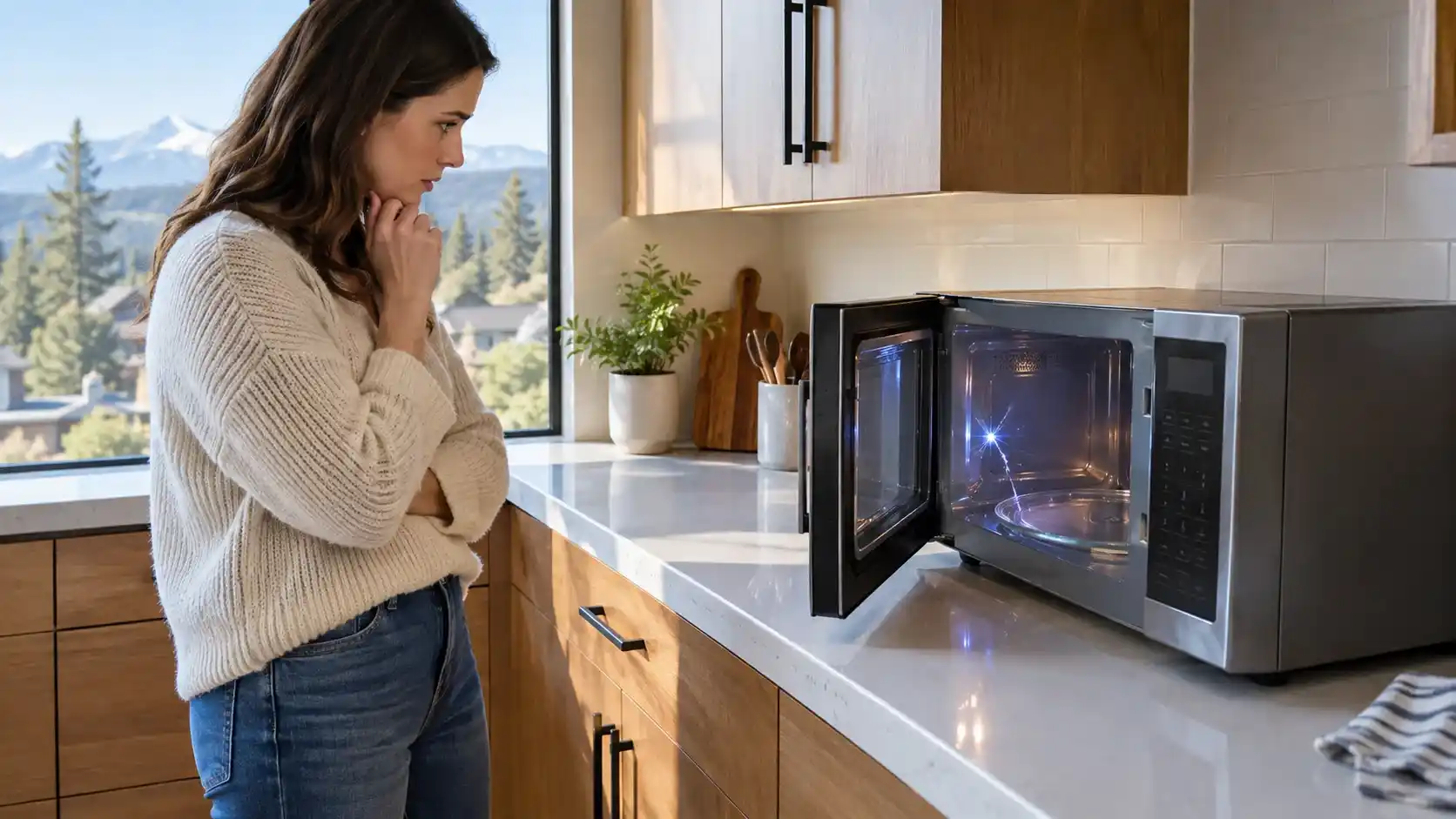
A microwave should heat food quietly and evenly. When you see a bright blue or white flash inside, stop the cooking cycle immediately. Microwave sparking can happen because of metal, foil, food residue, an accessory, or a damaged component. Some causes are simple to correct, while others need professional attention.
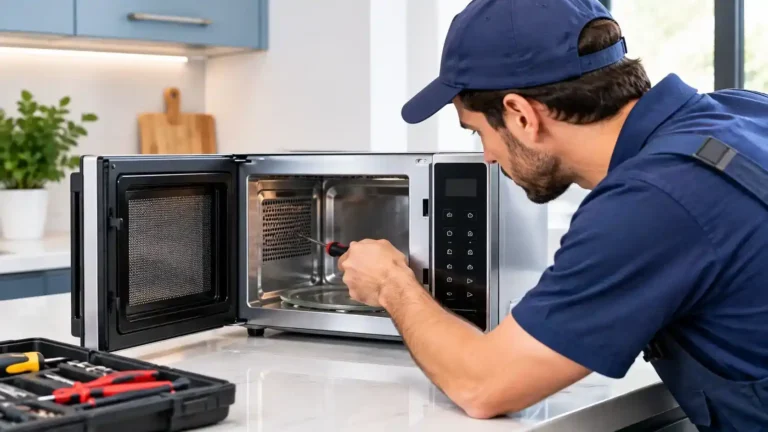
Before checking anything, turn off the microwave and let it cool. Do not keep running it to see whether the sparks happen again. Repeated arcing can damage the cavity or other components. Homeowners in Bend, Oregon, can usually perform a few simple external checks safely. However, the microwave cabinet should never be opened as a DIY repair.
Whether you live near Old Bend, River West, Larkspur, or the Old Mill District, the basic safety steps are the same. Stop the microwave, identify what was inside, and inspect the cavity only after it has cooled.
📋 Table of Contents — Tap to Jump to a Section
- 01 Why Is My Microwave Sparking?
- 02 What Causes It?
- 03 Main Causes at a Glance
- 04 Check the Cavity
- 05 Food & Grease Buildup
- 06 Rack or Crisper Pan
- 07 What Is Arcing?
- 08 Is It Dangerous?
- 09 Microwave-Safe Cookware
- 10 Damaged Waveguide Cover
- 11 Food or Vegetables
- 12 How to Stop the Sparking
- 13 Spark Location Guide
- 14 When to Stop Using It
- 15 DIY or Professional?
- 16 Repair or Replace
- 17 Prevention Tips
- 18 FAQ
- 19 Final Takeaway
Why Is My Microwave Sparking?
So, why is my microwave sparking when there does not seem to be anything unusual inside? In most cases, something inside the cooking cavity is interacting with microwave energy in an unsafe way. Metal objects, aluminum foil, food buildup, improperly placed racks, and damaged interior parts are common possibilities.
The first thing to consider is what you were heating. A fork, twist tie, metal container, foil fragment, or cookware with metallic trim can produce an arc. Even a small piece of foil left behind in the cavity can cause a bright flash.
Food residue can also contribute to the problem. Grease and dried food can become heavily heated during repeated cooking. If residue collects near the waveguide cover or cavity wall, it may contribute to arcing.
Maytag and Whirlpool both identify metal, foil, accessories, food buildup, and improper cookware as possible causes of arcing.
Microwave Oven Sparking: What Causes It?
Microwave oven sparking can have several causes, so it helps to check the simplest possibilities first. Start with the items inside the cavity before assuming that an internal component has failed.
Metal in the Microwave Can Cause Arcing
Metal reflects microwave energy rather than absorbing it like food or water. Certain metal objects can therefore create electrical arcs inside the cavity. The shape and position of the metal also matter. Sharp edges and thin points can make arcing more likely.
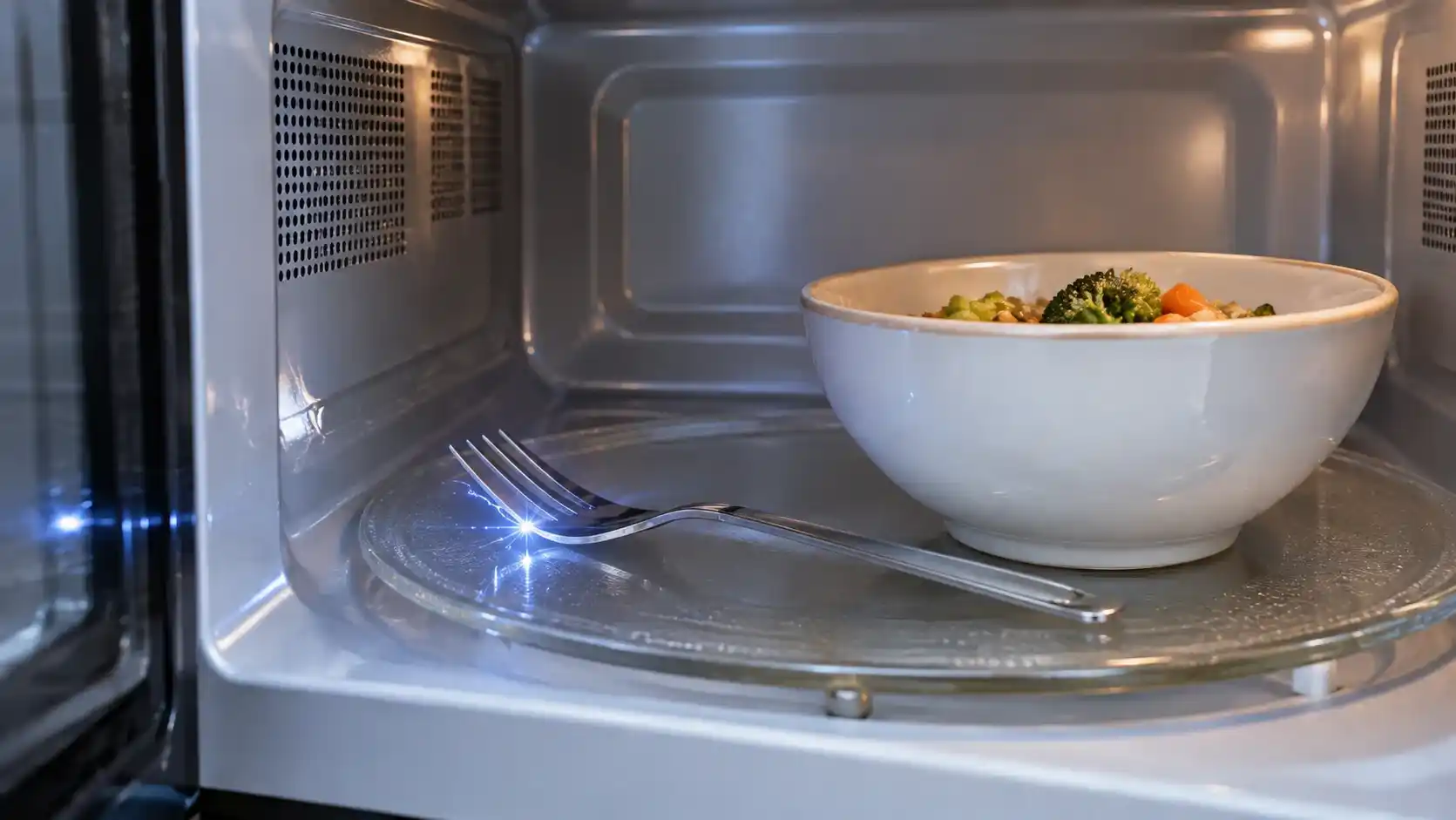
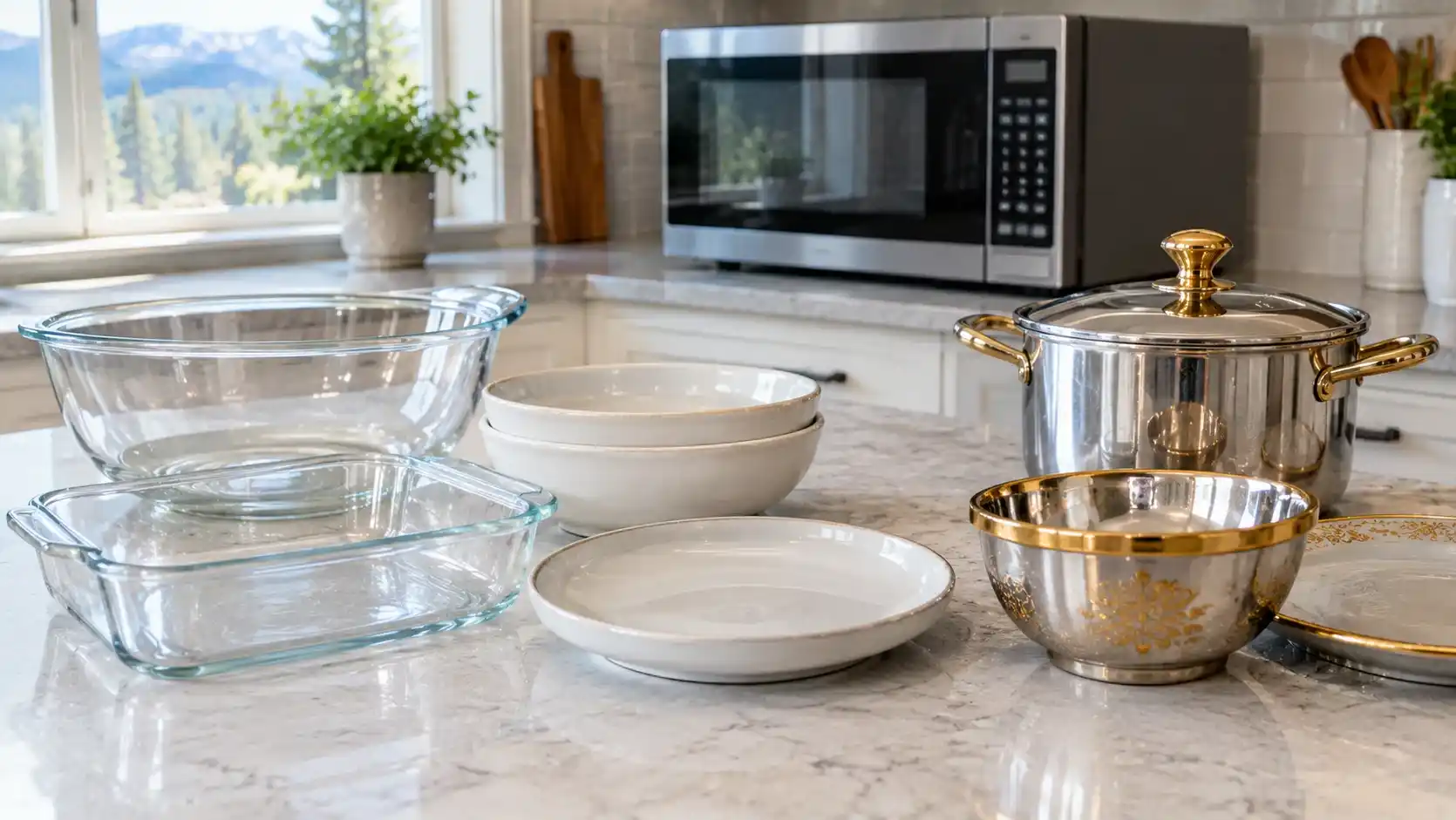
A fork, metal clip, twist tie, skewer, or metallic container can cause sparks. Cookware with gold or silver trim can also create problems. Some microwave-safe containers may contain small metallic decorations that are not suitable for microwave use.
If you discover metal inside after seeing a spark, stop the microwave and let it cool. Remove the item only after the appliance is no longer operating. Check the cavity for scorch marks before using the microwave again.
Aluminum Foil in Microwave Use Needs Care
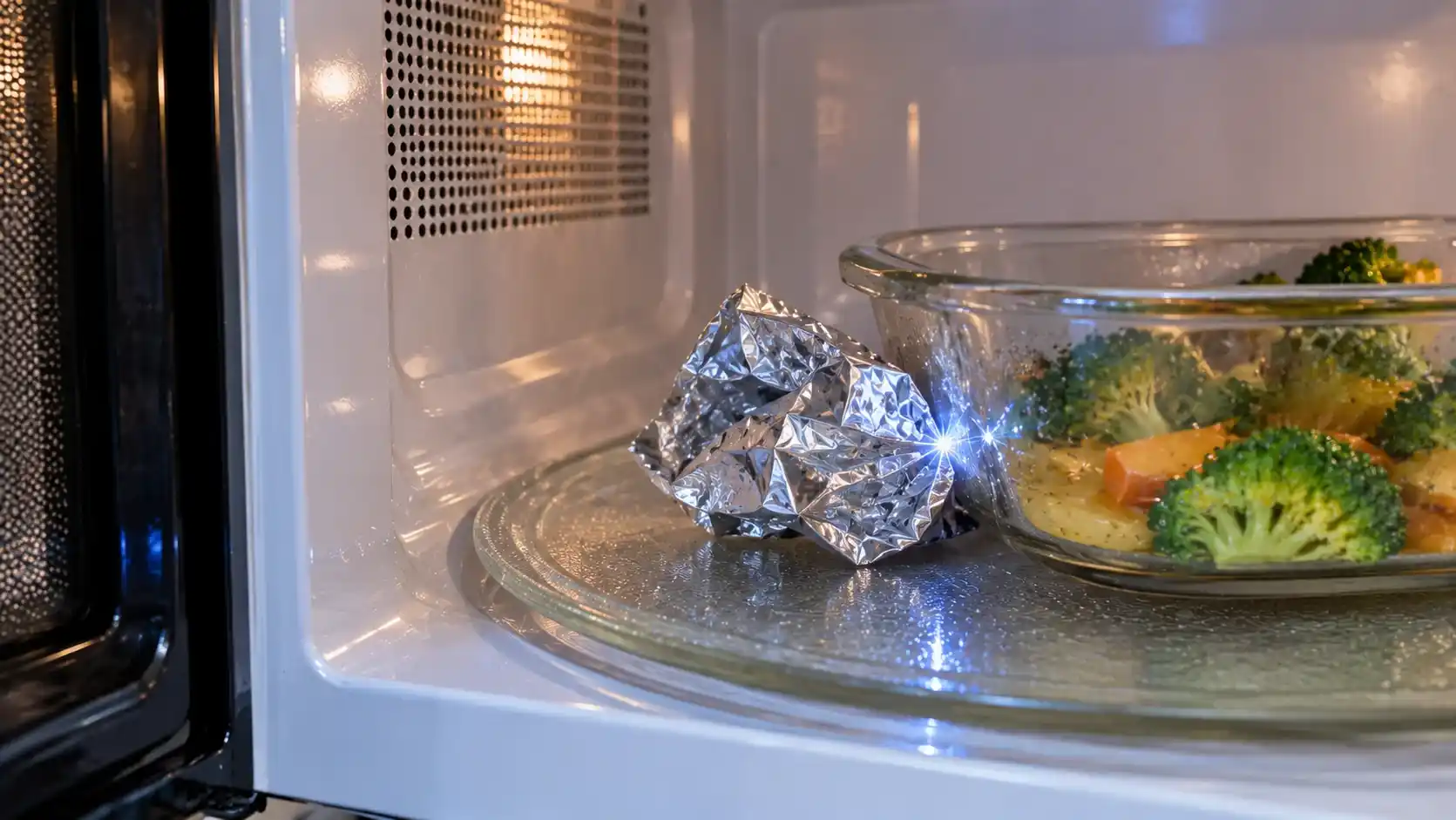
Aluminum foil in microwave cooking is a common source of confusion. Some microwave models allow limited foil use under specific conditions. Other manufacturers recommend avoiding it. Always follow the instructions for your particular model.
Crumpled foil is especially important to check because sharp edges can increase the chance of arcing. Foil touching the cavity wall can also produce sparks. Maytag notes that improper foil use can cause sparking or arcing.
If foil causes a spark, stop the microwave immediately. Do not continue the cycle simply because the microwave still appears to work.
Main Causes at a Glance
The following table gives you a quick way to connect the spark with a possible cause and the safest next step.
| Possible Cause | What You May Notice | What to Do |
|---|---|---|
| Metal or foil | Blue or white flashes or popping | Stop the microwave and remove the metal after cooling |
| Food or grease buildup | Sparks near dirty areas | Clean the cavity according to the manual |
| Damaged waveguide cover | Sparks near the side-wall cover | Stop using the unit and inspect the cover |
| Damaged cavity coating | Sparks from one damaged area | Do not sand or paint it; arrange an inspection |
| Rack or crisper pan | Sparks after installing an accessory | Check the owner’s manual |
| Metallic cookware | Sparks around the container | Replace it with approved cookware |
| Certain foods | Sparks directly around food | Stop the cycle and avoid repeating the test |
| Internal fault | Sparks continue with safe cookware | Stop using the microwave and seek professional diagnosis |
This table is useful for basic troubleshooting, but it does not replace a professional diagnosis. The location of the spark can provide additional clues.
Microwave Sparking Inside: Check the Cavity
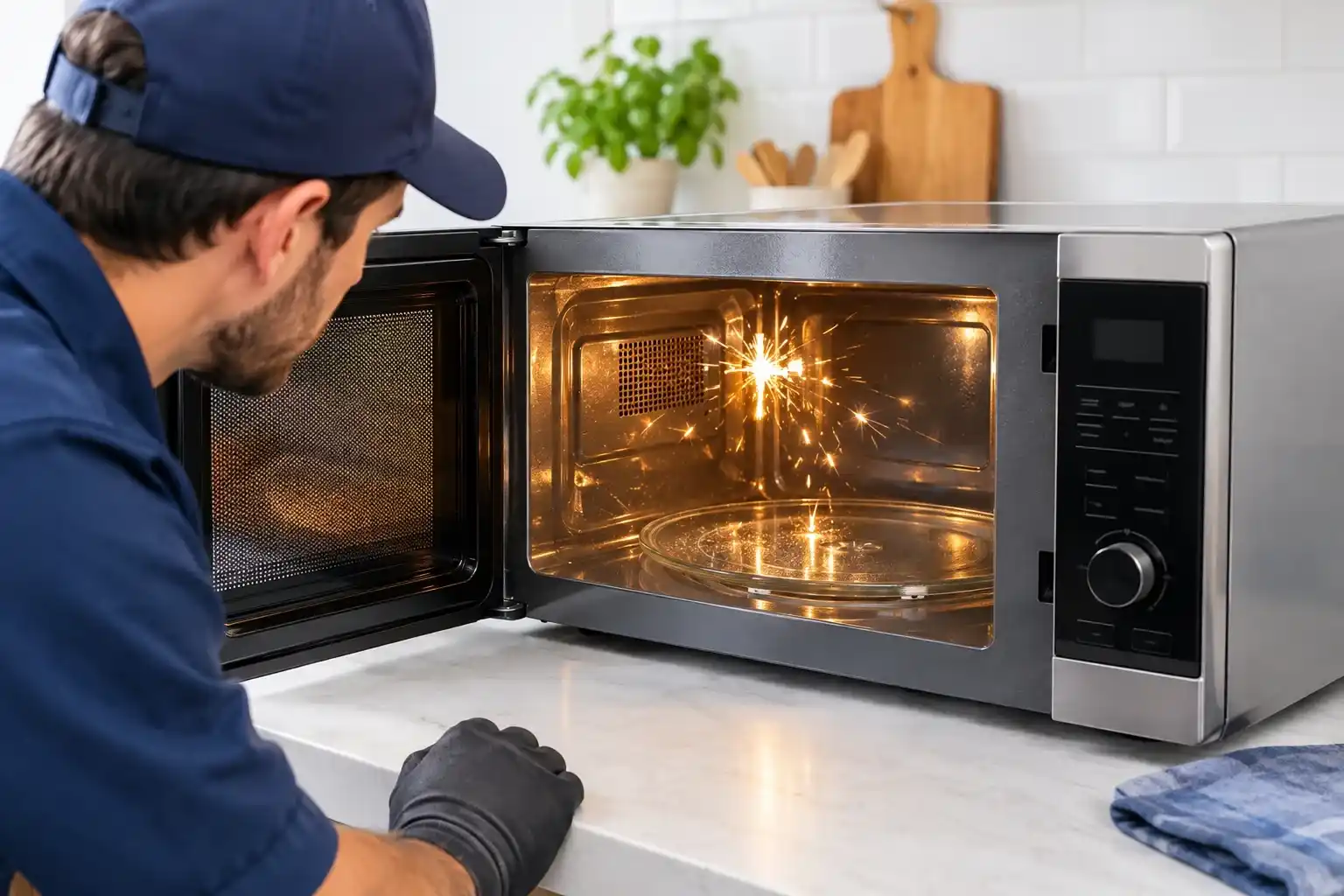
If you notice microwave sparking inside, wait until the microwave has completely stopped and cooled before inspecting it. Look carefully at the cavity walls, ceiling, floor, corners, turntable area, and the area around the waveguide cover. Check for burnt food, grease, scorch marks, chipped surfaces, or exposed metal. Food residue is easy to overlook, especially around the side walls and ceiling.
Avoid scraping the cavity with a sharp object. Do not sand damaged areas, and do not cover exposed or damaged surfaces with ordinary household paint. These shortcuts can create additional problems and may make the appliance less safe to operate.
Food and Grease Buildup Can Cause Arcing
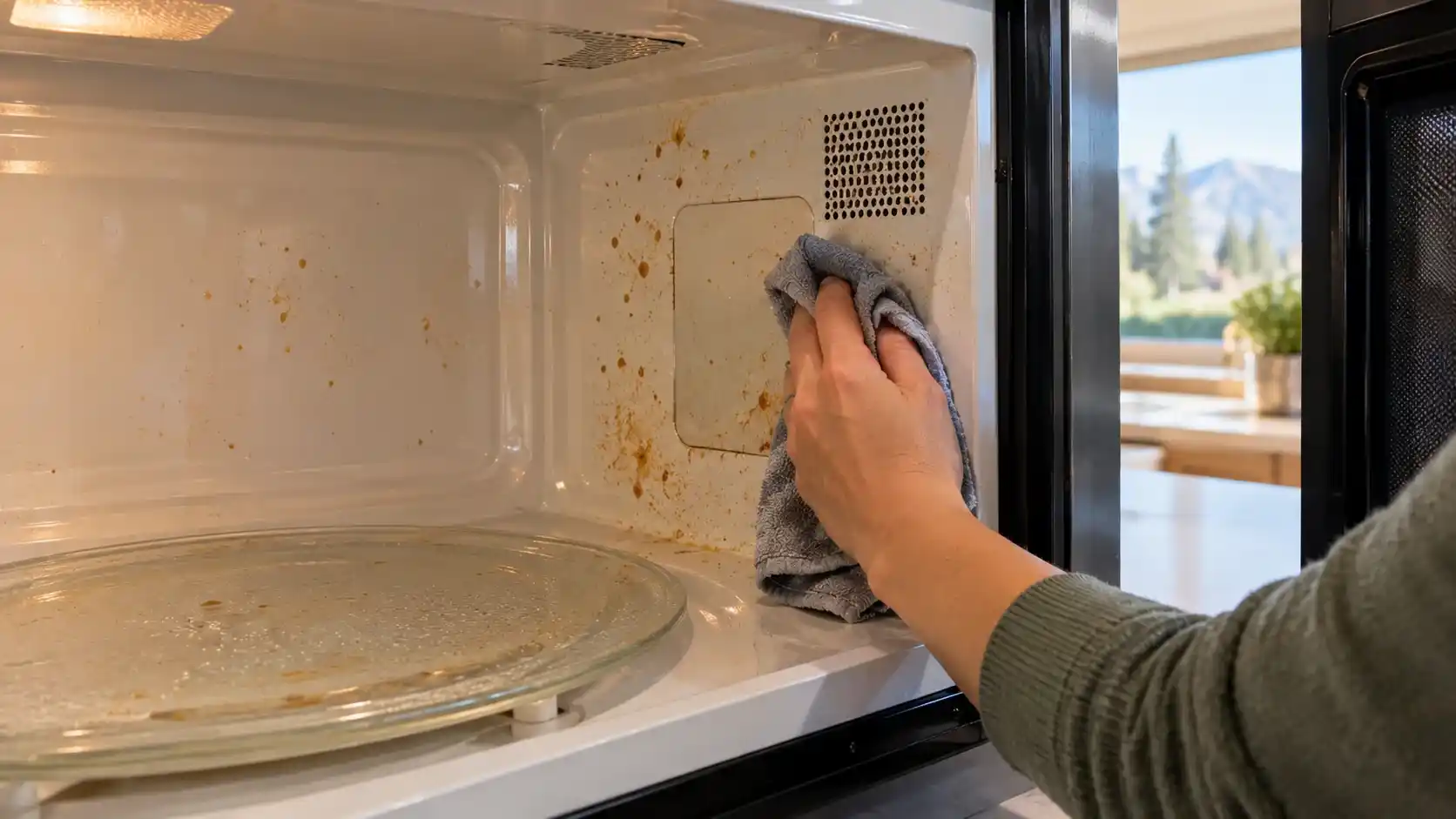
Regular microwave cleaning can help prevent residue from becoming a problem. Food splashes can dry onto the cavity wall and become harder to remove. Heavy grease and burnt food can also create areas where arcing becomes more likely.
Maytag and Whirlpool both list soil or food buildup as a possible cause of arcing.
Use a soft cloth or sponge and follow the cleaning instructions supplied with your microwave. Avoid abrasive cleaners unless the manufacturer specifically approves them. A clean cavity also makes it easier to identify fresh scorch marks or other damage.
Microwave Sparks Inside: Could the Rack or Crisper Pan Be the Cause?
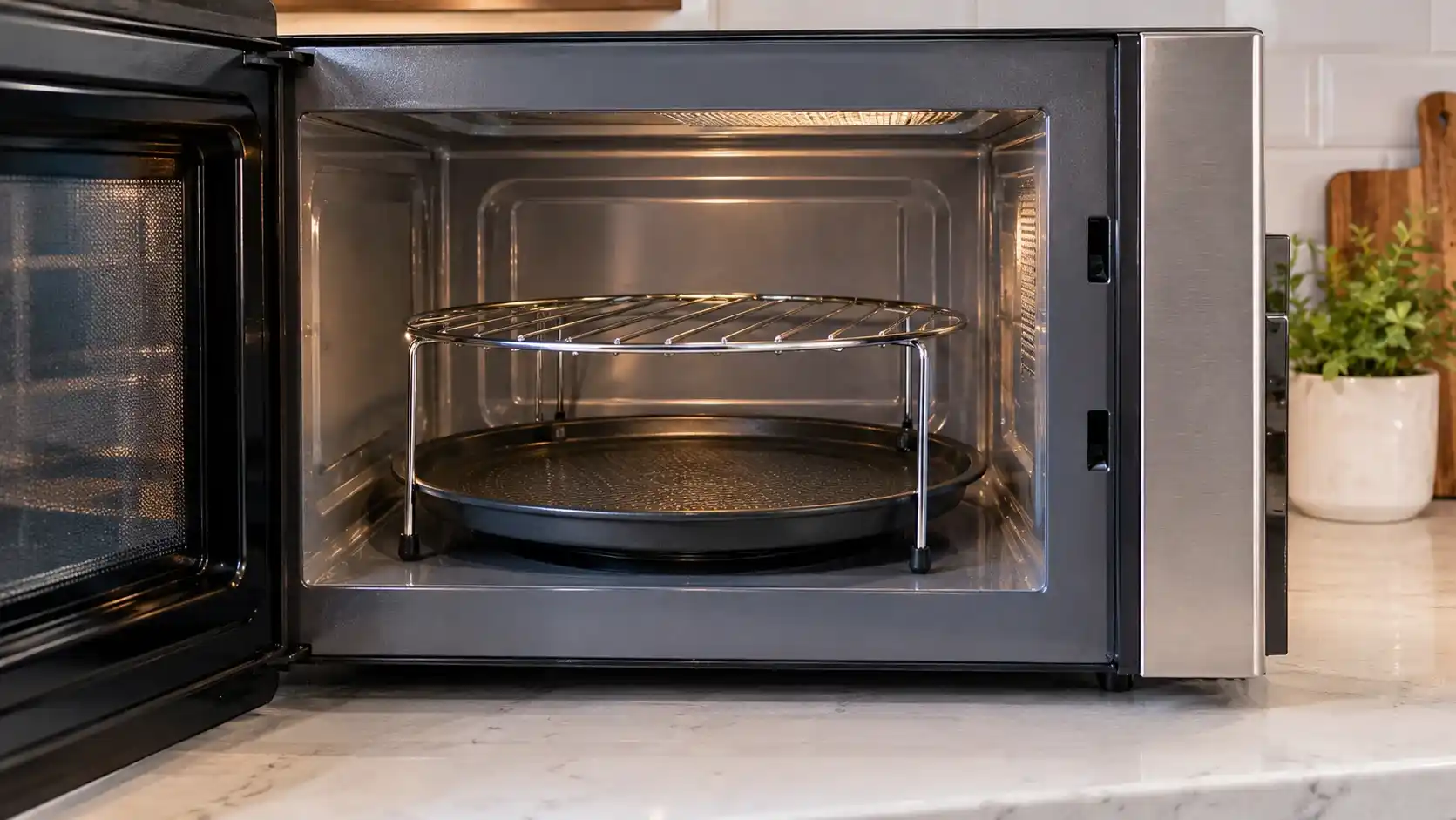
Microwave sparks inside can sometimes be linked to an accessory rather than a failed microwave component. Combination microwaves may include metal racks, convection accessories, or crisper pans. These accessories are designed for specific functions and may not be suitable for every cooking mode.
A metal rack can create an arc if it touches the cavity wall or is used incorrectly. A crisper pan can also cause problems if it is not approved for the specific model. Whirlpool advises users to check the correct use of racks and crisper pans because improper placement can cause arcing.
If the sparking started after you added a rack or pan, remove that accessory after the microwave cools. Check the owner’s manual before using it again. Never assume that an accessory from another microwave is compatible with your appliance.
Check the Convection Rack and Crisper Pan
Look for contact between the accessory and the cavity walls, ceiling, or floor. Also check whether the accessory is intended for microwave, convection, or combination cooking. Some accessories are safe only during certain functions.
If the microwave works normally without the accessory, the accessory or its placement may explain the problem. If sparks continue without it, further troubleshooting may be necessary.
What Is Microwave Arcing?
Microwave arcing is an electrical discharge that can appear as a bright flash inside the cooking cavity. You may also hear popping, snapping, or buzzing when it happens.
The visible spark does not automatically mean that the microwave is permanently damaged. A single brief arc caused by an accidental metal object may not cause lasting damage. However, repeated or prolonged arcing can damage the cavity or other parts.
This is why you should not repeatedly restart the microwave after seeing a spark. Identify and remove the obvious cause first. If you cannot find one, stop using the appliance until it can be checked.
Is Microwave Sparking Dangerous?
Sparking should always be treated as a safety issue. Turn the microwave off immediately when you see an unexpected spark. If there is smoke, a burning smell, or a growing flame, disconnect the appliance from power if you can do so safely and follow appropriate fire-safety procedures.
Do not reach inside a microwave while it is operating. Never bypass the door switch or operate the appliance with a damaged door.
The FDA provides consumer guidance on microwave oven safety and emphasizes using microwave ovens according to manufacturer instructions.
If the microwave sparks repeatedly, do not continue using it simply because it still heats food. A microwave can continue heating while another problem is developing.
Can Microwave-Safe Cookware Still Cause Sparks?
Yes, although properly approved microwave-safe cookware should normally be suitable for microwave heating when used correctly. The label alone does not guarantee that every accessory or decorative feature is appropriate.
Check for metallic paint, gold trim, silver trim, metallic glaze, or other conductive decorations. Also check whether the container has become damaged.
A container that was safe before may also develop cracks or damage that make it unsuitable. Follow the manufacturer’s instructions whenever you are uncertain.
Could a Damaged Waveguide Cover Cause Sparking?
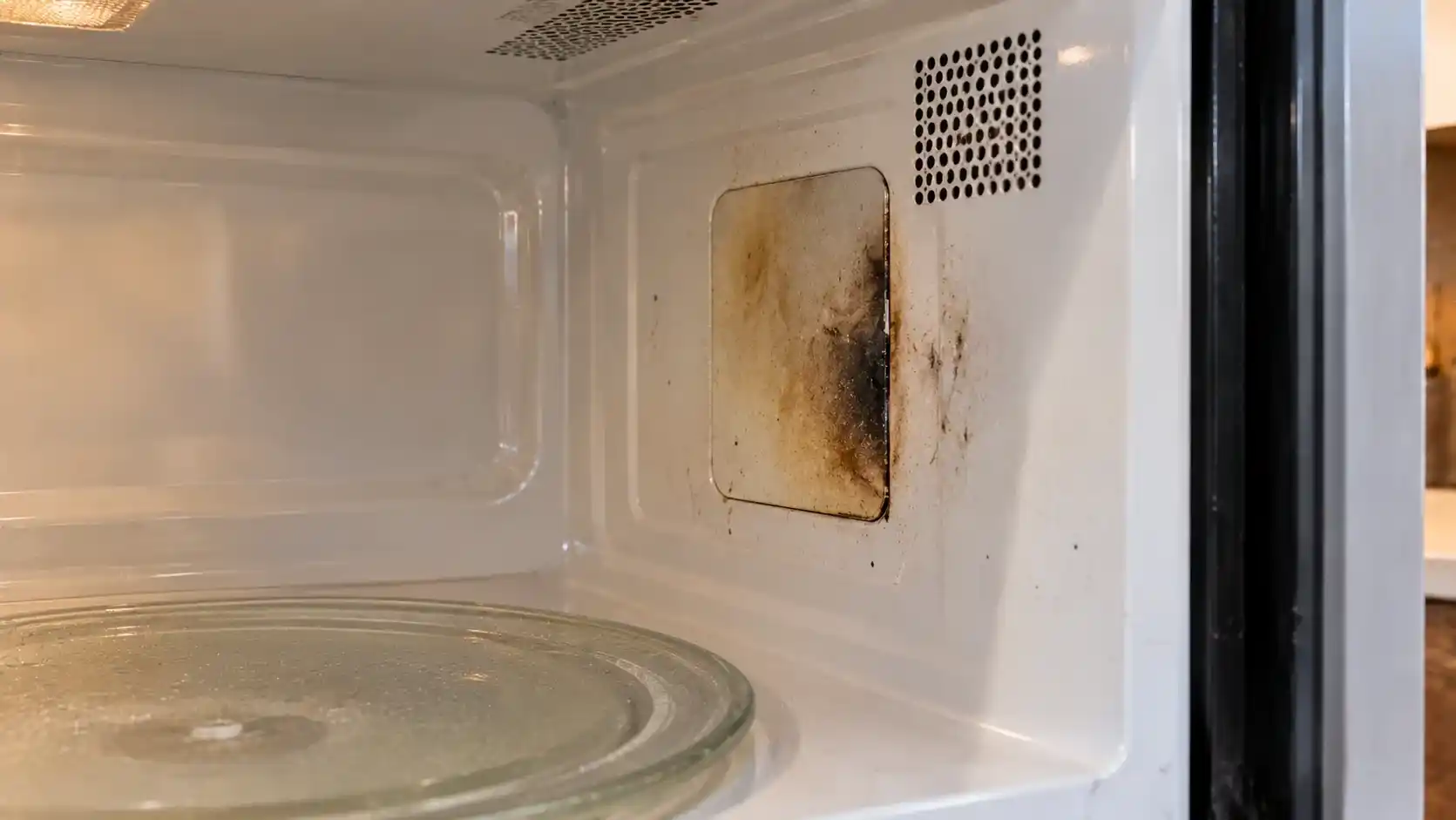
The waveguide cover is an important part of many microwave designs. It helps protect the waveguide area from food and moisture while allowing microwave energy to enter the cooking cavity.
A damaged or heavily contaminated cover can become a source of concern. You may notice sparking close to the cover, especially if food residue has collected around it.
Do not automatically assume the cover is the cause. A spark in that area can also come from food residue, metal, or another issue.
Inspect the cover visually after the appliance has cooled. If it is badly burned, cracked, melted, or damaged, stop using the microwave and arrange a professional inspection. Do not remove internal components or attempt repairs behind the cover unless the manufacturer’s instructions specifically describe a safe user-level replacement.
Can Food or Vegetables Spark in a Microwave?
Yes. Certain foods can occasionally produce arcing. Foods with high mineral content or irregular moisture distribution may create small sparks under certain conditions.
Maytag and Whirlpool both mention some vegetables and food-related arcing as possible causes.
This does not mean every vegetable will spark. The food, moisture level, preparation, and microwave conditions can all matter.
If you see sparks around food, stop the microwave. Do not repeatedly run the same food to confirm the problem. Check the food and cavity after everything has cooled.
How to Stop a Microwave From Sparking
The safest approach is to work through the simple checks in order. First, stop the microwave and let it cool. Remove any metal, foil, rack, or accessory that may have caused the spark. Then inspect the cavity for food residue, grease, scorch marks, chipped coating, or exposed metal.
Clean ordinary food residue using the manufacturer’s recommended method. Do not scrape the cavity or use abrasive materials that could damage its surface.
Next, check the owner’s manual for cookware and accessory requirements. Pay particular attention to convection racks and crisper pans.
If the microwave sparks again with nothing metallic inside, stop using it. Repeated testing is not a safe troubleshooting method.
Where the Spark Appears Can Help Identify the Cause
The location of the spark can provide useful information. A spark directly around foil points toward the foil. A spark near a rack may indicate incorrect accessory use. A repeated spark near the same cavity area deserves more attention.
| Where You See the Spark | Possible Reason | Recommended Action |
|---|---|---|
| On the food | Food-related arcing | Stop the cycle and remove the food after cooling |
| Around foil | Improper foil use | Remove foil and follow the owner’s manual |
| Around a metal container | Metal or metallic trim | Replace it with approved cookware |
| Near the side-wall cover | Food buildup or cover damage | Stop using the microwave and inspect visually |
| Against the cavity wall | Metal contact or cavity damage | Stop using the microwave |
| Around a rack | Incorrect rack placement or mode | Check the owner’s manual |
| In the same location repeatedly | Possible appliance fault | Stop using the appliance |
| With no obvious metal inside | Residue, cover, cavity, or internal issue | Arrange professional diagnosis |
This information can also make a repair appointment more productive. Tell the technician where the spark appeared and what you were cooking.
When Should You Stop Using a Sparking Microwave?
Stop using the microwave if the sparking continues after removing obvious causes. You should also stop if you see smoke, flames, significant scorch marks, exposed metal, or a damaged cavity surface.
A damaged door is another reason to stop using the appliance. The door and its safety system are critical parts of microwave operation.
Do not continue testing an appliance that sparks with approved cookware and no visible contamination. At that point, the issue may involve an internal component.
When to Check It Yourself and When to Call a Professional
| Situation | Safe Homeowner Check | Professional Help? |
|---|---|---|
| Fork, foil, or metal caused one spark | Remove the object after cooling | Usually not needed if no damage occurred |
| Food residue is visible | Clean according to the manual | Not usually |
| Rack or crisper caused sparks | Check correct accessory use | If sparking continues |
| Waveguide cover looks damaged | Perform visual inspection only | Yes, if damaged or repeatedly sparking |
| Cavity has exposed metal | Do not sand or paint | Yes |
| Sparks continue with safe cookware | Stop testing | Yes |
| Burning smell or smoke | Stop using the appliance | Yes |
| Door or door seal is damaged | Do not operate it | Yes |
| Microwave operates with the door open | Stop immediately | Yes |
| Suspected high-voltage or internal fault | Do not open the cabinet | Yes |
When Does Microwave Sparking Require Professional Repair?
Professional service becomes important when the cause is not an obvious removable object or residue. Persistent sparking can indicate a damaged waveguide cover, cavity problem, high-voltage component issue, or another internal fault.
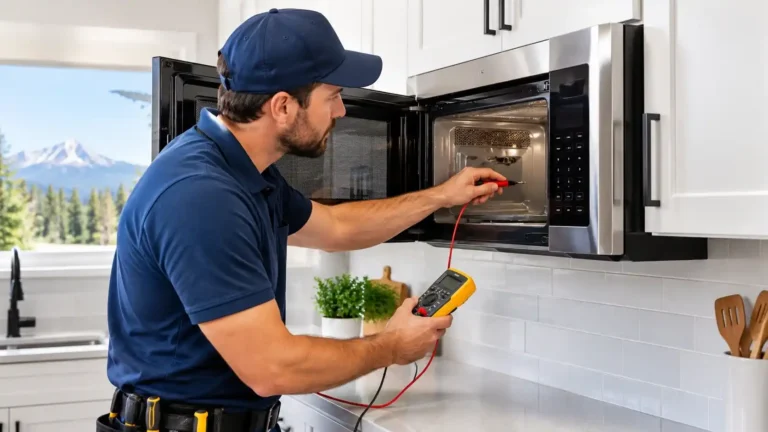
Microwave ovens contain components that can retain dangerous electrical energy even after the appliance is unplugged. For that reason, opening the cabinet is not a suitable DIY repair for most homeowners.
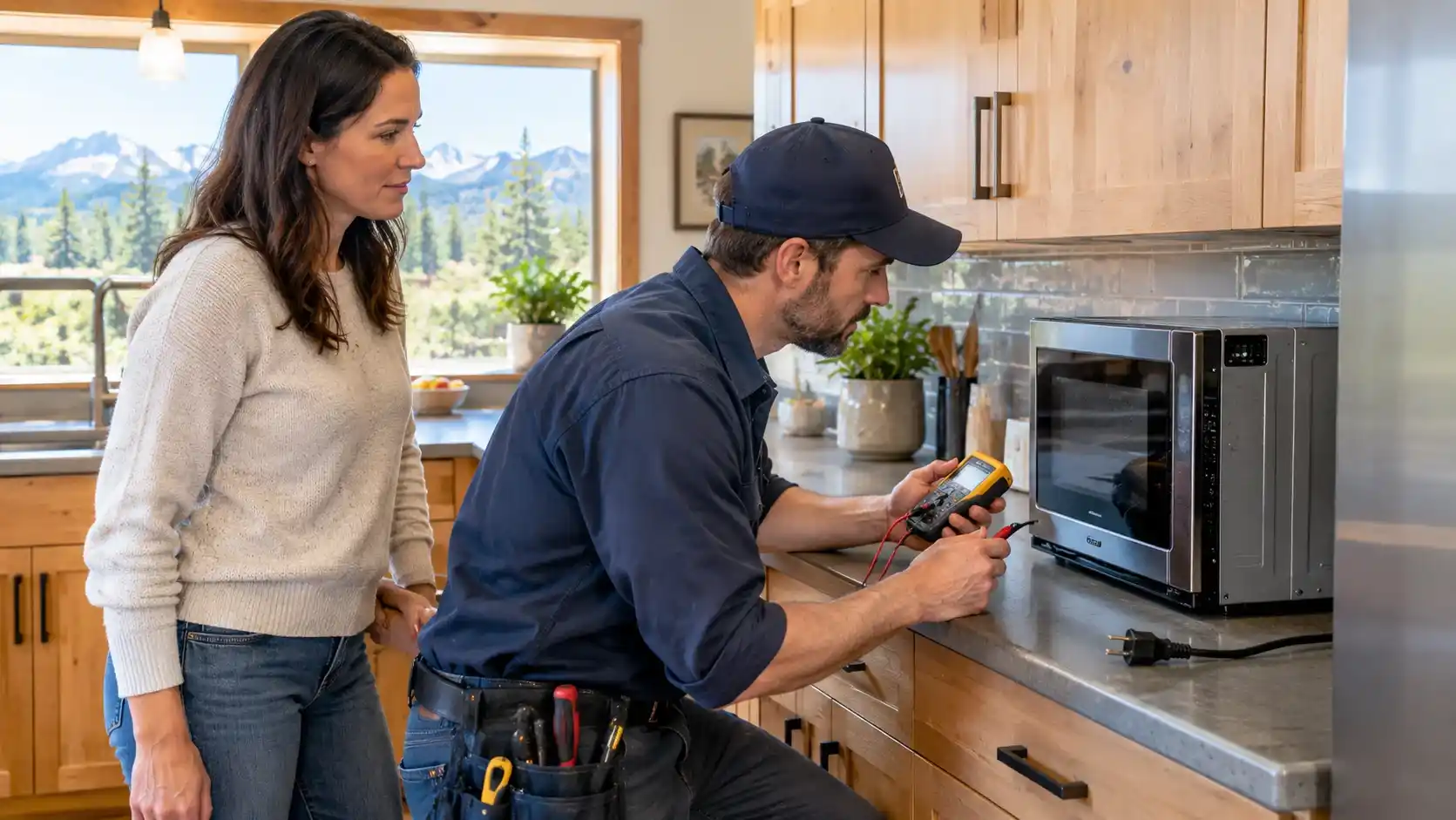
A qualified appliance technician can inspect the appliance using the correct procedures and determine whether repair is practical.
If you are in Bend, service needs can vary depending on the appliance type and location. Homes around Century Drive, Reed Market Road, Greenwood Avenue, and the Old Mill area may have different access and scheduling considerations, but the safety diagnosis remains the same.
Repair or Replace: How to Decide
A microwave that sparks because of foil or food residue may not need a repair at all. Removing the cause and checking for damage may solve the problem.
A damaged waveguide cover may be repairable depending on the model and part availability. A serious cavity problem can be more complicated.
The age and condition of the appliance also matter. If the microwave has several unrelated problems, replacement may make more financial sense.
A technician can help identify the actual fault before you make that decision. Avoid replacing an appliance based only on one brief spark caused by an obvious metal object.
Facts and Figures: What Homeowners Should Know
Microwave sparking does not always mean the microwave is ruined. A brief spark from an accidental metal object can occur without major damage.
The concern increases when the arcing is repeated or prolonged. Manufacturer guidance specifically warns that continued arcing can damage the oven.
The most useful facts to record are simple. Note what you were heating, what container you used, where the spark appeared, and whether it happened more than once.
These details can help separate a simple cookware issue from a potential appliance fault.
Real Customer Testimonials
Only use verified customer testimonials on a business website. Do not publish invented names, quotes, star ratings, or repair results. Genuine reviews are especially useful when they describe the actual problem, diagnosis, and repair outcome.
Accurate Diagnosis
A useful testimonial explains that a homeowner noticed repeated sparks, stopped using the microwave, and had it professionally inspected.
Honest Repair Advice
Homeowners value technicians who explain whether the cause was cookware, residue, or an internal fault.
Safe, Professional Service
Real experiences with high-voltage repairs provide stronger trust than generic marketing claims.
Awards, Certifications & Case Studies
Only include awards, licenses, certifications, or professional memberships that the business can verify. Avoid generic claims such as “Bend’s best microwave repair company” unless they are supported by a credible source. Trust grows when local service claims can be checked.
A strong case study should explain the problem without exaggeration — the appliance type, where the spark appeared, the inspection process, and whether the issue involved cookware, contamination, a damaged cover, or another component. Do not publish a case study unless the repair actually happened. Replace the example below with real, verified service details before publishing.
Waveguide Cover Case Study
The problem: A homeowner noticed repeated sparking near the side-wall cover.
The diagnosis: The technician found a burned and cracked waveguide cover.
The result: Replacing the cover resolved the sparking safely.
How to Prevent Microwave Sparking
For homeowners in Bend, regular cleaning and sensible cookware choices are simple ways to reduce avoidable microwave problems.
Frequently Asked Questions
Why is my microwave sparking when there is no metal inside?
Food residue, a damaged waveguide cover, cavity damage, or certain foods can sometimes cause arcing. Stop the microwave and inspect it after cooling. If the sparks continue, professional diagnosis is safer than repeated testing.
Why does my microwave spark when I use aluminum foil?
Foil can create sparks when it is crumpled, positioned incorrectly, or placed too close to the cavity walls. Some microwave models permit limited foil use, while others do not. Follow the instructions for your specific model.
Can I use my microwave after it sparks?
It depends on the cause and whether any damage occurred. A single spark from an obvious metal object may not cause permanent damage. However, repeated sparks, scorch marks, smoke, exposed metal, or a damaged waveguide cover are reasons to stop using the microwave and seek professional advice.
Final Takeaway
Microwave sparking can come from something simple, such as foil, metal, food residue, or an accessory. It can also indicate damage that requires professional attention.
The safest response is always the same: stop the microwave, let it cool, remove obvious causes, and inspect the cavity carefully. Do not open the cabinet or attempt high-voltage repairs yourself.
If the microwave continues to spark with approved cookware and a clean cavity, stop using it. A qualified appliance technician can identify the underlying problem and help you decide whether repair or replacement makes sense.
For Bend, Oregon homeowners, addressing the problem early can also prevent a small issue from becoming a more expensive appliance repair.
Need Help Diagnosing a Sparking Microwave?
If basic checks haven’t solved the problem, our technicians can find the actual cause and give you a clear repair estimate before any work begins.