Washing Machine Smells Bad? Causes and Fixes for Bend, OR Homes
A washing machine that smells bad is usually growing mold or mildew somewhere you cannot see. This guide covers the real causes of washer odor — front-loader gaskets, drain pump filters, detergent buildup — and the cleaning routine that eliminates them.

Start Here: Clean Clothes Should Not Smell Like Mildew
There is a special frustration in pulling “clean” laundry from the machine and catching a whiff of mildew. The clothes went in dirty and came out smelling worse — which feels backwards until you understand what is happening inside the machine. A washing machine that smells bad is not cleaning properly, because the machine itself is dirty.
Washer odor is almost always biological: mold, mildew, and bacteria growing in the damp, dark places inside the machine. The rubber door gasket on front-loaders is the classic culprit, but it is far from the only one. Detergent residue feeds biofilm in the drum and hoses, the drain pump filter traps rotting debris, and the detergent drawer grows mold in its damp compartments. Modern high-efficiency machines, which use less water, are actually more prone to odor than the old water-guzzling top-loaders — less water means less flushing of residue.
The good news: washer odor is one of the most fixable appliance problems there is. A thorough cleaning routine — gasket, drawer, filter, hot cleaning cycle — resolves the great majority of cases in a single afternoon. No parts, no tools beyond what is under your sink, no service call required.
There is also a health angle worth taking seriously. The mold and bacteria living in a smelly washer do not stay politely inside the machine — they transfer onto your clothes, towels, and sheets. For most people that is just unpleasant, but for anyone with allergies, asthma, or sensitive skin, sleeping in musty-smelling sheets or wearing mildew-scented clothes can trigger real symptoms. A clean washer is not just about nicer-smelling laundry; it is about not wearing the machine’s microbiome.
This guide is written for homeowners in Bend, Oregon and the surrounding Central Oregon area. It covers every cause of washing machine odor, the complete deep-clean routine, the differences between front-loaders and top-loaders, and clear guidance on when a smell signals something a technician should look at.
Table of Contents — Tap to Jump to a Section
Why Does My Washing Machine Smell Bad?
The most common causes of washing machine odor, in rough order of likelihood:
| Cause | Typical Smell | Fix |
|---|---|---|
| Mold in the front-loader door gasket | Musty, mildewy | Scrub the gasket folds; leave the door ajar |
| Detergent and softener residue | Sour, stale | Use less HE detergent; run hot cleaning cycles |
| Clogged drain pump filter | Rotten, swampy | Remove and clean the filter |
| Mold in the detergent drawer | Musty | Remove the drawer; soak and scrub |
| Biofilm in the drum and hoses | Sour laundry smell | Monthly hot vinegar or cleaner cycle |
| Wet laundry left sitting | Mildew on clothes | Transfer loads promptly; do not let them sit |
| Cold-water-only washing | Gradual buildup odor | Run periodic hot cycles to flush residue |
| Drain hose issues | Sewage-like | Check hose routing and standpipe |
Start with the gasket, the drawer, and one hot cleaning cycle — those three steps resolve most washer odor complaints without going further.
Why Washing Machines Smell: Mold, Mildew, and Biofilm
A washing machine is, from a microbe’s perspective, paradise: warm, dark, constantly damp, and regularly supplied with food in the form of detergent residue, fabric softener, body oils, and skin cells washed out of clothes. Mold and bacteria colonize every surface that stays wet between cycles, and their waste products are what you smell.
Biofilm is the key concept. It is the slimy layer that bacteria build on surfaces — the same stuff that makes river rocks slippery. Inside a washer, biofilm coats the outer drum (the part you never see), the hoses, the detergent drawer housing, and the gasket folds. It protects the bacteria living in it from detergent and even from hot water, which is why a single hot cycle sometimes does not fully fix a long-neglected machine.
Modern high-efficiency washers made this worse, not better. HE machines use far less water than old top-loaders, which is great for your water bill but means less flushing of residue with every cycle. The residue that old machines washed away now accumulates. Add the airtight door seal that front-loaders need (top-loaders just have an open lid), and you have a sealed, damp chamber between uses — the perfect incubator.
Cold-water washing compounds it. Hot water kills more bacteria and dissolves more residue per cycle. A household that washes everything cold — increasingly common with modern detergents marketed for cold water — gives the machine no periodic thermal reset. The fix is not to abandon cold washing, which saves real energy, but to run a hot cleaning cycle monthly to compensate.
Understanding this biology shapes the whole cleaning approach. You are not just wiping surfaces — you are breaking up biofilm colonies, removing their food supply (excess detergent), and drying out their habitat (airflow between loads). Every step in the routine below targets one of those three goals.
Front-Loader Door Gasket: Mold’s Favorite Home
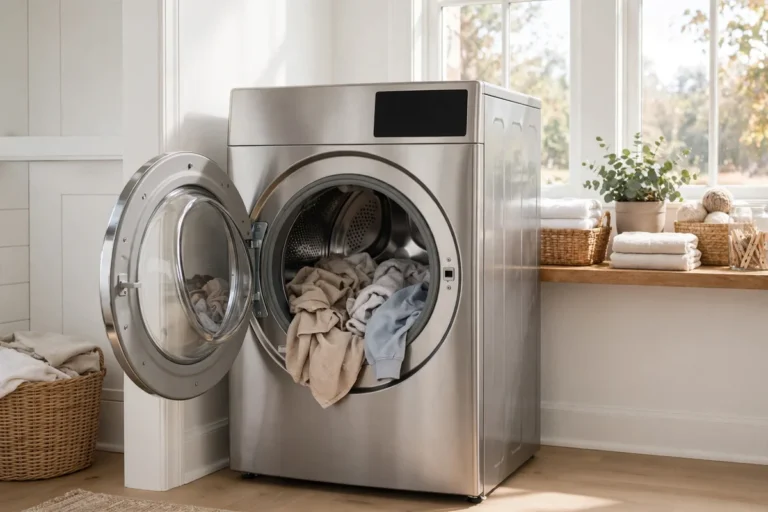
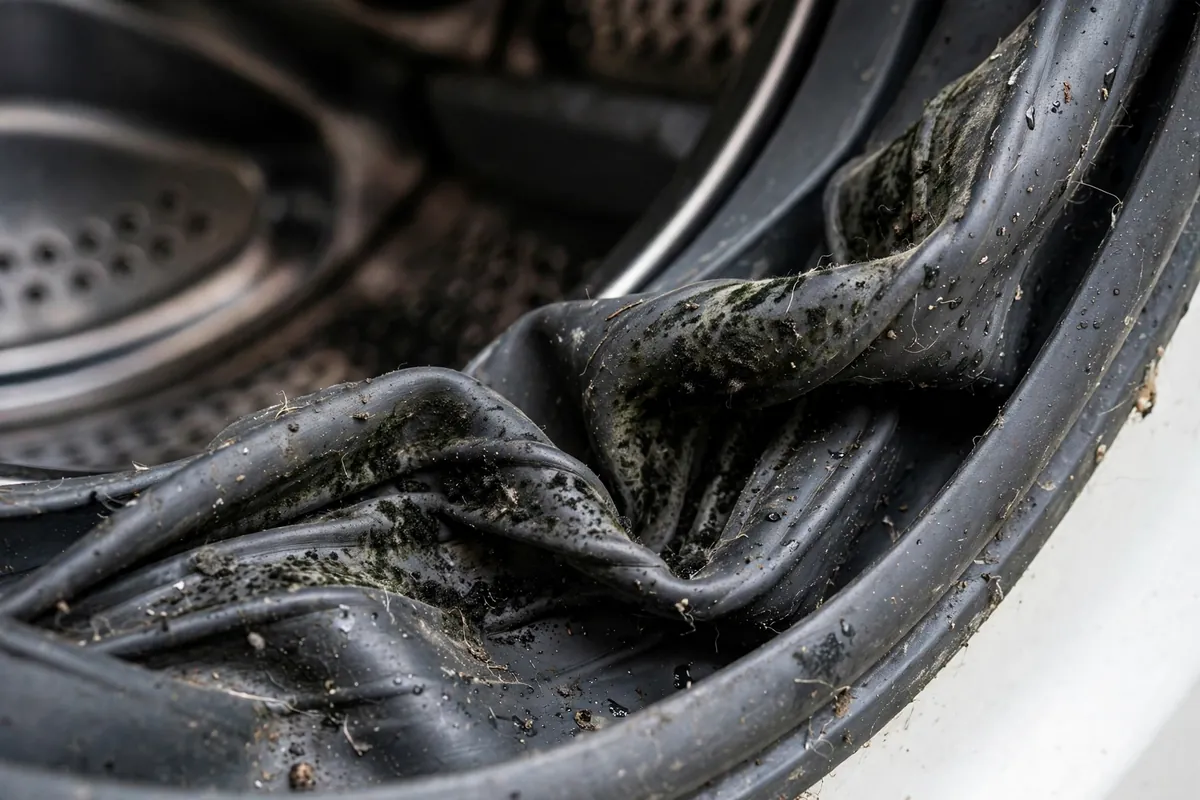
The rubber door gasket — the gray bellows seal around the door opening of a front-loader — is the number one source of washing machine odor. Its folds trap water after every cycle, and that trapped water sits in a dark, warm, airless fold of rubber. Mold and mildew move in within days, and the musty smell they produce wafts out every time you open the door.
Peel the gasket folds back with your fingers and look. Black or dark spotting, slimy residue, or a strong musty smell right at the seal confirms it. Check the entire circumference — top, sides, and especially the bottom, where water pools. Also check the small drain holes at the bottom of the gasket; they clog with lint and debris, which makes the pooling worse.
Cleaning it is straightforward but needs thoroughness. Mix equal parts white vinegar and water, or use a mold-specific cleaner for heavy growth. Wipe every fold with a cloth, using an old toothbrush for the crevices. For stubborn black mold, make a paste of baking soda and water, apply it to the spots, let it sit for thirty minutes, then scrub. Rinse by wiping with a clean damp cloth, then dry the folds completely with a towel — leaving them wet restarts the cycle.
The habit that matters most costs nothing: leave the door ajar after every load. Even a two-inch gap lets air circulate and dry the gasket between uses. If you have small children and worry about them climbing in, use the machine’s child lock or leave the detergent drawer open instead — it provides some airflow, though less than an open door. Wiping the gasket dry with a towel after the last load of the day is the next best habit.
Inspect the gasket annually for tears, deformation, or sections that no longer seal. A damaged gasket does more than smell — it can leak during the cycle. Replacement is a technician job on most models, since it involves removing the front panel and the retaining spring or clamp.
Detergent Buildup and the Moldy Dispenser Drawer
More detergent does not mean cleaner clothes — it means more residue feeding the biofilm. This is the most common user-caused source of washer odor, and the fix is free: use less.
High-efficiency machines need HE detergent, and they need surprisingly little of it — typically one to two tablespoons per load, far less than the cap markings suggest. Excess detergent does not rinse out fully in HE water levels. It coats the drum, hoses, and gasket with a soapy film that traps body oils and skin cells, and that film is a banquet for bacteria. If your washer smells sour and you have been generous with detergent, overuse is the prime suspect.
Fabric softener makes it worse. Liquid softener is essentially scented fat, and it coats everything it touches — including the inside of your washer. Dryer sheets are no better for the dryer. If odor is a problem, skip the softener for a month and see what happens; many households find the smell fades dramatically.
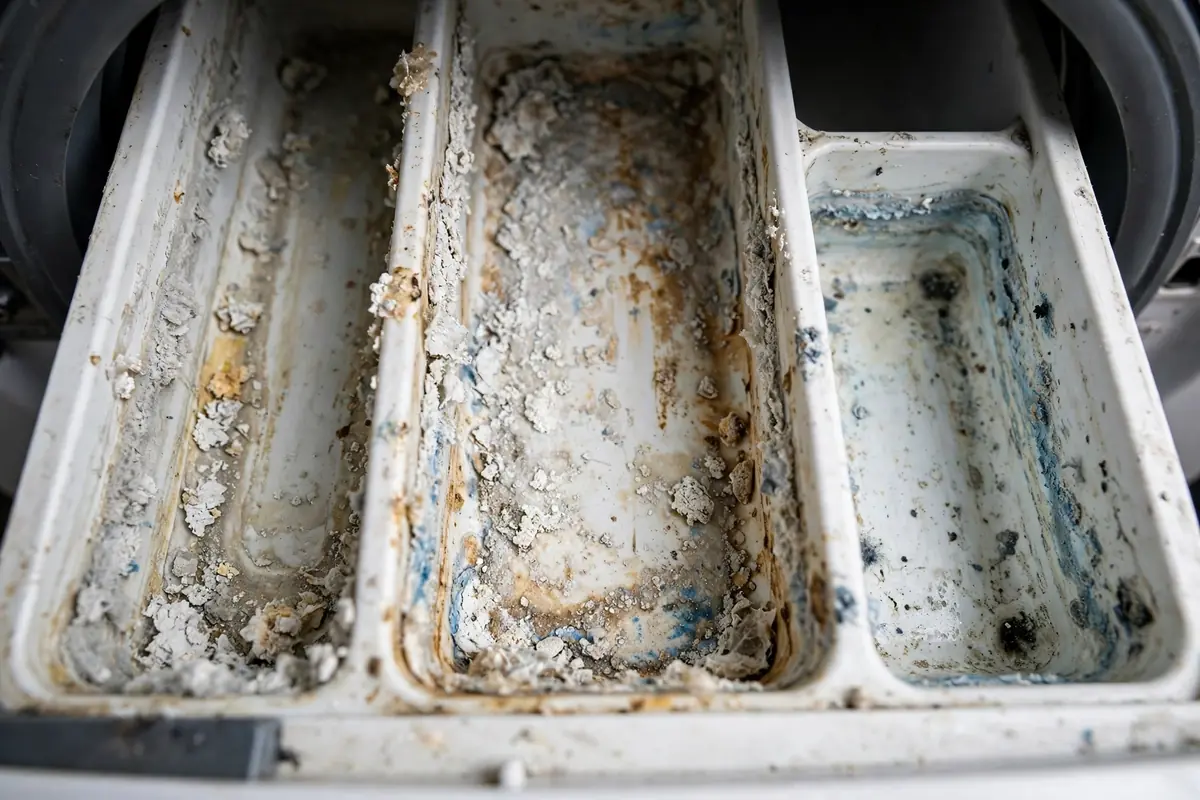
The detergent drawer itself is a mold hotspot. Pull it out — most drawers release with a tab or button — and look inside the compartments and the housing cavity. Black mold and pink slime are common in the softener compartment, which stays dampest. Soak the drawer in hot water with dish soap, scrub every compartment and channel with a toothbrush, and wipe out the housing cavity before sliding it back. Leave the drawer slightly open between loads so it dries.
For persistent residue, run an empty hot cycle with washing machine cleaner or two cups of vinegar. The hot water and acid dissolve the detergent film that cold cycles leave behind. In Central Oregon’s hard water, mineral scale bonds with detergent residue into an especially stubborn layer — monthly hot cleaning cycles are not optional here, they are the maintenance that keeps the machine neutral-smelling.
The Drain Pump Filter: The Smell Most People Never Find
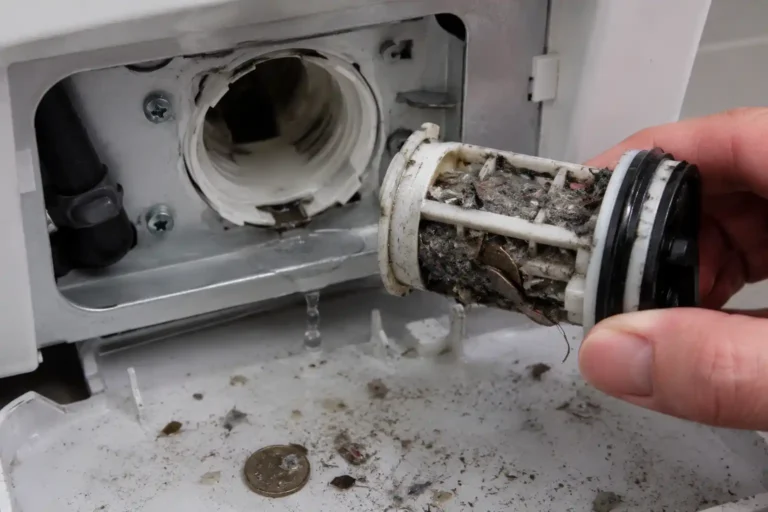
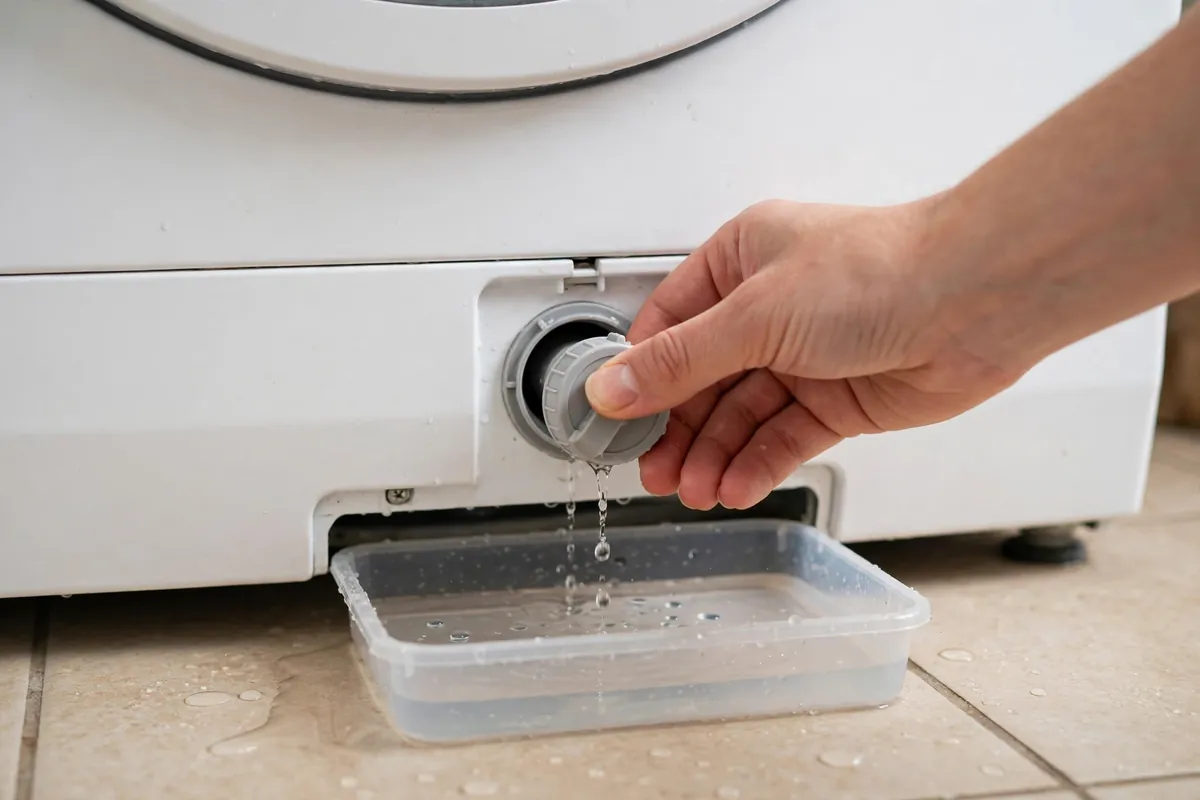
Every front-loader — and many top-loaders — has a drain pump filter: a small trap that catches coins, lint, hair, buttons, and debris before they reach the pump. It sits behind a little access door at the bottom front of the machine. Most owners have never opened it. When they finally do, the smell explains everything.
The filter traps organic debris in standing water. Hair, lint, and tissue sit in that water between cycles, decomposing slowly. The result is a swampy, rotten smell that no amount of drum cleaning will fix, because the source is in the filter housing, not the drum. If your washer smells rotten rather than musty, check the filter first.
Cleaning it: place a shallow tray and towels under the access door — water will come out. Open the door, unscrew the filter cap slowly (it is usually a round twist cap), and pull the filter out. Remove all debris, rinse the filter under hot water, and wipe out the housing with a cloth. Screw the cap back firmly — a loose cap leaks. Do this every two to three months, or monthly if you wash pet bedding or heavily soiled work clothes.
While the filter is out, shine a flashlight into the housing and check for anything wrapped around the pump impeller behind it — a sock, a hair tie, a small cloth. These restrict the pump and cause both odor and drainage problems. If the pump itself is noisy or the machine drains slowly even with a clean filter, the pump may be failing, which is a technician repair.
Pro tip: put a recurring reminder on your phone for filter cleaning. It is the highest-value, least-known washer maintenance task, and the smell it prevents is the worst one a washer can produce.
The Deep-Clean Routine: Step by Step
Set aside about an hour. Work through these steps in order — each one targets a different odor source, and together they reset the machine completely.
What You Will Need
White distilled vinegar, baking soda, dish soap, an old toothbrush, microfiber cloths, a shallow tray and towels for the pump filter. Nothing else is required.
Step 1 — Clean the Gasket
With the machine empty, peel back every fold of the door gasket and scrub with the vinegar-water mix or a mold cleaner. Use the toothbrush in the crevices. For heavy black mold, apply a baking soda paste, wait thirty minutes, then scrub. Wipe dry with a clean towel.
Step 2 — Clean the Detergent Drawer
Remove the drawer completely. Soak it in hot soapy water for fifteen minutes, then scrub every compartment, channel, and corner with the toothbrush. Wipe out the empty housing cavity with a vinegar-dampened cloth. Leave the drawer out to air-dry while you continue.
Step 3 — Clean the Drain Pump Filter
Place the tray and towels under the access door at the bottom front. Open it, unscrew the filter cap slowly, and let the water drain. Pull the filter, remove all debris, rinse it under hot water, wipe the housing, and screw the cap back firmly.
Step 4 — Wipe the Drum
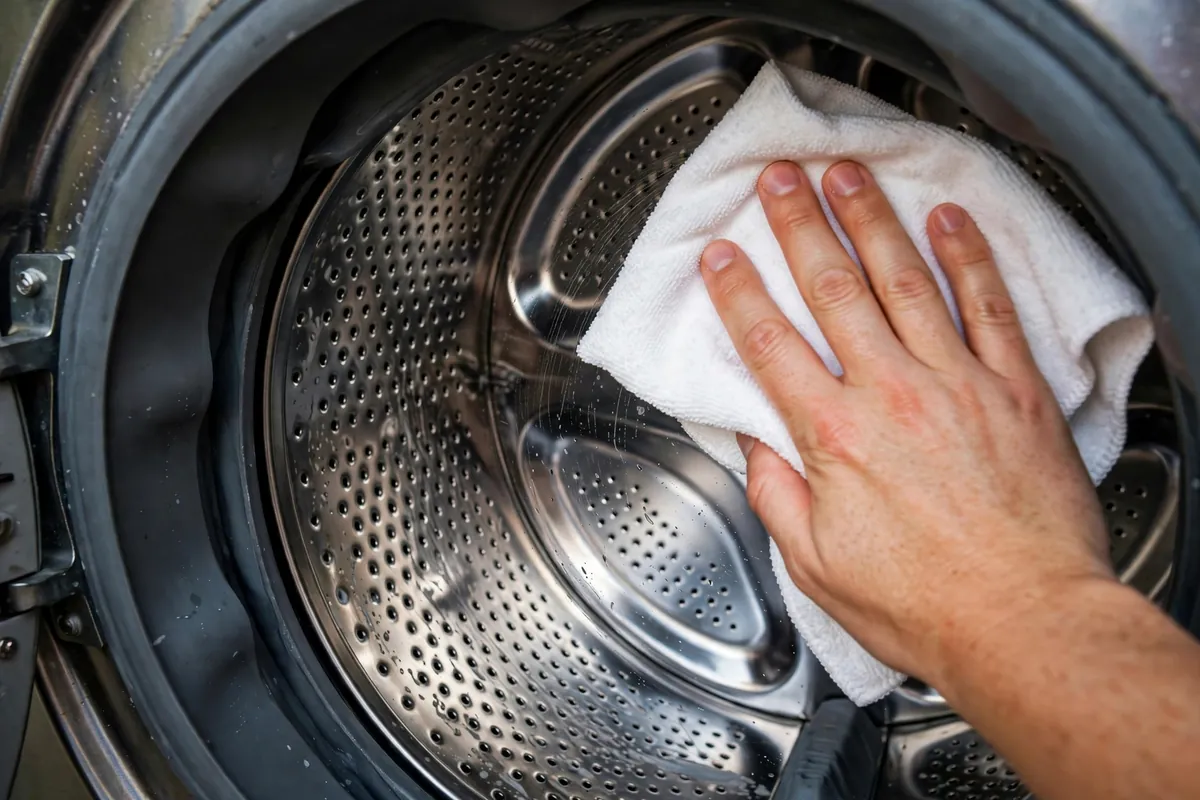
With a microfiber cloth dampened with vinegar water, wipe the entire visible drum surface, the door glass inside and out, and the top edge of the door opening where residue collects. This removes the surface film so the hot cycle can work on what is underneath.
Step 5 — The Hot Vinegar Cycle
Reinstall the drawer. Pour two cups of white distilled vinegar directly into the empty drum. Run the hottest, longest cycle available — the tub-clean or sanitize cycle if your machine has one. The hot vinegar dissolves detergent film, kills mold and bacteria, and flushes the internal hoses.
Step 6 — The Baking Soda Freshen
When the vinegar cycle finishes, sprinkle half a cup of baking soda directly into the drum and run another hot cycle. The baking soda neutralizes lingering odors and leaves the machine smelling clean rather than vinegary.
Step 7 — Dry Everything and Air Out
When the cycle completes, wipe the gasket folds dry one more time, leave the door wide open, and leave the detergent drawer slightly open. Let the machine air-dry completely — several hours if possible — before the next load.
Vinegar vs Baking Soda vs Commercial Cleaners
Vinegar is a mild acid — excellent at dissolving detergent film and mineral scale, and good at killing common mold and bacteria. It is the best all-around DIY choice and costs almost nothing.
Baking soda is a mild alkali and a deodorizer — less of a cleaner, more of a smell-neutralizer. That is why the routine uses it second, as a freshening step after the vinegar has done the heavy cleaning.
Commercial washing machine cleaners add surfactants and stronger agents designed to penetrate biofilm — the slimy bacterial layer that vinegar struggles with. If a neglected machine has been smelly for a year or more, the biofilm may be thick enough that vinegar cycles do not fully clear it. Use a commercial cleaner monthly for two to three months to break it down, then switch to vinegar maintenance cycles. Follow the product’s instructions exactly.
What not to use: dishwasher tablets in the washer (they can foam excessively and damage seals), and any combination of bleach with vinegar or ammonia (which creates toxic gas). One cleaning agent at a time, always.
Still smelly after all seven steps? Run one more hot cycle with a commercial washing machine cleaner instead of vinegar — these are formulated to break up heavy biofilm. If the odor survives that too, the buildup may be in hoses or the outer tub where DIY cannot reach, and it is time to call a technician.
Top-Loader vs Front-Loader: Who Smells Worse?
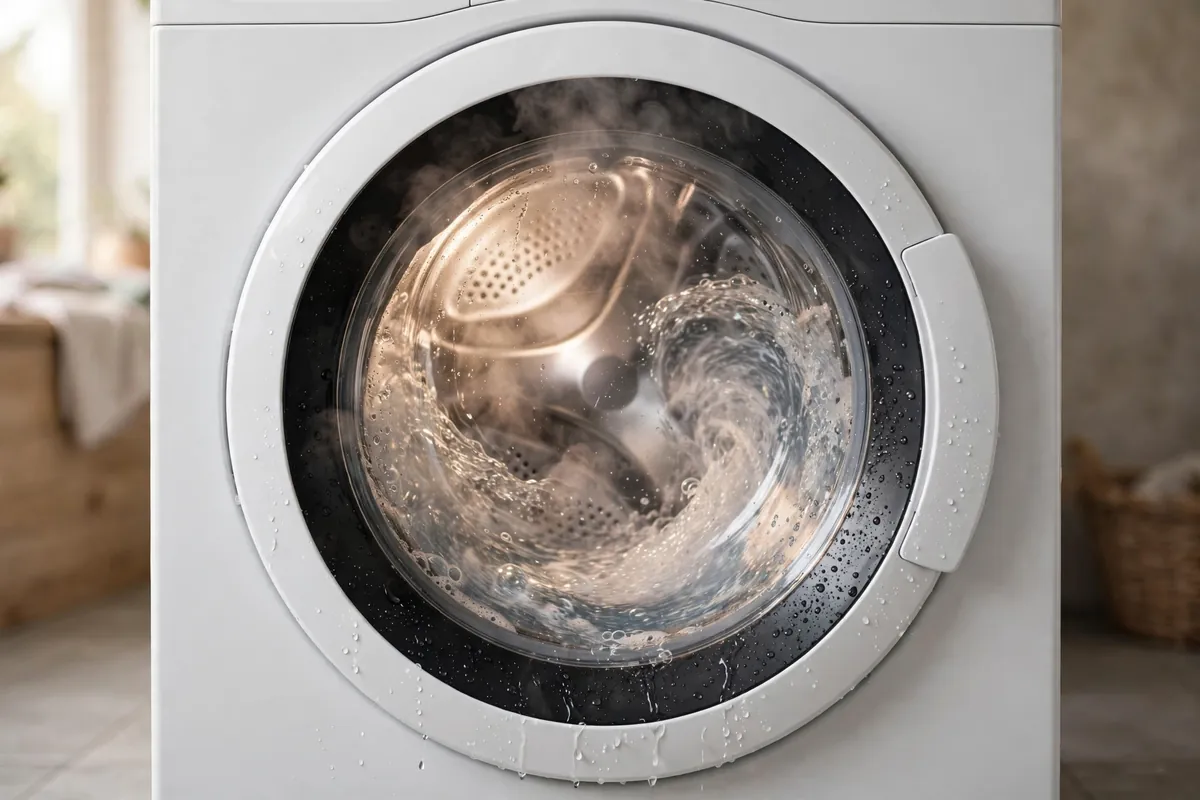
Front-loaders get the bad reputation, and they earn it — the sealed door gasket is the single worst odor trap in any washing machine. But top-loaders are not immune. They just smell for different reasons.
Front-loaders smell because of the gasket, the airtight seal, and low water levels. The gasket folds are the primary source, followed by the drain pump filter and detergent drawer. The fix is the routine above, with special attention to the gasket and the open-door habit. HE front-loaders are the most odor-prone machines on the market — but also the most fixable, because the causes are all accessible.
Top-loaders smell because of what hides under the agitator or impeller plate and around the top rim. The area beneath the agitator traps detergent and debris where you cannot see it, and the lid — while not airtight — still closes over a damp drum. Top-loaders with a central agitator are actually easier to deep-clean in one respect: you can often remove the agitator cap and clean underneath it directly.
High-efficiency top-loaders (impeller models without an agitator) split the difference. They use low water like front-loaders, so they accumulate residue the same way, but they lack the gasket trap. Their odor sources are the impeller plate underside, the drum rim, and the drain pump filter — yes, they have one too, usually in the same bottom-front location.
The universal truth across all three types: less water means more residue, and more residue means more odor without regular hot cleaning cycles. Whatever type you own, the monthly hot cycle is non-negotiable.
| Machine Type | Top Odor Sources | Key Prevention |
|---|---|---|
| Front-loader (HE) | Door gasket, pump filter, drawer | Door ajar always; monthly hot cycle |
| Top-loader with agitator | Under-agitator area, drum rim | Clean under agitator; lid open between loads |
| Top-loader impeller (HE) | Impeller underside, pump filter | Monthly hot cycle; clean the filter |
Keep the Smell From Coming Back
Deep cleaning once is only half the job. These habits keep every cause above from returning.

Consistency beats intensity. Ten minutes a month of maintenance prevents the biofilm buildup that would otherwise take an hour to undo — and it keeps your clothes actually smelling clean, which is the entire point of the machine.
One more habit for households with heavy laundry volume: run the monthly hot cleaning cycle on the first of the month, tied to another routine like paying bills. The machines that develop the worst odor are almost always the ones whose owners meant to clean them “sometime.” A fixed date removes the decision.
Central Oregon Factors: Hard Water and Dust
Two local conditions make washer odor slightly more stubborn around Bend and Redmond than in soft-water regions.
First, hard water. Central Oregon’s mineral content bonds with detergent residue into a particularly stubborn film on drums, hoses, and gaskets. That mineral-detergent layer shelters biofilm through cleaning cycles that would clear it elsewhere. The answer is frequency: monthly hot vinegar cycles are the baseline here, not the aspiration. Homes on private wells, with the heaviest mineral content, should also wipe the gasket and drawer more often, since scale accelerates every buildup process.
Second, high-desert dust. Fine dust settles into the detergent drawer, onto the gasket, and into the drum between loads — especially in homes where the laundry area is near a garage or exterior door. That dust becomes part of the residue matrix that feeds odor. Keeping the laundry area reasonably dust-free and the machine closed… well, ajar but clean… reduces the raw material.
Neither factor means anything is wrong with your washer. They just mean the monthly routine matters more here than the manual suggests. Households that keep up with it rarely need a service call for odor.
When Should You Call a Washing Machine Technician?
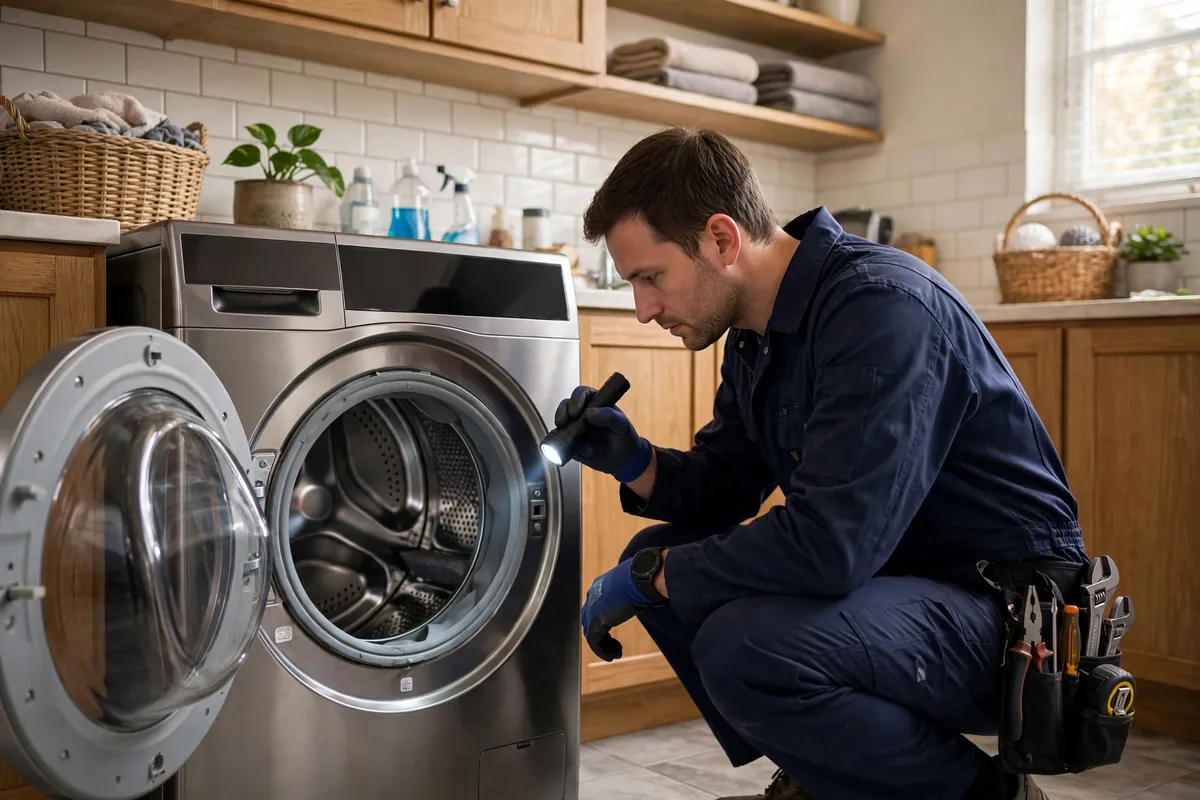
Call a technician when the full deep-clean routine has not resolved the odor. At that point the likely sources are places DIY cannot reach: heavy biofilm in the outer tub, buildup in internal hoses, or a drain pump that is failing and leaving stagnant water in the system. A professional can disassemble what you cannot and clean or replace the affected parts.
Call sooner for a sewage-like smell that persists after checking the drain hose routing. If the standpipe or drain connection is the source — a missing air gap, a hose pushed too far down the standpipe causing siphoning — that is a plumbing configuration issue a technician can identify and correct.
Also call if the odor is accompanied by performance problems: clothes not draining properly, the machine not spinning fully, or error codes. Odor plus malfunction usually means the drain system needs professional attention, not just cleaning.
For homeowners in Bend, professional washing machine repair starts with what you have already tried. Tell the scheduler the steps you completed — “I cleaned the gasket, drawer, and pump filter and ran two hot cycles, and the musty smell is still there.” That detail helps the technician go straight to the internal sources instead of repeating your work.
Frequently Asked Questions About Smelly Washing Machines
Why does my front-load washer smell like mildew?
Mildew grows in the damp folds of the rubber door gasket, which stays wet between cycles. Scrub the gasket folds, dry them after use, and leave the door ajar after every load to let air circulate.
How do I clean a smelly washing machine drum?
Run the hottest, longest empty cycle with two cups of white vinegar, followed by a second hot cycle with half a cup of baking soda. For heavy biofilm, use a commercial washing machine cleaner instead of vinegar.
Where is the drain pump filter and how often should I clean it?
Behind the small access door at the bottom front of the machine. Clean it every two to three months — monthly if you wash pet bedding or heavily soiled clothes. Place towels underneath; water will drain out when you open it.
Can using too much detergent cause washer odor?
Yes — it is one of the top causes. Excess detergent leaves a residue film that feeds odor-causing bacteria. Use one to two tablespoons of HE detergent per load, not a full cap.
Is it safe to use bleach to clean my washer?
Bleach kills mold effectively, but never mix it with vinegar or other cleaners. If you use bleach, run it alone in a hot cycle, then run an empty rinse cycle afterward. Vinegar and baking soda handle most odors safely without the risks.
Why do my clothes smell musty even after washing?
The machine is transferring its odor to the load. The drum, gasket, or hoses harbor biofilm that redeposits on clothes. Deep-clean the machine using the routine above, and rewash the affected clothes in hot water with vinegar.
Should I leave my washer door open between loads?
Yes — this is the single most effective prevention habit. An open door lets the gasket and drum dry out, removing the damp habitat mold needs. Leave the detergent drawer slightly open too.
My washer smells like sewage — what causes that?
A sewage smell usually comes from the drain side: a drain hose pushed too far into the standpipe, a missing air gap, or a clogged drain pump filter full of rotting debris. Check the filter first, then the hose routing.
Washing Machine Repair in Bend, OR
A smelly washer is usually asking for a deep clean, not a replacement — but when cleaning does not resolve it, internal buildup in the outer tub or hoses, or a failing drain pump, is the next place to look. Our technicians can reach what DIY cannot and tell you honestly what the machine needs.
We serve homeowners throughout Bend — including Northwest Crossing, Awbrey Butte, Boyd Acres, Larkspur, River West, Mountain View, Summit West, Orchard District, and Southern Crossing — as well as appliance repair in Redmond, Oregon and surrounding Central Oregon communities. Same-day appointments available, upfront pricing, 90-day warranty on every repair.
Final Takeaway
A washing machine that smells bad is a dirty machine, not a broken one. Mold in the gasket folds, biofilm from excess detergent, a forgotten drain pump filter, and a moldy dispenser drawer account for nearly every case of washer odor — and the deep-clean routine above resolves all of them in about an hour.
Afterward, the open door and the monthly hot cycle are the two habits that keep it from coming back. When the smell survives a full deep clean, internal buildup or a drain problem is the likely cause — and that is a job for a technician.
Washer Still Smells After Deep Cleaning?
If the full routine has not fixed it, the buildup may be in the outer tub or hoses where DIY cannot reach — or the drain pump may be failing. Our technicians will find it and give you an upfront estimate.