Why Is My Refrigerator Running Constantly? Causes and Fixes
Your fridge runs all the time — humming nonstop and never seeming to rest. That constant running raises your power bill and wears out the compressor. Here are the most common causes, the quick checks you can do yourself, and when to call a refrigerator repair tech in Bend.
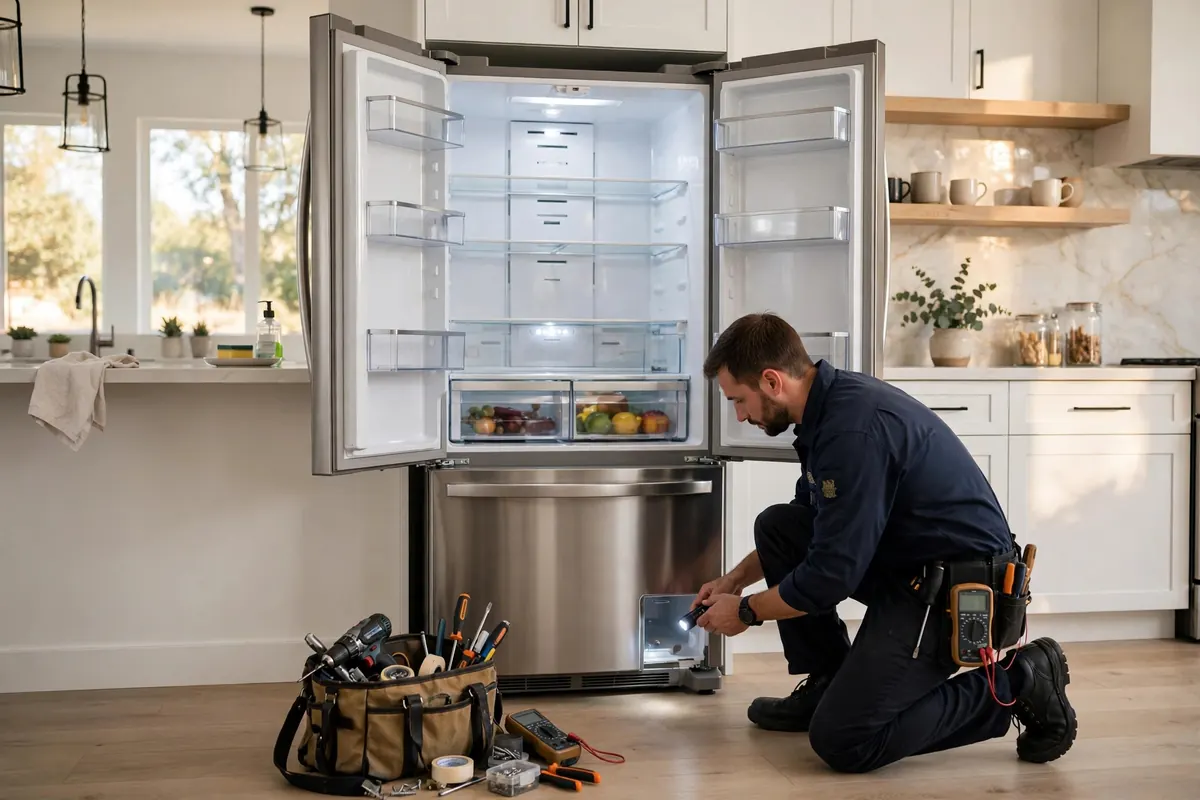
Table of Contents
Why Your Fridge Never Seems to Stop Running
A refrigerator that runs all the time is usually struggling to reach its set temperature. Something is making it work too hard, so the compressor never gets a break.
The most common culprit is dirty condenser coils. Warm air leaking through a worn door gasket is a close second. Both are simple to check.
Below are the causes in order, from easiest to hardest — plus repair costs, when to call a tech, and why this hits Bend homes so often.
Is It Normal for a Refrigerator to Run All the Time?
A healthy fridge cycles on and off all day. Most run about 30–50% of the time — roughly 8–12 hours per day. Newer models run longer but quieter thanks to variable-speed compressors.
So how long should a refrigerator run before you worry? If the compressor never cycles off for a full day, or food stays warm while it runs nonstop, investigate.
| What you notice | Normal? | Action |
|---|---|---|
| Runs 8–12 hours a day, cycling on and off | Yes | None needed |
| Runs longer on hot days or after loading groceries | Yes | None needed |
| Hums quietly most of the day (newer fridge) | Often yes | Check temps to be sure |
| Never shuts off for 24 hours straight | No | Run the checks below |
| Runs nonstop and food feels warm | No | Call a tech soon |
Why a Fridge That Never Stops Costs You Money
A refrigerator running constantly is one of the biggest power draws in your home. It never cycles off, so it draws power around the clock — and that shows up on your electric bill every month.
It also wears the compressor faster. The compressor is the most expensive part in the fridge, and nonstop duty shortens its life.
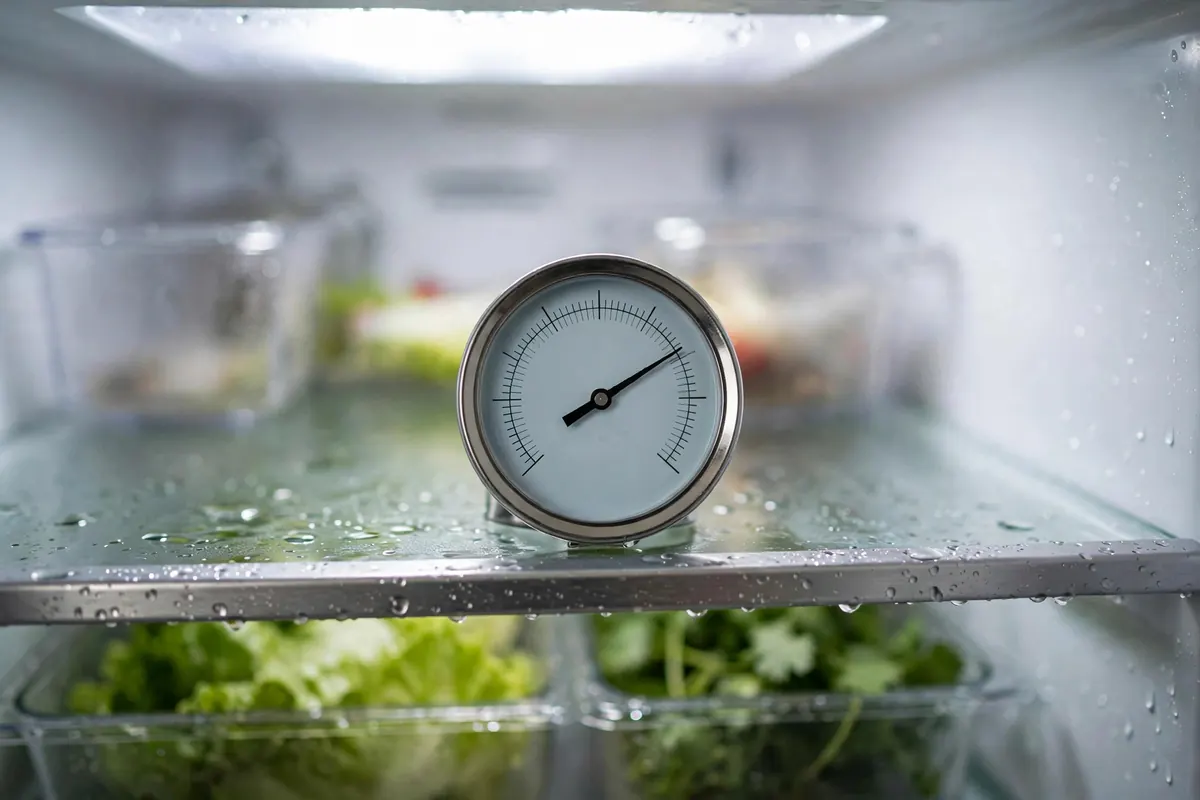
The worst case is a fridge that runs hard but still can’t hold temperature. The FDA recommends keeping the fridge at or below 40°F and the freezer at 0°F. Above that line, food spoils faster and the risk of foodborne illness rises.
3 Quick Checks Before You Worry
- Check the temperature settings. Set the fridge to 37–40°F and the freezer to 0°F. Use a fridge thermometer, not the dial. Dials lie, especially on older models. A freezer that can’t hold near 0°F will also stop making ice — our ice maker troubleshooting guide covers that side of the problem.
- Clear the inside air vents. Look for vents on the back wall of the fridge and freezer. Move food away from them. A pizza box pressed against a vent can cause this entire problem.
- Level the fridge. If it tilts forward, the doors may not seal on their own. Adjust the front feet until the unit leans slightly back. The doors should swing shut by themselves.
Fridge runs all the time even after these checks? Move on to the seven causes below, starting with the most common.
Dirty Condenser Coils Force Your Fridge to Overwork
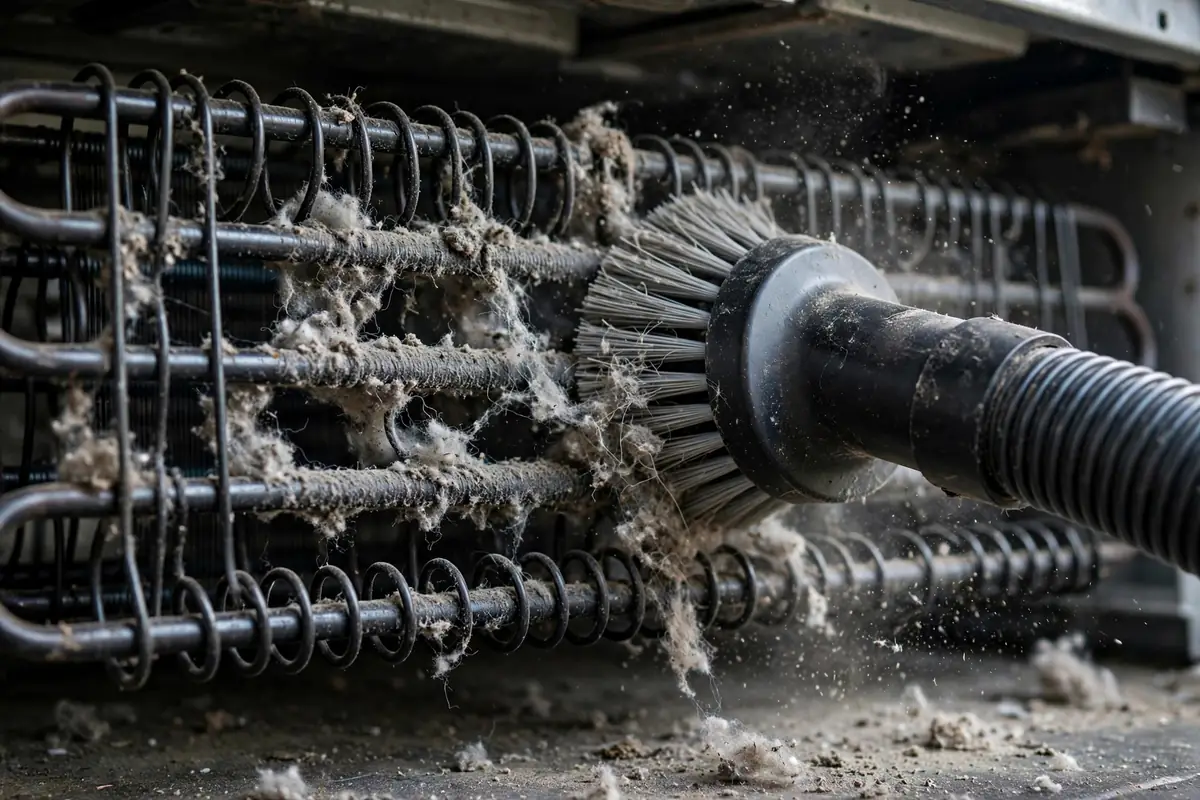
Condenser coils release heat from inside the fridge. When dust coats them, heat can’t escape. The compressor runs longer and longer to compensate.
This is the number one cause we find on service calls across Bend. It is also the cheapest to fix.
On most models the coils sit under the fridge behind the kick plate; older models have them exposed on the back. To clean them:
- Unplug the fridge.
- Pull it away from the wall.
- Vacuum the coils with a brush attachment.
- Use a coil brush for stuck-on dust (about $10 at any hardware store).
- Push the fridge back and plug it in.
Repeat every 6 months — every 3–4 months if you have pets.
A Worn Door Gasket Leaks Cold Air All Day
The rubber gasket seals cold air inside. When it cracks or warps, cold air leaks out and warm air leaks in. The fridge never reaches its target temperature, so it never shuts off.
Try the dollar-bill test. Close a dollar bill in the door and pull it out. If it slides out easily, the seal is weak. Test all four sides of both doors.
Also look for cracks, mold, condensation on the outside of the door, or frost building up near the seal. Any of these point to a gasket problem.
First wipe the gasket with warm soapy water — grime alone can break the seal. If the rubber is torn or warped, replace it; the part typically costs $50–$150.

Blocked Air Vents Starve Your Fridge of Cold Air
Cold air enters the fridge section through vents, usually on the back wall. Block those vents and the thermostat never senses cold air. The compressor just keeps running.
Usual suspects: overstuffed shelves, tall items against the back wall, or ice over the vent — often right after a big grocery run.
Leave a few inches of space in front of every vent. Don’t push food flat against the back wall. In the freezer, keep bags away from the rear vents too.

A Faulty Thermostat or Temperature Sensor Never Says “Stop”
The thermostat tells the compressor when to shut off. If it misreads the temperature, the compressor runs forever. Newer fridges use electronic sensors called thermistors instead of dial thermostats. Both can fail.
Warning signs include a fridge that feels too cold yet still runs, or a temperature dial that changes nothing when you turn it.
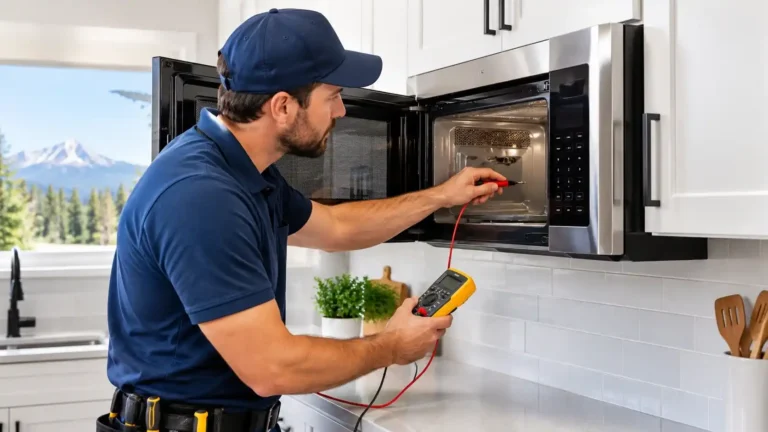
Testing one needs a multimeter and means working around live wiring — usually a job for a technician.
Defrost System Failure Packs the Coils With Ice
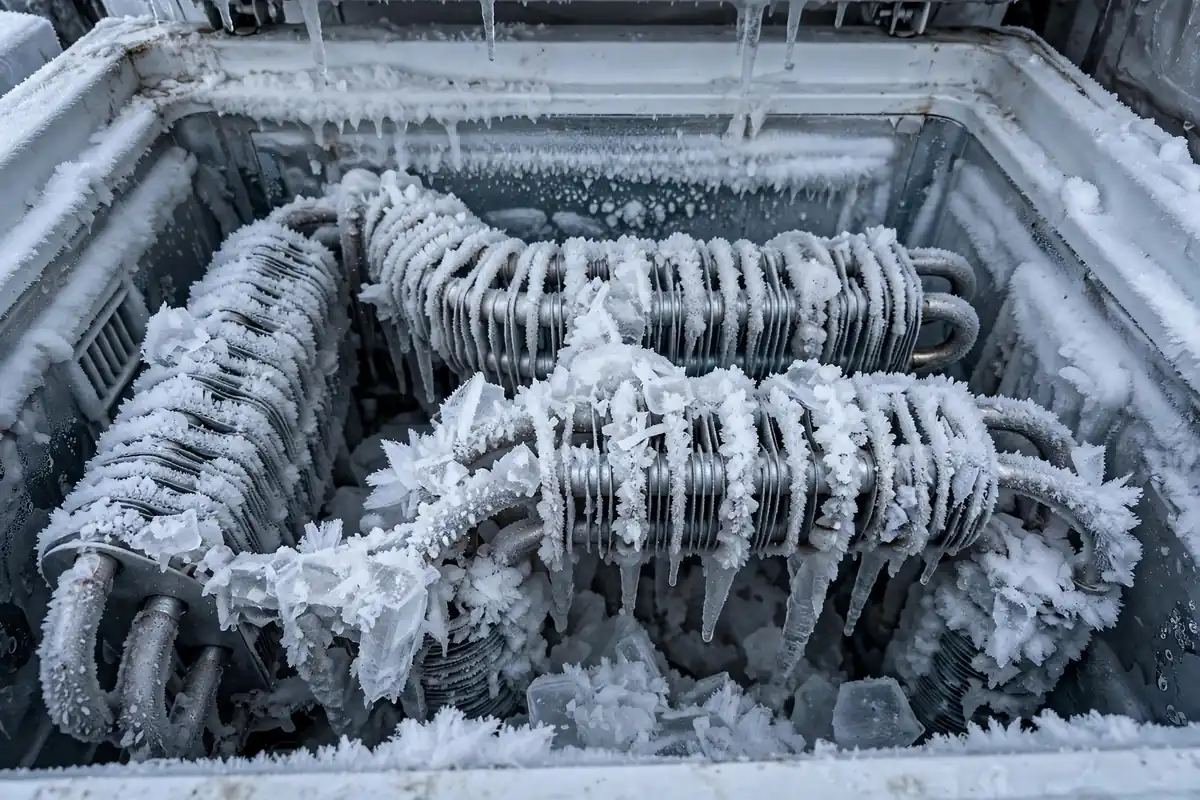
Every fridge builds frost on its evaporator coils. A defrost heater melts that frost on a timer. If the timer, heater, or defrost thermostat fails, ice keeps building up.
That ice blocks airflow between the freezer and fridge sections. The fridge stays warm while the compressor runs nonstop trying to fix it. For the full breakdown of cooling failures, see our guide to why a refrigerator stops cooling.
Thick freezer frost, a warm fridge section, or water pooling under the crispers all point here. The parts sit behind interior panels and involve wiring — pro territory.
A Dead Fan Motor Traps Heat or Cold Air
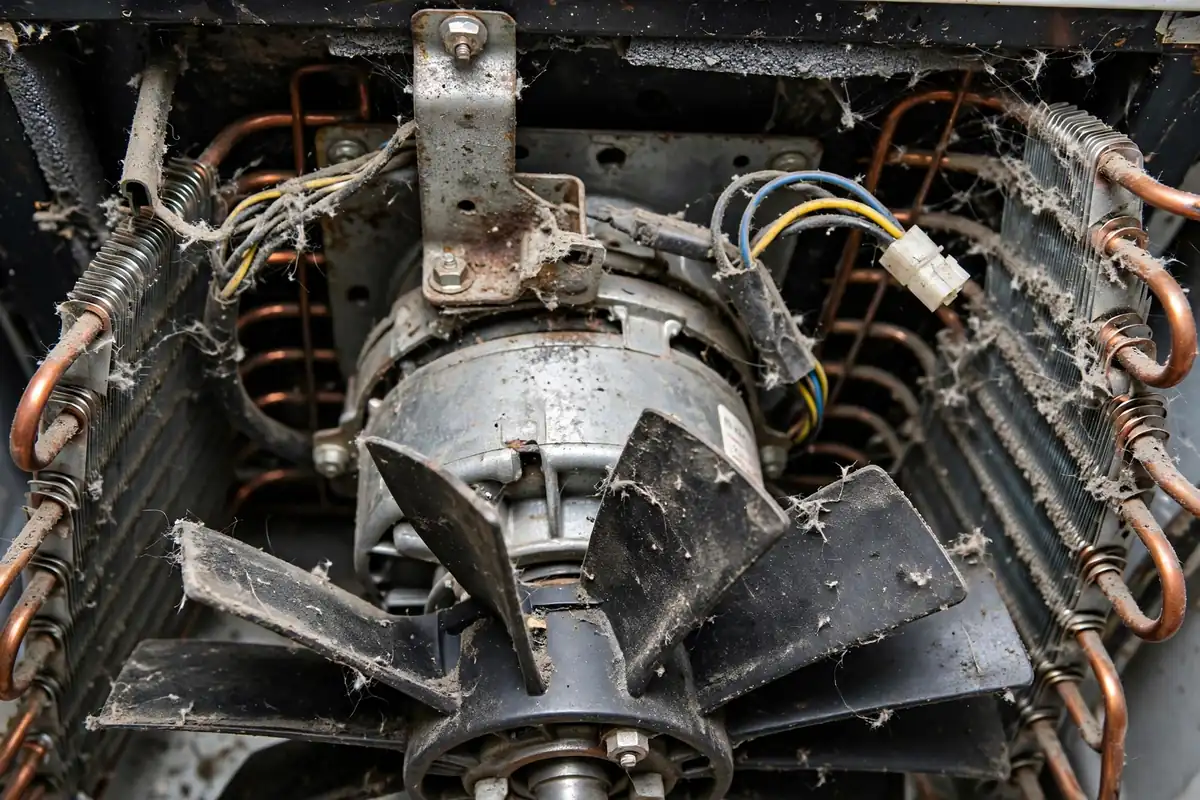
Two fans matter here. The condenser fan blows air over the hot coils underneath or behind the fridge. The evaporator fan pushes cold air from the freezer into the fridge section.
If the condenser fan dies, heat builds up and the compressor overworks. If the evaporator fan dies, cold air never reaches the fridge, so the thermostat keeps calling for cooling.
A fridge that went oddly quiet may have a stopped fan. Loud buzzing from the back or inside the freezer can mean a failing one.
Low Refrigerant Means the Fridge Can Never Catch Up
Refrigerant carries heat out of the fridge in a sealed loop. If the loop develops a leak, cooling power drops. The compressor runs constantly, but the temperature never drops far enough.
The telltale sign is a fridge that runs all day while both sections stay warmer than they should. The compressor may also feel extremely hot to the touch.
Federal rules restrict who can handle refrigerant. Only a licensed technician can find the leak and recharge the system. Do not try this yourself.
Heads up: a sealed-system repair is the most expensive fridge fix. Always get a clear written quote before approving the work.
How Much Does It Cost to Fix a Constantly Running Fridge?
Costs vary by brand and model, but these are the typical ranges we see in the Bend area:
| Problem | DIY or pro? | Typical cost range |
|---|---|---|
| Dirty condenser coils | DIY | $0–$15 (coil brush) |
| Door gasket replacement | DIY or pro | $50–$150 for the part; more with labor |
| Thermostat / temperature sensor | Pro | $150–$300 |
| Defrost system parts | Pro | $150–$350 |
| Fan motor | Pro | $150–$350 |
| Refrigerant leak / sealed system | Pro only | $400+ |
Most refrigerator repairs land between $200 and $500 — see our appliance repair cost guide for typical ranges, or learn more about our refrigerator repair service in Bend, OR.
Use the 50% rule: if the repair costs more than half the price of a new fridge, and your unit is over 10 years old, replacement usually makes more sense. Newer models also use far less energy.
When to Call a Refrigerator Repair Tech in Bend
Not every constantly running fridge is an emergency. Use this guide:
| Situation | What to do |
|---|---|
| Fridge holds temperature but runs long during a heat wave | Monitor for a day |
| Runs nonstop right after loading a big grocery haul | Wait 24 hours |
| Fridge above 40°F for more than a few hours | Call now — food safety risk |
| Water leaking onto the floor | Call now |
| Burning smell, or a clicking compressor that won’t start | Call now; unplug if safe to do so |
| Coils cleaned and seal checked, still runs nonstop | Schedule a diagnosis |
If you’re unsure, call (541) 422-4646. Our licensed techs serve Bend, Redmond, Sisters, La Pine, and Sunriver with upfront flat pricing and a 90-day warranty.
Why This Problem Hits Bend Homes So Often
Central Oregon’s dry, dusty air is rough on condenser coils. Dust builds up fast here — faster than in damper climates. That makes coil cleaning the highest-value chore for any Bend fridge owner.
Summer heat waves push kitchens and garages into the 90s. A fridge in a hot garage can run nearly nonstop and still struggle to keep up. Winter brings the opposite problem for second fridges: an unheated garage can confuse the thermostat, leaving the fridge section too warm while the freezer stays icy.
We see this pattern every year in homes from Northwest Crossing and Awbrey Butte to Boyd Acres, Larkspur, and River West — and out toward Redmond and Sunriver. If your kitchen sits near Highway 97 or an active construction zone, check those coils even more often.
5 Habits That Keep Your Fridge From Running Nonstop
- Clean the condenser coils every 6 months — every 3–4 months if you have pets.
- Wipe the door gaskets quarterly and do the dollar-bill test once a year.
- Leave 1–2 inches of clearance behind and above the fridge for airflow.
- Keep inside vents clear. Don’t pack food against the back wall.
- Set 37–40°F in the fridge and 0°F in the freezer, and verify with a thermometer.
Frequently Asked Questions
Is it normal for a refrigerator to run constantly in summer?
Yes, to a point. Hot kitchens make any fridge run longer, but it should still cycle off during cooler hours. If it never stops for days, start with dirty coils.
How often should a fridge cycle on and off?
Most cycle 1–3 times per hour and run 30–50% of the day. Newer variable-speed models may hum almost continuously at low power — normal if temperatures hold steady.
How do I know if my door seal is bad?
Do the dollar-bill test: close a bill in the door and pull. If it slides out with no resistance, the seal is weak. Also watch for cracks, mold, condensation on the door exterior, or frost near the gasket.
Will a constantly running fridge raise my power bill?
Yes. A fridge that never cycles off uses far more electricity than one on a normal duty cycle. Dirty coils alone can raise consumption noticeably — a $10 coil brush pays for itself fast.
Does constant running mean the compressor is about to die?
Not always. Most causes are cheap fixes like dirty coils or a worn gasket. But months of nonstop running do wear the compressor faster, so don’t ignore the problem and hope it goes away.
Should I unplug my fridge if it won’t stop running?
Only as a short test. A few hours unplugged won’t hurt food if doors stay closed, but it won’t fix the cause. If the fridge can’t hold 40°F or below, call a technician.
When should I replace my fridge instead of repairing it?
If the unit is 10–15+ years old and the repair costs more than half the price of a new one, replace it. Newer models use far less energy too.
Key Takeaways
A fridge that runs all the time is telling you something. Start with the easy checks: temperature settings, inside vents, and condenser coils. Those three solve most cases.
For deeper problems — sealed system, defrost parts, control board — a licensed technician can diagnose it fast and give you a straight repair-vs.-replace answer.
Don’t let it run for months. Your power bill and your compressor will thank you.
Refrigerator Running Constantly in Bend? Get It Checked Today.
Our licensed technicians diagnose refrigerator problems across Bend, Redmond, and Central Oregon. Upfront flat pricing, genuine parts, and a 90-day warranty on every repair.
📍 850 NE 1st St, Bend, OR · 🕗 Mon–Sat, 8am–6pm