Dryer Not Heating: Common Causes and Repair Options
Is your dryer tumbling but leaving clothes damp? Learn why a dryer stops heating, what you can safely check, and when professional dryer repair makes more sense.
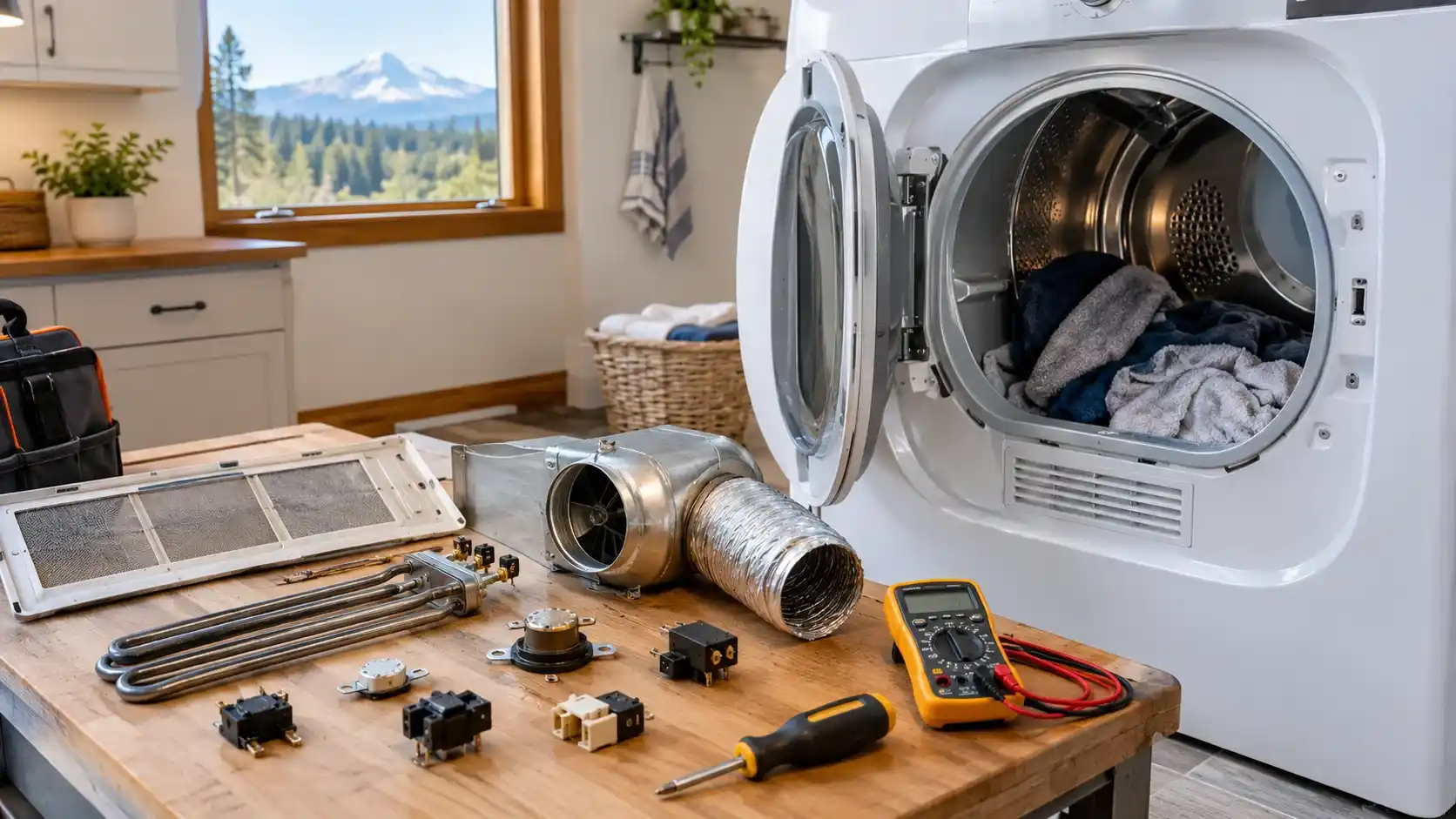
Dryer Not Heating: Why Clothes Come Out Damp or Cold
A dryer not heating can turn a simple laundry routine into a frustrating problem. Your dryer may still turn, tumble, and sound normal. Yet your clothes come out damp or cold.
The good news is that some heating problems have simple causes. A wrong cycle, tripped breaker, restricted airflow, or dirty lint screen can affect drying performance. Other problems involve parts such as the heating element, thermal fuse, thermostat, igniter, or gas valve.
This guide explains why is my dryer not heating, what you can safely check, and when professional dryer repair makes more sense.
Whether you live near Old Bend, Larkspur, Orchard, Old Farm, River West, or Southern Crossing, the same basic dryer heating problems can occur in homes throughout Bend, Oregon.
📋 Table of Contents — Tap to Jump to a Section
- 01 Introduction
- 02 Why Is My Dryer Not Heating?
- 03 Quick Troubleshooting Guide
- 04 Simple Checks First
- 05 Common Reasons
- 06 Dryer Not Getting Hot
- 07 Runs but Does Not Heat
- 08 Gas Dryer Not Heating
- 09 Element & Fuse Replacement
- 10 Warm or Heats Then Stops
- 11 DIY or Professional?
- 12 Repair or Replace?
- 13 Prevent Heat Loss
- 14 Facts and Figures
- 15 Testimonials & Case Studies
- 16 FAQ
- 17 Professional Dryer Repair
Why Is My Dryer Not Heating?
Start with the symptom. A dryer that produces absolutely no heat needs a different approach from one that gets warm but takes two hours to dry a load.
For example, an electric dryer can tumble normally even when one side of its electrical supply has a problem. Gas dryers can also tumble without producing heat if the gas supply or ignition system has a fault.
Here is a quick way to narrow down the problem:
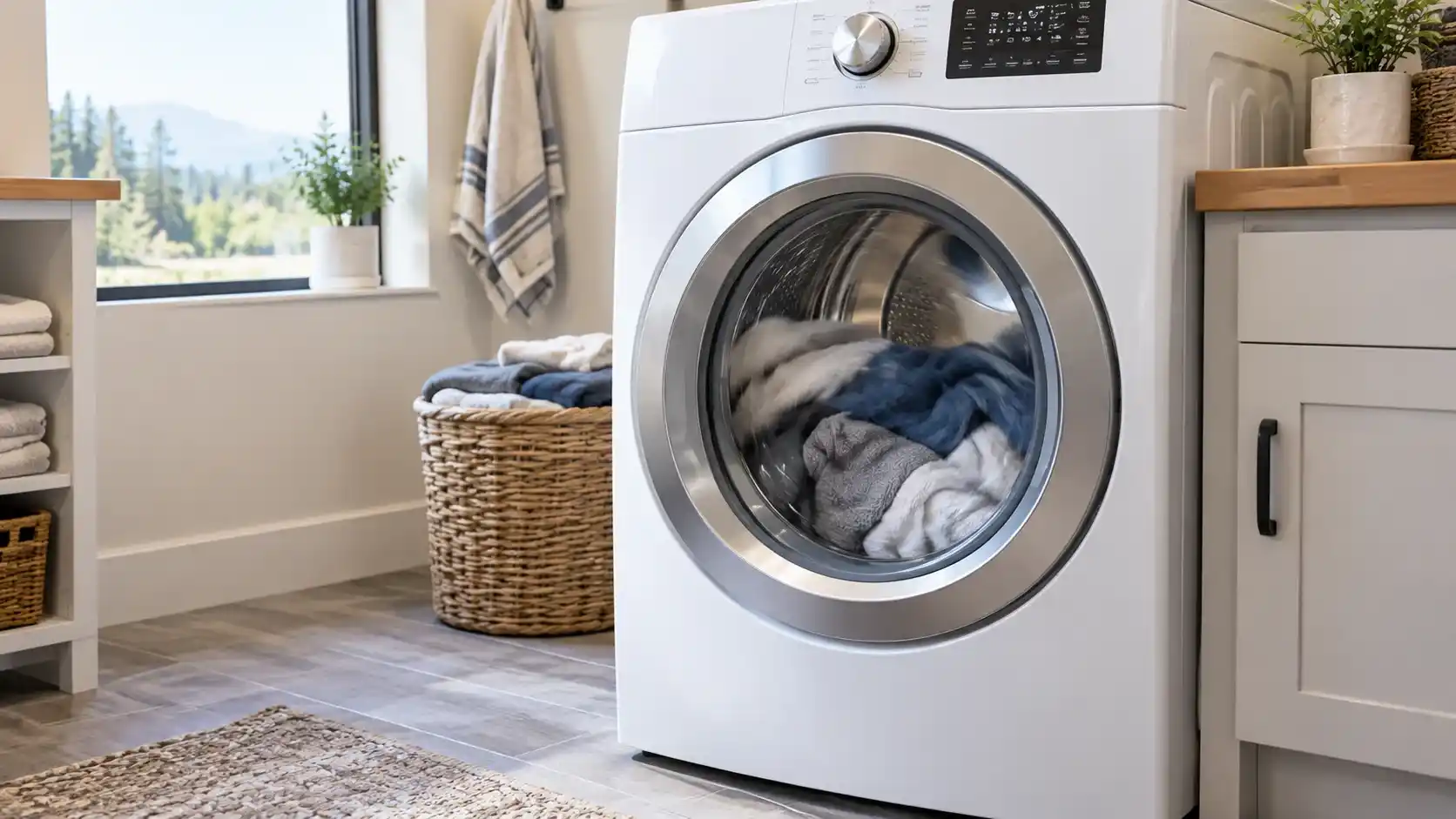
Quick Dryer Heating Troubleshooting Guide
| Dryer Symptom | Possible Cause | What to Check First |
|---|---|---|
| Dryer runs but does not heat | Heating element, thermal fuse, power supply | Check cycle and circuit breaker |
| Dryer gets warm but not hot | Restricted airflow, heating element, thermostat | Check lint screen and vent |
| Dryer heats then stops | Overheating, thermostat, airflow problem | Check vent and exhaust airflow |
| Dryer takes too long to dry | Clogged vent, poor airflow, oversized load | Clean lint screen and inspect vent |
| Electric dryer tumbles but has no heat | Circuit breaker, heating element, thermal fuse | Check both sides of the breaker |
| Gas dryer tumbles but does not heat | Igniter, gas valve, flame sensor | Check gas supply and shutoff |
This table is a starting point, not a diagnosis. Internal dryer components can carry dangerous electrical or gas-related risks.
Check These Simple Things Before Calling for Dryer Repair
Before assuming a major component has failed, check the easy things first.
Check the Dryer Settings
Make sure you selected a heated drying cycle.
Some dryers have Air Only, Air Fluff, or similar settings. These cycles tumble clothes without adding heat.
If the dryer suddenly seems cold after changing cycles, the setting may explain the problem. Also check whether an energy-saving setting has changed the expected drying temperature.
Check the Dryer Circuit Breaker
Electric dryers require a substantial electrical supply. Whirlpool notes that electric dryers use a 240-volt supply with separate sides of the electrical circuit. One side can power the motor while another supplies the heating system.
That means the drum can sometimes turn even when the dryer cannot produce heat.
Check the dryer circuit breaker at your electrical panel. If it has tripped, reset it once. If it immediately trips again, stop using the dryer and arrange professional electrical or appliance service.
Do not repeatedly reset a breaker to keep the dryer running.
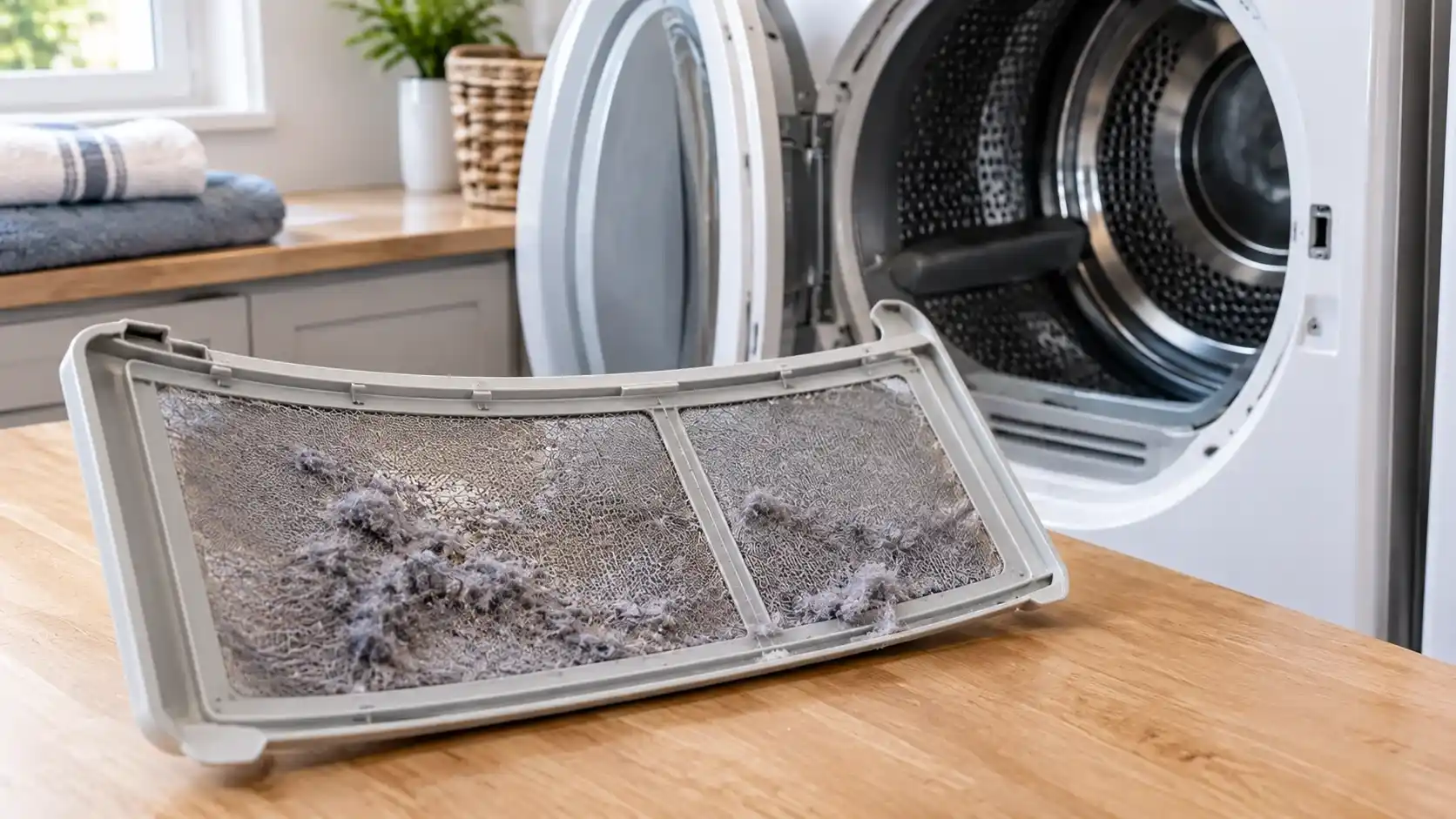
Inspect the Lint Screen and Airflow
Clean the lint screen before or after each load.
A heavily restricted screen reduces airflow. Lint buildup elsewhere can create additional airflow problems.
However, an important distinction matters here: a dirty lint screen or clogged vent does not automatically mean the dryer will produce zero heat. Whirlpool explains that airflow restrictions are often associated with poor drying performance rather than a complete loss of heat.
That distinction can prevent you from replacing an expensive component unnecessarily.
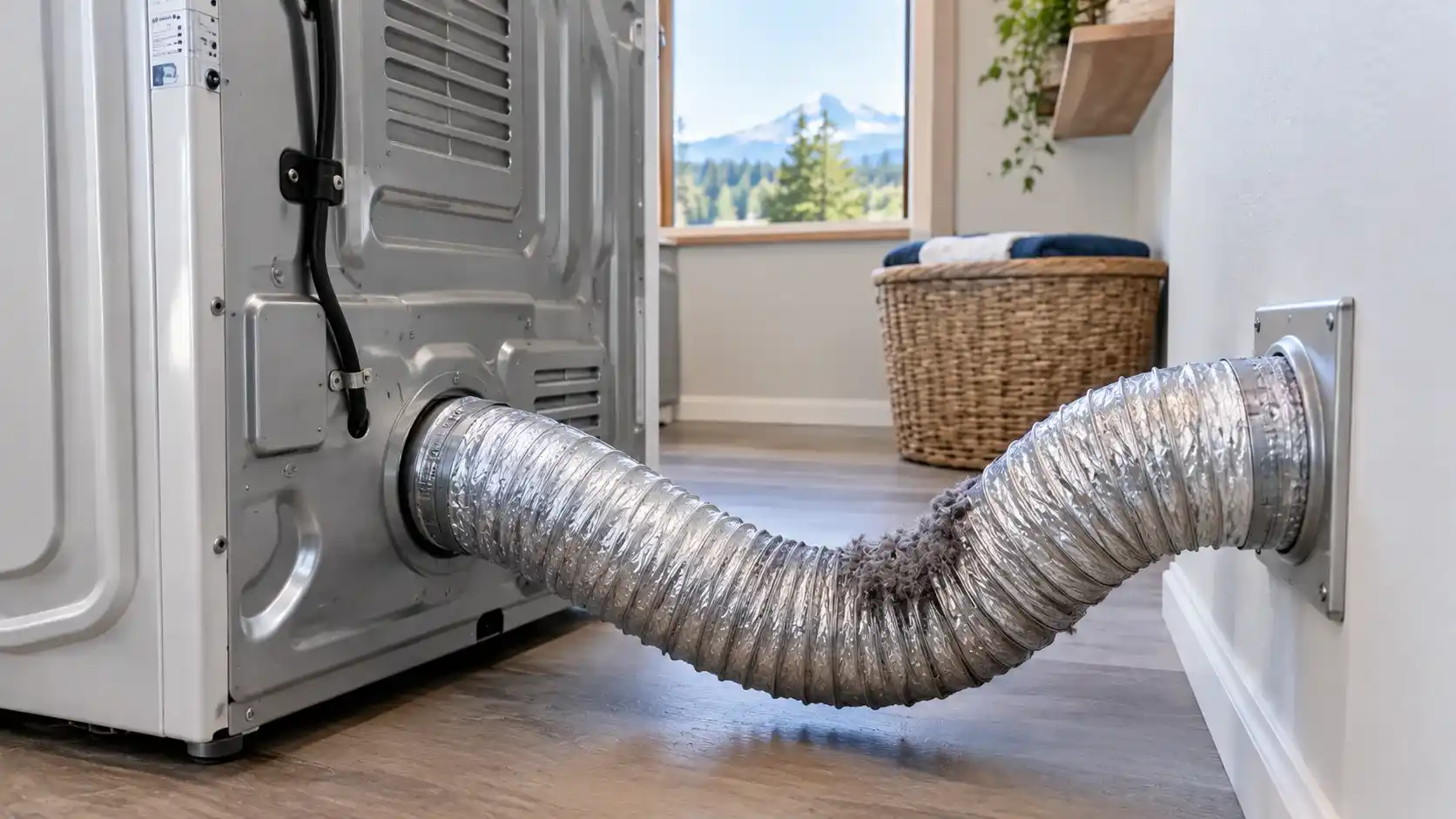
Check for a Clogged or Crushed Vent
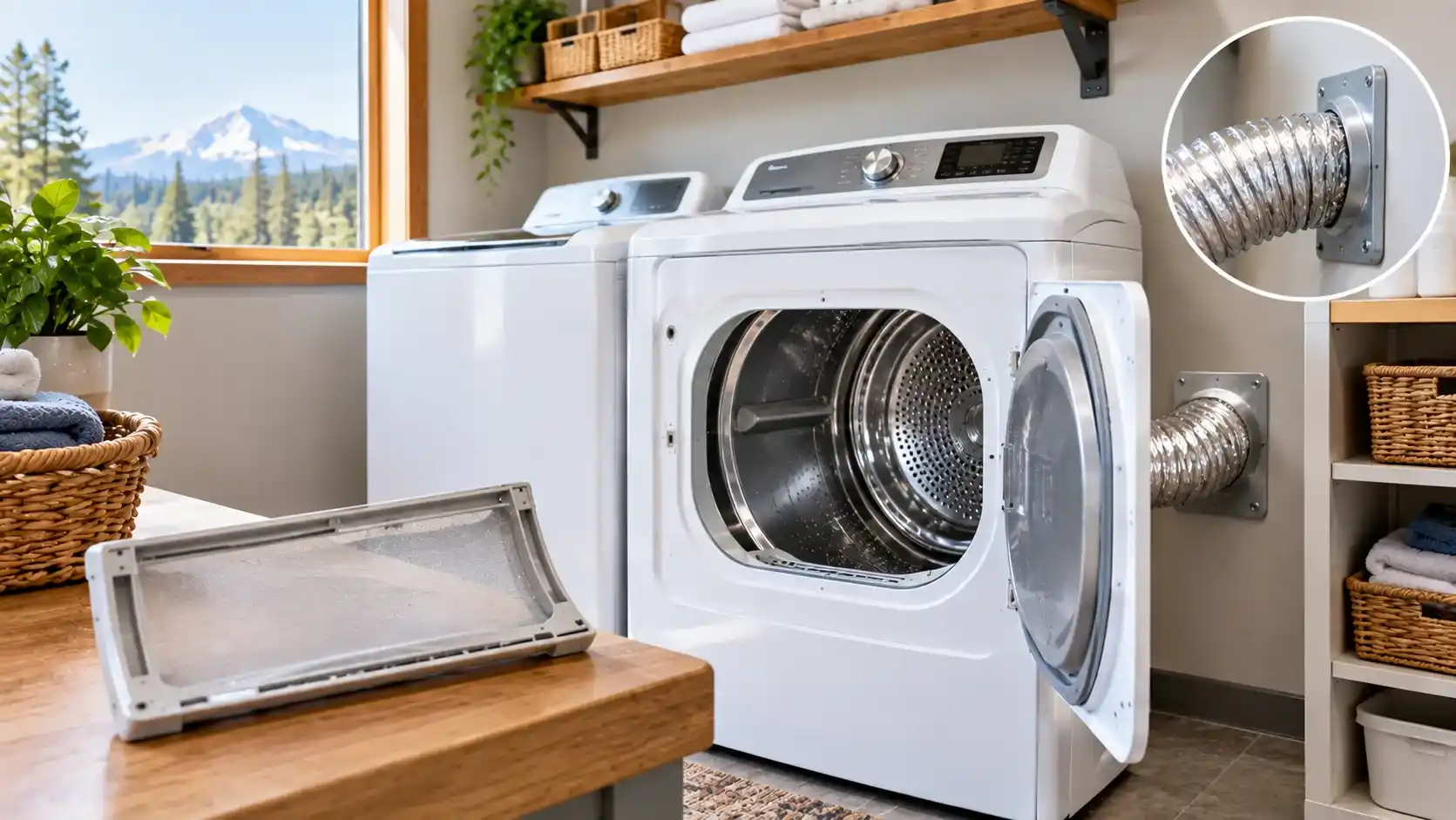
Look behind the dryer at the visible exhaust connection.
A crushed vent hose can restrict airflow. Lint can also accumulate inside the exhaust system.
Poor airflow may cause clothes to remain damp. It can also contribute to excessive heat inside the dryer.
The U.S. Consumer Product Safety Commission recommends cleaning dryer lint filters regularly and keeping exhaust vents free from restrictions.
Check the Load Size and Moisture Level
An overloaded dryer may struggle to dry clothing efficiently.
Very wet clothes can also increase drying time. If your washer does not remove enough water during its spin cycle, the dryer has to work much harder. If the washer is also having problems, our washer repair service can help diagnose the issue.
Try a smaller load with properly spun clothes. If the dryer still produces no heat, continue troubleshooting.
Common Reasons Your Dryer Is Not Heating
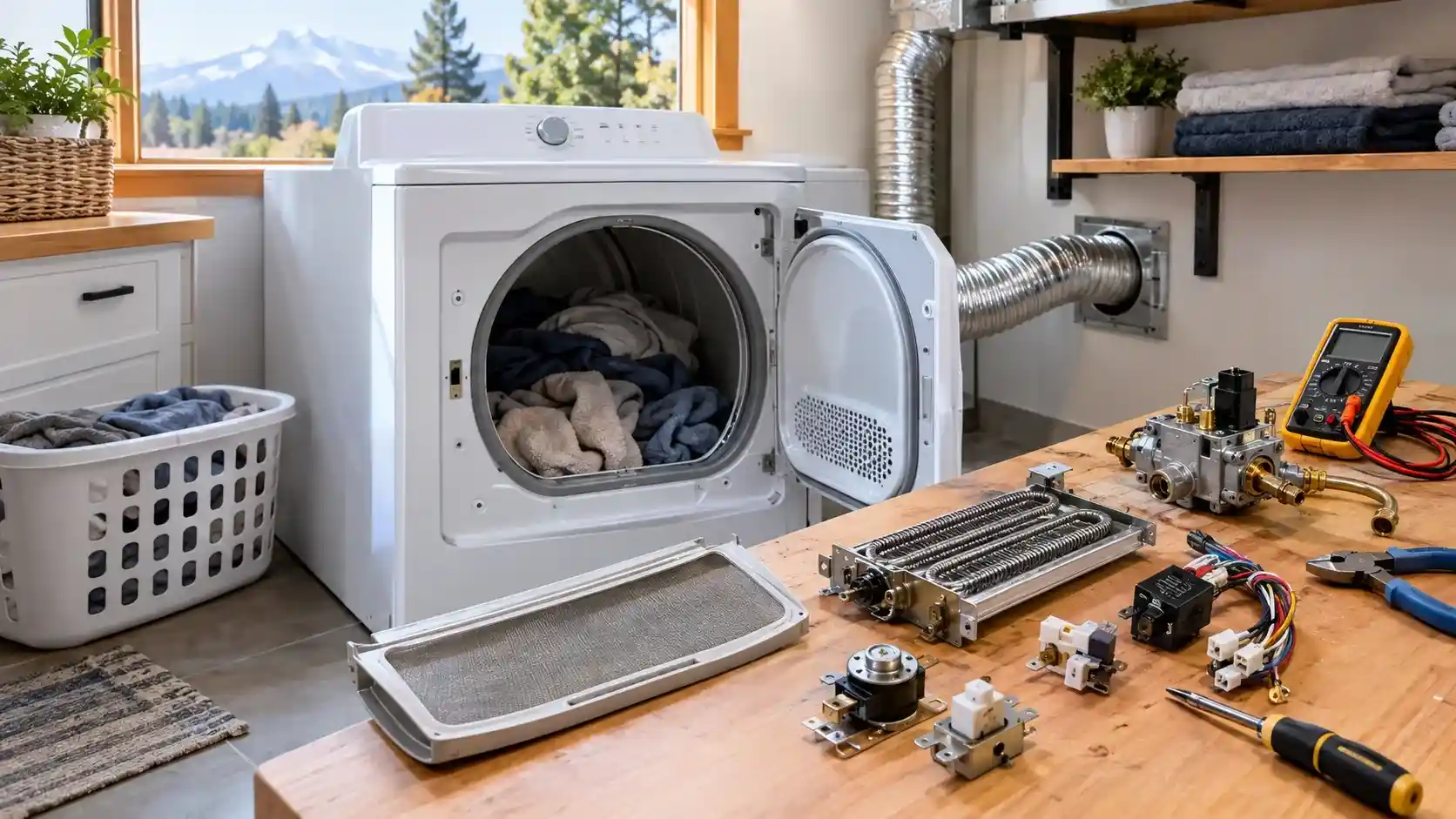
If basic checks do not solve the issue, a component may have failed. Several parts work together to create, control, and safely remove heat.
| Component or Problem | What It Does | Common Symptom | Professional Repair May Involve |
|---|---|---|---|
| Dryer heating element | Produces heat in an electric dryer | Dryer runs but produces little or no heat | Heating element testing or replacement |
| Dryer thermal fuse | Protects against excessive temperature | Dryer may stop heating or operating | Thermal fuse testing and replacement |
| Dryer thermostat | Helps regulate temperature | Incorrect or inconsistent heating | Thermostat testing or replacement |
| Dryer vent / airflow | Removes hot, moist air | Long drying times or overheating | Vent and airflow inspection |
| Dryer circuit breaker | Supplies electrical power | Drum turns but heating fails | Electrical supply diagnosis |
| Gas dryer igniter | Starts the gas heating process | Drum turns without normal heat | Igniter and ignition-system testing |
| Gas valve / coils | Controls gas flow | Gas dryer fails to produce heat | Gas-system diagnosis |
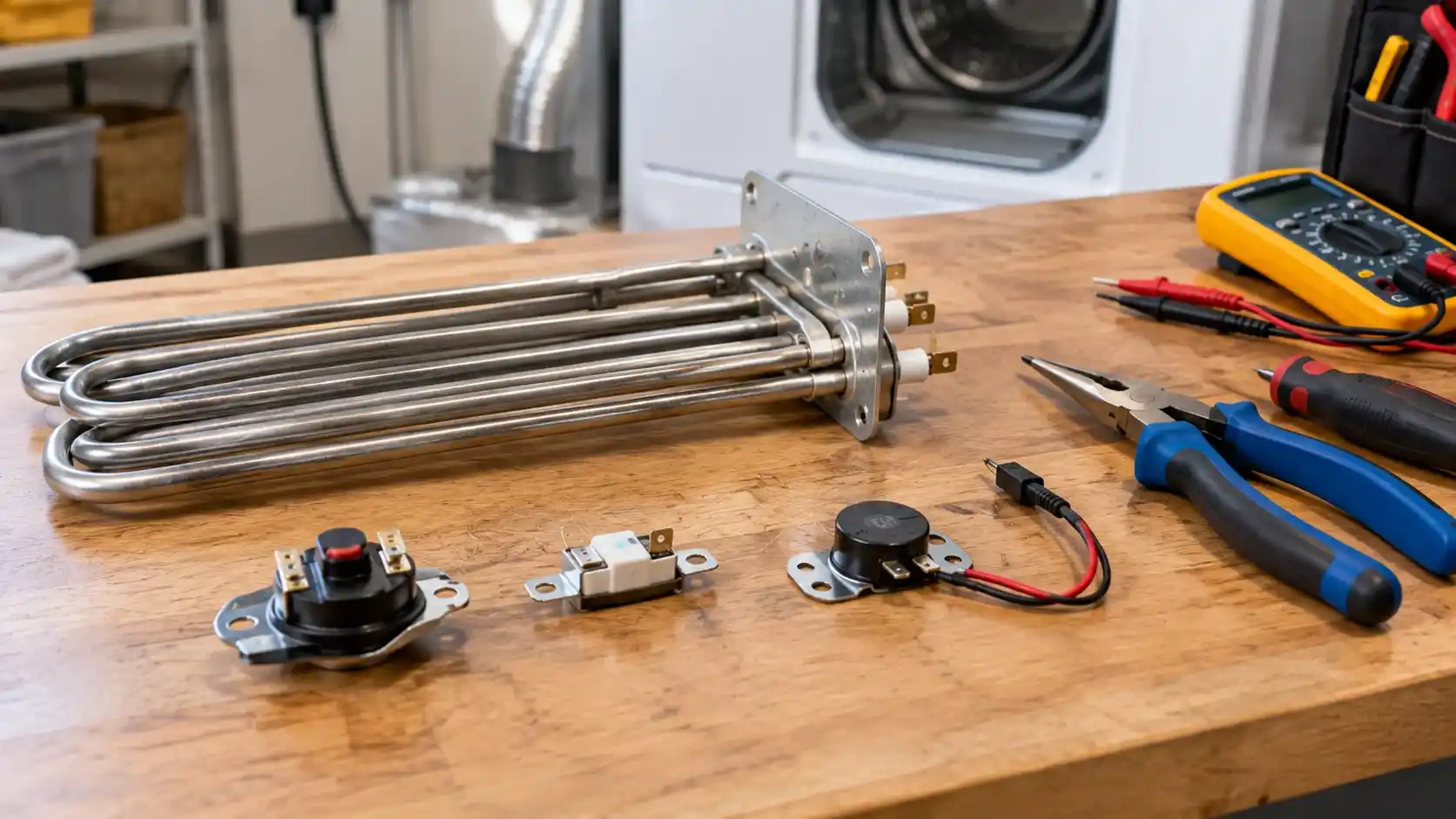
Dryer Heating Element
The dryer heating element is a major heat-producing component in an electric dryer.
When the element fails, the drum can continue tumbling while the dryer produces little or no heat.
A damaged element can sometimes show visible breaks or burn marks. However, visual inspection alone does not always confirm failure.
A technician can test the element for proper electrical continuity and inspect the surrounding components.
Dryer Thermal Fuse
The dryer thermal fuse is a safety component designed to protect the dryer from excessive temperatures.
A failed fuse can interrupt the heating system. Depending on the dryer design, it can also prevent the dryer from operating normally.
If a fuse has failed, the underlying reason should also be considered. Replacing the fuse without addressing an airflow or overheating problem may allow the same issue to return.
Dryer Thermostat
The dryer thermostat helps control temperature during the drying cycle.
A faulty thermostat can cause incorrect or inconsistent heating.
Some dryer models also use a thermistor to monitor temperature electronically. The exact testing procedure varies by model.
Because these components sit inside the appliance, professional diagnosis is often the safer choice.
Restricted Airflow or a Clogged Dryer Vent
A dryer vent clogged with lint or debris can seriously reduce airflow.
Your dryer needs to move warm, moist air out of the drum. When exhaust airflow becomes restricted, clothes can take longer to dry. The dryer may also run hotter than intended.
The CPSC reports an annual average of about 6,400 clothes dryer fires in the United States, along with approximately 180 injuries and nearly $105 million in property damage. Regular lint and vent maintenance can reduce one important source of dryer fire risk.
These figures do not mean every clogged vent creates a fire. They show why dryer airflow and maintenance deserve attention.
Dryer Circuit Breaker or Power Supply Problem
An electric dryer needs the correct electrical supply to generate heat.
If the dryer circuit breaker trips on one side, the drum may still operate while the heating system does not.
This is one reason a dryer runs but does not heat situation should not automatically be blamed on the heating element.
If the breaker repeatedly trips, contact a qualified professional.
Why Is My Dryer Not Getting Hot?
If your dryer feels slightly warm but never reaches its normal temperature, look beyond a complete component failure.
Possible causes include:
- Restricted exhaust airflow
- A partially damaged heating element
- A thermostat problem
- A temperature-sensing issue
- Electrical supply problems
- Gas ignition or gas-flow problems
- Incorrect cycle selection
A dryer that is not getting hot can still be producing some heat. That makes the diagnosis different from a dryer producing absolutely no heat.
If clothing eventually dries but takes much longer than normal, airflow deserves particular attention.
Dryer Runs but Does Not Heat: What Does It Mean?
A dryer that tumbles normally but produces no heat often has a heating-system problem. The exact cause depends on whether you have an electric or gas model.
Electric Dryer Runs but Does Not Heat
For an electric dryer, possible causes include:
- Failed heating element
- Blown thermal fuse
- Faulty thermostat
- Electrical supply problem
- Damaged wiring
- Control-system failure
Start with the safe external checks. If the dryer still has no heat, internal testing should be handled carefully.
Gas Dryer Runs but Does Not Heat
Gas dryers use a different heating system. The drum can turn while the burner fails to ignite.
Possible causes include:
- Failed gas dryer igniter
- Faulty gas valve coils
- Flame sensor problem
- Gas supply issue
- Closed gas shutoff valve
- Burner-system problem
Gas appliance repairs require additional safety precautions.
Gas Dryer Not Heating: Common Causes
A gas dryer not heating can have several possible causes.
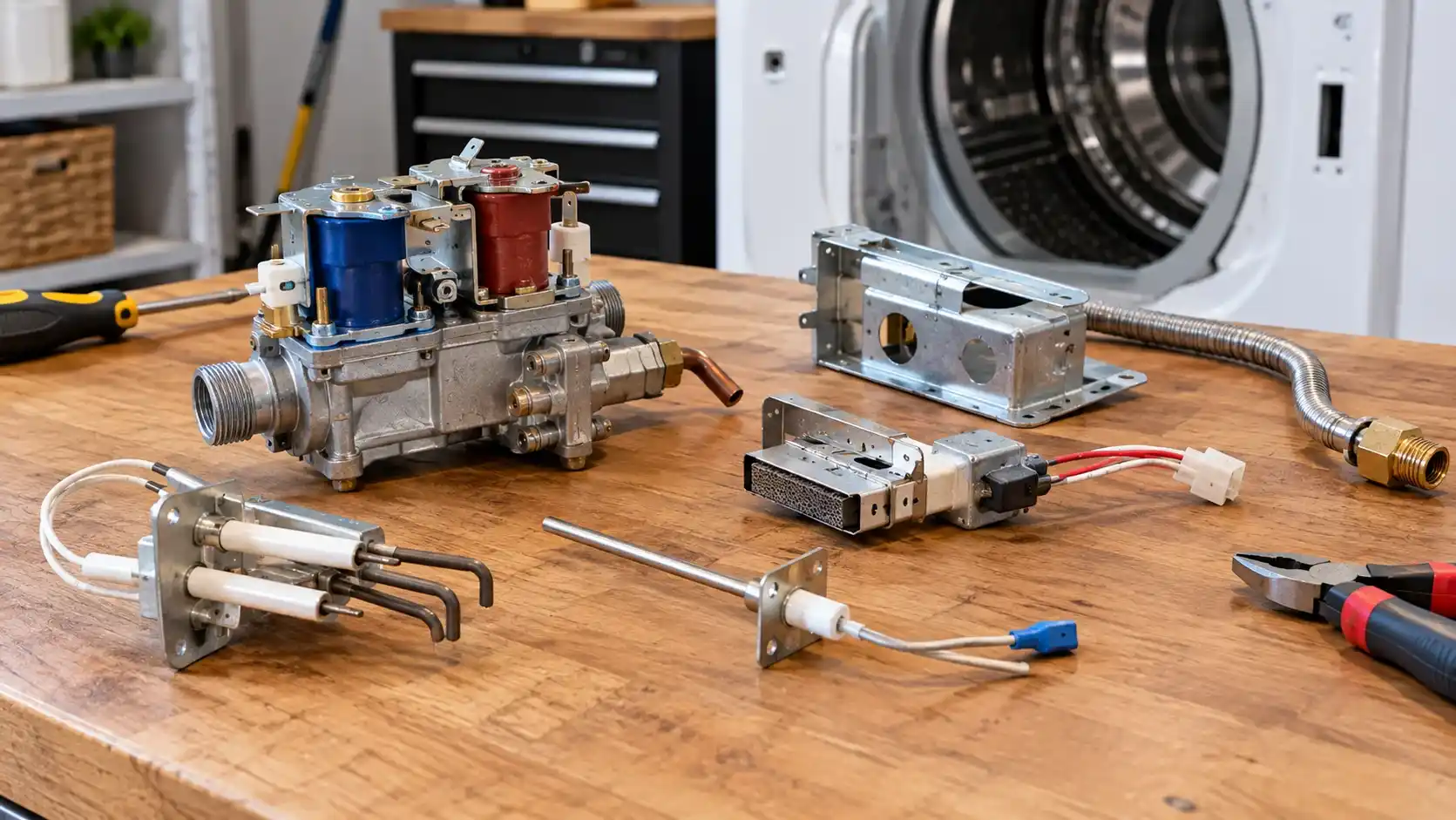
Failed Gas Dryer Igniter
The igniter helps start the burner process. If it fails, the dryer may tumble normally while producing no heat.
A technician can test the ignition system and determine whether the igniter is receiving the correct electrical supply.
Faulty Gas Valve or Valve Coils
Gas valve coils help control gas flow to the burner. A failing coil can cause ignition problems or intermittent heating.
Because this involves the gas system, professional diagnosis is recommended.
Gas Supply or Shutoff Problem
Check whether the dryer has an accessible gas shutoff valve and whether the appliance is properly connected.
A closed valve can allow the drum to turn without producing heat. If you suspect a gas leak, do not continue troubleshooting the dryer.
Flame Sensor or Burner Problem
The flame sensor helps control burner operation. A problem in the sensor or burner assembly can prevent normal heating.
These components require model-specific testing.
Dryer Heating Element Replacement: When Is It Necessary?
A dryer heating element replacement may be necessary when testing confirms that the element has failed.
Do not replace the element simply because the dryer is not heating. Other problems can produce the same symptom.
A technician should check the heating element, electrical supply, thermal fuse, thermostat, wiring, and other relevant components before recommending replacement.
The correct replacement part must also match the dryer model.
Dryer Thermal Fuse Replacement: What Homeowners Should Know
A dryer thermal fuse replacement may restore operation when the fuse has failed. But the fuse usually fails for a reason.
Restricted airflow and excessive heat can contribute to thermal problems. If the underlying issue remains, the replacement fuse may fail again.
Never bypass a thermal fuse to keep the dryer running. That safety component exists to help protect the appliance from dangerous overheating.
What If the Dryer Gets Warm but Not Hot?
A dryer getting warm but not hot often points toward reduced heating performance rather than a complete heating failure.
Check the lint screen first. Then inspect the visible exhaust hose and airflow.
If airflow looks normal, other possibilities include the heating element, thermostat, thermistor, or electrical supply. For gas models, ignition and gas-flow components also need consideration.
Do not keep running a dryer that shows signs of overheating, burning odors, smoke, or abnormal electrical behavior.
What If the Dryer Heats Then Stops?
A dryer that heats at first and then stops heating can be especially frustrating. Possible causes include:
- Restricted airflow
- Cycling thermostat problems
- A damaged heating element
- Overheating
- Temperature-sensing problems
- Loose or damaged wiring
- Gas ignition problems
The pattern matters. If the dryer heats during the beginning of the cycle but becomes cold later, airflow and temperature-control components deserve attention. A technician can test the system while monitoring its operation.
Which Dryer Heating Problems Can You Safely Troubleshoot Yourself?
Not every dryer repair should become a DIY project. Basic external checks are usually reasonable. Internal electrical and gas repairs require more caution.
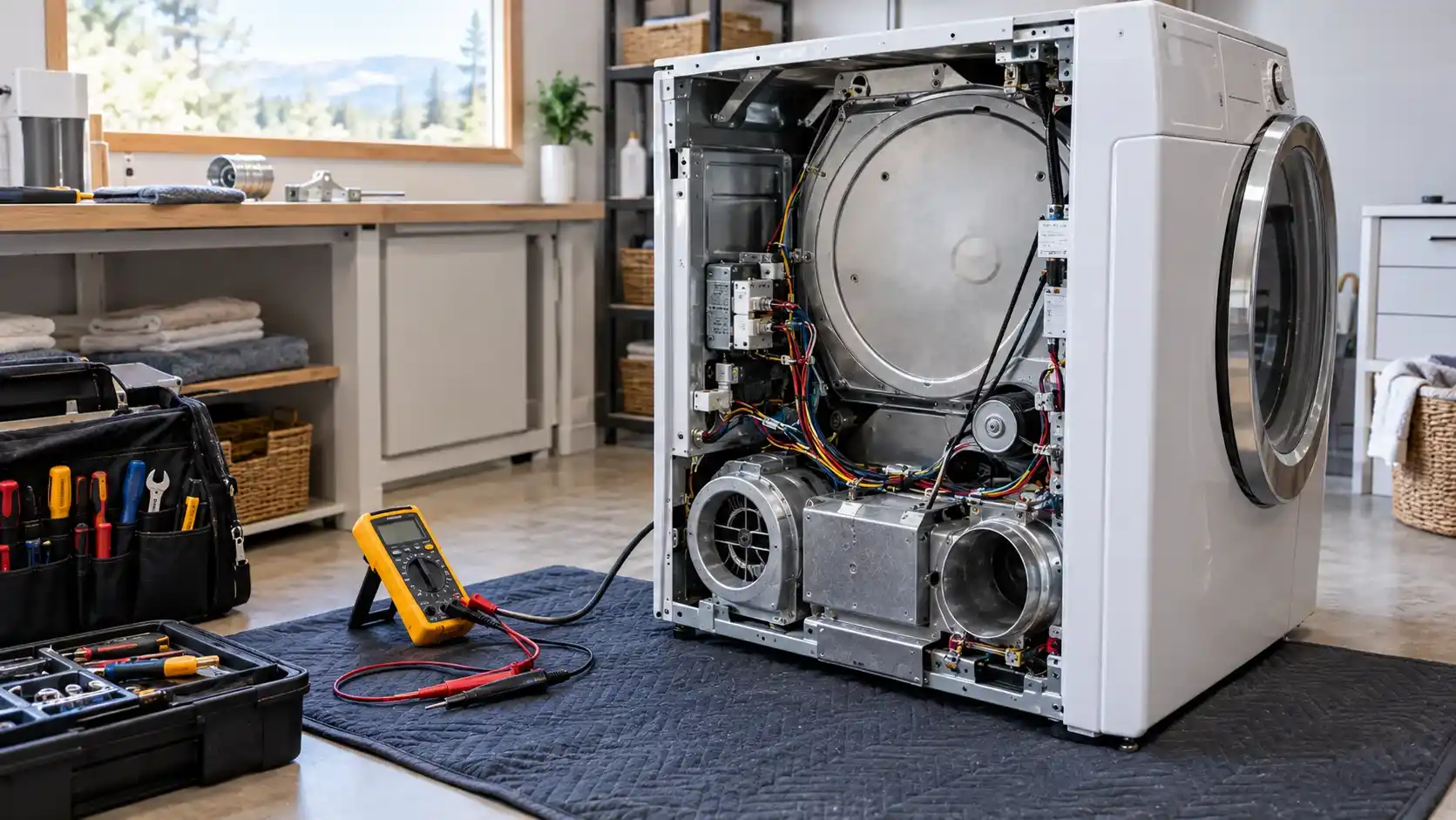
DIY Check vs. Professional Repair
| Check or Problem | Homeowner Can Check? | Professional Recommended? |
|---|---|---|
| Dryer cycle or heat setting | Yes | No |
| Lint screen | Yes | No |
| Visible vent hose | Yes | No |
| Dryer load size | Yes | No |
| Circuit breaker | Basic check only | Yes if it repeatedly trips |
| Heating element | No internal repair | Yes |
| Thermal fuse | No internal repair | Yes |
| Thermostat or thermistor | No internal repair | Yes |
| Gas igniter or gas valve | No | Yes |
| Internal wiring or electrical components | No | Yes |
Safe Basic Checks
You can usually start by checking:
- Dryer settings
- Lint screen
- Load size
- Visible vent hose
- Circuit breaker
- Gas shutoff valve, where safely accessible
Always follow your dryer’s manufacturer instructions.
Problems Better Left to a Professional
Internal repairs can expose you to electrical hazards. Gas dryers introduce additional risks. Professional service is appropriate when the problem involves:
- Heating elements
- Thermal fuses
- Thermostats
- Thermistors
- Internal wiring
- Gas valves
- Igniters
- Burners
- Control boards
- Repeated breaker trips
When Should You Repair or Replace Your Dryer?
A heating problem does not automatically mean you need a new dryer.
A relatively newer dryer with a failed heating element or thermal fuse may be a reasonable repair candidate. An older appliance with several failing components may require a broader cost comparison.
Consider:
A technician can help identify the actual failure before you make a replacement decision.
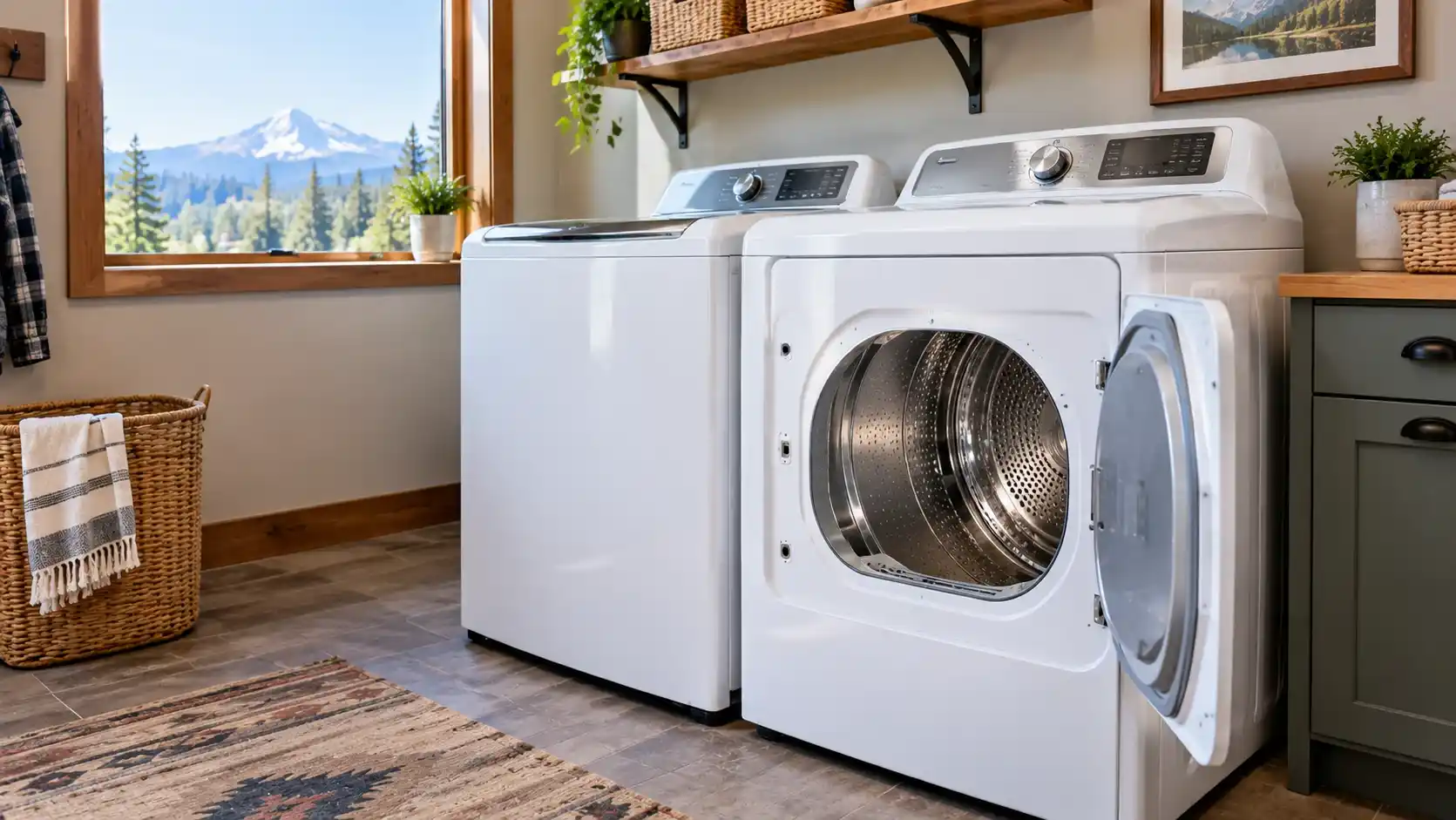
How to Prevent Your Dryer From Losing Heat
Regular maintenance can help protect dryer performance.
If clothes suddenly take much longer to dry, do not ignore the change. It may indicate an airflow or heating problem.
Facts and Figures About Dryer Heating and Safety
The U.S. Consumer Product Safety Commission estimates an annual average of approximately 6,400 clothes dryer fires in the United States.
Those fires are associated with roughly 180 injuries and almost $105 million in property damage each year.
The CPSC recommends cleaning the lint filter before or after each load and ensuring the exhaust vent remains unrestricted.
These figures reinforce a simple point: dryer maintenance is not just about getting clothes dry faster. Proper airflow and safe operation matter.
Customer Testimonials, Awards, and Case Studies
Customer Testimonials
Real customer experiences can help homeowners understand what professional dryer repair looks like.
For the final published version of this section, use verified reviews from actual Appliance Repair Bend OR customers. Do not publish invented testimonials.
A strong testimonial should explain the problem, the service experience, and the outcome without making unrealistic claims. For example, a real customer might describe a dryer that stopped producing heat, how quickly the issue was diagnosed, and whether the repair restored normal drying.
Awards, Experience, and Dryer Repair Case Studies
If Appliance Repair Bend OR has verified awards, certifications, manufacturer training, or documented repair cases, this is the right place to showcase them.
For case studies, focus on real problems. For example:
Problem: Electric dryer running normally but producing no heat.
Diagnosis: Technician identifies the failed heating component after appropriate testing.
Repair: Faulty component replaced with the correct model-specific part.
Result: Dryer returns to normal heating operation.
Only publish case-study details that can be verified.
Frequently Asked Questions About a Dryer Not Heating
Why is my dryer not heating but still running?
The dryer may have a failed heating element, thermal fuse, thermostat, electrical supply problem, or another heating-system fault. An electric dryer can sometimes tumble even when the heating circuit is not receiving the correct power.
Why is my dryer not getting hot enough to dry clothes?
Restricted airflow is one possibility. Check the lint screen and visible vent hose first. A failing heating element, thermostat, thermistor, or gas-system component can also cause insufficient heat.
What should I check first when my dryer is not heating?
Start with the cycle setting, lint screen, visible vent hose, load size, and circuit breaker. If those checks do not solve the problem, the dryer may need component-level diagnosis.
Can a clogged dryer vent cause a dryer to stop heating?
A restricted vent can cause poor drying and overheating. However, a clogged vent does not necessarily explain a complete loss of heat. Other components may also need testing.
Is it worth repairing a dryer that is not heating?
It depends on the dryer’s age, condition, repair cost, and the number of components that have failed. A technician can identify the actual problem before you decide between repair and replacement.
Need Professional Dryer Repair in Bend, Oregon?
When your dryer stops producing heat, you do not always need a replacement appliance. The first step is finding the actual cause.
A simple setting or airflow problem may be easy to correct. A failed heating element, thermal fuse, thermostat, electrical component, igniter, or gas valve requires a different approach.
For homeowners in Bend, professional diagnosis can save time and prevent unnecessary parts replacement.
Whether you are near Old Bend, Orchard, Larkspur, Old Farm, River West, or the Old Mill area, a dryer that suddenly stops heating should not be ignored.
If basic checks do not restore normal heating, arrange professional dryer repair and have the appliance properly diagnosed before replacing parts.
Need Help Diagnosing a Dryer That Won’t Heat?
If basic checks haven’t solved the problem, our technicians can find the actual cause and give you a clear repair estimate before any work begins.